

How to Style Thin Curly Hair for More Volume
Fine curly hair gets treated like an afterthought in most tutorials. Every guide tells you to
1. Clarify your hair and scalp regularly
Fine curly strands carry buildup like a magnet. Product residue from gels, creams, and dry shampoo sits on each strand and weighs down already-thin curls, flattening the pattern into limp waves by day two. If you've noticed your curls look full right after washing and deflated a day later, buildup is usually the culprit, not your hair type, and it's the first thing to fix before you touch a single styling product.
How to do it
Work a clarifying shampoo through your scalp once every one to two weeks, focusing on the roots where oil and product collect fastest. Massage for a full sixty seconds before rinsing, then follow with a lightweight conditioner so you don't strip too much moisture in the same step. If you're heavy-handed with styling cream or gel, an apple cider vinegar rinse between clarifying washes cuts residue without drying out fine strands the way a full clarifying shampoo can.
Why it helps thin curls
Removing buildup lets each strand stand up on its own instead of clumping under a layer of product. Once residue is gone, figuring out how to style curly thin hair gets a lot simpler, because whatever you apply afterward actually does its job instead of sitting on top of leftover product. Clean strands also absorb styling products more efficiently, so you end up using less to get more curl definition and volume.
Clean strands hold their curl; buildup just weighs them into waves.
Mistakes to avoid
Clarifying too often strips the natural oils that fine curls need to stay flexible and bouncy, which leaves hair dry and prone to frizz. Watch for these common missteps:
- Over-clarifying: washing with clarifying shampoo more than once a week, leaving thin curls brittle and dull instead of full.
- Skipping the scalp: focusing rinsing only on the lengths and ignoring the roots, where most buildup actually forms.
- Reapplying heavy conditioner right after: using a rich, silicone-based conditioner immediately post-clarify, which reintroduces the same weight you just washed out.
Match your clarifying schedule to how much product you use. Heavy gel users need it weekly; anyone relying on light mousse can usually stretch it to every other week.
2. Wash with a lightweight, low-lather shampoo
Once buildup is gone, the shampoo you use every wash day matters just as much. Most drugstore shampoos rely on sulfates to create a thick lather, but that same foaming action strips natural oils and leaves fine curls feeling dry and static-prone within hours. Switching to a low-lather, sulfate-free formula keeps your scalp clean without stripping the lightness that thin curls depend on to stay bouncy.
How to do it
Look for a shampoo labeled sulfate-free or low-poo, and apply it only to your scalp, letting the suds rinse through the lengths as you wash out. Use a fingertip massage rather than nails, working in small circles for about thirty seconds to loosen oil without roughing up the cuticle. Rinse with lukewarm water, since hot water can strip moisture and leave strands rougher.
Why it helps thin curls
A gentle cleanse keeps your scalp balanced without loading your lengths with the residue that heavy, high-lather shampoos often leave behind. This step is central to how to style curly thin hair successfully, because a properly cleansed but not stripped canvas holds styling product better and dries with more lift.
A gentle shampoo cleans the scalp without stealing the volume from your curls.
Mistakes to avoid
Common errors here quietly undo the work you just did with clarifying:
- Chasing a big lather: assuming more foam means cleaner hair, when it usually just means more stripping.
- Washing too infrequently: stretching washes past a week lets oil build back up and flatten curls at the root.
- Using conditioner-shampoo combos: these often leave a coating that fine curls can't shake off.
3. Condition without weighing your curls down
Conditioner is where most fine curly hair goes wrong. Rich, silicone-heavy formulas made for coarse or thick curls coat fine strands in a film that looks smooth in the shower and flat an hour later. You still need moisture, since dry curls frizz and lose definition fast, but the goal here is hydration without the heaviness that pulls your pattern straight down.
How to do it
Choose a conditioner labeled lightweight or specifically for fine hair, and apply it from mid-length to ends only, skipping the roots entirely. Detangle with a wide-tooth comb or your fingers while the conditioner is still in, working in sections so you're not tugging at fragile strands. Rinse with cool water and resist the urge to add more product if hair still feels slightly rough. That texture usually smooths out once you add your leave-in.
Why it helps thin curls
Keeping conditioner off the roots protects the one area where volume actually starts. When you're working out how to style thin curly hair for real lift, root separation matters more than anything you do at the ends, and heavy conditioner near the scalp collapses that space before you've even started styling.
Save the richness for your ends; your roots need room to breathe.
Mistakes to avoid
Watch for these habits that quietly flatten curls right after the shower:
- Applying conditioner at the roots, which weighs down the scalp area and kills volume before styling even begins.
- Using rinse-out conditioners made for thick or coily hair, since their richness overwhelms fine strands.
- Rinsing with hot water, which strips the light coating you just added back on.
4. Boost hold and volume with protein treatments
Fine curly hair often lacks the internal structure that holds a curl shape through the day, and that's usually a protein deficiency, not a moisture problem. Strands that feel limp, stretch easily, or lose their curl pattern by noon need reinforcement from the inside, not another layer of cream on top. A occasional protein treatment rebuilds that missing structure so your curls have something to hold onto.
How to do it
Work a light protein treatment into damp hair once every two to four weeks, focusing on mid-lengths and ends where damage accumulates fastest. Leave it on for the time listed on the product, usually ten to twenty minutes, then rinse thoroughly before following with a lightweight conditioner to rebalance moisture. Hydrolyzed wheat or rice protein tends to suit fine curls better than heavier keratin treatments, since it strengthens without adding weight.
Why it helps thin curls
Protein fills in gaps along the damaged cuticle, giving each strand more body and a firmer curl pattern that holds shape through humidity and movement. This step matters most when you're troubleshooting styling tips for fine curly hair that keep falling flat by midday, since limp strands almost always trace back to a lack of structural strength rather than a lack of product.
Volume starts with strength; a strand with no structure can't hold a curl.
Mistakes to avoid
Protein helps in the right dose but backfires quickly when overused:
- Overdoing frequency: treating hair weekly instead of monthly, which leaves strands stiff, brittle, and prone to snapping.
- Skipping the moisture follow-up, leaving hair feeling straw-like after rinsing.
- Ignoring protein overload signs, like sudden dryness or increased breakage, and continuing the treatment anyway.
5. Choose lightweight styling products for volume
Gels, creams, and mousses built for thick or coily hair almost always overwhelm fine strands. Heavy formulas loaded with waxes or dense butters coat each curl in a film that pools under its own weight, so what should give you definition ends up dragging your curls flat by afternoon. Getting this choice right is one of the biggest levers in how to style curly thin hair, since the product itself either supports lift or actively fights it.
How to do it
Scan ingredient lists for lightweight, water-based formulas and skip anything listing shea butter, heavy oils, or wax near the top. Look for gels and mousses labeled specifically for fine or thin hair, since these brands formulate with less weight per drop. Scatter's lightweight styling products are built around this exact problem, giving textured hair hold without the density that flattens fine curls.
Why it helps thin curls
Thinner formulas dry down without dragging on the strand, letting curls dry into their natural shape instead of stretching straight under product weight. Choosing correctly here also solves a lot of the frustration behind styling tips for fine curly hair that never seem to deliver real lift.
The right product disappears into your curl instead of sitting on top of it.
Mistakes to avoid
A few habits sabotage even the best lightweight formula:
- Layering too many products at once, stacking gel, cream, and mousse until the combined weight collapses your curls.
- Using rich, butter-based creams made for thick hair textures.
- Ignoring the ingredient list and choosing based on marketing claims like "volumizing" alone.
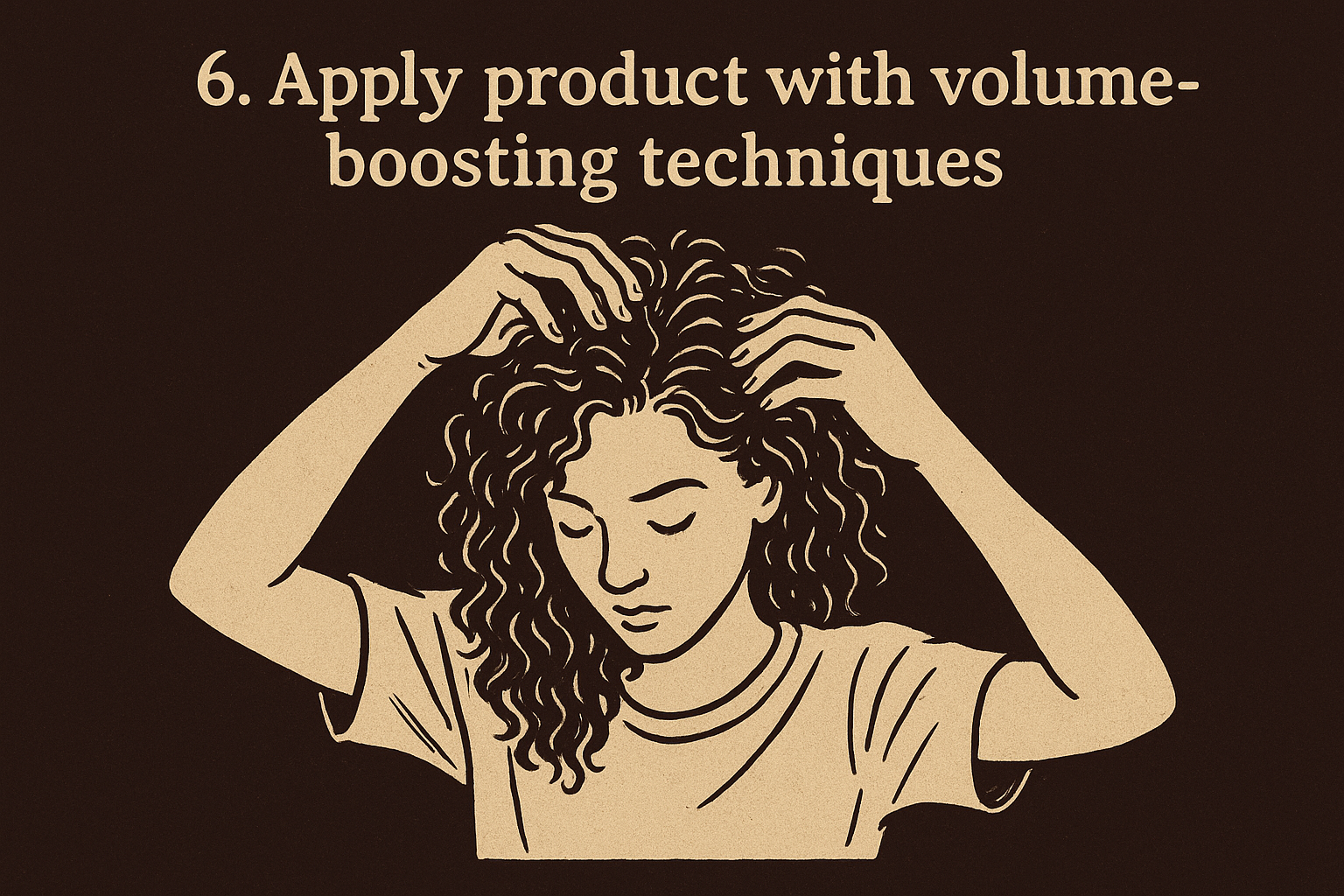
6. Apply product with volume-boosting techniques
Even the right product fails if you rub it in the wrong way. Scrunching and smoothing motions flatten the curl pattern before it has a chance to form, which is why two people using the same gel can end up with completely different results. How you apply product matters just as much as what you're applying, especially when you're trying to figure out how to style thin curly hair without losing lift at the root.
How to do it
Flip your head upside down and apply product in upward scrunching motions, pushing hair toward the scalp instead of smoothing it downward. Work in small sections rather than raking through all your hair at once, since sectioning lets product distribute evenly without overloading any one area. Finish each section with a gentle squeeze using a microfiber towel or cotton t-shirt to remove excess water and encourage the clumps to form tighter.
Why it helps thin curls
Upward application fights gravity instead of working with it, which is exactly what fine strands need since they have so little natural body to resist collapsing. Scrunching also encourages strands to clump together into fuller-looking curls, addressing one of the most common styling tips for fine curly hair that gets skipped.
Scrunch upward, not down; gravity is already working against your volume.
Mistakes to avoid
A few habits undo good technique fast:
- Smoothing hair downward while applying product, which stretches curls straight and kills the pattern before it sets.
- Rubbing with a regular towel, causing frizz that fights the definition you just built.
- Applying product to fully dry hair, missing the window when curls clump best.
7. Plop before you diffuse for lift and shape
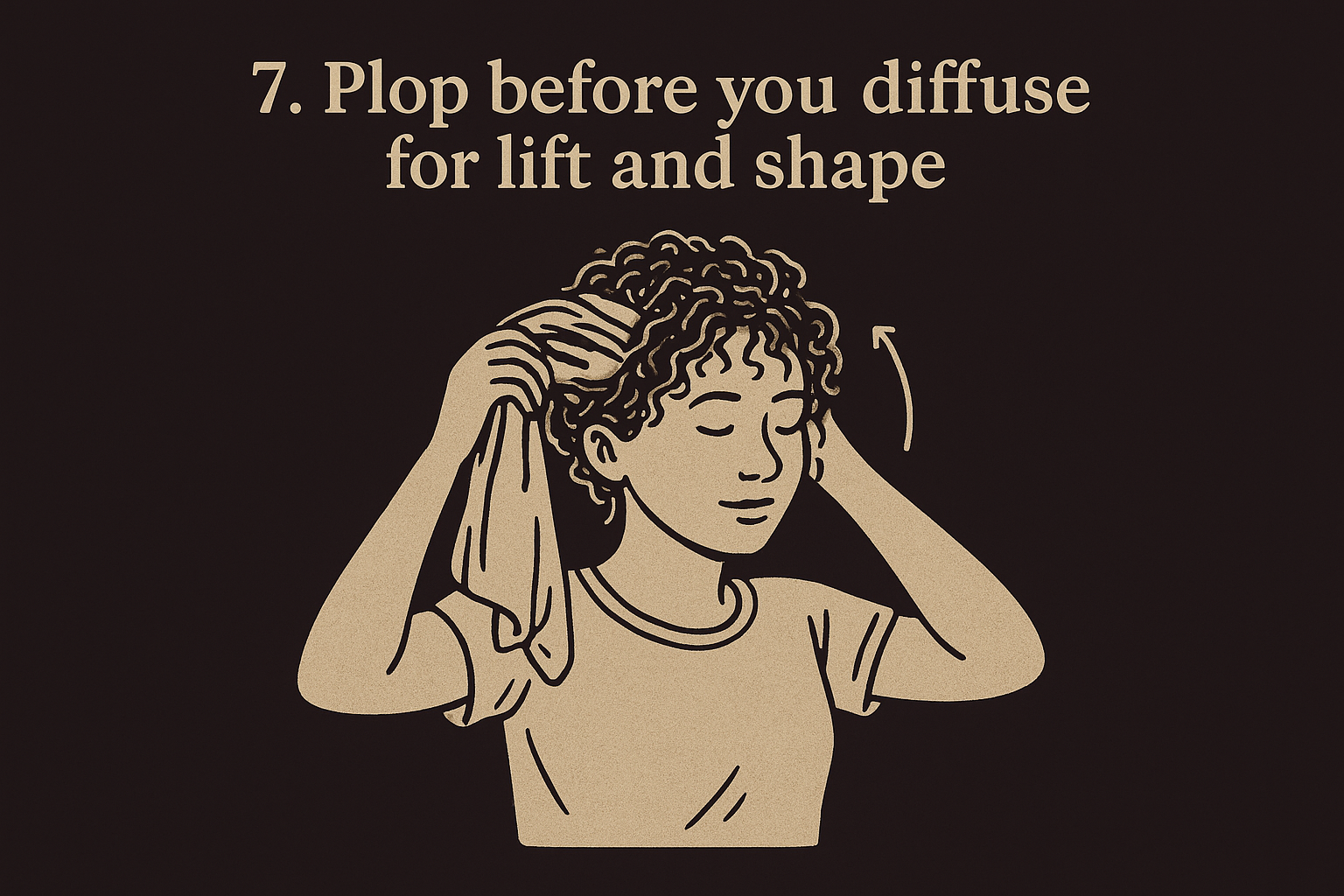
Plopping sits between scrunching and diffusing, and skipping it is one of the easiest ways to lose the volume you just built. Wrapping wet curls in a t-shirt or microfiber towel lets them set into their clumped shape while the fabric absorbs excess water, instead of letting gravity pull those fresh clumps straight down while you wait to diffuse.
How to do it
Lay a cotton t-shirt or microfiber towel flat, flip your head forward, and pile your curls into the center of the fabric. Fold the edges up and over, then twist or tie the ends at the nape of your neck so the wrap stays snug without pulling. Leave it plopped for ten to twenty minutes, less than the thirty-plus minutes recommended for thicker hair, since fine strands don't need as much time to hold their shape and over-plopping can actually cause frizz.
Why it helps thin curls
Plopping gives fine curls a head start on structure before heat or airflow gets involved, locking in the clump pattern from scrunching so it doesn't loosen while you set up your diffuser. Anyone still working out how to style thin curly hair for consistent volume should treat this step as non-negotiable, since it's often the difference between curls that hold shape and curls that fall by midday.
A short plop locks in the shape scrunching just created.
Mistakes to avoid
A few habits turn plopping from helpful to counterproductive:
- Plopping too long, which can cause fine strands to mat or lose their clump definition.
- Using a thick, absorbent bath towel instead of a t-shirt or microfiber, creating friction that leads to frizz.
- Wrapping too tightly, flattening curls at the crown before they've had a chance to set.
8. Root clip while drying for lasting volume
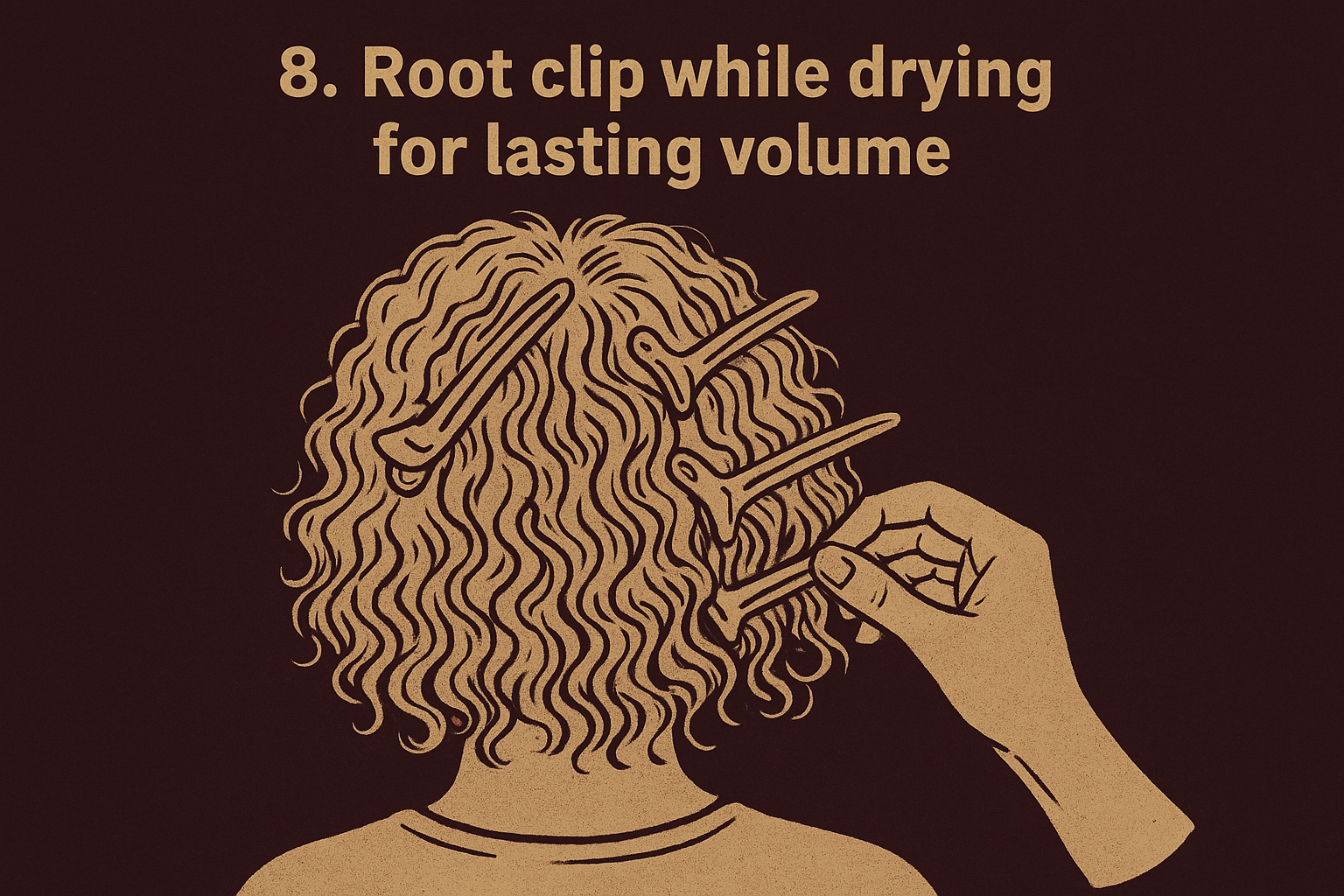
Root clipping fills the gap between plopping and diffusing, targeting the one spot that collapses fastest on fine curls: the crown. Small volumizing clips placed at the roots hold hair upright while it dries, so instead of drying flat against your scalp, those roots set standing up and stay that way long after you take the clips out.
How to do it
Section your hair at the crown and part it into two or three small panels, then clip each panel upward at the root using duckbill or volumizing clips. Leave the clips in while your hair air dries or while you diffuse the rest of your curls, checking every so often that they haven't slipped down and started pulling the roots sideways instead of up. Once your hair is fully dry, remove the clips gently to avoid disturbing the set curls underneath.
Why it helps thin curls
Gravity works against thin strands the entire time hair dries, and root clipping is the most direct counter to that pull. Anyone comparing styling tips for fine curly hair will notice this step shows up constantly, because it solves the exact problem plopping and scrunching can't finish on their own: keeping the roots lifted through the full drying process, not just the first few minutes.
Lifted roots while drying mean volume that survives the whole day, not just the first hour.
Mistakes to avoid
A few habits turn root clipping into wasted effort:
- Clipping too much hair per section, which crushes the volume instead of lifting it.
- Removing clips while hair is still damp, letting the roots fall before the set fully holds.
- Clamping too tightly, leaving a visible crease once the clip comes out.
9. Refresh curls between wash days
Fine curly hair loses its shape faster than thick or coily textures, and by day two the roots have usually gone flat while the mid-lengths look frizzy instead of defined. Refreshing between washes brings back the curl clumps without needing a full wash day, which matters since over-washing strips the natural oils fine strands rely on to stay flexible.
How to do it
Mist your hair lightly with water using a fine spray bottle, focusing on areas that lost their curl pattern rather than soaking the whole head. Work in a small amount of diluted leave-in conditioner or curl refresher spray, scrunching upward the same way you did on wash day. Finish with a quick blast of cool air from a diffuser to reset the clumps and dry any excess moisture before it weighs the roots back down.
Why it helps thin curls
Refreshing revives the curl pattern without adding the buildup that a full restyle would, which keeps hair light through the rest of the week. This step answers a real gap in how to style curly thin hair long-term, since most routines focus only on wash day and leave you guessing what to do on day two or three.
A light refresh brings curls back to life without weighing them down again.
Mistakes to avoid
A rushed refresh can undo days of careful styling:
- Soaking hair completely, which reactivates old product and creates a sticky, uneven texture.
- Skipping the diffuser step, leaving hair to air dry slowly and lose lift at the root.
- Adding fresh gel on top of old product, layering weight instead of reviving definition.
10. Get a haircut that supports volume
No styling routine fixes a cut that's working against you. Long, heavy layers pull curls down with their own weight, stretching the pattern out and hiding volume no matter how well you scrunch or plop. If you've mastered every technique above and still feel flat, the cut itself might be the last variable left to check.
How to do it
Ask your stylist for shorter, face-framing layers cut specifically for curly texture, ideally dry-cut so the stylist can see how each curl actually falls and springs back. Bring reference photos and mention that you deal with fine, thin curls specifically, since a stylist used to thick or coily hair may still cut in too much length and weight without realizing it. Request that length be removed gradually near the crown and sides rather than all at the ends, which keeps shape without a blunt, heavy line.
Why it helps thin curls
Shorter layers give each curl less length to fight gravity with, so the same strand that used to stretch flat under its own weight now springs up and holds shape. This is one of the most overlooked answers to how to style curly thin hair, since no amount of product or technique fully compensates for a cut that's fighting you from the start.
A cut built for your curl type does more for volume than any product you'll apply after.
Mistakes to avoid
A rushed or generic cut undoes months of careful styling:
- Keeping hair too long overall, letting weight pull curls straight regardless of product or technique.
- Choosing a stylist unfamiliar with fine curly texture, who may cut wet and misjudge shrinkage.
- Skipping regular trims, letting split ends add weight and dull the curl pattern over time.
Building a routine that works for your curls
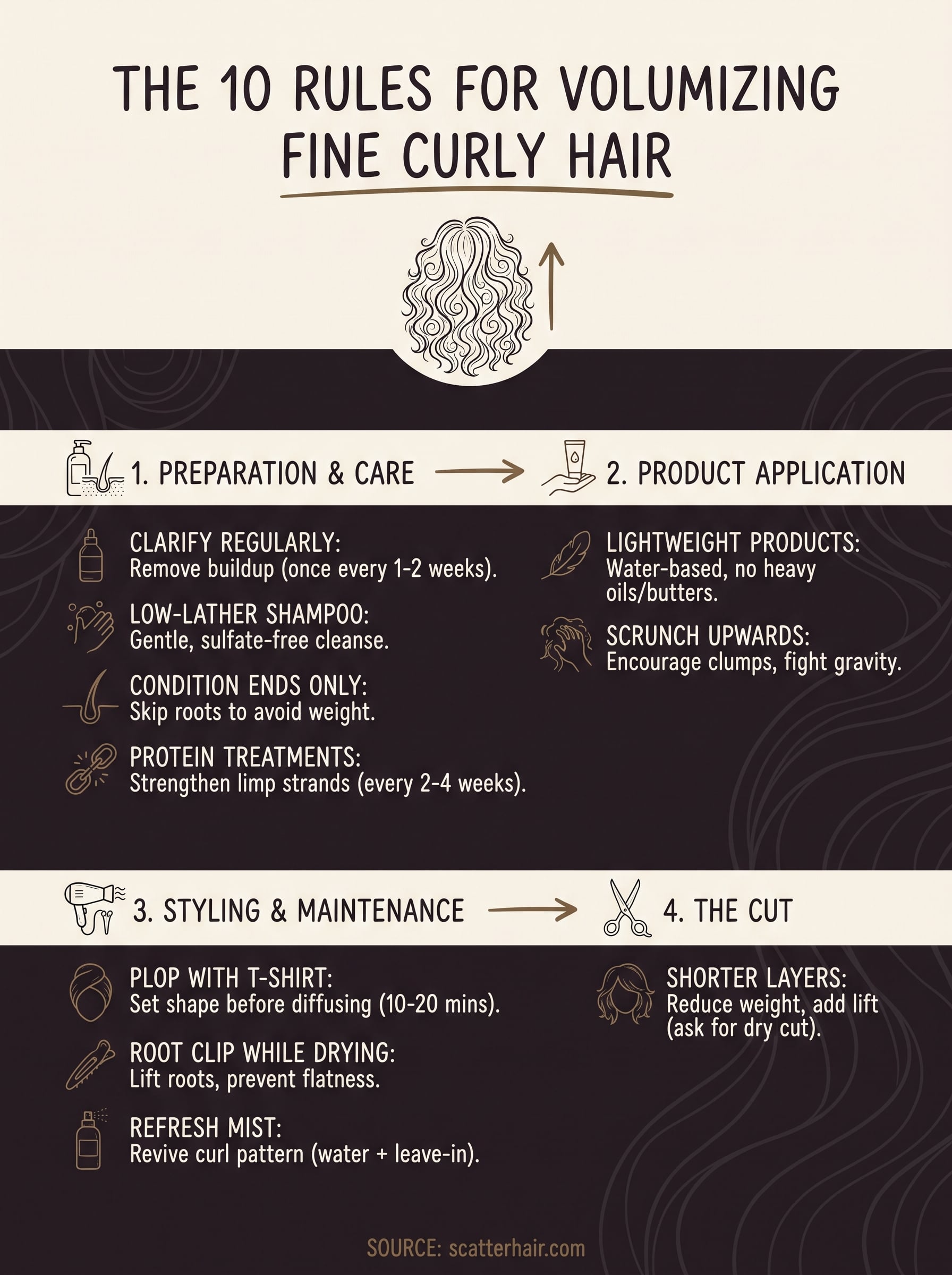
Volume for fine curly hair comes down to a handful of habits done consistently: clean strands, lightweight products, upward application, and drying techniques that fight gravity instead of ignoring it. Skip any one of these steps and the others have to work twice as hard to compensate, which is usually why past routines felt like they never quite delivered lift that lasted past noon.
You don't need to master all ten steps overnight. Pick the two or three that address your biggest frustration right now, whether that's flat roots by day two or curls that never had definition in the first place, and build from there. Small, deliberate changes compound fast once buildup is gone and your products actually match your hair type.
If you're still hunting for formulas light enough to hold without weighing fine curls down, check out Scatter's styling lineup built specifically for textured hair that needs performance without the density.