

Leave-In Conditioner Spray vs Cream: Which Is Right for You?
You're standing in the haircare aisle, or scrolling through fifty product pages, trying to figure out leave in conditioner spray vs cream and which one actually deserves a spot in your routine. Both promise softer, more manageable hair, but they work in completely different ways, and picking the wrong one can leave your curls either drowning in product or gasping for moisture.
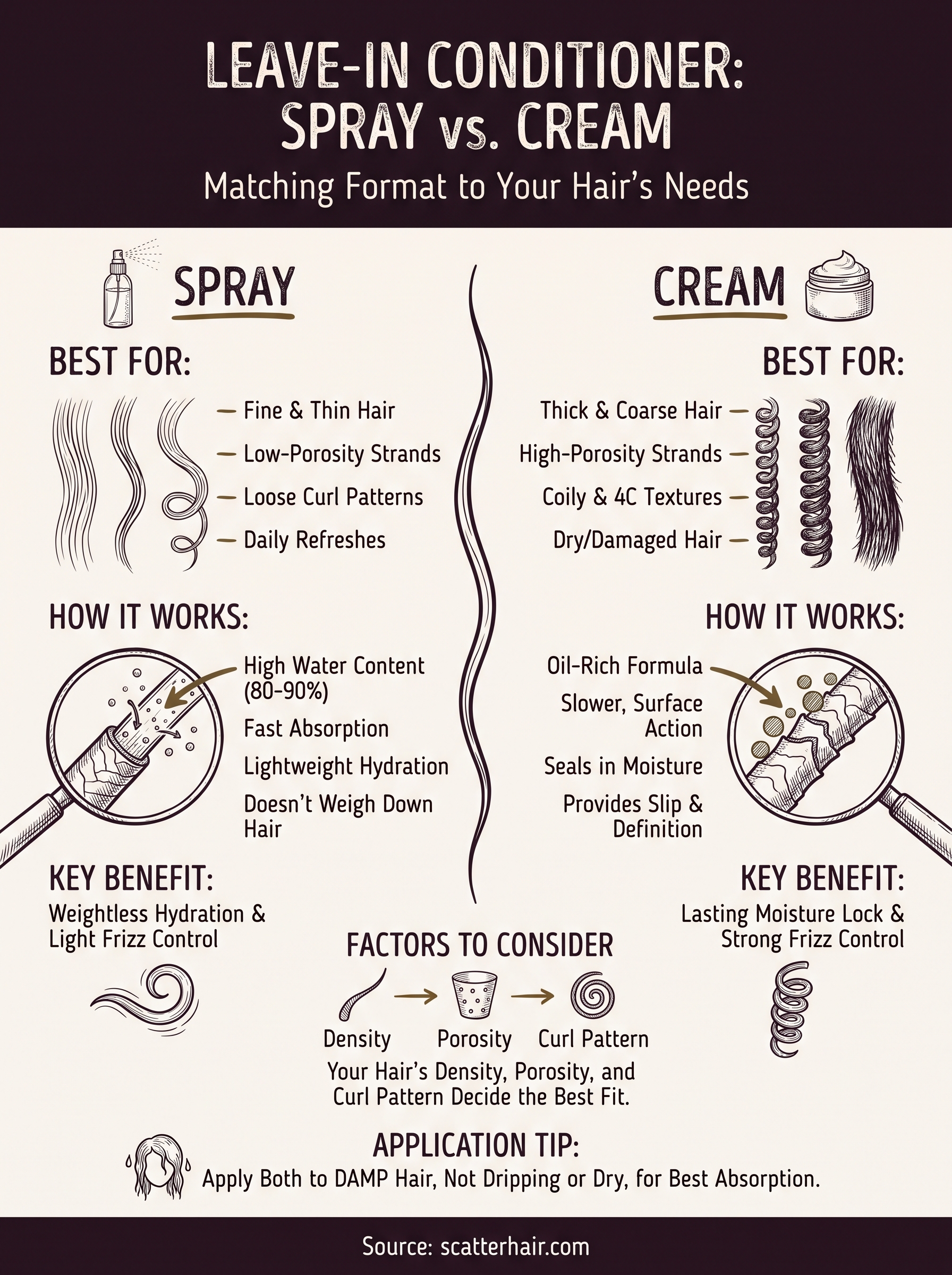
Here's the short answer: sprays work best for fine, low-porosity, or looser textures that need lightweight hydration without weight, while creams excel on thick, coily, or high-porosity hair that craves richer moisture and stronger frizz control. Your hair's density, porosity, and curl pattern decide which format actually delivers results instead of just sitting on your strands.
In this guide, we'll break down how each formula behaves on wash day and beyond, compare ingredient differences that affect slip and definition, and help you match the right product to your specific texture. Whether you're refreshing second-day curls or detangling a full wash-and-go, you'll walk away knowing exactly which format belongs in your shower caddy.
Why the format of your leave-in actually matters
Format isn't just packaging, it's the delivery system that decides how much moisture actually reaches your strands versus sitting on top of them. A leave-in conditioner spray vs cream debate really comes down to water-to-oil ratio and molecule size, two things that change how a product behaves the second it touches your hair. Sprays are typically 80 to 90 percent water, which means the liquid formula penetrates the hair shaft quickly and evaporates fast, leaving behind only a thin layer of conditioning agents. Creams flip that ratio, packing in more emollients, butters, and oils that sit on the cuticle and seal moisture in rather than racing to absorb.
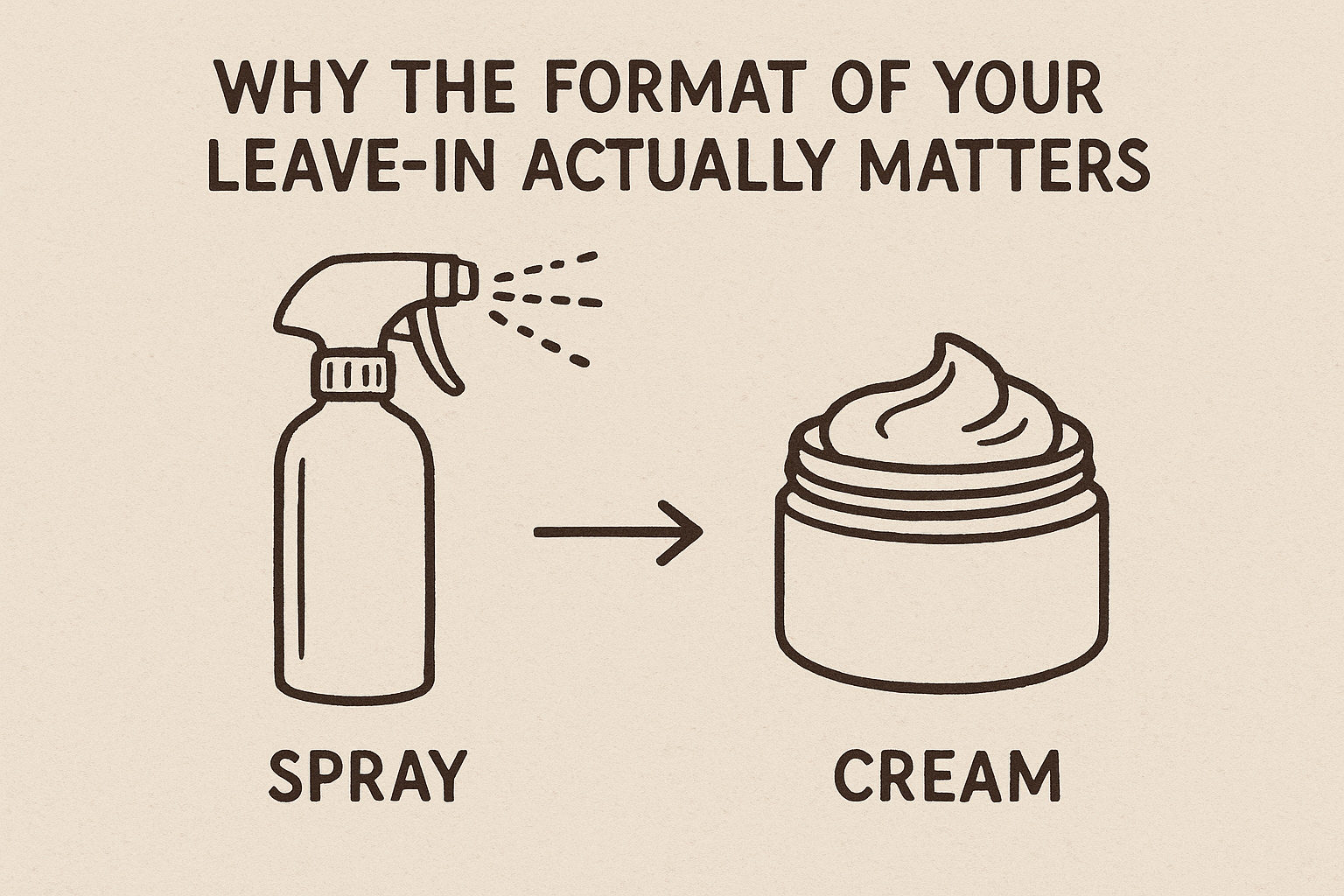
Governed by that difference, each format solves a different problem. Sprays excel at rehydrating dry strands between wash days because the fine mist distributes evenly without overloading thin or fine hair. Creams excel at sealing in moisture for hair that loses hydration fast, like high-porosity or tightly coiled textures where the cuticle is raised and water escapes before it can do any good.
The right format doesn't just add moisture, it decides whether that moisture actually stays in your hair.
Weight and buildup differences
Think about what happens when you apply each product to a full head of hair. Sprays distribute in seconds and dry down light, which is why they rarely cause buildup even with daily use. Creams require more product per application and can weigh down fine strands if you're heavy-handed, but that same density is exactly what coarse or coily hair needs to stay defined all day.
| Factor | Spray | Cream |
|---|---|---|
| Water content | High (80-90%) | Lower, oil-rich |
| Absorption speed | Fast | Slower, sits on strand |
| Best for | Fine, low-porosity hair | Thick, high-porosity, coily hair |
| Buildup risk | Low | Higher if overused |
| Frizz control | Light | Strong |
Porosity changes everything
Porosity determines how your cuticle handles either formula. Low-porosity hair has a tightly closed cuticle that resists absorption, so the lightweight, fast-penetrating nature of a spray works with your hair instead of against it. High-porosity hair has gaps and raised cuticles that let moisture escape almost as fast as it goes in, and that's where a cream's heavier oils act like a lid, according to guidance from the American Academy of Dermatology on maintaining a healthy moisture barrier. Skipping this step and guessing based on marketing alone is usually why people end up disappointed with a product that works great for someone else's hair type.
How to choose spray or cream for your hair type
Matching product to texture starts with an honest look at three things: density, porosity, and curl pattern. If your strands are fine, straight, or wavy, a spray keeps your roots from going flat while still calming frizz. If you're working with coils, thick waves, or hair that dries out within hours of a wash, a cream gives you the staying power your texture actually needs. This is the practical side of the leave-in conditioner spray vs cream decision, and it's less about brand preference and more about reading your own hair correctly.
Your hair type isn't a suggestion, it's the instruction manual for which format actually works.
A quick texture checklist
Run through this list before you commit to either formula:
- Fine or thin strands: choose a spray to avoid weight and buildup.
- Low porosity hair: choose a spray since it absorbs faster through a tight cuticle.
- Coarse, coily, or 4C texture: choose a cream for lasting definition and frizz control.
- High porosity hair: choose a cream to seal in moisture the cuticle would otherwise lose.
- Wavy or loose curl patterns: choose a spray unless your ends run dry, then layer a small amount of cream just there.
- Chemically treated or heat-damaged hair: choose a cream for extra reinforcement against breakage.
Notice how texture and porosity sometimes pull in different directions, like a fine strand with high porosity. When that happens, favor porosity first, since it controls whether moisture actually sticks around long enough to matter.
Some people don't have to pick just one. Combining a spray for daily refreshes with a cream for wash day styling covers both moisture retention and manageability without overloading either extreme. Testing on a small section first, especially if you're switching from a routine you've used for years, saves you from a bad reaction spreading across your whole head.
How to apply each format for the best results
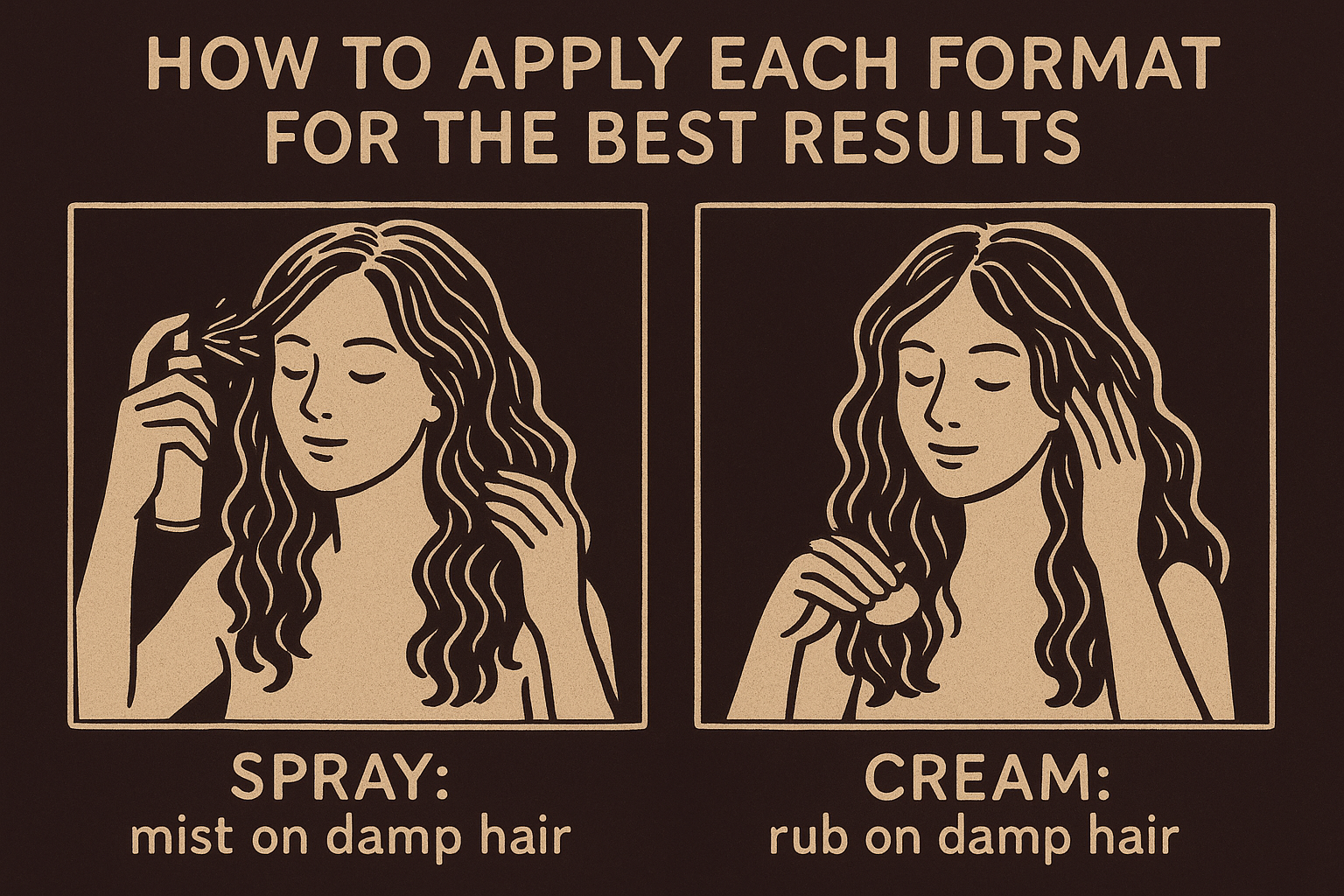
Application technique matters just as much as the formula you pick. Getting a leave in conditioner spray vs cream decision right still fails if you apply either one wrong, since even the best-matched product can underperform when it's layered on soaking wet hair or rubbed in without any direction. Both formats respond best to damp, not dripping hair, giving the product room to absorb instead of sliding off strands that are already saturated.
Applying spray for maximum absorption
Sprays work best when you treat them like a fine mist rather than a drench. Hold the bottle six to eight inches from your head and section your hair so the product reaches your roots and mid-lengths evenly, not just the surface layer you can see.
- Spray in two to three light passes rather than one heavy soak.
- Scrunch or finger-comb through immediately so it distributes before it dries.
- Reapply midday on dry patches instead of oversaturating the whole head again.
A spray applied in light layers works better than one heavy soak that never fully absorbs.
Applying cream without weighing hair down
Creams need warmth and friction to melt into the hair properly. Rub a coin-sized amount between your palms first, then rake it through sections starting at the ends, where dryness usually hits hardest, and work upward toward the roots.
- Use less than you think, since creams expand as you work them through.
- Focus application on the outer layer of curls, not the scalp.
- Layer a second thin pass on ends only if they still feel dry after five minutes.
Done this way, cream reinforces definition without leaving hair greasy by the next morning.
Mistakes that keep either formula from working
Even the right product fails when the same errors sneak into your routine. Most people blame the formula when the real issue is habit, not chemistry, and that's true whether you're comparing a leave-in conditioner spray vs cream or just trying to fix a routine that's stopped working.
Overloading the wrong texture
Applying too much cream on fine hair or too little spray on coily hair almost guarantees disappointment. Excess cream on thin strands creates a limp, greasy look by midday, while a light spray on 4C hair evaporates before it ever penetrates the cuticle.
The wrong amount can sabotage even a perfectly matched formula.
Skipping the damp-hair window
Both formats need a damp canvas to absorb properly. Product applied to soaking wet hair slides off before it bonds, and product applied to bone-dry hair just sits on top without sinking in at all.
Ignoring your climate and season
Humidity, heat, and dry winter air all change how a formula performs, so a routine that worked in July might fail in January.
- Switching to a richer cream in dry winter months when creams alone can't keep up.
- Adding a lightweight spray refresh in humid summer weather to fight frizz without buildup.
- Reapplying product after workouts or swimming, since sweat and chlorine strip moisture fast.
Never adjusting after a haircut or color change
Texture shifts after chemical treatments, heat styling, or even a fresh trim, yet plenty of people keep reaching for the same bottle out of habit. Recently colored or heat-damaged strands often need more moisture reinforcement than they did six months ago, which usually means shifting further toward a cream-heavy routine until the hair recovers its natural balance.
Making your choice
At the end of the day, the leave in conditioner spray vs cream decision comes down to what your strands actually need, not what's trending or sitting prettiest on a shelf. Fine, low-porosity, or loosely textured hair thrives on a light mist that hydrates without weight. Thick, coily, or high-porosity hair needs a cream's richer seal to keep moisture locked in past wash day. Neither format is better across the board, and plenty of routines end up using both depending on the season, your styling goals, or how your hair responds after a color treatment.
Once you know your texture and porosity, testing a formula becomes a lot less guesswork and a lot more strategy. If you're building a routine around textured hair that actually holds up, check out what Scatter is developing for styling that works with your curls instead of against them.