

Lightweight Oils for Low Porosity Hair: 10 Best Picks
Low porosity hair has tightly closed cuticles that block moisture from getting in. When you use heavy oils, they just sit on your strands instead of sinking in. You end up with greasy buildup, flat roots, and hair that still feels dry underneath. The fix? Lightweight oils with smaller molecules that can actually penetrate those stubborn cuticles and deliver the hydration your hair needs.
This guide breaks down 10 lightweight oils that work specifically for low porosity hair. You'll learn which oils absorb fastest, how to layer them into your routine without weighing your hair down, and which formulas deliver the most shine and moisture. Whether you want a pure oil or a ready made serum, these picks will help you seal in hydration without the greasy aftermath. Your textured hair deserves products that work with its structure, not against it.
1. Jojoba oil
Jojoba oil mimics your scalp's natural sebum more closely than any other plant oil. This similarity means your hair recognizes it as something familiar rather than foreign, which helps it absorb faster through those tight cuticles. You get deep conditioning without the buildup that heavier oils leave behind. Pure jojoba oil also stays stable in different temperatures, so it won't turn sticky in summer heat or solidify when it gets cold.
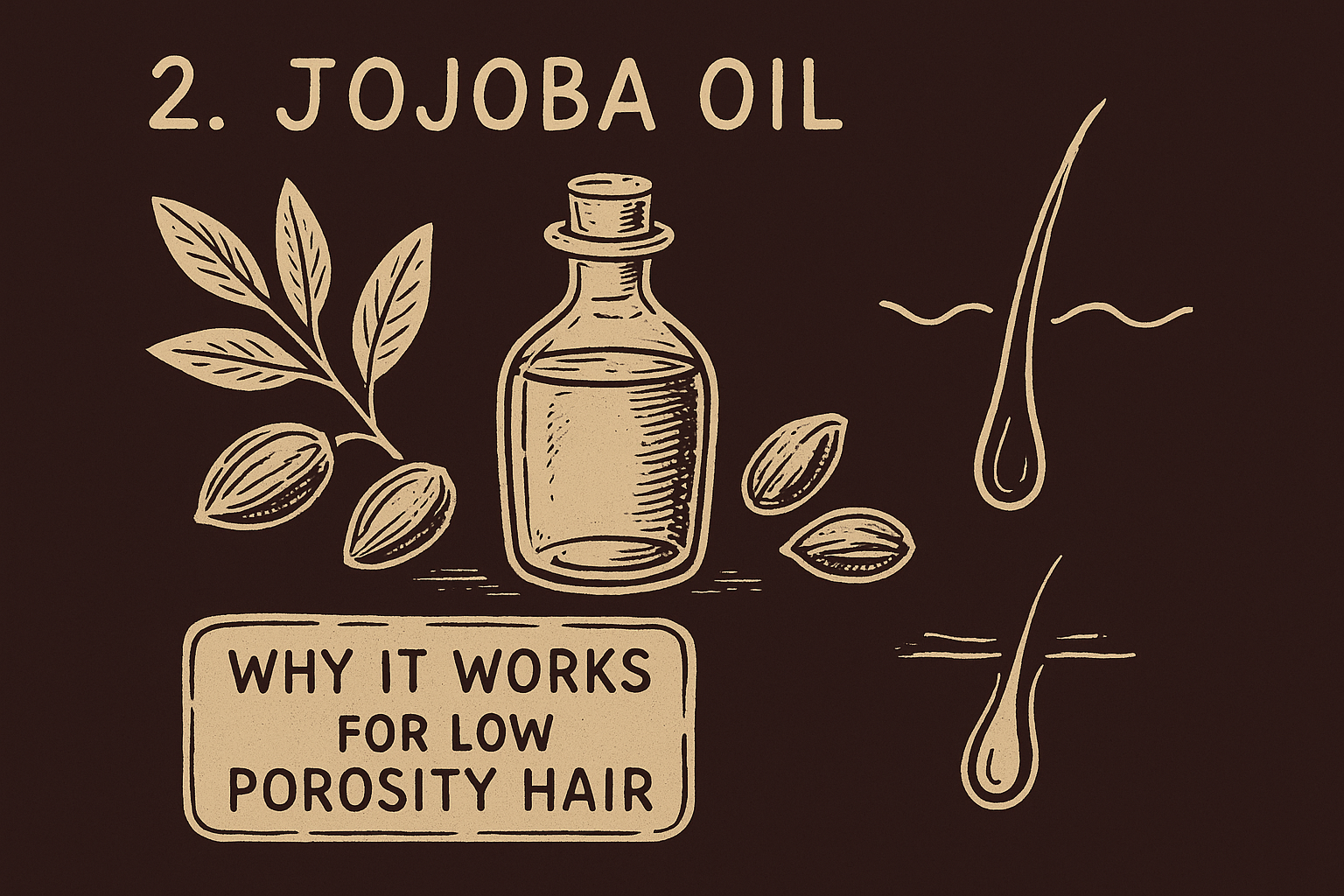
Why it works for low porosity hair
The molecular structure of jojoba oil is actually a liquid wax ester, not a true oil, which gives it a lighter feel than most botanical oils. This structure allows it to penetrate the hair shaft more easily while still providing enough weight to seal moisture inside. Your hair absorbs the vitamins and minerals (like vitamin E, B vitamins, zinc, and copper) without feeling coated. Jojoba oil also helps balance your scalp's oil production, which prevents your roots from getting greasy while your ends stay moisturized.
Jojoba oil's wax ester structure makes it one of the most effective lightweight oils for low porosity hair.
How to use it in your routine
Warm 3-4 drops between your palms before applying it to damp hair after washing. Concentrate on your ends and mid-lengths first, then lightly smooth over your roots if they tend to be dry. You can also mix jojoba oil with your leave-in conditioner for easier distribution. For pre-poo treatments, apply it to dry hair 30 minutes before shampooing to protect your strands from moisture loss during cleansing.
Who should reach for this oil
Jojoba works best if you have scalp sensitivity or if your roots get oily while your ends stay dry. You'll benefit from this oil if you need something that absorbs quickly without leaving residue on your pillowcase. Anyone new to hair oiling should start with jojoba because it rarely causes buildup or adverse reactions.
2. Argan oil
Argan oil delivers intense nourishment without the heavy feel that typically comes with rich hair oils. This Moroccan oil contains high levels of vitamin E and essential fatty acids that repair damage while adding shine. Your hair absorbs it more readily than heavier alternatives because of its medium-weight molecular structure. Pure argan oil also provides heat protection up to 430°F, which makes it useful for anyone who styles with hot tools regularly.
Why it works for low porosity hair
Argan oil sits in the sweet spot between lightweight and nourishing oils, making it one of the best lightweight oils for low porosity hair. Its oleic and linoleic acid content helps soften your cuticles slightly, which allows moisture to penetrate more easily. You get the conditioning benefits of a heavier oil without the greasy residue. The antioxidants in argan oil also protect your strands from environmental damage and color fading, which helps maintain your hair's health over time.
Argan oil's medium-weight structure provides intense moisture without overwhelming low porosity strands.
How to use it in your routine
Apply 2-3 drops to towel-dried hair after you finish your wash routine. Distribute it through your lengths and ends using your fingers or a wide-tooth comb. You can layer it over your leave-in conditioner or mix a few drops directly into your styling cream for easier application. For nighttime care, smooth a small amount onto dry hair before wrapping it to reduce friction and frizz while you sleep.
Who should reach for this oil
Argan oil works best if you have color-treated or heat-styled hair that needs extra protection and repair. You'll appreciate it if your hair feels dry despite regular conditioning treatments. Anyone with medium to coarse textures will benefit from argan oil's ability to smooth and soften without weighing down your curls or coils.
3. Grapeseed oil
Grapeseed oil ranks as one of the lightest oils you can use on low porosity hair. This oil comes from the seeds of wine grapes and contains a thin consistency that absorbs almost instantly. Your hair benefits from its high linoleic acid content (around 70%), which penetrates the cuticle layer easily while providing essential fatty acids. The light texture means you can apply more product if needed without creating buildup or weighing down your strands.
Why it works for low porosity hair
Grapeseed oil contains smaller molecules than most botanical oils, which allows it to slip through tight cuticles with minimal resistance. You get conditioning benefits from its vitamin E and omega-6 fatty acids without the greasy coating that heavier oils leave behind. This oil also helps strengthen your hair over time by reducing protein loss during washing and styling. The antioxidants in grapeseed oil protect your strands from free radical damage caused by sun exposure and pollution.
Grapeseed oil's high linoleic acid content makes it one of the fastest-absorbing lightweight oils for low porosity hair.
How to use it in your routine
Start with just 1-2 drops on damp hair after conditioning, focusing on your ends first. You can add more if your hair drinks it up without getting heavy. Mix grapeseed oil with your leave-in product for better distribution, or use it as a final sealing step after your cream. This oil works well for refresh days too when you need to add moisture without rewetting your entire head.
Who should reach for this oil
Grapeseed oil suits you best if you have fine or thin hair that gets weighed down by traditional oils. You'll appreciate how it adds shine without greasiness and how quickly it absorbs into your strands. Anyone who needs daily moisture without buildup will benefit from keeping this lightweight option in their routine.
4. Squalane oil
Squalane oil ranks among the most innovative lightweight oils for low porosity hair because it acts like a biomimetic ingredient that your hair recognizes. This hydrogenated oil comes from plant sources like olives or sugarcane and delivers pure moisture without any of the fatty acids that can sit on your cuticles. Your strands absorb squalane completely because its molecular structure matches the natural sebum your scalp produces, which means zero greasy residue even if you apply multiple layers.
Why it works for low porosity hair
Squalane oil contains no triglycerides like traditional plant oils, which gives it an exceptionally light texture that penetrates closed cuticles effortlessly. You get instant moisture that reaches your hair cortex rather than coating the surface. This oil also creates a breathable barrier that prevents moisture loss without suffocating your strands or blocking future hydration. Squalane stabilizes at any temperature and won't oxidize or go rancid, which means your hair stays fresh and moisturized longer between wash days.
Squalane's triglyceride-free structure allows it to penetrate low porosity hair more completely than traditional botanical oils.
How to use it in your routine
Apply 2-3 drops to soaking wet hair right after you rinse out your conditioner. Focus on your ends and problem areas where dryness shows up most. You can layer squalane over your leave-in product or mix it directly into your styling cream for seamless application. This oil works exceptionally well as a midweek refresher when you need to revive your style without starting your entire routine over.
Who should reach for this oil
Squalane suits you perfectly if you have extremely fine or easily weighted hair that rejects every other oil you try. You'll benefit from this option if you need maximum moisture with absolute minimum weight. Anyone with sensitive skin or scalp issues should try squalane because it rarely triggers reactions or irritation.
5. Sweet almond oil
Sweet almond oil brings mild, hypoallergenic moisture to low porosity hair without overwhelming your strands. This oil comes from pressed almonds and contains a light to medium weight that absorbs well while still providing substantial conditioning. Your hair benefits from its rich vitamin E content and omega-9 fatty acids that strengthen and soften without creating buildup. Sweet almond oil also helps reduce inflammation on your scalp, which makes it useful if you experience sensitivity or irritation from heavier products.
Why it works for low porosity hair
Sweet almond oil contains about 60% oleic acid and 30% linoleic acid, which gives it a balanced profile that penetrates closed cuticles effectively. You get nourishing moisture from the oleic acid while the linoleic acid helps strengthen your hair's protein structure. This oil delivers vitamins A, E, and D along with magnesium and calcium that improve your hair's overall health over time. The emollient properties smooth your cuticle layer, which increases shine and reduces friction between strands during styling.
Sweet almond oil's balanced fatty acid profile makes it an effective lightweight option for sealing moisture into low porosity strands.
How to use it in your routine
Apply 2-4 drops to damp hair after you finish conditioning, working from your ends upward to your mid-lengths. You can warm the oil between your palms first for better distribution. Mix sweet almond oil with your leave-in conditioner or styling cream to dilute it slightly if your hair tends toward the finer side. This oil works well as an overnight treatment too when you need deeper conditioning without the heaviness of traditional hot oil treatments.
Who should reach for this oil
Sweet almond oil suits you best if you have sensitive skin or scalp that reacts to fragranced or heavily processed products. You'll appreciate it if you need something between the ultra-light options like grapeseed and the richer oils like avocado. Anyone with normal to coarse textures will benefit from sweet almond oil's ability to condition thoroughly without leaving greasy residue.
6. Apricot kernel oil
Apricot kernel oil delivers ultra-light conditioning that rivals grapeseed oil in how quickly it absorbs into resistant cuticles. This oil comes from the kernels inside apricot pits and contains a thin, silky texture that spreads easily through your strands. Your hair benefits from its high linoleic acid content (around 30%) and vitamin A, which help strengthen while moisturizing. Apricot kernel oil also contains vitamin E that protects against oxidative damage without adding weight to your style.
Why it works for low porosity hair
Apricot kernel oil ranks among the best lightweight oils for low porosity hair because of its fast absorption rate and balanced fatty acid profile. You get moisture from oleic acid (60-70%) while linoleic acid (25-30%) penetrates your cuticle layer to strengthen the internal structure. This oil contains natural emollients that smooth your hair's surface without creating a heavy coating. The vitamins A and E work together to repair damage and prevent future breakage, which keeps your strands healthy over time.
Apricot kernel oil's balanced oleic and linoleic acid content makes it ideal for penetrating tight cuticles while providing lasting moisture.
How to use it in your routine
Apply 2-3 drops to damp hair after your leave-in conditioner, focusing on your mid-lengths and ends where dryness appears most. You can mix it with your styling products for seamless distribution throughout your strands. This oil works well as a pre-shampoo treatment too when you apply it to dry hair 20 minutes before washing to protect against moisture loss.
Who should reach for this oil
Apricot kernel oil suits you best if you have fine to medium textured hair that needs lightweight moisture without greasiness. You'll appreciate it if you want something between the ultra-light options and richer oils.
7. Rosehip seed oil
Rosehip seed oil delivers intensive repair alongside lightweight moisture that low porosity hair actually absorbs. This oil comes from the seeds of wild rose bushes and contains a dry, fast-absorbing texture that vanishes into your strands within minutes. Your hair benefits from its exceptionally high linoleic acid content (around 44%) and vitamin A derivatives that strengthen while moisturizing. Rosehip oil also contains natural retinol that promotes cellular turnover on your scalp, which creates a healthier environment for growth.
Why it works for low porosity hair
Rosehip seed oil contains over 75% essential fatty acids that penetrate closed cuticles more easily than saturated fats found in heavier oils. You get powerful conditioning from its linoleic and alpha-linolenic acid content while vitamins A, C, and E protect against environmental damage. This oil delivers antioxidant protection that prevents oxidative stress from weakening your hair structure over time. The dry-touch finish means your hair feels soft and moisturized without any slippery or greasy residue.
Rosehip seed oil's high essential fatty acid content makes it one of the most reparative lightweight oils for low porosity hair.
How to use it in your routine
Apply 2-3 drops to damp hair after you apply your leave-in conditioner, focusing on your ends and damaged areas where brittleness shows up most. You can mix it with your styling cream for better distribution or use it alone as a finishing oil. This oil works exceptionally well as a nighttime treatment when you need repair without the heaviness that disrupts your morning routine.
Who should reach for this oil
Rosehip seed oil suits you best if you have damaged or chemically treated hair that needs intensive repair without weight. You'll appreciate it if your hair breaks easily or if you notice split ends forming between trims.
8. Avocado oil
Avocado oil brings rich nourishment to low porosity hair while maintaining a surprisingly lightweight feel compared to its thick, green appearance. This oil comes from pressed avocado fruit and contains a medium-weight texture that absorbs more readily than traditional heavy oils like coconut or castor. Your hair benefits from its exceptional vitamin and mineral content, including vitamins A, D, E, and B6, along with essential fatty acids that penetrate resistant cuticles. Avocado oil also contains natural proteins that strengthen your hair shaft while the fats provide deep conditioning.
Why it works for low porosity hair
Avocado oil contains about 70% oleic acid (omega-9) that softens your cuticle layer just enough to allow moisture penetration without damaging your hair structure. You get intensive conditioning from its monounsaturated fats while the smaller molecular components slip through tight cuticles more easily than saturated fats. This oil delivers potassium and magnesium that strengthen your strands from within while the high vitamin E content protects against environmental damage. The proteins in avocado oil help fill microscopic gaps in your hair shaft, which reduces porosity temporarily and helps your strands retain more moisture between washes.
Avocado oil's high oleic acid content helps soften cuticles just enough to allow moisture penetration in low porosity hair.
How to use it in your routine
Apply 3-4 drops to damp hair after your leave-in conditioner, working from your ends upward to your mid-lengths where dryness appears most. You can warm the oil slightly between your palms for easier distribution through thicker textures. Mix avocado oil with lighter options like grapeseed (1:1 ratio) if your hair tends to get weighed down easily. This oil works exceptionally well as a hot oil treatment when you need intensive repair without the commitment of an overnight mask.
Who should reach for this oil
Avocado oil suits you best if you have coarse or thick textured hair that needs substantial moisture without complete heaviness. You'll appreciate it if your hair feels constantly dry despite regular conditioning treatments.
9. Baobab oil
Baobab oil comes from the seeds of Africa's iconic baobab tree and delivers exceptional moisture without the heavy coating that traditional oils leave behind. This oil contains a lightweight, fast-absorbing texture that penetrates low porosity hair more easily than most botanical oils. Your strands benefit from its high vitamin content (including vitamins A, D, E, and F) and omega fatty acids that nourish while maintaining movement and bounce. Baobab oil also contains natural emollients that smooth your cuticle layer without creating buildup or weighing down your style.
Why it works for low porosity hair
Baobab oil ranks among the best lightweight oils for low porosity hair because of its balanced fatty acid profile that includes 30-40% oleic acid and 24-34% linoleic acid. You get deep conditioning from the oleic acid while linoleic acid strengthens your hair's internal structure by penetrating the cuticle layer. This oil contains powerful antioxidants (including vitamins A, D, E, and F) that protect your strands from environmental damage without adding weight. The omega-3, 6, and 9 fatty acids work together to improve elasticity and reduce breakage over time.
Baobab oil's balanced fatty acid profile delivers intensive moisture while maintaining the lightweight feel low porosity hair needs.
How to use it in your routine
Apply 2-3 drops to damp hair after your leave-in conditioner, concentrating on your ends and dry areas where moisture loss shows up most. You can mix it with lighter oils like grapeseed for even faster absorption. This oil works well as a midweek refresher when you need to add moisture without rewashing your entire head.
Who should reach for this oil
Baobab oil suits you best if you have normal to coarse textured hair that needs substantial conditioning without complete heaviness. You'll appreciate it if your hair needs repair from heat damage or chemical treatments.
10. Lightweight silicone oil serum
Lightweight silicone oil serums offer a synthetic alternative to botanical oils that works exceptionally well for low porosity hair. These serums contain dimethicone, cyclomethicone, or other silicone derivatives that create a microscopically thin coating around each strand rather than penetrating the cuticle. Your hair benefits from instant smoothness, shine, and heat protection without any of the absorption challenges that come with natural oils. Silicone serums also prevent moisture loss by creating a breathable barrier that locks in hydration from your water-based products.
Why it works for low porosity hair
Silicone serums work differently than botanical oils because they don't attempt to penetrate your closed cuticles at all. Instead, they coat your hair's surface with an ultra-thin, flexible layer that smooths down raised cuticles and reflects light for maximum shine. You get instant results with zero waiting time for absorption since silicones work on contact. These serums also repel humidity and prevent frizz more effectively than natural oils, which makes them ideal for unpredictable weather conditions. The lightweight formulas won't build up on your strands if you use water-soluble silicones that rinse away during your next wash.
Silicone serums provide instant smoothing and shine without requiring cuticle penetration, making them ideal for resistant low porosity strands.
How to use it in your routine
Apply 1-2 pumps to damp hair as your final styling step after all your water-based and oil-based products. Focus on your mid-lengths and ends where frizz appears most. You can also use silicone serum on dry hair throughout the day to refresh your style and smooth flyaways. This product works best when you use it sparingly since a little goes a long way with concentrated silicone formulas.
Who should reach for this oil
Silicone serums suit you best if you prioritize shine and smoothness over deep conditioning. You'll appreciate them if you live in humid climates or if your hair frizzes easily despite using other lightweight oils for low porosity hair.
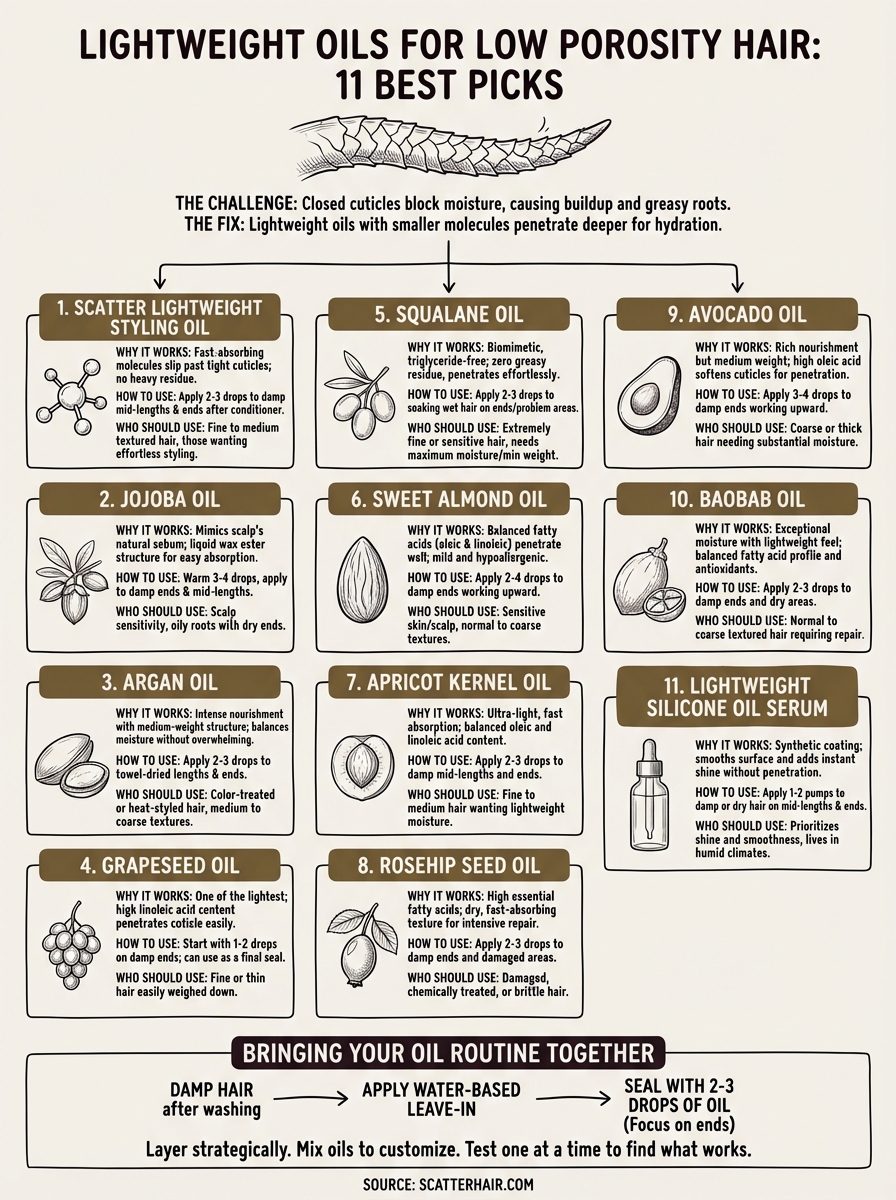
Bring your oil routine together
Your low porosity hair responds best when you layer lightweight oils strategically rather than drowning your strands in heavy products that never absorb. Start with damp hair after washing, apply your water-based leave-in first, then seal everything in with 2-3 drops of your chosen oil. Focus on your ends where dryness shows up most, then work any remaining product toward your mid-lengths. You can mix different lightweight oils for low porosity hair to create a custom blend that targets your specific needs, like combining grapeseed's fast absorption with avocado's intensive repair properties.
Testing one oil at a time helps you identify which formulas your hair actually absorbs versus which ones sit on the surface. Your strands will tell you what works through improved softness, reduced frizz, and lasting moisture between wash days.
Scatter's first product is Slip, a 2% hyaluronic acid hair serum. Work it through wet-to-damp hair, then air dry for texture or blow dry for body. It's on pre-order now: see Slip hair serum.