

Medium Porosity Hair Characteristics: 10 Signs To Know
You've probably heard that knowing your hair porosity matters, but what does that actually look like in practice? If your hair dries at a reasonable pace, holds styles without too much effort, and doesn't freak out when you try a new product, you might already have medium porosity hair characteristics working in your favor. The thing is, most people with this hair type don't even realize it because their hair just… cooperates. And that can make it easy to overlook what's actually going on at the strand level.
Medium porosity hair sits in the sweet spot between low and high porosity. Its cuticle layer is loosely layered enough to let moisture in without letting it escape too quickly. That balance is exactly why it tends to respond well to styling and treatments, but it still has specific needs, especially when it comes to textured hair. Understanding those needs is a big part of what we focus on here at scatterhair, where we're building styling products designed to work with your texture, not against it.
This article breaks down 10 clear signs that point to medium porosity hair. By the end, you'll know how to identify it on your own hair and understand why it behaves the way it does, so you can stop guessing and start making smarter product and styling choices.
What medium porosity hair means
Hair porosity describes how well your hair absorbs and holds onto moisture. It comes down to the structure of your cuticle layer, which is the outermost part of each hair strand. Those cuticles can sit tightly sealed, stay wide open, or land somewhere between the two. When yours sit in the middle, you have medium porosity hair, and that single factor shapes how your hair behaves with water, products, and heat.
The cuticle layer explained
Your hair strand has three layers: the medulla at the center, the cortex in the middle, and the cuticle on the outside. The cuticle is made up of overlapping microscopic scales, similar to shingles on a roof. One of the most recognizable medium porosity hair characteristics is that those cuticle scales sit in a relatively neutral, balanced position. They are not so tightly packed that moisture bounces off, and not so lifted that everything drains right back out. That balance lets moisture move in at a manageable pace and stay long enough to actually condition and hydrate the strand.
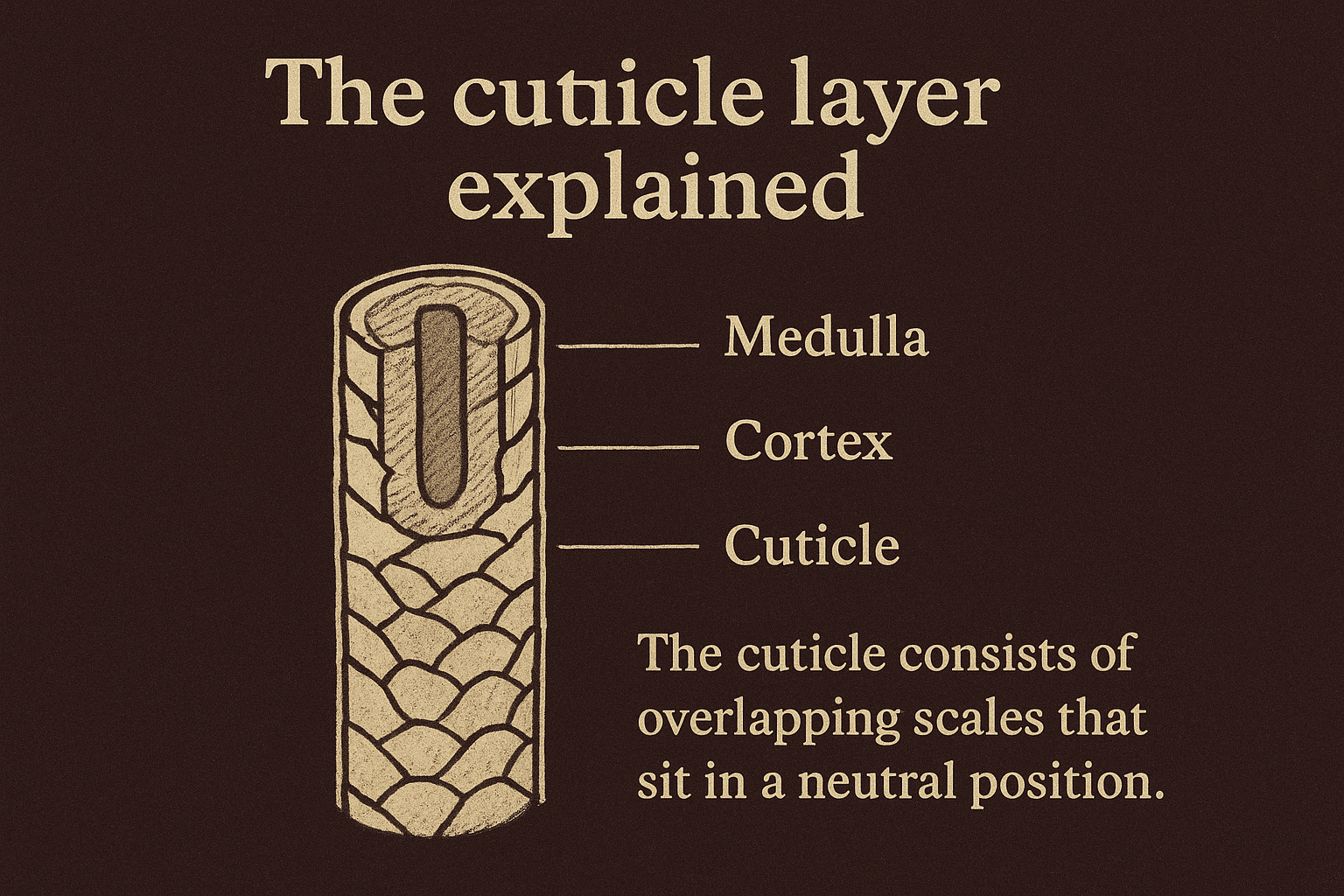
When your cuticle scales sit in a neutral position, your hair absorbs moisture consistently without losing it too fast, and that makes a real difference in how your styles hold up.
How medium porosity compares to low and high
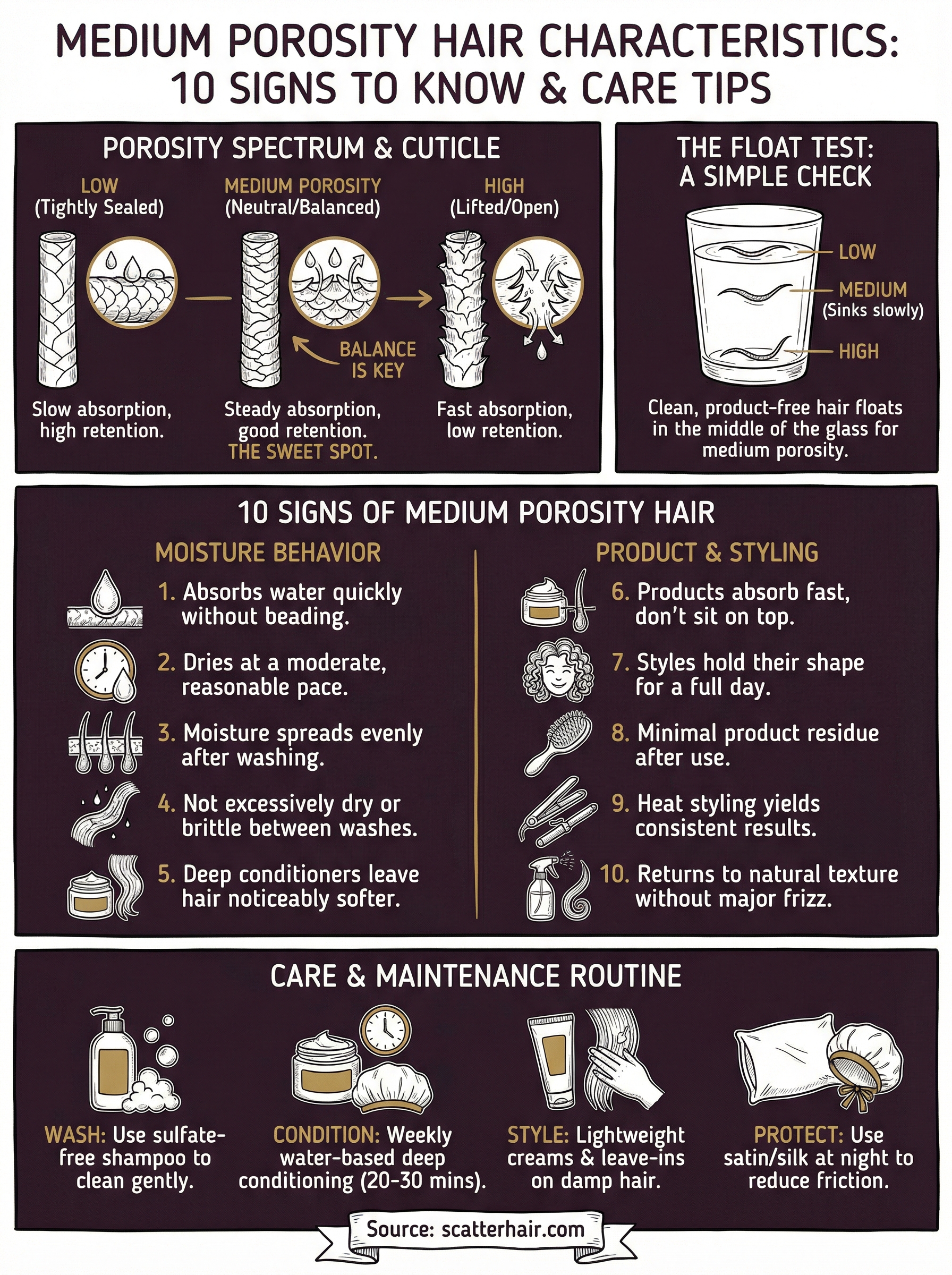
Knowing where medium porosity fits on the full spectrum puts its behavior in context. Low porosity hair has cuticles that are sealed so tightly that water and products tend to sit on the surface rather than soak in. High porosity hair swings to the opposite end, with cuticles so lifted that moisture enters quickly but escapes just as fast. Medium porosity sits between these two, giving you steady absorption and reasonable retention without the constant battle that comes with either extreme.
| Porosity Type | Cuticle State | Moisture Absorption | Moisture Retention |
|---|---|---|---|
| Low | Tightly sealed | Slow | High |
| Medium | Neutral/balanced | Steady | Good |
| High | Lifted/open | Fast | Low |
Why porosity matters for textured hair
Porosity is not a universal concern, but it carries extra weight for people with textured hair. Textured strands, whether coily, curly, or wavy, have a naturally uneven structure that makes them more vulnerable to moisture loss. The bends and curves in each strand create points where the cuticle can lift, which is why understanding your porosity level helps you predict how your hair will behave before you even reach for a product.
Porosity tells you whether your hair is fighting to hold onto moisture or struggling to take it in, and that knowledge changes everything about how you care for it.
How porosity shapes your product choices
When your porosity level does not match your products, you get build-up, dryness, or frizz that no amount of effort seems to fix. Heavy butters and oils work well for high porosity hair because they help seal the cuticle. Those same products can sit on top of low porosity hair without absorbing at all. Medium porosity hair characteristics put you in a position where most well-formulated products work, but that does not mean every formula serves you equally. Lightweight creams and water-based stylers tend to perform best because they move in and out of the cuticle at a pace your hair can actually use.
Your styling results also depend on porosity. Defined curls and long-lasting styles are much easier to achieve when your products match how your cuticle absorbs and holds moisture.
How to tell if you have medium porosity hair
You do not need a lab or a specialist to figure out your porosity level. A couple of simple at-home tests give you a solid read on where your hair falls, and they take less than five minutes to do. The key is to test on clean hair without any product on it, since build-up can throw off your results.
The float test
Take a few clean, dry strands of hair and drop them into a glass of room-temperature water. Watch what happens over the next few minutes. If your strands float in the middle of the glass rather than sitting at the top or sinking to the bottom quickly, that points to medium porosity. Hair that floats at the surface has tightly sealed cuticles, while hair that sinks fast has cuticles too open to hold air.
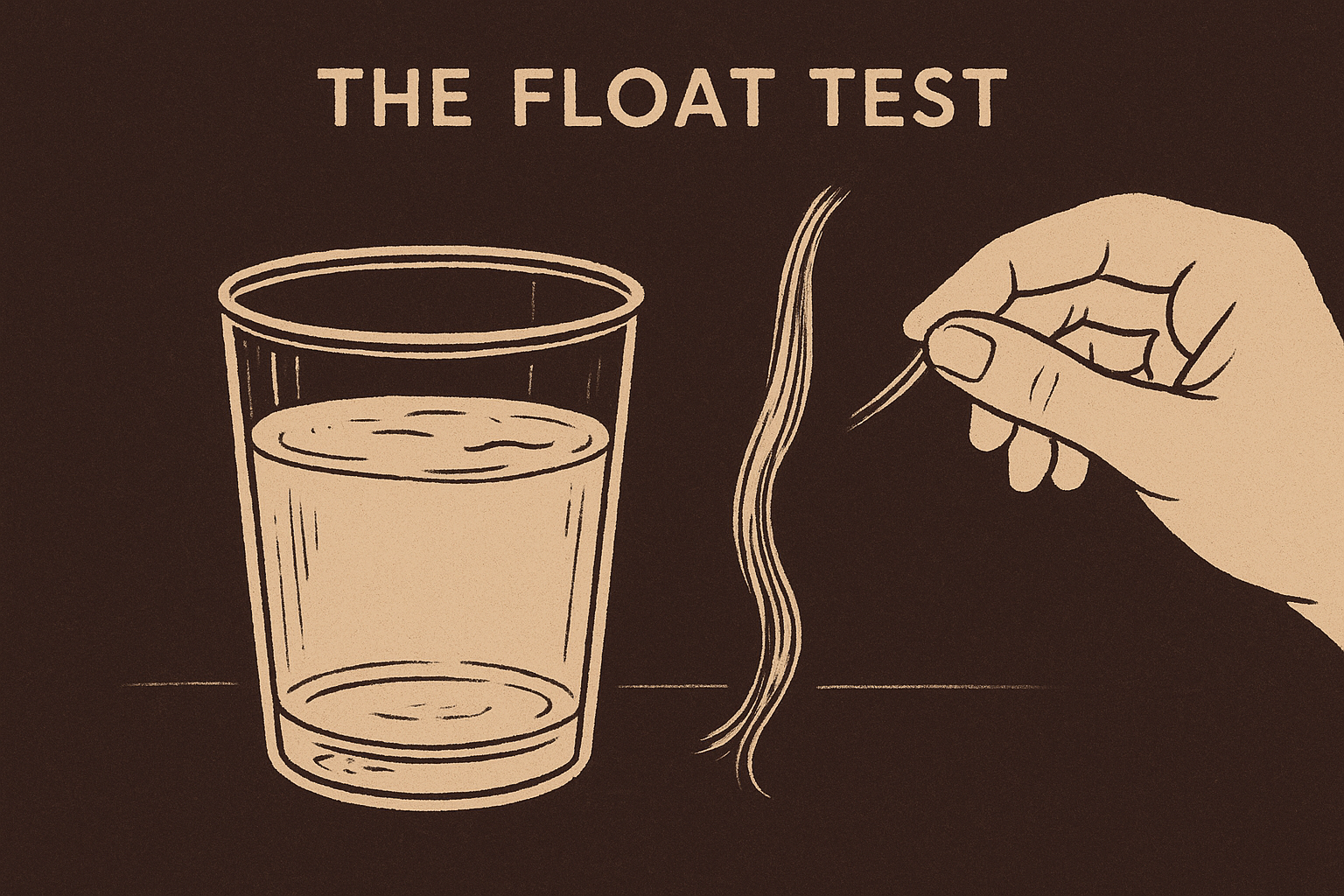
The float test works best on freshly washed hair, since product residue can weigh strands down and give you a false reading.
The spray bottle test
Mist a small section of your hair with water and watch how your strands respond. Medium porosity hair characteristics include absorbing the water within a few seconds, leaving your hair visibly damp rather than beaded or immediately soaked through. If the water sits on top for a long time, your porosity is likely low. If it disappears almost instantly, your porosity is likely high. Medium porosity lands right in between, with a clear and steady absorption rate.
Medium porosity hair characteristics: 10 signs
These signs give you a clear picture of where your hair falls on the porosity scale. If several of these match your experience, medium porosity hair characteristics are likely what you're working with, and that knowledge matters before you adjust your routine.
How your hair handles moisture
Your hair's relationship with water is one of the strongest indicators of its porosity level. Look for these five signs related to moisture:
- Your hair absorbs water within a few seconds without it beading on the surface
- Your hair dries at a moderate pace, not instantly and not taking hours
- Moisture spreads evenly through your strands after washing
- Your hair does not feel brittle or excessively dry between wash days
- Deep conditioners leave your hair noticeably softer without weighing it down
If your hair checks off most of these, you are working with well-balanced porosity that responds consistently to moisture.
How your hair responds to products and styling
Product performance and styling behavior reveal just as much about porosity as moisture absorption does. Watch for these five signs:
- Products absorb quickly without sitting on top of your strands
- Your styles hold their shape for at least a full day
- Your hair does not collect product residue after a single use
- Heat styling produces consistent results without excessive damage
- Your hair returns to its natural texture after being wet without significant frizz
How to care for medium porosity hair
Caring for medium porosity hair is more straightforward than caring for low or high porosity hair, but that does not mean anything goes. Your hair still benefits from consistent habits and well-matched products that support the balanced cuticle behavior you already have working in your favor. The goal is to maintain that balance rather than push your hair toward either extreme.
Washing and conditioning
Wash your hair with a sulfate-free shampoo to clean without stripping the cuticle. Because medium porosity hair absorbs moisture at a steady rate, it responds well to regular deep conditioning, roughly once a week. Use a water-based deep conditioner and leave it on for 20 to 30 minutes under a shower cap to give your cuticles time to absorb it fully. Avoid protein overload since your hair does not need as much strengthening as high porosity hair does.
Consistency matters more than intensity for medium porosity hair. A steady routine keeps your cuticle layer balanced and performing the way it naturally does.
Styling and protection
When styling, reach for lightweight creams or leave-in conditioners that absorb quickly and do not build up. One of the clearest medium porosity hair characteristics is that your hair responds well to a wide range of stylers, giving you real flexibility. Apply products to damp hair to lock in moisture before it starts to evaporate. Protect your hair at night with a satin or silk pillowcase to reduce friction and keep your style intact longer.
What to do next
Now that you know the key medium porosity hair characteristics, you can stop second-guessing your hair and start building a routine that actually fits. Run the float test or spray bottle test on clean, product-free hair to confirm your porosity level, then use the 10 signs in this article as your reference point. If most of them match your experience, you are working with balanced, cooperative hair that responds well to the right products and consistent habits.
Your next move is to match your products to what your hair actually needs. Focus on lightweight, water-based formulas that absorb quickly and do not build up between wash days. Protect your moisture at night, deep condition weekly, and keep your routine steady. Textured hair with medium porosity does not need complicated fixes, just the right support. If you are ready to find products built for exactly that, explore what Scatter is building for textured hair.