

Nighttime Routine for Natural Hair: A Step-by-Step Guide
You know the feeling. You style your hair perfectly, go to sleep, and wake up to frizz, tangles, or flat curls that look nothing like they did the night before. A solid night time routine natural hair care plan fixes that, and it takes less time than you'd think once you know the steps.
The short answer: moisturize while your hair is still slightly damp, seal that moisture in, then protect your style overnight with the right fabric and technique. Skip any of those steps and you're fighting frizz and dryness by morning, no matter how good your products are. This applies whether you're working with long twists or a short 4c cut that shifts around while you sleep.
This guide walks through each part of a nightly natural hair routine, from prepping your strands to picking the right bonnet or pillowcase. You'll get a clear order of operations, product suggestions that actually hold up overnight, and tips for adjusting the routine based on your hair length and texture. Follow it consistently and you'll notice less breakage and more definition within a couple of weeks.
Why a nighttime routine matters for natural hair
Textured hair behaves differently while you sleep than any other type of hair, and that's the root of the problem. Coily and curly strands are naturally drier because sebum from your scalp struggles to travel down each twist and turn, so hair that starts the night hydrated can end up parched by morning without help. Add hours of tossing and turning, and you've got friction working against every curl pattern you spent time defining.
Friction is the real enemy here. A regular cotton pillowcase pulls moisture straight out of your strands and roughs up the hair cuticle, which leads to frizz, split ends, and tangles you didn't have when you went to bed. That's why a nighttime routine for natural hair isn't optional maintenance, it's damage control you do before the damage happens.
Protect your hair while you sleep, and you won't need to repair it in the morning.
Think about what your hair actually goes through overnight:
- Moisture loss from evaporation and cotton fabric pulling hydration out of the cuticle
- Mechanical friction from shifting positions, which causes single-strand knots and breakage
- Compression and flattening, especially on shorter styles like a 4c cut that has less length to cushion against a pillow
- Product buildup shifting unevenly, leaving some sections dry and others weighed down
Each of these adds up fast. Skip your natural hair bedtime routine for even a few nights and you'll notice more shedding in the shower, duller curl definition, and hair that takes longer to detangle. Build the habit, and you're working with your hair every morning instead of against it.
Step 1. Detangle gently before bed
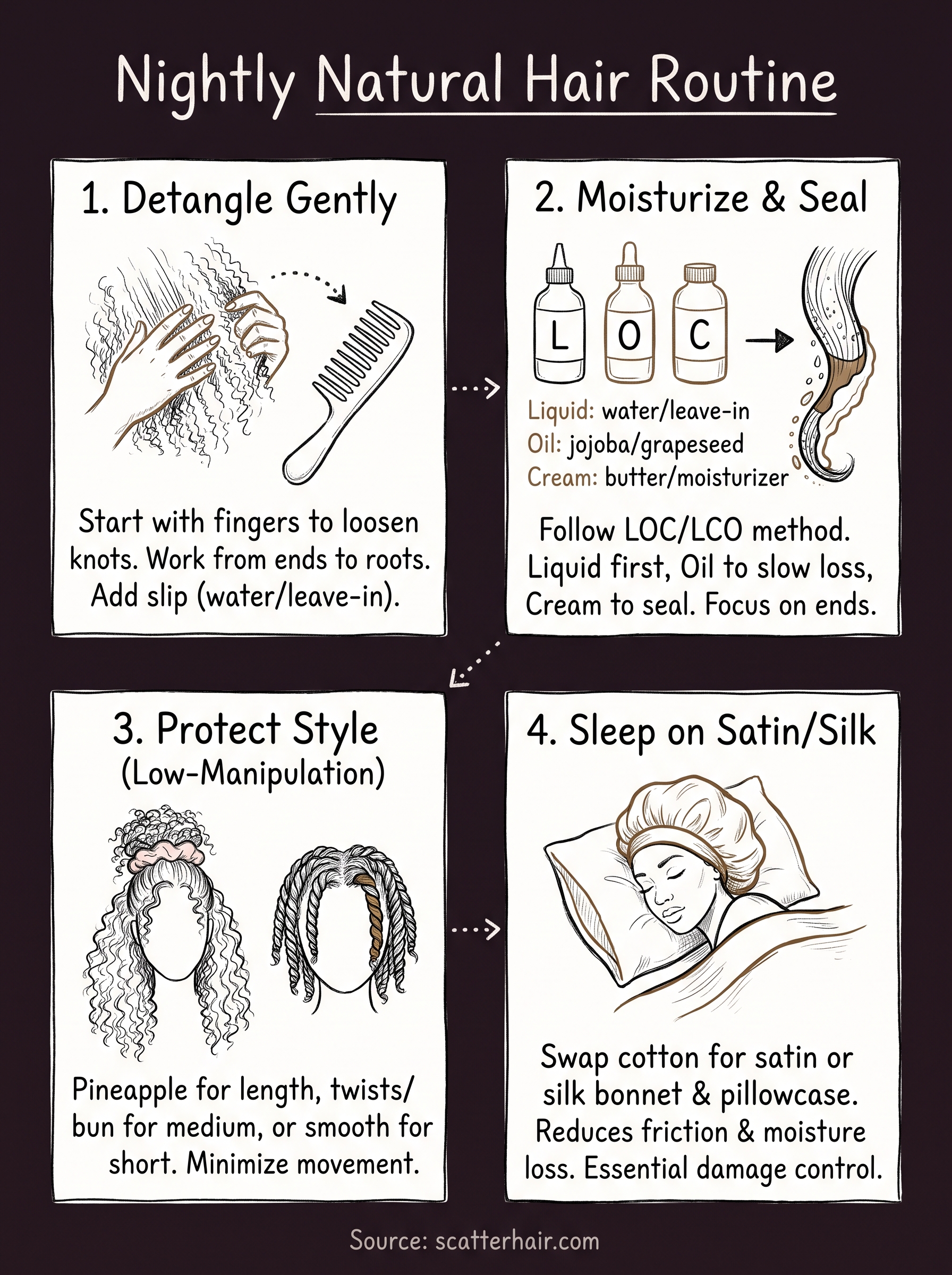
Detangling at night sets up everything else in your nightly natural hair routine, because knots left in overnight tighten with friction and turn into breakage by morning. Work through your hair while it still has some moisture from the day, using your fingers first to loosen shed strands before reaching for a wide-tooth comb. Section your hair into four to six parts and start from the ends, working upward. Rushing this step or detangling dry, brittle strands is how most breakage happens, not the styling that follows.
Keep it low-manipulation
For a night routine for short 4c natural hair, skip the comb entirely if your coils are tightly packed and stick to finger detangling to avoid unnecessary stress on shorter strands.
- Spritz with water or a leave-in to soften strands before detangling
- Divide hair into sections to work smarter, not harder
- Detangle from ends to roots, never the reverse
- Stop the moment you feel resistance and add more slip
Detangled hair sleeps better than hair you hope will sort itself out overnight.
Step 2. Moisturize and seal in hydration
Moisture goes on before you protect anything, since sealing dry hair just locks in the dryness instead of the hydration you want. Follow the LOC method (liquid, oil, cream) or LCO if your hair is finer and gets weighed down easily. Start with a water-based leave-in to rehydrate each strand, then follow with an oil to slow water loss, and finish with a cream or butter to seal it all in. This order matters more than any single product you use.
Applying product with intention beats piling it on. Focus extra cream on your ends, since they're the oldest and driest part of every strand, and use a lighter hand at the roots to avoid buildup on your scalp.
Moisture without a seal evaporates by morning, so never skip the second half of the step.
- Liquid: water-based leave-in conditioner
- Oil: jojoba, grapeseed, or your favorite lightweight oil
- Cream: a butter-based moisturizer focused on your ends
Getting this sequence right is half the reason a solid night routine for natural hair actually holds up until morning.
Step 3. Protect your style with a low-manipulation method
Gathering your curls into a loose pineapple at the crown of your head keeps them from getting crushed against your pillow, and it works especially well if your hair has enough length to bunch up without pulling at your edges. Use a soft scrunchie or a strip of satin fabric, never a tight elastic that tugs at your hairline overnight. This single step protects your curl pattern more than any product you apply, because it stops the flattening that comes from sleeping directly on your strands.
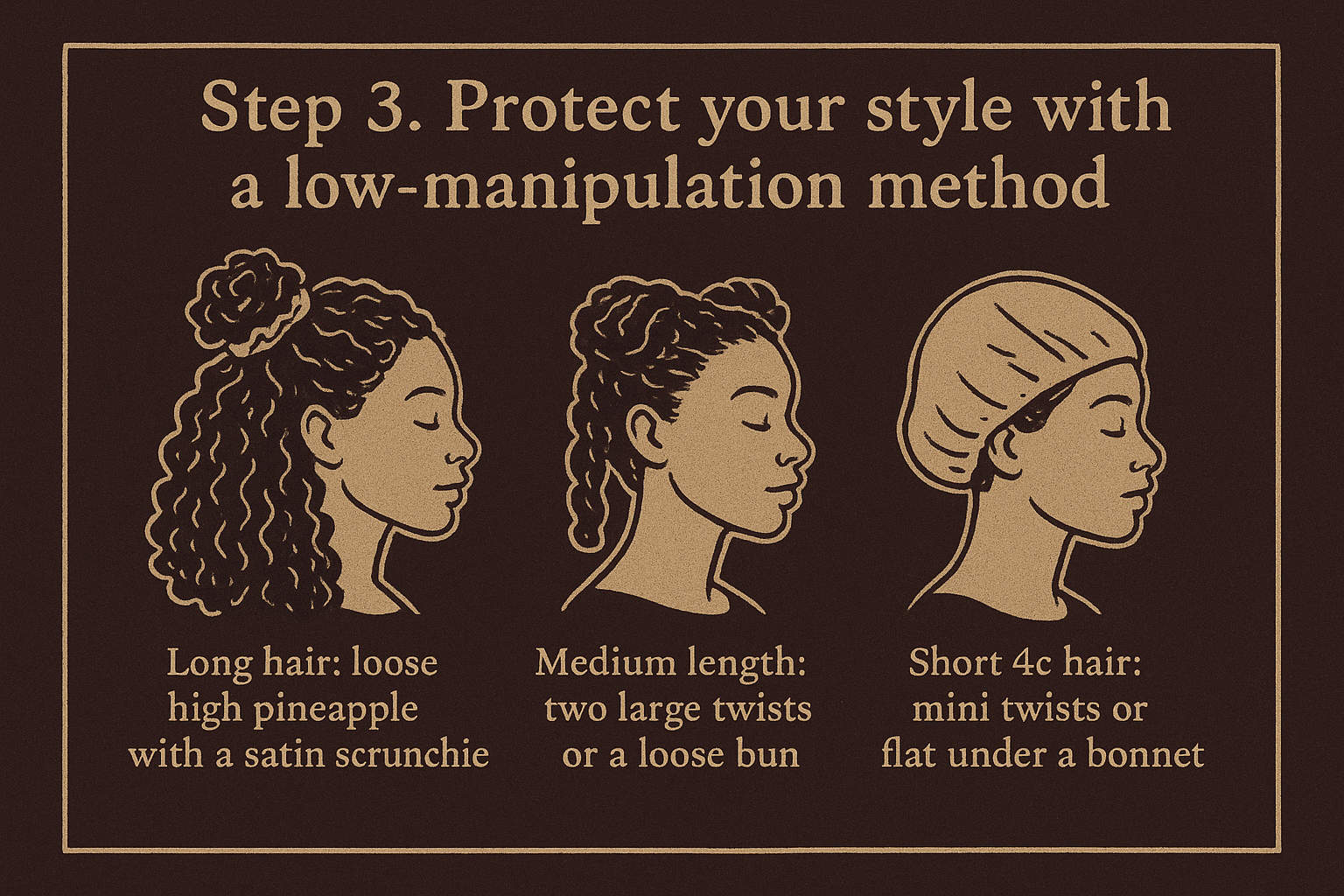
Shorter styles need a different approach. A night routine for short 4c natural hair usually calls for a loose two-strand twist-out or simply smoothing hair down under a satin bonnet, since there isn't enough length to pineapple effectively. Either way, the goal stays the same: minimize movement and friction while you sleep.
The less your hair moves overnight, the less it needs fixing in the morning.
- Long hair: loose high pineapple with a satin scrunchie
- Medium length: two large twists or a loose bun
- Short 4c hair: mini twists or flat under a bonnet
Pick whichever method matches your length tonight, not what worked for you last year.
Step 4. Sleep on satin or silk to lock it all in
Everything you did in the first three steps gets undone fast if you sleep on the wrong fabric. Swap your cotton pillowcase for one made from satin or silk, or tie your hair up in a bonnet before bed, since both materials let your strands glide instead of grip and pull.
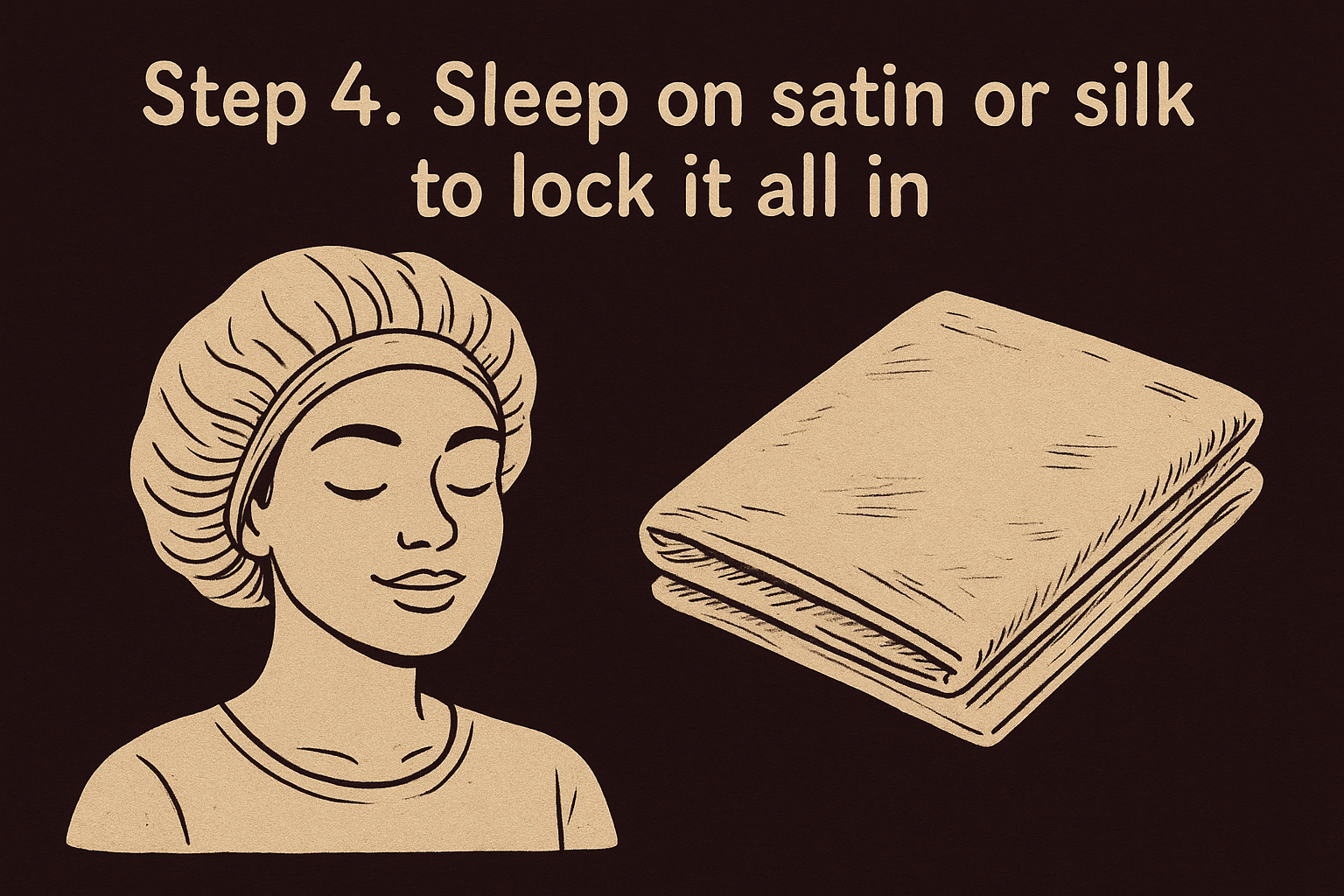
A satin bonnet finishes the job your leave-in and twist-out started.
Choosing between a bonnet and a pillowcase depends on how much your hair moves while you sleep. Restless sleepers do better with a bonnet, since a pillowcase alone won't stay in place all night, while calmer sleepers can usually get away with just the pillowcase.
| Fabric | Friction | Moisture retention | Best for |
|---|---|---|---|
| Cotton | High | Poor | Avoid entirely |
| Satin | Low | Good | Budget-friendly nights |
| Silk | Lowest | Best | Sensitive scalps, edges |
Making satin or silk part of your nighttime natural hair routine costs less than replacing damaged hair from months of cotton friction. Grab two of whatever you choose so laundry day never forces you back onto cotton by accident.
Making it a habit
Consistency beats intensity here. Doing all four steps once won't fix months of dryness, but repeating them nightly for two weeks will show you softer curls, less shedding, and mornings where your style actually survives. Detangling, moisturizing, protecting, and sleeping on satin takes maybe ten minutes once you've done it a few times, and your hair starts to feel the difference before your eyes do.
Give yourself grace on the nights you're exhausted and just wrap your hair with nothing else. That's still better than skipping protection entirely. The goal is a nightly natural hair routine you'll actually stick to, not a perfect one you abandon after a week.
If you're still figuring out which products and textures work for your specific curl pattern, see what Scatter is building for textured hair and get early access when the formulas launch.