

7 Steps for a Nighttime Hair Care Routine for Textured Hair
You spend money on good products, style your curls just right, then wake up to frizz, flat spots, and tangles that take twenty minutes to comb through. A solid nighttime hair care routine isn't optional for textured hair, it's the difference between refreshing your style in the morning and starting from scratch every single day.
The fix comes down to protecting your hair from friction and moisture loss while you sleep. That means the right pillowcase, the right wrap, and a pre-bed moisture step that keeps your strands hydrated for eight hours straight. Skip any of these and your curls pay for it by morning.
Below are seven concrete steps built specifically for coils, curls, and coarse textures, not generic tips lifted from straight-hair routines. You'll learn how to detangle without breaking strands, which fabrics actually prevent frizz, and how to wake up with a style that just needs a quick refresh instead of a full redo.
1. Detangle your hair before bed
Tangles that form overnight turn into knots that turn into breakage by morning. If you skip detangling before bed, every twist and turn you make on your pillow tightens those knots further, and you'll pay for it with a comb the next day. Textured hair tangles fastest of all hair types because the bends and coils in each strand naturally catch on each other, so this step can't be an afterthought.
Why it matters for textured hair
Curly and coily hair has fewer cuticle layers protecting the shaft compared to straight hair, which makes it more prone to snapping when you force a brush through knots. Overnight friction from tossing and turning makes existing tangles worse, especially at the nape and back of the head where hair rubs against the pillow most. Detangling before bed means you're working with loose, manageable strands instead of fighting knots that have had eight hours to set.
Detangle before bed, not after you wake up, and you'll cut your morning routine in half.
How to do it right
Work in sections, always starting from the ends and moving up toward the roots. This is the single most important technique for textured hair, since finger detangling or brushing from the root down just pushes tangles into a tighter knot lower on the strand. Use a wide-tooth comb or your fingers, and add a slip-inducing product like a leave-in conditioner or detangling spray to help the comb glide through without pulling.
Here's a simple routine that works for most curl patterns:
- Spritz each section lightly with water or a leave-in conditioner.
- Divide hair into 4 to 6 sections and clip the rest away.
- Starting at the ends, comb through with a wide-tooth comb until smooth.
- Move up the strand in small increments, never combing through a full section in one pass.
- Repeat for each section before moving to the next.
This takes 10 to 15 minutes most nights, less once your hair is used to the routine and less tangled to begin with.
Common mistakes to avoid
Brushing dry hair with a paddle brush is the fastest way to cause breakage on textured strands. Dry detangling strips moisture and creates static, which makes hair puff up and tangle even more once you're asleep. Always detangle with some moisture in the hair, whether that's a spray bottle of water or a proper leave-in product.
Another mistake is rushing the process and yanking through knots instead of working them loose patiently. Skipping detangling altogether because you're too tired is the third trap, and it's the one that costs you the most time the next morning. Set aside those 10 minutes every night, and your hair will hold its shape and stay smoother far longer than if you try to catch up on a weekend deep-detangle session once a week.
2. Never sleep with soaking wet hair
Going to bed with dripping curls feels harmless, but it sets you up for a rough morning. Wet hair is at its weakest point structurally, and hours of rubbing against a pillow while the strand is fully saturated does more damage than almost anything else in your nighttime hair care routine. If you're washing at night, plan around drying time before you actually get in bed.
Why it matters for textured hair
Water temporarily breaks the hydrogen bonds that give hair its shape, which makes each strand more elastic and prone to snapping under friction. Soaking wet strands swell up, and that swelling weakens the cuticle layer even further on hair that already has fewer protective layers than straight hair. Add eight hours of movement on a pillow, and you're looking at split ends, frizz, and a style that never quite sets the way you wanted.
Wet hair and friction don't mix, so keep the two apart until your strands are at least mostly dry.
How to do it right
Wash and condition earlier in the evening rather than right before bed, giving your hair a real window to air dry or diffuse. If you're short on time, a microfiber towel or an old cotton t-shirt cuts drying time significantly compared to a regular terry cloth towel, which roughs up the cuticle. Aim for hair that's at least 80% dry before you wrap it or lie down, and use a low, cool setting on a diffuser if you need to speed things along.
Common mistakes to avoid
Rushing straight from the shower to bed is the biggest culprit here, especially on nights when you're exhausted and just want to sleep. Skipping the towel-dry step entirely and going straight to a satin bonnet traps excess moisture against the scalp, which can lead to buildup or an unpleasant smell by morning. Also avoid rubbing hair aggressively with a regular towel to speed drying, since that roughs up the cuticle and creates the exact frizz you're trying to prevent.
3. Seal in moisture with a leave-in treatment or oil
Once your hair is dry enough for bed, it still needs a final layer of protection to lock in whatever moisture you've already worked into it. Skipping this step means your strands spend all night losing hydration to dry air, and you wake up with the same brittle, frizzy texture you were trying to avoid. A quick moisture seal takes under five minutes and changes how your curls look and feel by morning.
Why it matters for textured hair
Coily and curly strands lose moisture faster than straight hair because the natural oils from your scalp struggle to travel down the twists and bends of the shaft. Sealing in moisture with a leave-in conditioner or lightweight oil creates a barrier that slows down that overnight moisture loss, keeping the hair shaft flexible instead of dry and prone to breakage. Without this step, even a great wash day gets undone by morning.
Moisture you don't seal in overnight is moisture you'll be chasing again tomorrow.
How to do it right
Apply a small amount of leave-in conditioner section by section, focusing on the ends where hair is oldest and driest. Follow with a few drops of a lightweight oil like jojoba or grapeseed, rubbed between your palms first so it distributes evenly instead of sitting heavy on top of the strand. Scrunch or smooth the product through depending on your curl pattern, and avoid overloading your roots, since that's where buildup and limp curls start.
Common mistakes to avoid
Using a heavy butter or thick oil right before bed can leave hair greasy and weigh down your curl pattern by morning. Overapplying product is just as bad as skipping it entirely, since excess buildup attracts lint and flattens texture against your pillow. Also skip water-based sprays alone without a sealant on top, since water evaporates fast and leaves you no better off than if you'd done nothing at all.
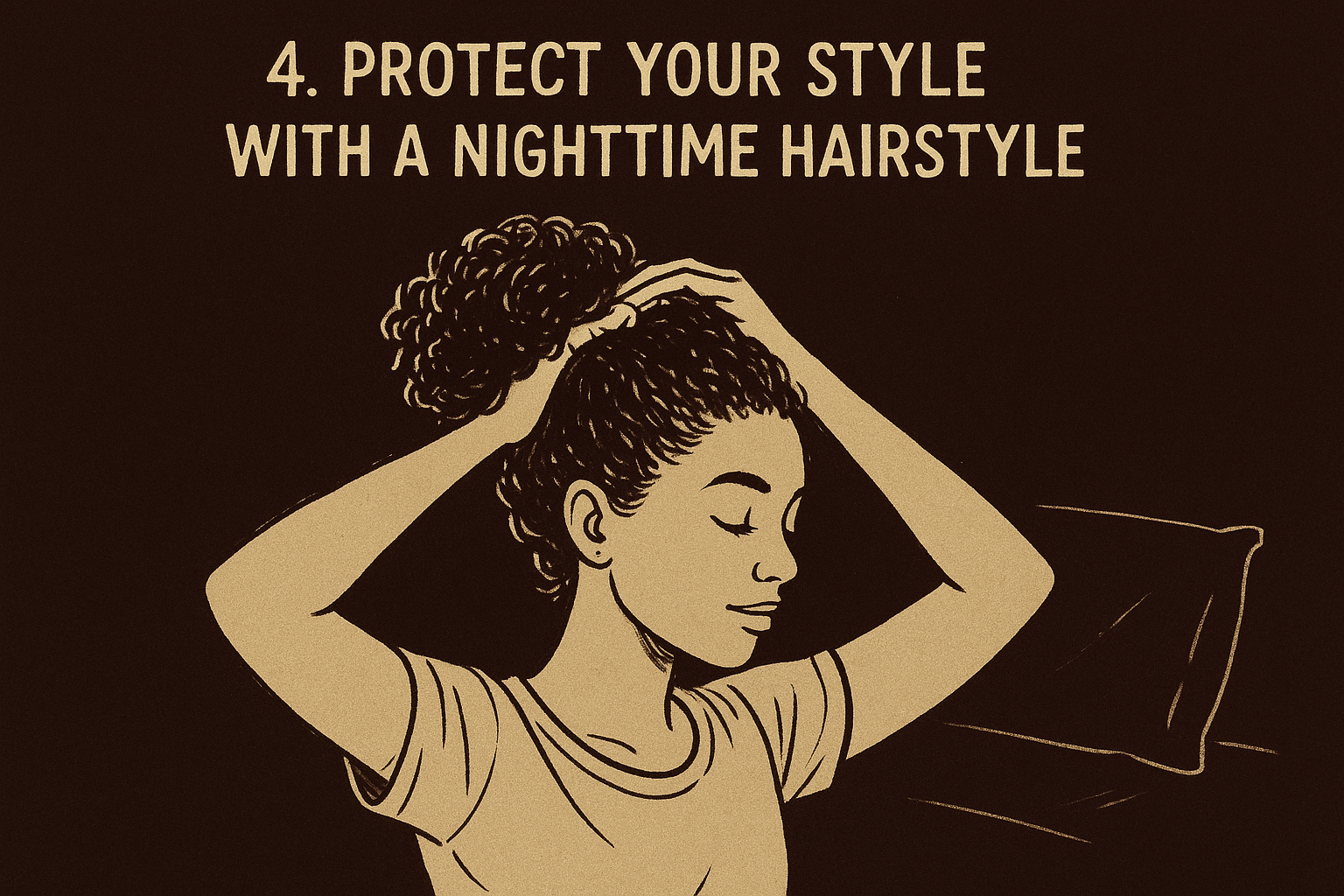
4. Protect your style with a nighttime hairstyle
How you gather your hair before bed decides whether you wake up to bounce or a flat mess on one side. A protective nighttime hairstyle keeps curls from getting crushed against the pillow and stretches your style out over two or three days instead of one. Skip this step and even a perfect wash-and-go falls apart by morning.
Why it matters for textured hair
Curls and coils lose their shape fastest at the points of contact with your pillow, usually the crown and one side depending on how you sleep. Pineappling, the technique of gathering hair loosely on top of your head with a scrunchie, keeps those contact points to a minimum and preserves the curl pattern at the roots. Braids or twists work the same way by keeping strands bundled together instead of loose and exposed to friction all night.
The less your curls touch the pillow, the less they have to recover from in the morning.
How to do it right
Pick your method based on your hair length and how much volume you want to keep:
- Pineapple: Gather hair loosely at the very top of your head with a scrunchie or silk scrunchie tie. Best for longer curls and coils.
- Twists or braids: Section hair into 2 to 8 large twists before bed. Best for shorter hair or when you want stretched-out curls the next day.
- Bantu knots: Small coiled buns across the scalp. Best when you want defined curls with extra volume.
Whichever you choose, keep it loose enough that you don't feel tension on your scalp.
Common mistakes to avoid
Pulling the pineapple or twists too tight causes tension headaches and can lead to breakage right at the hairline. Overtightening at the roots is the most common error, especially with elastic scrunchies that have some stretch left in them. Also avoid using regular hair ties with metal clasps, since they snag strands and undo all the protection your style was supposed to provide.
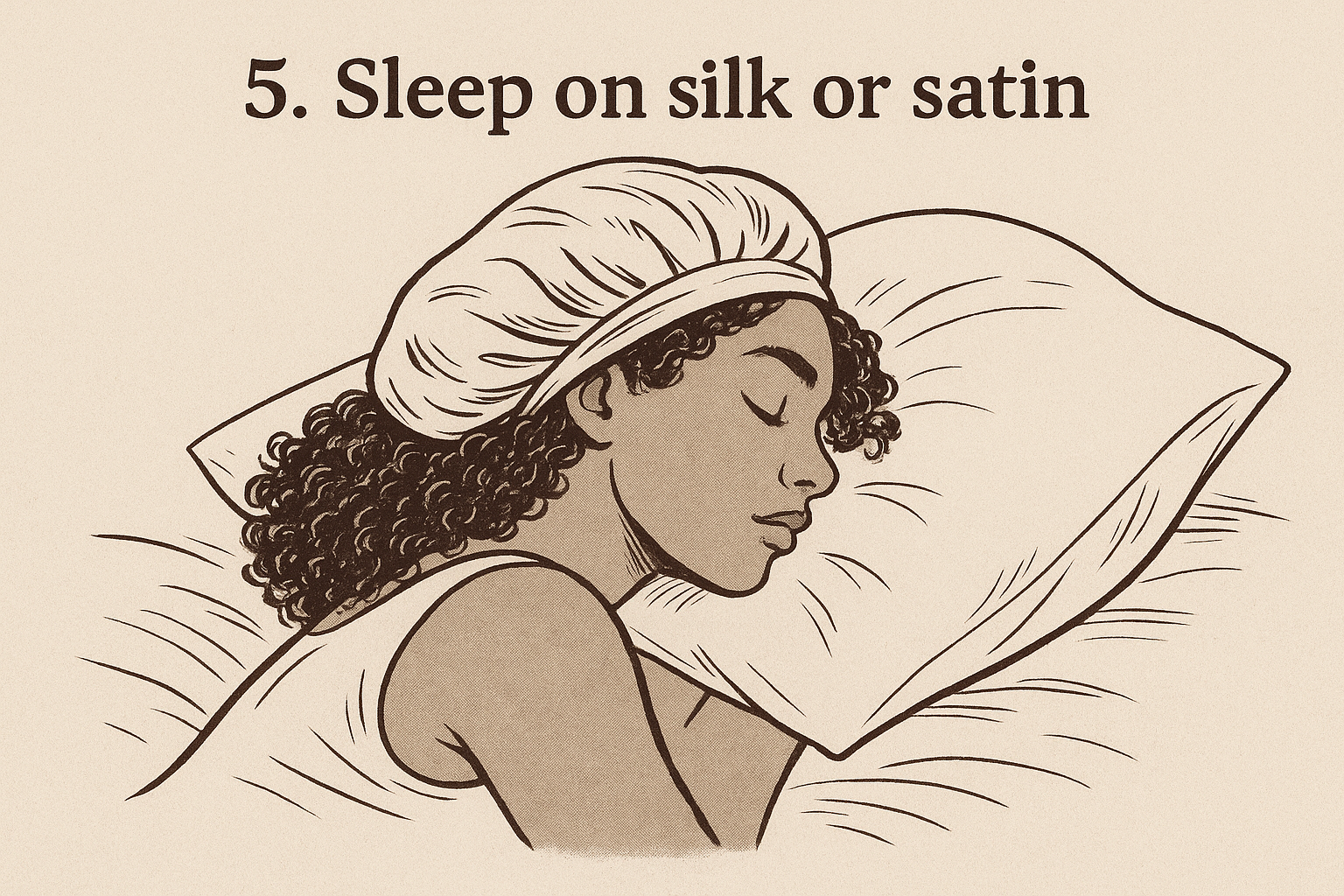
5. Sleep on silk or satin
Cotton pillowcases pull moisture straight out of your hair and rough up every strand that touches them overnight. Swapping to a silk or satin pillowcase (or a matching bonnet) is one of the cheapest, easiest upgrades you can make to a nighttime hair care routine, and the difference shows up within a week of consistent use.
Why it matters for textured hair
Cotton fibers are absorbent and slightly rough at a microscopic level, which means they soak up the oils and moisture you just sealed into your hair and create drag with every movement you make in your sleep. Silk and satin fabrics are smooth and non-absorbent, so hair glides across the surface instead of catching and stretching. For curls and coils, that reduced friction means less frizz, fewer split ends, and a style that actually survives until morning.
Swap cotton for silk, and your pillowcase stops fighting your hair every night.
How to do it right
Go with a bonnet, a wrap, or a full pillowcase depending on how much your hair moves while you sleep. Bonnets and wraps offer more coverage for longer or thicker hair, while a pillowcase works well if you tend to stay still overnight or prefer not to wear anything on your head.
| Fabric | Moisture retention | Frizz reduction | Best for |
|---|---|---|---|
| Cotton | Poor, absorbs oils | Low | Not recommended for textured hair |
| Satin | Good | High | Budget-friendly protection |
| Silk | Best | Highest | Sensitive scalps, long-term investment |
Common mistakes to avoid
Buying a cheap satin-look polyester blend instead of real satin or silk defeats the purpose, since synthetic blends can still create static and heat buildup. Skipping the wrap on nights you're too tired is another common slip, and it's exactly the nights your hair needs the protection most. Washing your silk pillowcase or bonnet regularly matters too, since buildup from products transfers back onto your hair otherwise.
6. Care for your scalp overnight
A healthy head of curls starts at the root, and your scalp works overtime while you sleep to produce the oils that keep hair flexible. Ignoring scalp care in your nighttime routine leaves buildup, flakes, and product residue to sit undisturbed for eight hours straight, which shows up as itchiness or dullness by morning. Treating your scalp as part of the routine, not an afterthought, keeps the whole system working the way it should.
Why it matters for textured hair
Textured hair often means denser coverage at the scalp, which makes it easier for product, sweat, and dead skin to collect without you noticing. Scalp buildup blocks follicles and can slow growth over time, and it's harder to spot on coily hair than on straight hair where the scalp stays more exposed. Nighttime is actually the easiest window to address this, since you're not fighting against a fresh style or heading out the door.
A neglected scalp undoes every good thing you did for your strands that day.
How to do it right
Massage a few drops of a lightweight scalp oil into your roots two or three nights a week, using your fingertips in small circles to boost circulation without disturbing your protective style. Focus on areas prone to dryness, usually the crown and hairline, and stop before oil starts pooling rather than absorbing. If you notice flaking or persistent itch, an exfoliating scalp scrub once a week before wash day clears buildup that nighttime oiling alone won't touch.
Common mistakes to avoid
Heavy, waxy oils sitting directly on the scalp every single night is the most common error, since it clogs follicles instead of nourishing them. Overloading the scalp with product mimics the same buildup problem you're trying to solve. Skipping scalp attention entirely because your hair looks fine on the surface is the other trap, and it catches up with you eventually in the form of thinning or irritation.
7. Refresh your hair in the morning
Waking up doesn't mean starting your styling routine over from scratch, not if the first six steps went well. A quick morning refresh takes the shape you protected overnight and brings it back to life with water, a little product, and a few minutes of attention. Skip this step and even a perfectly protected style can look flat or dull until you touch it up.
Why it matters for textured hair
Curls lose some definition overnight no matter how well you wrap or pineapple them, since even minimal contact with a pillow softens the pattern slightly. Morning moisture reactivates the products you sealed in the night before, waking curls back up without needing a full rewash. For textured hair especially, a proper refresh stretches the life of a style from one day to three or four, which saves both time and product in the long run.
A quick refresh in the morning is what turns one good wash day into a whole week of good hair days.
How to do it right
Unwrap your hair and gently release your pineapple, twists, or bantu knots, separating curls with your fingers rather than a brush. Mist strands lightly with water or a diluted leave-in spray, focusing on the roots and any flat spots. Scrunch in a small amount of curl cream or gel to redefine shape, then let hair air dry for a few minutes before you touch it again.
Common mistakes to avoid
Brushing curls out with a paddle brush the moment you wake up destroys the pattern you worked to protect all night. Overwetting your hair in the morning is another trap, since soaking strands again undoes the moisture balance you built the night before. Touching your hair too much while it dries also causes frizz, so apply your refresh products and step away rather than fussing with your curls every few minutes.
Making nighttime care a habit
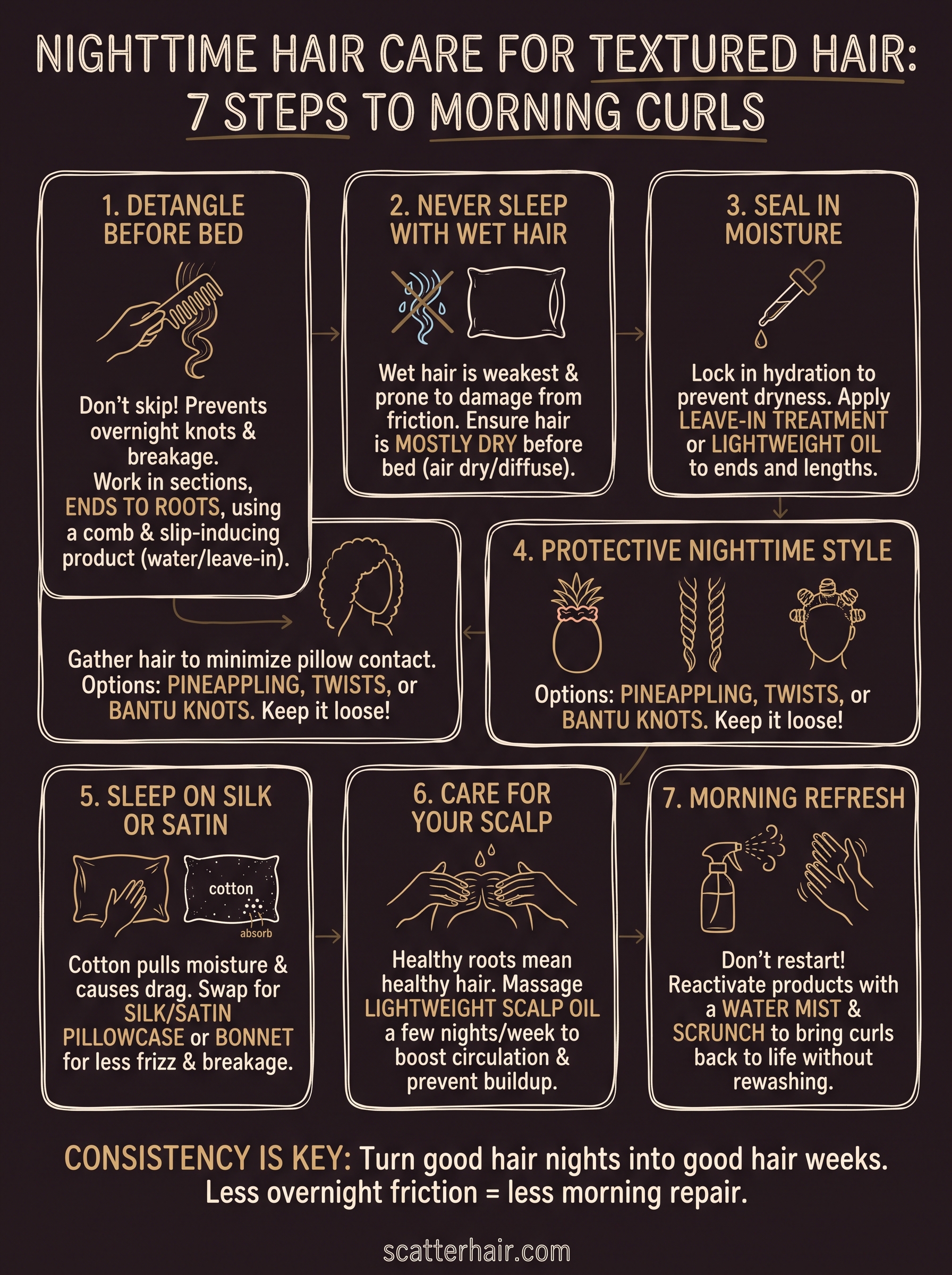
None of these seven steps work as a one-off fix. Consistency is what turns a good hair night into a good hair week, and eventually into hair that holds its shape without you fighting it every morning. Detangle before bed, protect it with the right wrap, and seal in moisture, and your curls stop starting from zero every single day.
Think of your nighttime hair care routine as maintenance, not damage control. The less friction and moisture loss your hair deals with overnight, the less repair work you need come morning, and the longer your styles actually last. Give it two weeks of consistent effort and you'll notice less breakage, fewer flat spots, and curls that bounce back with barely any product.
If you're ready to pair this routine with products actually formulated for textured hair, see what Scatter is building and sign up for early access before launch.