

Silk Vs Satin Pillowcase For Hair: Which Is Better?
You spend time picking the right products, perfecting your routine, and styling your textured hair just the way you want it, only to wake up with frizz, flattened curls, or tangles that undo all of it. If you've started looking into silk vs satin pillowcase for hair, you're already on the right track. What you sleep on matters more than most people realize, and the wrong pillowcase can sabotage your style overnight.
Both silk and satin claim to reduce friction, prevent breakage, and help your hair hold moisture while you sleep. But they're not the same material, and the differences between them, cost, breathability, durability, feel, affect how well they actually protect your hair. Especially textured hair, which is already more prone to dryness and mechanical damage.
At scatterhair, we're building styling products specifically for textured hair, formulated to make your routine easier and your results last longer. That means we care about what happens after you style, too, including the eight hours your hair spends against a pillowcase. This guide breaks down silk and satin side by side so you can pick the one that actually works for your hair type, budget, and lifestyle.
Why pillowcase fabric matters for hair health
Your hair moves against your pillowcase hundreds of times every night. Every shift, every turn, every adjustment creates friction between your hair strands and the fabric beneath them. That friction is not harmless. Over time, it roughens your hair cuticle, the outermost layer of each strand, which leads to frizz, tangles, and breakage that compound night after night. The type of fabric you sleep on determines how much friction your hair deals with while you rest.
The friction problem
Cotton is the most common pillowcase material, and it is also the roughest on hair. Cotton fibers have a coarse, woven texture that grips hair strands and pulls on them as you move. For straight hair, this creates frizz and split ends. For textured hair, the damage is more pronounced because curls and coils already have an uneven cuticle structure that makes them more vulnerable to mechanical stress. Each knot you wake up with is the result of your hair snagging on the fabric overnight.
Sleeping on a rough fabric surface is the equivalent of gently teasing your hair for eight hours straight, and your strands show it.
Both satin and silk have much smoother surfaces than cotton, which is exactly why the silk vs satin pillowcase for hair conversation has gained traction among people serious about protecting their hair health. A smoother surface lets your hair glide rather than catch, which keeps your cuticle flat and your style intact by morning.
Moisture loss while you sleep
Cotton is also highly absorbent, which is useful for a bath towel but damaging for hair. When your hair rests on cotton overnight, the fabric draws moisture directly out of your strands and into itself. For textured hair that already struggles to retain moisture, this is a compounding problem. Dry hair is more prone to breakage, dullness, and shrinkage, and replenishing that lost moisture requires more product and more effort the next morning.
Silk and satin are far less absorbent than cotton, so they pull significantly less moisture away from your hair while you sleep. Your strands stay closer to their natural hydration level, which means your styling products work harder and your hair behaves better when you wake up. If your moisturizing routine never seems to hold through the night, your pillowcase is worth looking at before you blame the products.
Silk vs satin explained in plain English
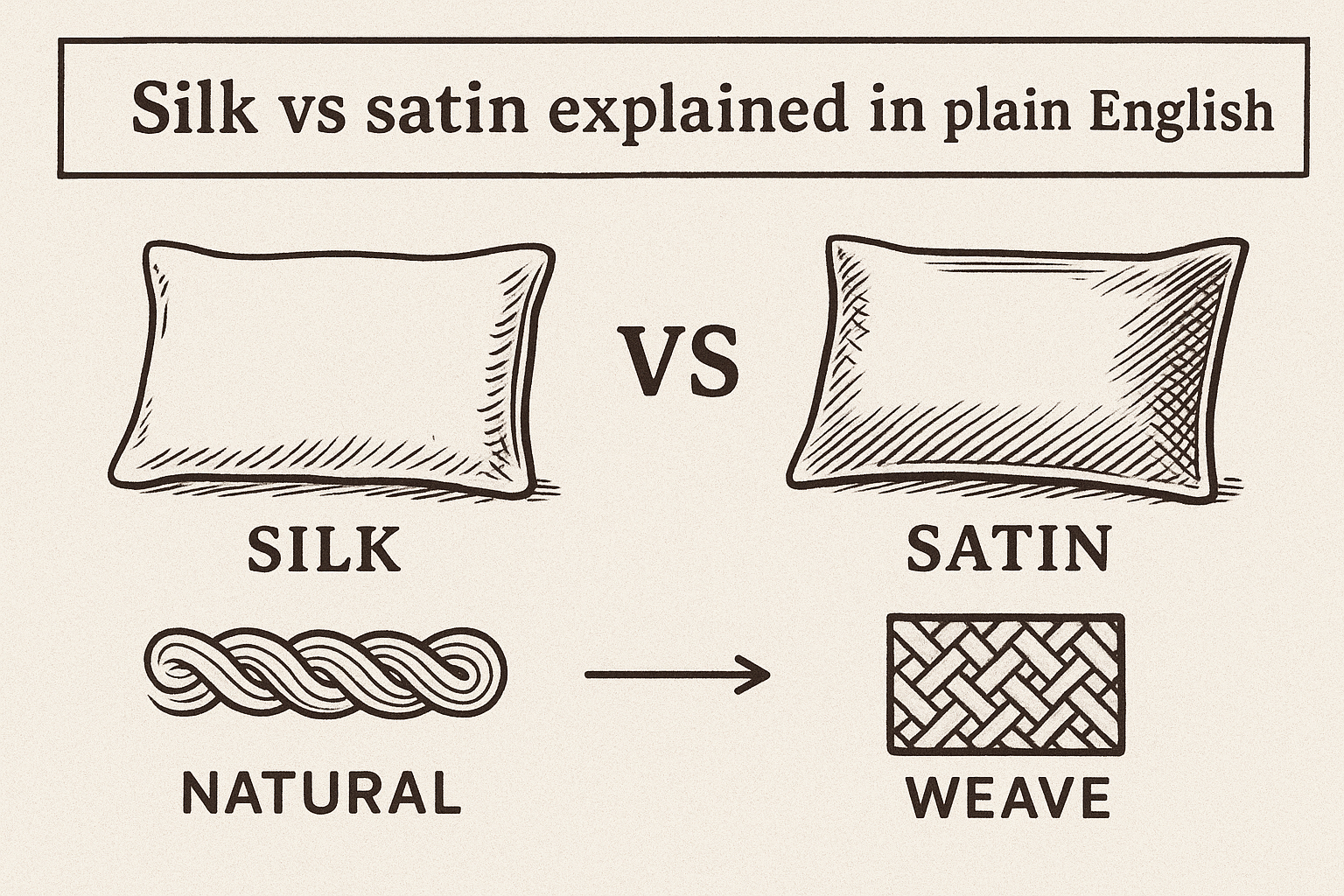
The biggest source of confusion in the silk vs satin pillowcase for hair debate is that people treat them as if they are two versions of the same thing. They are not. Silk is a natural material, and satin is a weave pattern. Understanding that difference helps you make a smarter buying decision and set realistic expectations for what each one will actually do for your hair.
What silk actually is
Silk is a natural protein fiber produced by silkworms, and it has been used in textiles for thousands of years. The fiber is incredibly fine and smooth at the microscopic level, which gives silk fabric its signature soft, low-friction surface. Because it comes from a living source, silk is also naturally breathable and temperature-regulating, keeping you cool in warm months and comfortable year-round. That smoothness is not a result of how the fabric is woven; it comes from the fiber itself.
Silk's smoothness is built into the material at a molecular level, which is why it performs so consistently across different thread counts and weave styles.
What satin actually is
Satin describes a specific weaving technique, not a base material. In a satin weave, threads float over several others before interlocking, which creates a smooth, glossy surface on one side and a duller finish on the other. Polyester is the most common material used to produce satin fabric, which is why satin pillowcases are typically far cheaper than silk ones. You can also find satin made from nylon or rayon. The smooth surface of satin mimics some of silk's low-friction benefits, but the underlying fiber affects breathability, durability, and how the fabric actually feels against your skin and hair over time.
How silk and satin affect textured hair overnight
Textured hair, whether curly, coily, or wavy, has a structure that makes it uniquely vulnerable to overnight damage. The cuticle on each strand naturally lifts at the points where the hair bends and curls, which means more surface area is exposed to friction compared to straight hair. Both silk and satin address this problem, but they do it differently, and those differences show up in how your hair looks and feels in the morning.
Silk's effect on textured hair
Silk's naturally smooth protein fiber sits flat against your cuticle as you move during sleep, reducing the mechanical stress that causes frizz and breakage. Because silk is also breathable and temperature-regulating, it does not trap heat around your hair overnight. Heat and humidity build-up can disrupt your curl pattern, so sleeping on a fabric that stays cool and dry keeps your definition intact by morning. For textured hair that relies on a precise wash-and-go or twist-out shape, that level of consistency matters.
Silk's protein-based fiber is chemically similar to your own hair, which is why it interacts so gently with your strands during sleep.
Satin's effect on textured hair
Polyester satin still delivers a noticeably smoother surface than cotton, which means you will see a real reduction in frizz and tangles compared to a standard pillowcase. The trade-off is that polyester does not breathe well, so it can trap warmth around your hair throughout the night. For textured hair that is prone to dryness, that added heat can pull more moisture from your strands over time. When you are weighing the silk vs satin pillowcase for hair question with textured hair specifically in mind, silk gives you more consistent overnight results, while satin still outperforms cotton at a fraction of the cost.
How to choose the right one for you
The right pick depends on your budget, your hair's specific needs, and how much maintenance you want to deal with. Both materials outperform cotton, but they serve different priorities. Knowing where you stand on a few key factors makes the silk vs satin pillowcase for hair decision straightforward.
If budget is your main concern
Satin is the clear starting point when cost is the deciding factor. A quality polyester satin pillowcase typically runs between $10 and $30, compared to $50 or more for a genuine silk pillowcase. If you have never used either before, starting with satin lets you experience the difference from cotton without a large upfront commitment. You can always upgrade to silk once you know how much the switch actually improves your hair.
Satin delivers most of the friction-reduction benefit at a fraction of the cost, making it a practical first step if you are new to hair-protective sleep habits.
If your hair needs maximum protection
Silk is worth the investment when your textured hair deals with persistent dryness, breakage, or fragile strands that need every advantage overnight. The natural fiber breathes better, regulates temperature more consistently, and creates the smoothest possible surface for your hair. If you already invest in quality styling products and protective routines, a silk pillowcase extends the value of all of that by protecting what you build during the day.
A simple way to decide
These benchmarks help you land on the right option for your situation without overthinking it. Your hair type and budget together point directly to the answer:
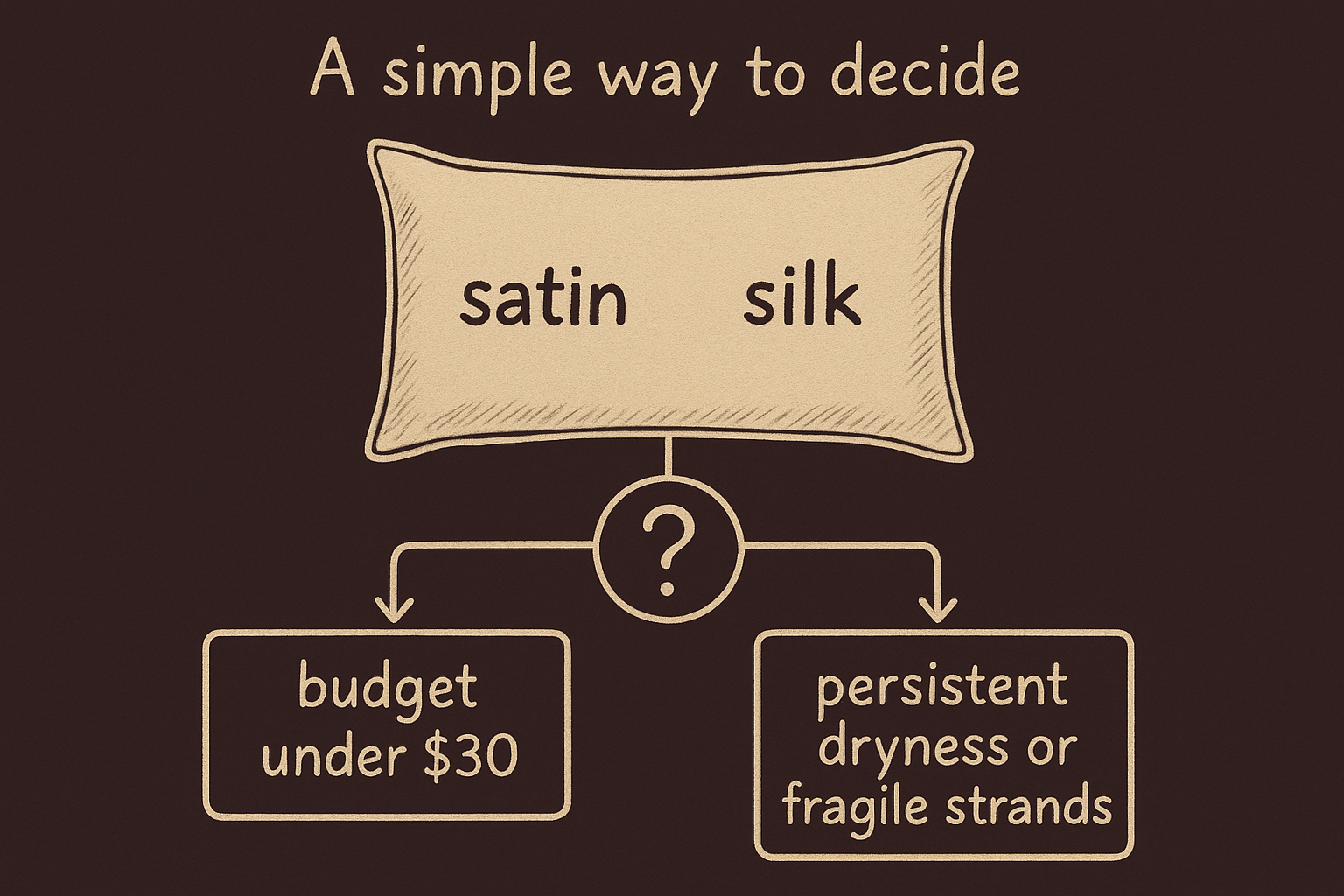
- Budget under $30: start with satin
- Persistent dryness or fragile strands: invest in silk
- Hot sleeper who wakes up sweaty: silk breathes better
- New to hair-protective sleep habits: satin first, upgrade later
- Already spending on a solid product routine: silk protects that investment
How to care for silk or satin so it lasts
Getting the most out of your pillowcase means treating it correctly from the first wash. Both silk and satin require more care than a standard cotton pillowcase, but the difference in effort is small compared to the protection they give your hair. Skipping the right care steps shortens the lifespan of either material and reduces the friction-reduction benefits you are counting on from the silk vs satin pillowcase for hair switch.
Washing silk the right way
Silk needs gentle handling every single time you wash it. Use cold water and a detergent formulated for delicate fabrics, and always wash silk on a delicate or hand-wash cycle. Never wring or twist a wet silk pillowcase because that stresses the fibers and breaks down the smooth surface that protects your hair. Lay it flat to dry or hang it away from direct sunlight, since heat and UV exposure degrade silk quickly and cause it to lose its natural sheen.
Washing silk in hot water or running it through a regular spin cycle even once can permanently damage the fiber structure.
Keeping satin in good shape
Polyester satin is more forgiving than silk, but it still benefits from a cold-water wash on a gentle cycle. High heat in the dryer can melt or warp synthetic fibers, so air drying is the safer option. If you do use a dryer, keep it on the lowest heat setting and remove the pillowcase while it is still slightly damp. Avoid fabric softeners with satin because they leave a residue that builds up over time and dulls the smooth surface. Store both silk and satin pillowcases away from rough fabrics in your linen closet so they do not pick up snags between uses.
Final take
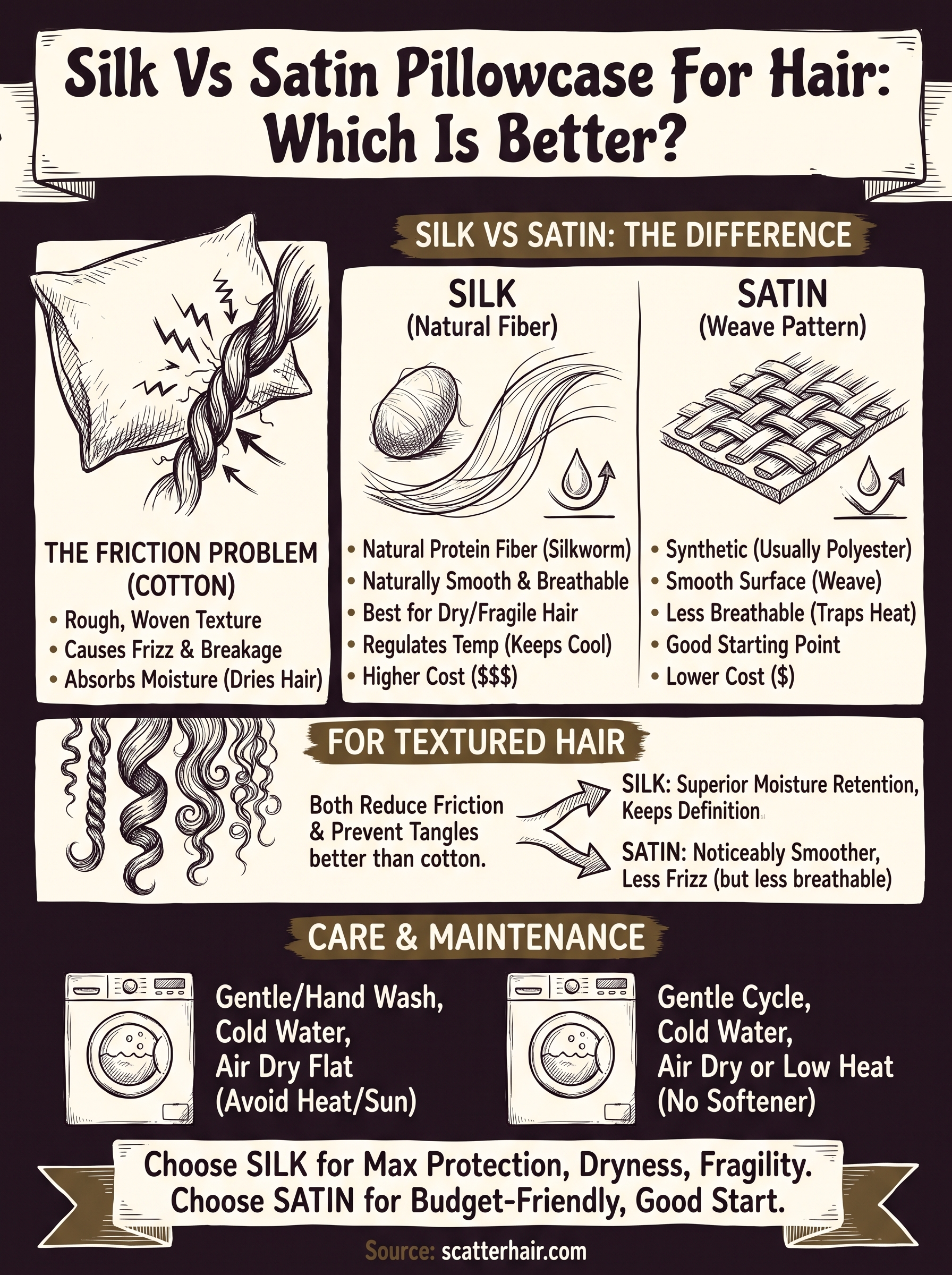
The silk vs satin pillowcase for hair debate does not have one universal winner, it has a right answer for your specific situation. Silk gives you better breathability, a naturally smoother surface, and superior moisture retention, making it the stronger choice if your textured hair deals with dryness, fragility, or breakage you cannot seem to get ahead of. Satin closes most of the gap at a much lower price, which makes it a smart starting point if you have never made the switch from cotton.
Either way, changing what you sleep on is one of the lowest-effort, highest-return habits you can build into your hair care routine. Your styling products work harder, your results last longer, and your mornings get easier. If you are serious about your textured hair, this is one upgrade that pays for itself quickly. Check out scatterhair to see what else we are building for textured hair done right.