

What Is Heat Protectant for Hair? Benefits, Use, Myths
You pick up a flat iron or blow dryer, run it through your hair, and hope for the best. Sound familiar? If you've ever wondered what is heat protectant for hair, and whether you actually need one, you're asking the right question. Heat styling is one of the fastest ways to damage textured hair, breaking down the proteins that give your curls, coils, and waves their structure and bounce.
Good styling starts with protection. That means understanding what goes between your hair and a 400°F styling tool before you even think about the look you're going for. Heat protectant is one of those steps that gets oversimplified, overhyped, or straight-up skipped, and your hair pays the price either way.
This article breaks down exactly what heat protectant is, how it actually works on a hair-science level, the real benefits, how to use it properly, and the myths that keep circulating online. By the end, you'll know whether it deserves a permanent spot in your routine, and how to pick one that works for your hair type rather than against it.
Why heat protectant matters for heat styling
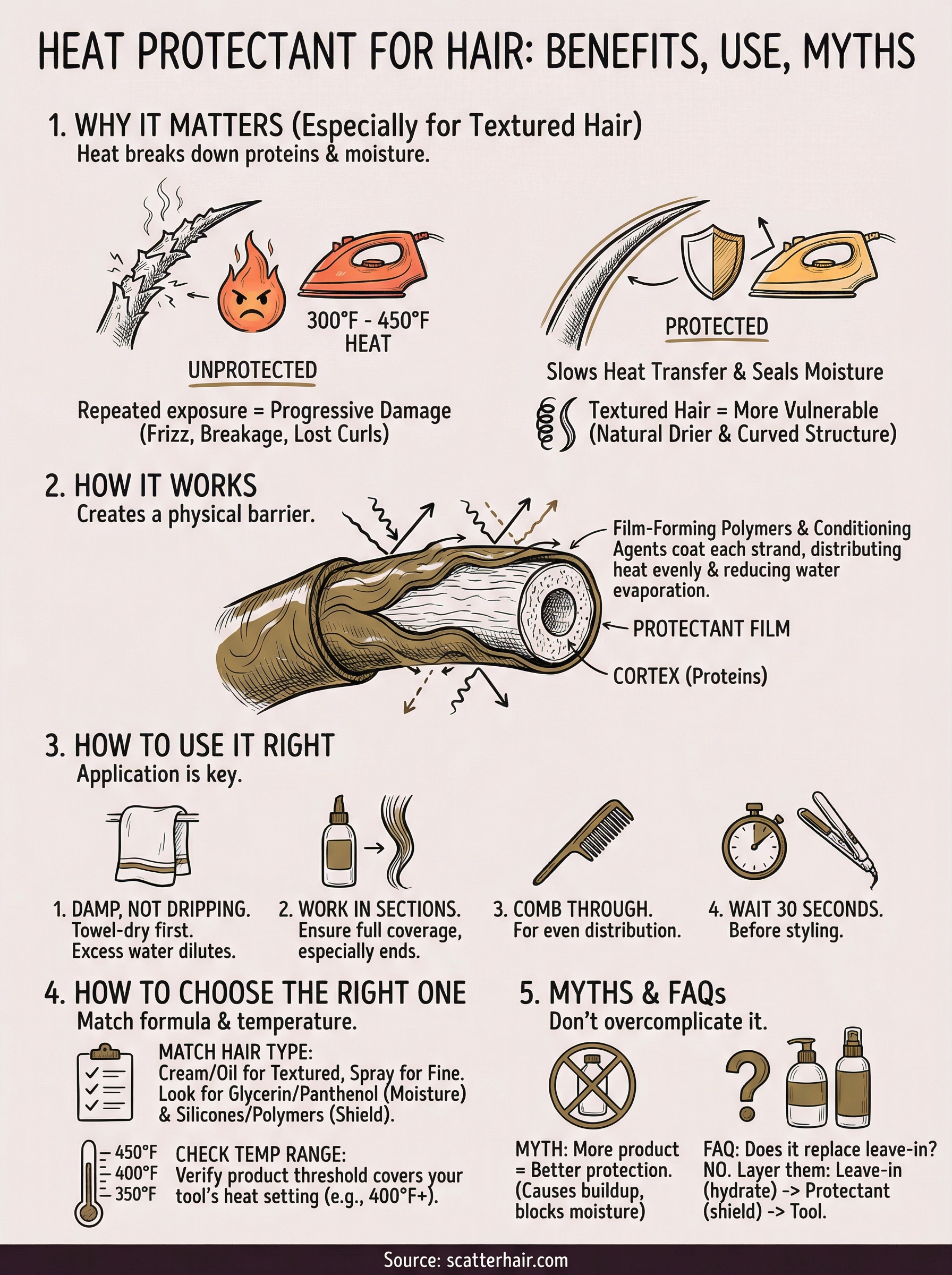
When you apply direct heat to your hair, you're working with temperatures that most styling tools push between 300°F and 450°F. Your hair's outer layer, the cuticle, is built to handle a lot, but repeated heat exposure at those levels strips moisture, raises and cracks the cuticle, and degrades the keratin proteins that give your strands their strength. Heat protectant sits between your hair and the tool, acting as a buffer that slows heat transfer and seals in moisture before damage starts.
Textured hair carries more risk
Curly, coily, and wavy hair types are structurally more vulnerable to heat damage than straight hair. The bends and curves in each strand create points where the cuticle naturally lifts, which makes it easier for heat to penetrate deeper into the cortex. On top of that, textured hair tends to be drier by default because the natural oils your scalp produces have a harder time traveling down a coiled strand. Less moisture means less natural protection, so the margin between a good styling session and a damaging one is smaller than you might think.
If your hair already lacks moisture, adding high heat without any protection accelerates breakage and permanently alters your curl pattern.
What repeated heat exposure actually does
Understanding what is heat protectant for hair starts with understanding what heat actually does over time. A single styling session at high heat won't destroy your hair, but repeated exposure without protection builds up cumulative damage. Each session lifts the cuticle a little more, lets moisture escape a little faster, and makes your strands progressively more brittle. By the time you notice the frizz, split ends, or lost curl definition, the damage is already done and much harder to reverse.
How heat protectant works on your hair
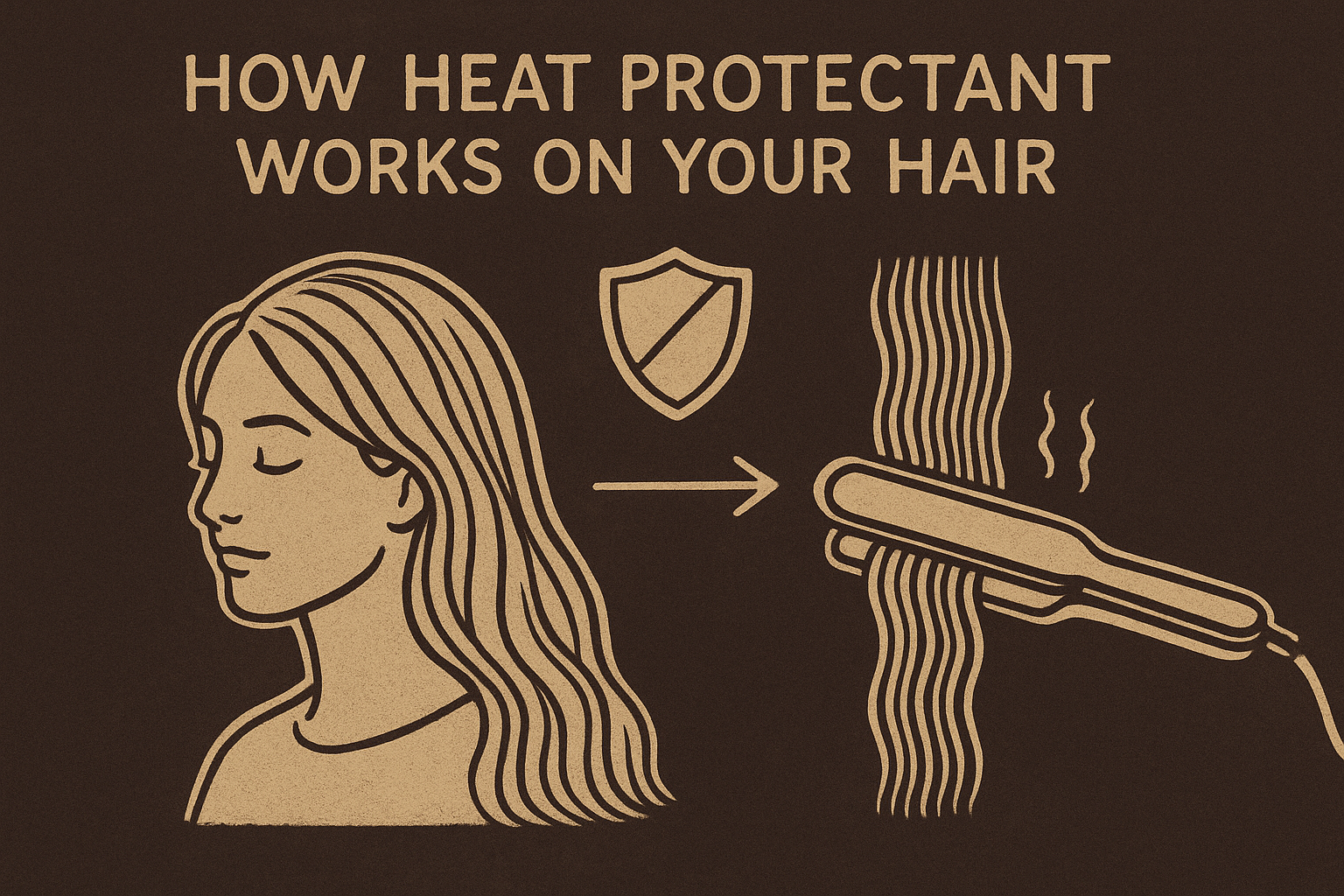
Heat protectants work through a combination of film-forming polymers and conditioning agents that coat each strand before you apply heat. These ingredients create a physical barrier on the surface of your hair that slows heat transfer, so less thermal energy penetrates into the cortex where real structural damage happens.
The role of film-forming ingredients
Most heat protectants rely on polymers like silicones, proteins, or plant-based film formers to do the heavy lifting. These ingredients spread across the hair shaft and form a thin, even layer that absorbs and distributes heat more evenly than unprotected hair can. When understanding what is heat protectant for hair, this distribution is the key mechanism: instead of one concentrated point of heat hitting your cuticle, the barrier spreads it out.
The more evenly heat distributes across your strand, the less likely you are to cause localized damage that weakens your curl pattern over time.
Your hair also retains more moisture when a film-former is present, because the coating reduces how much water evaporates from the strand during styling. That means softer, more defined results after you put the tool down.
How to use heat protectant the right way
Knowing what is heat protectant for hair is only half the equation. Application technique matters just as much as the product itself. Most people apply too little, skip sections, or put it on soaking wet hair, which dilutes the formula before it bonds to your strands.
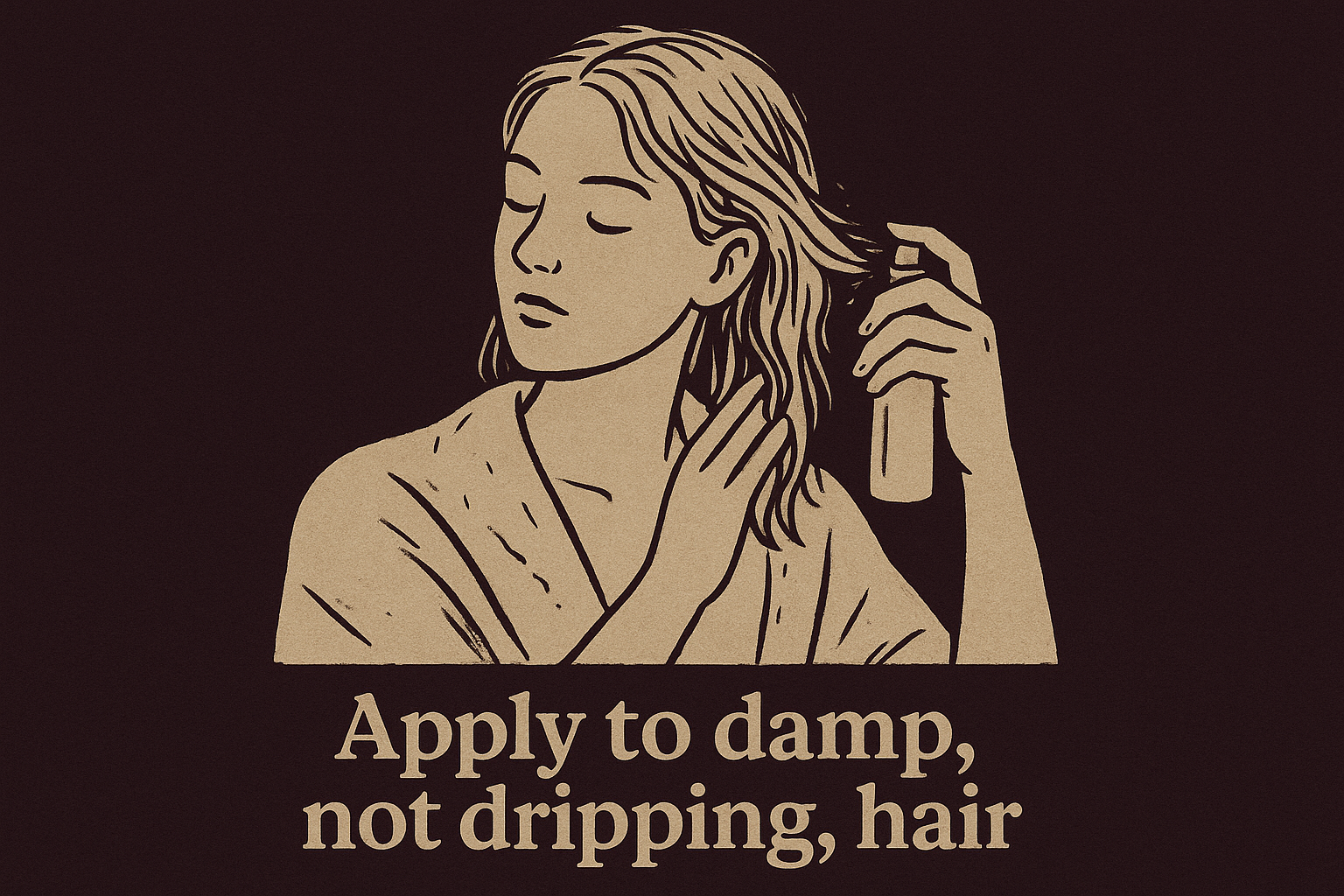
Apply to damp, not dripping, hair
Your hair should be towel-dried and damp when you apply heat protectant, not soaking. Excess water dilutes the product and stops the film-forming ingredients from coating your strands evenly. Focus on the mid-lengths and ends, where your hair takes the most direct heat.
Skipping the ends is the most common application mistake, and it's exactly where breakage and split ends start.
Work in sections for full coverage
Sectioning your hair ensures you don't miss spots, especially with thick or high-density textured hair where product struggles to reach every strand in one pass. Apply, comb through, and wait at least 30 seconds before you pick up your styling tool. A basic order helps:
- Towel dry your hair first
- Apply protectant section by section
- Comb through for even distribution
- Wait 30 seconds, then style
How to choose the right heat protectant
Not every product labeled as a heat protectant delivers the same results. When you understand what is heat protectant for hair and what it does, you can filter out formulas that won't hold up to your actual styling temperature or hair texture.
Match the formula to your hair type
Textured hair typically does better with cream or oil-based formulas because they combine moisture delivery with thermal protection. Lightweight sprays suit fine or low-porosity hair where heavy products cause buildup. A quick check of the ingredient list helps:
- Look for glycerin or panthenol for added moisture
- Look for silicones or plant-based polymers for heat shielding
- Avoid formulas with high alcohol content, which dries textured hair out
A product that doesn't match your hair type will either sit on top of your strands or evaporate before it can protect them.
Check the heat protection range
Every heat protectant lists a maximum temperature threshold on the label. If you style at 400°F or above, verify the product covers that range before you buy it.
A formula rated for 350°F won't protect your hair at 450°F regardless of how evenly you apply it. Always match the product's ceiling to your tool's actual setting.
Heat protectant myths and FAQs
A few persistent myths around what is heat protectant for hair lead people to either overuse these products or skip them entirely. Neither approach protects your strands, and both can leave your hair in worse shape than a simple, consistent routine would. These misunderstandings are common, and clearing them up helps you build a routine that actually performs.
Myth: More product means more protection
Piling on extra product doesn't give your hair stronger protection. Once the film-forming ingredients coat your strands evenly, additional layers just sit on top and create buildup. Too much product can actually block moisture from entering the hair shaft after styling, leaving textured hair feeling stiff and dry.
One even, well-distributed application does more than three heavy ones.
FAQ: Does heat protectant replace leave-in conditioner?
No. These two products serve different functions. Leave-in conditioner hydrates and detangles your hair before styling. Heat protectant creates a thermal barrier between your strand and the tool. Your hair benefits most when you layer them in the right order: leave-in first, heat protectant second, then your styling tool.
Using only one of these products leaves a gap in your routine that heat damage or dryness will fill quickly. Both products work together, not in place of each other.
Final takeaways
Understanding what is heat protectant for hair gives you the foundation to make smarter decisions every time you pick up a styling tool. Heat damages textured hair by breaking down proteins, moisture, and curl structure over time, and a good heat protectant slows that process by forming a barrier between your strands and the tool.
Application and product selection matter as much as the protectant itself. You need the right formula for your hair type, applied to damp hair in sections, at a temperature your product can actually handle. Pairing it with a leave-in conditioner fills the gap between hydration and protection.
Skipping this step costs your curl pattern and strand strength more than most people realize until the damage becomes visibly irreversible. Build the habit now, and your hair will hold up to styling longer. Scatter's first product is Slip, a 2% hyaluronic acid hair serum. Work it through wet-to-damp hair, then air dry for texture or blow dry for body. It's on pre-order now.