

Scalp Massage: What It Is and How to Do One
If your scalp feels tight, itchy, or just plain neglected, you're not alone. A scalp massage is exactly what it sounds like: applying pressure with your fingers, a tool, or a brush to the skin on your head to loosen tension and help you relax. It's not some spa-only luxury reserved for special occasions. It's a five-minute habit you can build into your routine tonight.
So what does it actually do? A proper scalp massage feels great, and it physically loosens product buildup and dead skin that weigh down your texture. It also relaxes the muscles around your head and neck, which matters more than people realize when you're constantly manipulating textured hair through wash days, protective styles, and detangling sessions.
This guide breaks down the real mechanics behind scalp massage: how it works, the techniques worth learning, and what it means for curly, coily, and textured hair specifically. We'll cover when to do it, whether oil helps or hurts, and how this small habit fits into a bigger routine built around styling that actually works with your texture, not against it.
Why a scalp massage matters for your hair and mind
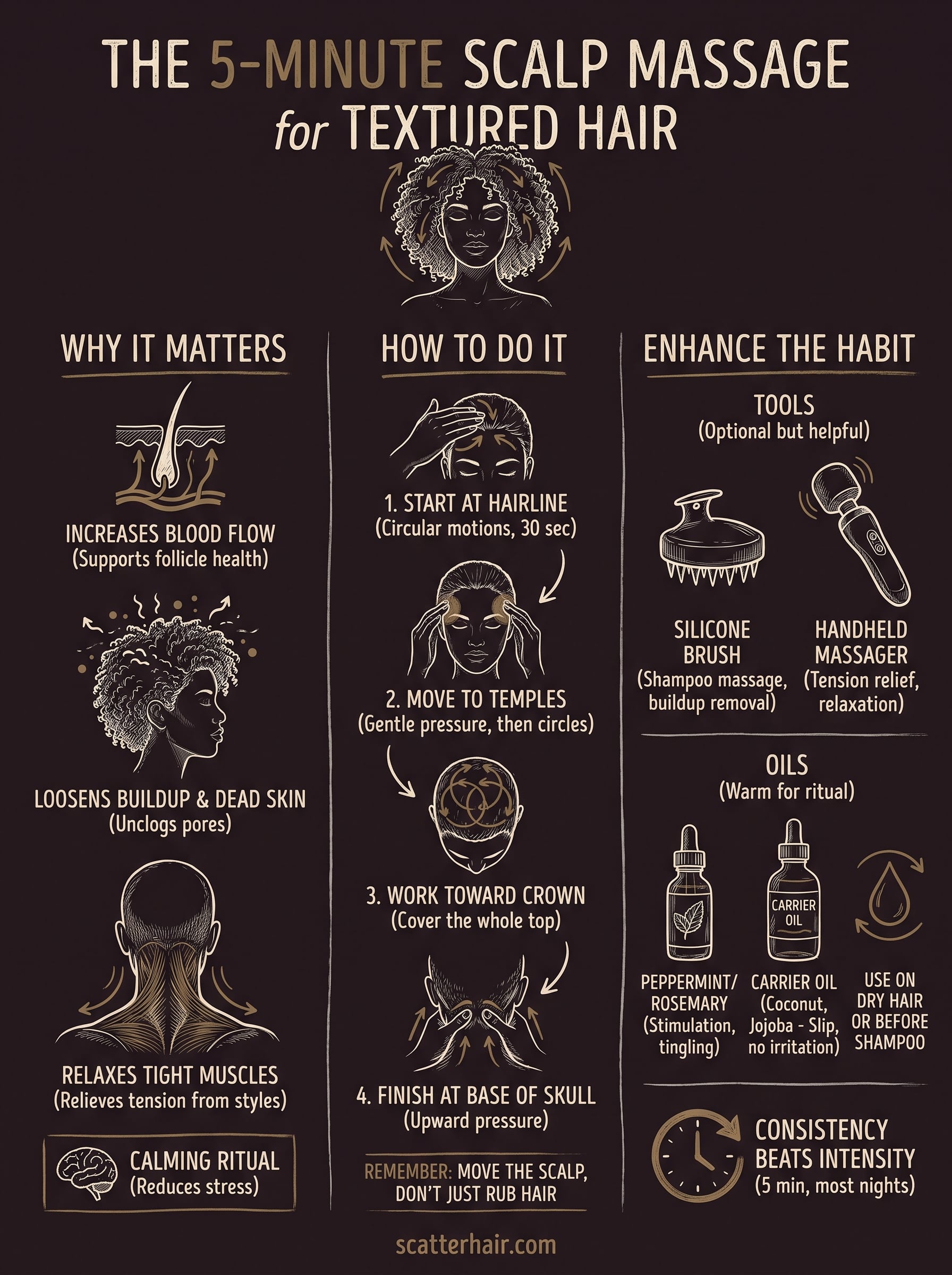
Your scalp is skin, and like any skin, it can get tight, dry, or clogged without you noticing. Textured hair tends to trap product residue and dead skin cells more easily because of how the hair coils and shields the scalp from air and light exposure. When you massage that skin, you mechanically break up buildup and loosen the surface so it's easier to rinse clean. That's a simple, practical reason to spend five minutes on your scalp instead of skipping straight to your ends.
A tense scalp doesn't just feel bad, it makes wash day harder than it needs to be.
There's also a muscular piece people miss. The muscles across your scalp, especially near your temples and the base of your skull, tighten up from stress, tension headaches, and even from styles that pull at the root like tight ponytails or braids. Chronic tightness in that area restricts movement in the tissue and can make your scalp feel sore to the touch. Massage releases that tension the same way rubbing a tight shoulder does. You're not just working on your hair, you're easing the skin and muscle underneath it.
Then there's the mental side, which matters just as much for anyone dealing with the extra time and effort textured hair styling demands. Detangling, twisting, and protective styling take patience, and a lot of people carry low-grade frustration around wash day. A calming ritual like scalp massage, especially with warm oil and slow circular motions, shifts you out of that frustration and into something closer to relaxation. It's the same reason a head massage at the salon feels so good: slow pressure and a bit of warmth tend to help you unwind.
Putting these pieces together, scalp massage isn't just a nice-to-have. It loosens buildup, releases physical tension your styling routine creates, and gives you a moment of calm in a process that can otherwise feel like a chore. That combination is why it belongs in your regular routine, not just your occasional self-care day.
How to give yourself a scalp massage
You don't need special training to do this right. Start with dry hair or right before you shampoo, since damp or oiled hair gives your fingers less slip and makes the technique harder to control. Use your fingertips, not your nails, and press firmly into the skin rather than dragging across the surface of your hair. The goal is to move the scalp over the skull, not just pet the strands.
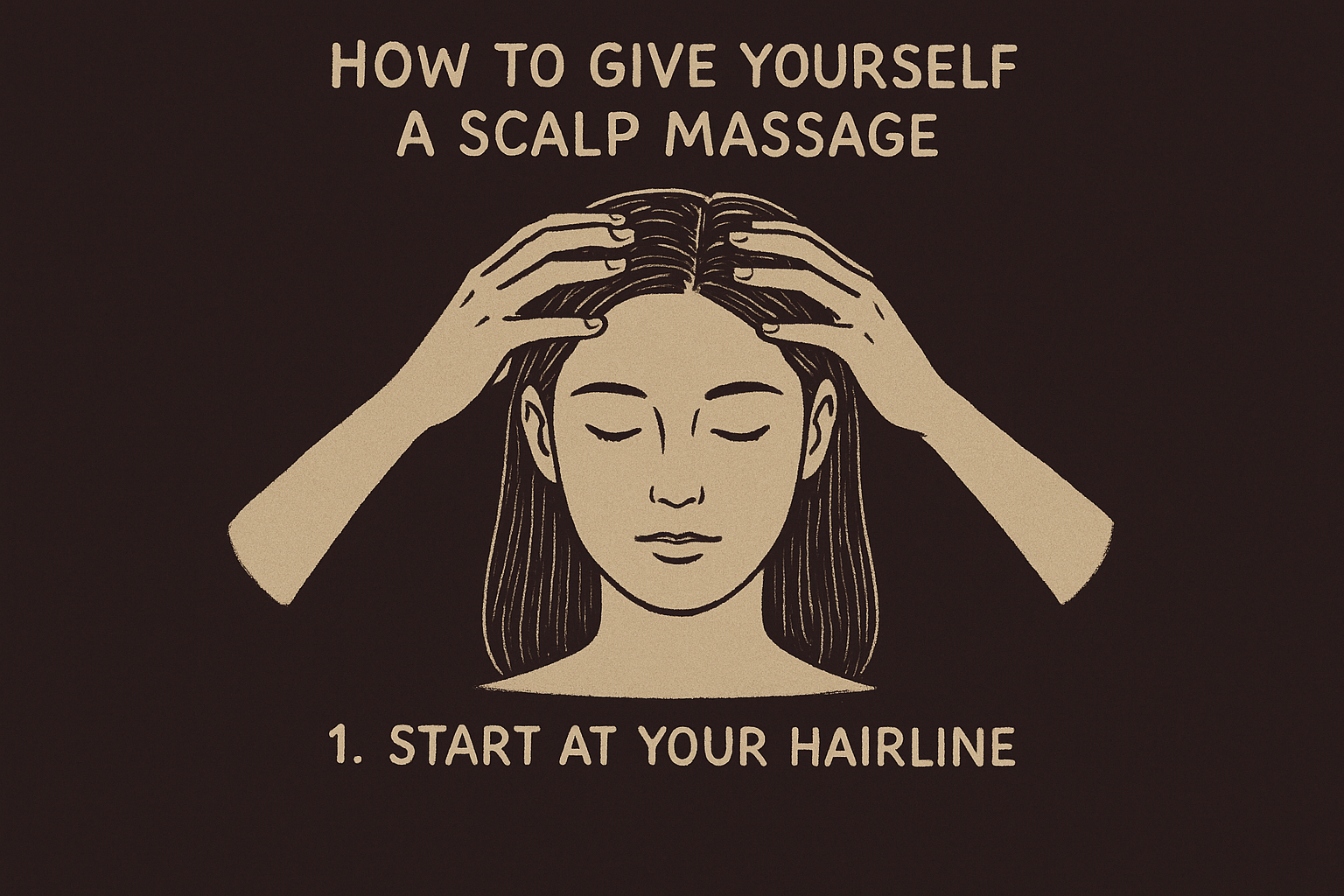
The scalp should move under your fingers, not just get brushed on top.
Here's a simple sequence you can follow every time:
- Start at your hairline and press with four fingers on each side, making small circular motions for 30 seconds.
- Move to your temples, where tension from tight styles tends to build, and hold gentle pressure for 10 seconds before circling.
- Work toward the crown, covering the whole top of your head in overlapping circles.
- Finish at the base of your skull, using your thumbs to press upward into the muscle where your neck meets your head.
- Repeat the full pass two or three times, spending extra time on any spot that feels particularly tight or sore.
Keep your pressure firm but not painful. You're aiming for the kind of pressure that feels like a good stretch, not one that makes you wince. Five minutes is plenty for a daily habit, though you can stretch it to ten if you're using it to unwind before bed. If your fingers get tired, switch hands or take a short break rather than lightening your pressure, since consistent depth matters more than speed. Doing this over sink water or with a towel around your shoulders also makes it easy to add oil without a mess, which we'll get into next.
Scalp massage tools and oils worth trying
Your fingers work fine on their own, but the right tool or oil can make a scalp massage feel more effective and easier to stick with. Tools add consistent pressure your hands can't hold for long, and oils reduce friction so you can massage longer without irritating the skin. Neither is required, but both are worth testing if you want to upgrade a habit you're already doing.
Tools that actually help
Silicone scalp brushes and handheld massagers are the most common options, and each suits a different need.
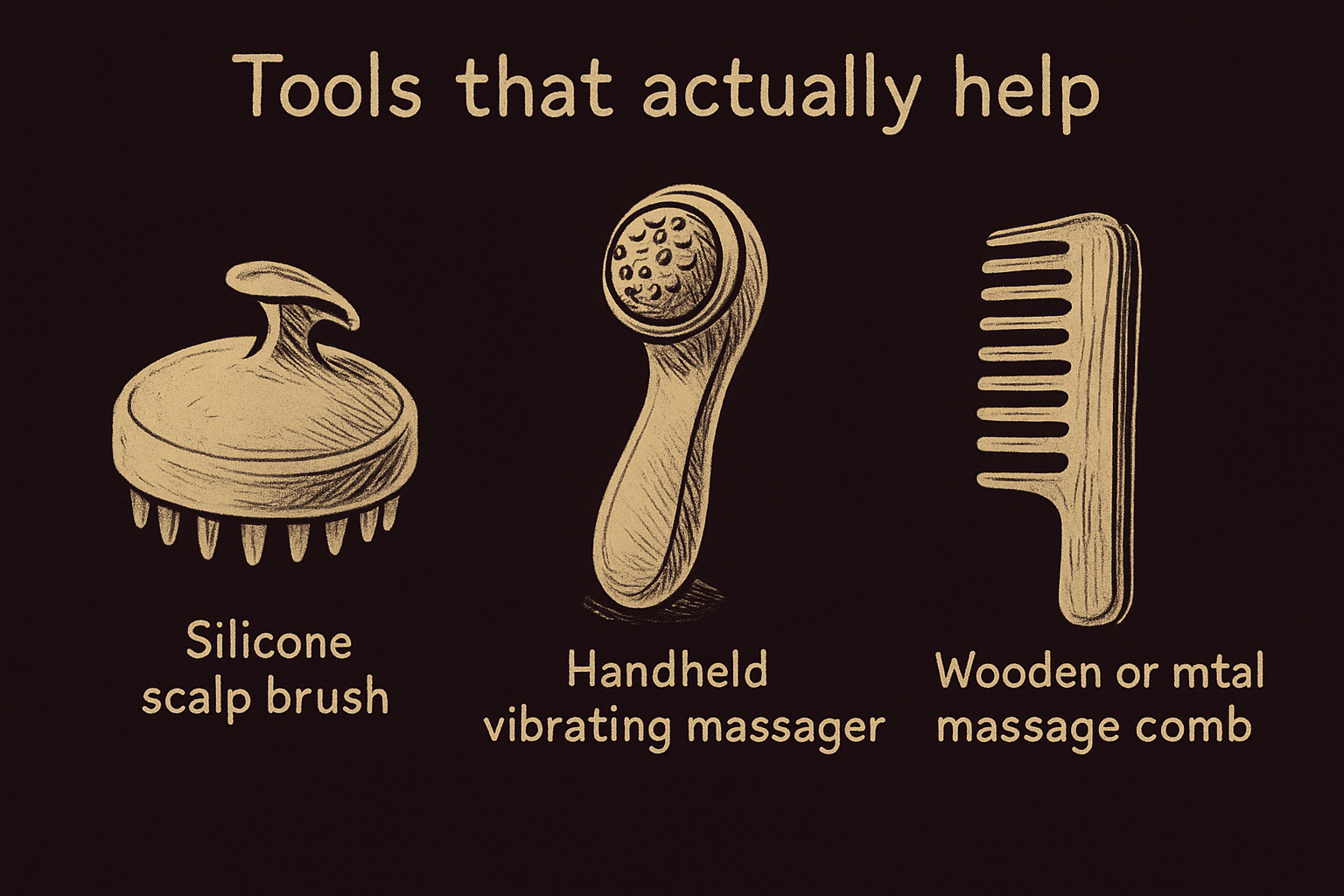
| Tool | Best for | Watch out for |
|---|---|---|
| Silicone scalp brush | Shampoo massage, buildup removal | Too much pressure can scratch a sensitive scalp |
| Handheld vibrating massager | Tension relief, relaxation | Battery life, awkward angles at the back of the head |
| Wooden or metal massage comb | Combining massage with detangling | Slower, requires more hand strength |
The best tool is the one you'll actually use every day, not the one with the most features.
Oils worth adding
Warm oil turns a quick massage into something closer to a ritual, and it helps your fingers glide instead of tug at strands. Peppermint oil (diluted in a carrier oil) adds a cooling, tingling sensation many people enjoy. Coconut or jojoba oil work well as simple, textured-hair-friendly bases if you just want slip without added scent or sensation. If you're building your own styling routine around products made for textured hair, treating the scalp step as part of that routine, not separate from it, makes the whole process feel more intentional.
How often to massage and what to watch for
Daily is fine, but you don't need to overdo it. A five-minute massage most nights of the week gives you the tension relief and calm without turning into another chore on top of your styling routine. If you're short on time, even three sessions a week keeps your scalp from tightening back up between wash days. What matters more than frequency is consistency. A short, regular habit beats one long session on a Sunday.
Consistency beats intensity when it comes to scalp massage.
Signs you're doing it right
You should feel looser, not sorer, once you're done. Watch for these markers:
- Less tightness at your temples and hairline within a few minutes of finishing
- A warm, slightly tingly feeling across the scalp, not sharp pain
- No redness or scratches after you rinse or brush through your hair
- Hair that detangles more easily on wash day, since loosened buildup makes a real difference
When to pull back
Some scalps need a gentler approach, especially if you're dealing with flaking, active irritation, or a recent protective style that's still pulling at the roots. Scratching instead of pressing is the most common mistake, and it can irritate your scalp. If you notice ongoing redness or soreness that doesn't fade, ease off the pressure and check in with a dermatologist.
Making scalp care part of your routine
A scalp massage isn't a trend, it's basic maintenance for your scalp. Five minutes a night loosens buildup, calms the muscles tight styles create, and gives your textured hair a better foundation to work with, no matter what you put on it afterward. The habit only works if it sticks, so pair it with something you already do, like your nightly wind-down or the minutes before you climb into bed.
Scatter's first product is Slip, a 2% hyaluronic acid hair serum. Work it through wet-to-damp hair, then air dry for texture or blow dry for body. It's on pre-order now.