

Scalp Massage for Curly Hair: Benefits, Tools, And How-To
Your curls start at the scalp, not at the strand. That's something most people overlook when they focus only on products, techniques, and diffuser settings. But a solid scalp massage for curly hair can do more than just feel good. It boosts blood flow to the follicles, helps distribute natural oils, and creates a healthier foundation for your curls to actually thrive.
Whether you're dealing with dryness, slow growth, or product buildup that's weighing your texture down, a regular scalp massage routine can make a real difference. And the best part? You don't need expensive treatments or salon visits to get started, just the right tools, techniques, and a few minutes of your time.
At scatterhair, we're all about making styling effortless for people with textured hair. That means caring about what happens before you style, too. In this guide, we'll break down the actual benefits of scalp massage for curly hair, walk you through how to do it properly, and cover the best tools and products worth trying. Let's get into it.
What scalp massage can and can't do for curls
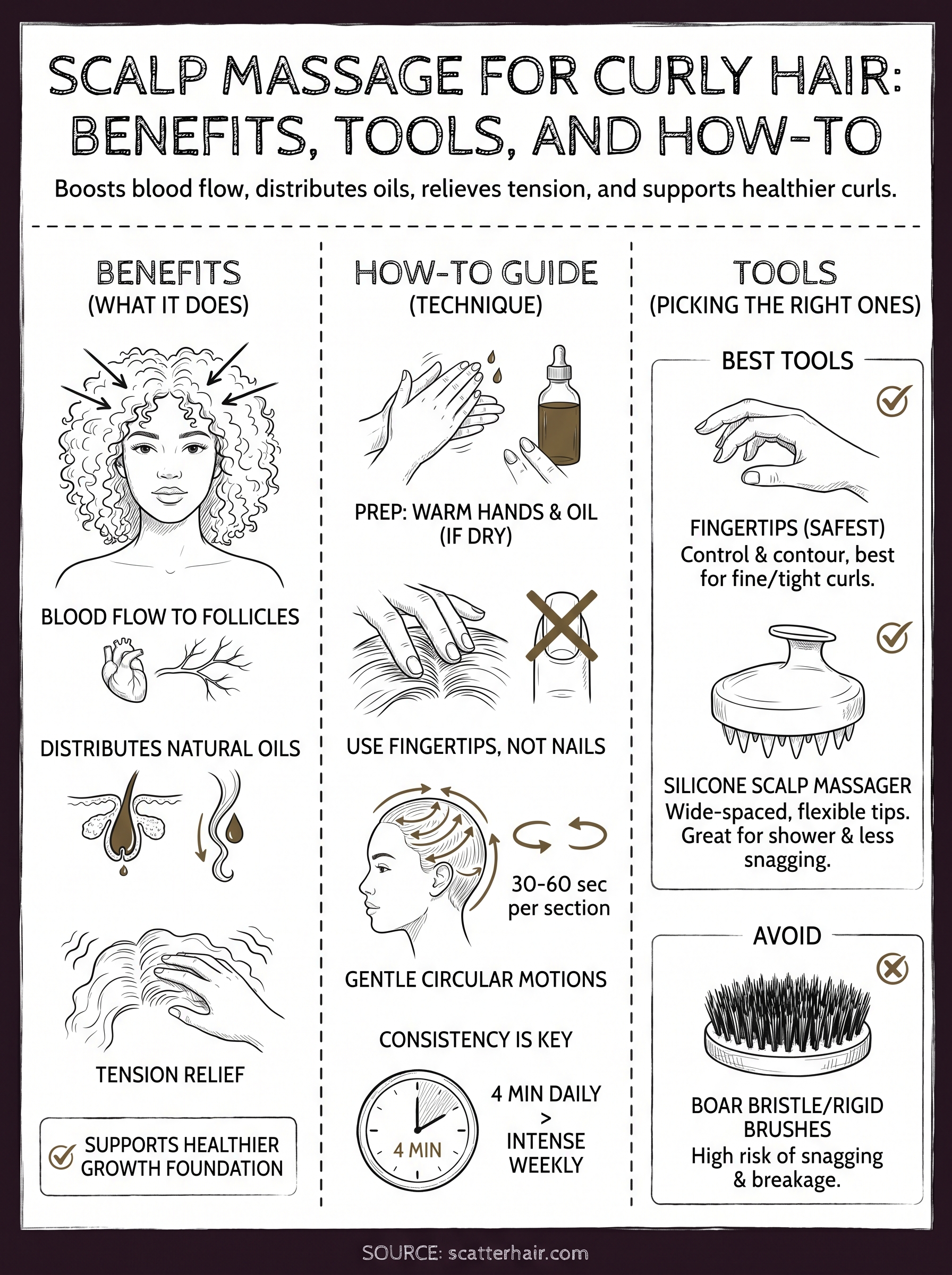
Scalp massage for curly hair gets a lot of attention online, and some of the claims are legitimate while others are overblown. Before you build a routine around it, it helps to know exactly what you're working with. Blood circulation is the real mechanism here: massaging your scalp stimulates blood flow to your follicles, which means more oxygen and nutrients reach the root. That creates a foundation for stronger, healthier hair growth over time, not overnight.
What the research actually supports
A small but notable study found that consistent scalp massage can increase hair strand thickness and stimulate follicle activity over a period of months. For curly hair specifically, the benefits go beyond growth. Regular massage helps loosen product buildup, break up dry flakes, and encourage your scalp's natural sebum to travel down the hair shaft. That matters because curly strands have a harder time retaining moisture due to their shape, and any extra lubrication from the root helps.
Consistency matters more than intensity. A four-minute daily massage will outperform an aggressive once-a-week session every time.
Your scalp is skin, and like all skin, it responds well to regular stimulation. Tension relief is another real benefit worth mentioning: people with curly hair often wear protective styles or tight updos, and massaging the scalp eases that built-up pressure and soreness in a noticeable way.
What it won't do on its own
Scalp massage is not a replacement for a solid hair care routine. If you're dealing with a medical condition like alopecia or scalp psoriasis, massage alone won't treat it and you'll need a dermatologist for that. Similarly, if your products are causing buildup or irritation, massage will move things around but won't fix the source of the problem.
Think of scalp massage as a supporting habit, not a cure. It works best when paired with proper cleansing, deep conditioning, and moisture-sealing for your curls. When those pieces are already in place, adding regular massage gives your scalp the right environment to support healthier growth and less buildup between wash days.
Step 1. Prep your scalp and hands
Before you start any scalp massage for curly hair, what's already on your scalp and hands matters. Going in dry with nothing on your fingertips creates friction against the scalp, which irritates the skin instead of helping it. Prepping correctly takes about two minutes and sets the entire massage up to actually work.
Choose an oil or product that matches your scalp type
The product you apply before massaging makes a direct difference in how well the massage works. If your scalp runs dry, a lightweight oil like jojoba or grapeseed absorbs without clogging follicles. If you deal with buildup or oiliness, massage on a dry scalp with clean hands and skip the added product entirely.
Apply oil in small sections directly to the scalp rather than pouring it onto the hair, so it actually reaches the follicles.
Prep your hands before you touch your scalp
Warm hands transfer heat and increase circulation more effectively than cold ones, so rub your palms together for about ten to fifteen seconds before starting. It also helps to wash your hands first with a gentle, fragrance-free soap and dry them fully. Any residue or bacteria on your fingers transfers straight to your scalp and can work against the very follicles you're trying to stimulate. Here's a quick pre-massage checklist:
- Wash hands with a fragrance-free soap
- Dry completely before touching your scalp
- Rub palms together for 10 to 15 seconds to warm them
- Part your hair into sections if needed to access the scalp directly
Step 2. Massage in the shower for a deeper cleanse
The shower is the best place to start a scalp massage for curly hair if you're new to the routine. Warm water softens the scalp, loosens buildup, and makes it easier for your fingers to move without friction. Apply your shampoo or co-wash directly to the scalp in sections before stepping under the water, then begin working it in with your fingertips.
Use your fingertips, not your nails
Your fingertips do all the work here, not your nails. Use the pads of your fingers and apply firm but comfortable pressure in small circular motions. Move across the scalp in sections, starting at the nape and working toward the crown. Spending 30 to 60 seconds per section gives the product enough time to break up buildup without over-stripping your scalp's natural oils.
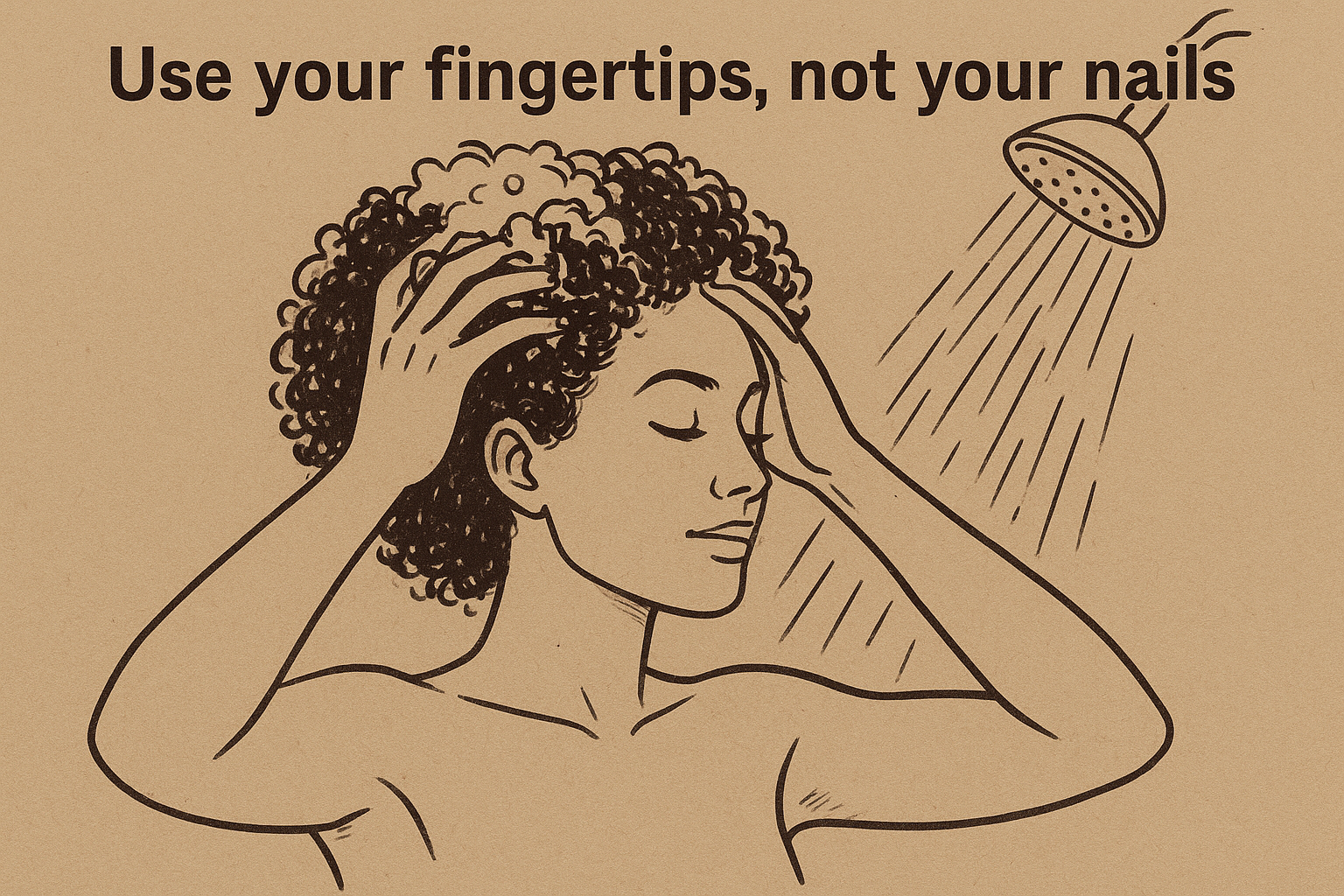
Keep your elbows raised and let gravity work for you. This position helps you apply even pressure across the entire scalp without straining your hands.
Time it with your rinse
Rinsing too quickly cuts the massage short before it does much. Aim for a total massage time of four to five minutes before you rinse. Once you're ready, continue gentle circular movements as the water runs through your scalp. That final rinse massage pushes loosened buildup out of the follicles rather than letting it settle back down onto the scalp surface where it started.
Step 3. Massage on dry scalp for growth routines
A dry scalp massage works differently than a shower massage, and it's the approach most tied to long-term hair growth results. When you massage between wash days on a completely dry scalp, you stimulate blood flow to the follicles without any water or product interfering with direct contact. This is where a consistent scalp massage for curly hair routine builds real momentum over time.
Set a time that fits your actual schedule
The best time to do a dry scalp massage is right before bed or first thing in the morning, when you're already sitting still and not rushing. Pick one consistent time each day and stick with it, because regularity drives results here more than technique ever will. A four-minute session with firm, circular fingertip pressure across the entire scalp is enough to make a measurable difference over weeks.
Four minutes daily for 24 weeks is what the research points to for measurable changes in hair thickness, so consistency matters more than intensity here.
What to do if your scalp feels tight or flaky
Dryness or tightness on the scalp signals that your skin barrier needs extra support before you massage. Apply a few drops of a lightweight scalp oil like jojoba directly to the affected areas before starting, not after. This small step prevents the friction that makes dry scalp conditions worse during the massage.
Work the oil in with small, slow circular motions rather than fast scrubbing movements. Slow, deliberate pressure brings blood flow to the surface without aggravating an already sensitive or flaky scalp. Keep each section to about 30 seconds and move methodically from the nape to the crown so you don't miss any areas.
Step 4. Pick tools that won't snag curls
The right tool makes a scalp massage for curly hair easier and more effective, but the wrong one can catch on your curl pattern and cause breakage at the root. Curly hair tangles easily, so tools with wide-spaced, flexible bristles or soft silicone tips work far better than anything rigid or closely packed.
Silicone scalp massagers
Silicone scalp massagers are the most curly hair-friendly option available. Their soft, flexible tips move along the scalp without gripping the hair shaft, which means less snagging as you work through sections. Look for a massager with rounded, well-spaced nodes rather than sharp or tightly clustered ones. The wider the spacing between nodes, the less likely it is to catch on your curls mid-massage.
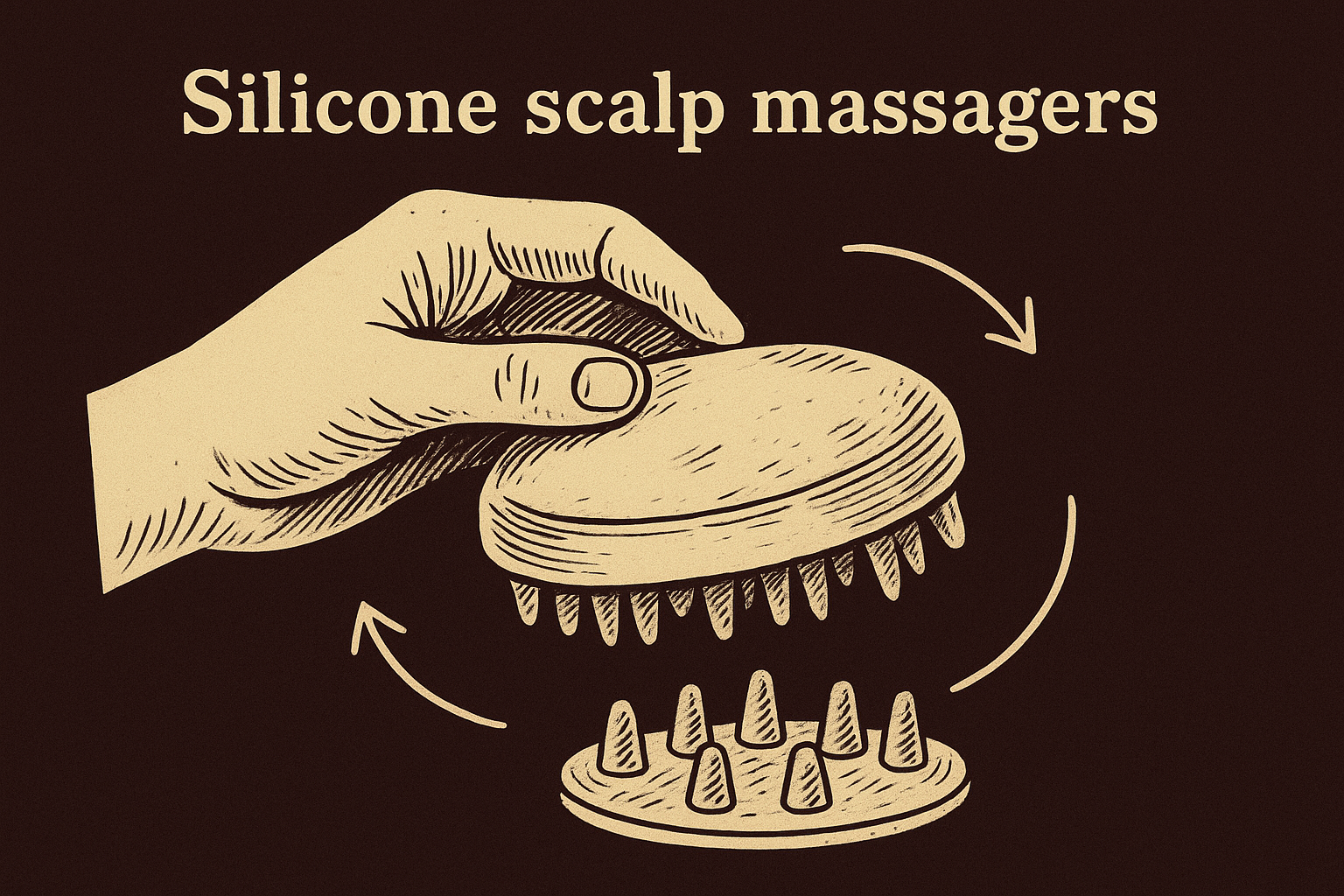
A handheld silicone massager used during shampooing cuts your wash-day time down while covering more scalp surface than fingers alone.
Here's a quick comparison to help you choose:
| Tool Type | Best For | Risk for Curls |
|---|---|---|
| Silicone handheld massager | Shower and dry massage | Low, if nodes are wide-spaced |
| Electric scalp massager | Deep stimulation sessions | Medium, check attachment type |
| Boar bristle brush | Spreading oils on scalp | High, avoid on curly hair |
When fingers beat any tool
Your fingertips remain the safest option for fine or tightly coiled curl patterns where even silicone tools create friction. No tool replicates the pressure control you get from your own hands, and fingers naturally follow the scalp's contours without pulling on nearby strands.
Next steps for a healthier scalp
A consistent scalp massage for curly hair routine builds real results over time, but it works best when the rest of your haircare habits support it. Start with what you already have, your fingertips, a few drops of lightweight oil, and four minutes of focused daily pressure. Once that feels natural, layer in a silicone massager on wash days for deeper stimulation without the risk of snagging your curl pattern.
From there, pay attention to how your scalp responds. Reduced flakiness, less tension, and improved curl definition at the root are all signs the routine is working. If you want to pair your scalp work with products actually formulated for textured hair, explore what Scatter is building for curly hair. The goal is a scalp that supports your curls from the inside out, and that starts with small, repeatable habits done consistently.