

How to Master Deep Conditioning for High Porosity Hair
Your hair drinks up moisture like a sponge, but hours later it feels dry and brittle again. That's high porosity hair in action. The raised cuticles that make your strands absorb products so quickly also let moisture escape just as fast. You've tried regular conditioning, but it barely makes a dent. What you need is a different approach to deep conditioning for high porosity hair.
The solution isn't just about slathering on any thick conditioner and hoping for the best. Deep conditioning high porosity hair requires specific ingredients, proper technique, and a strategic sealing step that most guides skip. When you get these three elements right, your hair actually holds onto moisture instead of losing it by lunch time.
This guide breaks down the exact three-step process that works for high porosity strands. You'll learn which protein and oil combinations your hair craves, how to apply heat correctly without causing damage, and the cool rinse technique that locks everything in. No fluff, just what actually works.
Why high porosity hair struggles with moisture
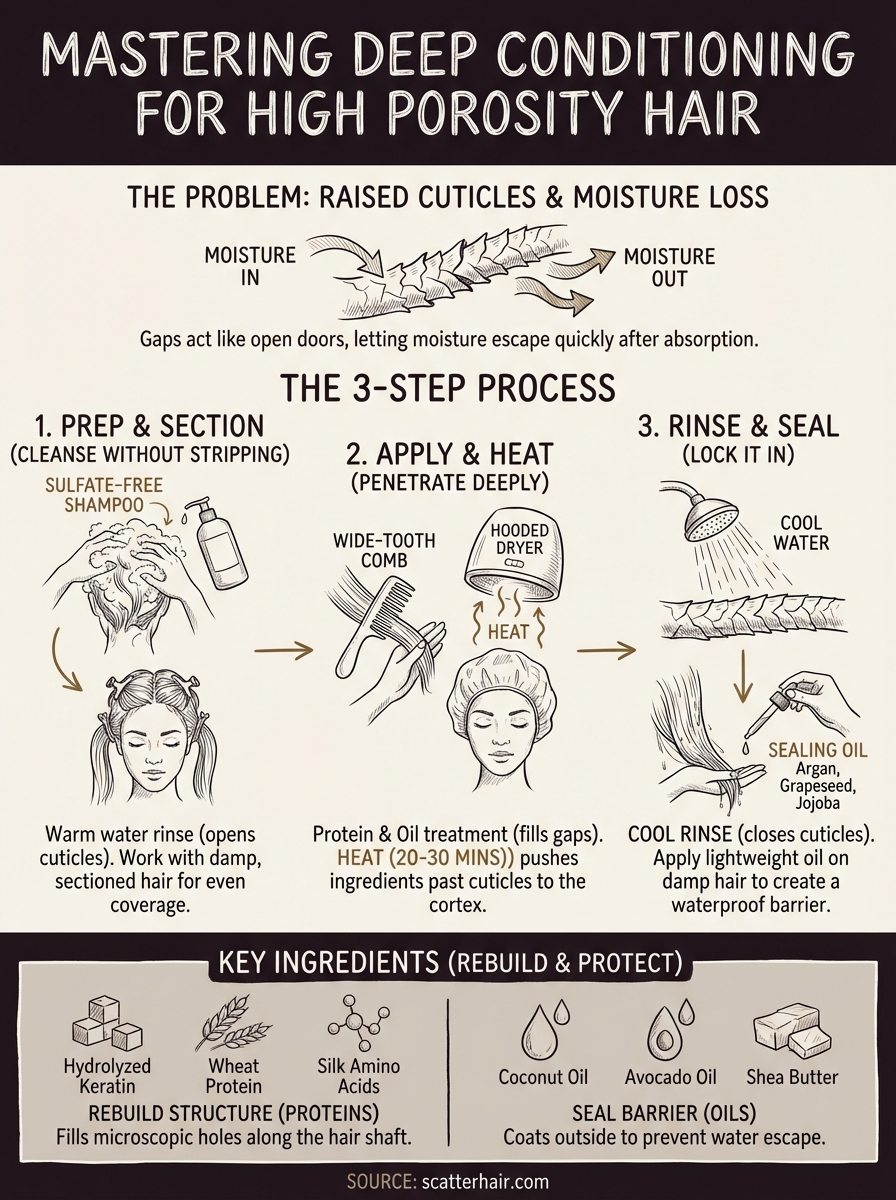
Your hair cuticles act like shingles on a roof. When they lie flat, moisture stays locked inside the strand. High porosity hair has cuticles that stand up and away from the shaft, creating gaps everywhere. These gaps let water rush in during washing, but they also create exits for that same moisture to escape within hours. You end up in a frustrating cycle where your hair feels hydrated in the shower but bone dry by midday.
The cuticle damage that creates open doors
High porosity happens through chemical treatments, heat styling, or mechanical damage from rough handling. Each process lifts and breaks down the protective cuticle layer. Your hair might have developed high porosity from years of bleaching, daily flat iron use, or even harsh brushing on wet strands. Some people inherit naturally high porosity hair, but most develop it over time through styling habits.

The lifted cuticles don't just affect moisture retention. They also make your strands grab onto products instantly but release them just as fast. You've probably noticed that conditioner seems to disappear into your hair, yet the benefits don't last. This happens because the open cuticle structure lets products penetrate deeply but provides no barrier to keep them locked inside.
High porosity hair needs both moisture infusion and a sealing strategy, not just one or the other.
Why regular conditioning fails high porosity strands
Standard rinse-out conditioners work for 2 to 5 minutes on your hair. That's nowhere near enough time for high porosity strands to absorb and retain the proteins and oils they need. Your hair requires longer contact time with intensive ingredients that can actually fill in those gaps and smooth down the cuticles. Regular conditioning just coats the surface without addressing the structural damage underneath.
Deep conditioning for high porosity hair changes this equation by giving your strands 20 to 30 minutes with concentrated treatments. The extended time allows heavier molecules to penetrate through those open cuticles and start repairing damage from the inside out. Heat application during this process opens the pathway even further, letting beneficial ingredients reach the cortex where they can strengthen your hair structure.
Best ingredients for high porosity hair
Your deep conditioning treatment needs to do two jobs at once: fill the gaps in your damaged cuticles and create a protective seal over the strand. The ingredients that accomplish this fall into two categories. Proteins rebuild the internal structure where your hair has broken down, while oils create an external barrier that locks moisture inside. Most people skip one or the other, which is why their deep conditioning treatments fail.
Proteins that rebuild hair structure
Hydrolyzed proteins small enough to penetrate your open cuticles work best for deep conditioning for high porosity hair. These proteins fill in the microscopic holes along your hair shaft, temporarily patching the damage that causes moisture loss. Look for these specific proteins on your product labels:
- Hydrolyzed keratin (rebuilds the cortex and strengthens from within)
- Hydrolyzed wheat protein (increases moisture retention capacity)
- Silk amino acids (smooths the cuticle layer)
- Hydrolyzed collagen (adds elasticity and bounce)
Your hair absorbs these proteins during the 20 to 30 minute treatment window, which is why regular conditioners that sit for just minutes don't deliver the same results. The proteins bind to damaged areas and create a temporary repair that lasts until your next wash.
Oils that seal and protect
Heavy oils create the moisture barrier your high porosity hair desperately needs. After proteins repair the internal damage, these oils coat the outside of your strand and prevent water from escaping. The most effective sealing oils include:
- Coconut oil (penetrates the shaft and prevents protein loss)
- Avocado oil (rich in fatty acids that smooth cuticles)
- Castor oil (thick consistency creates lasting protection)
- Shea butter (seals ends and high damage areas)
Combining proteins with oils gives you both internal repair and external protection in one treatment.
Step 1. Wash and section your hair
Starting with clean, detangled hair sets up your entire deep conditioning treatment for success. You need to remove buildup without stripping your strands, then create sections that allow even product distribution. This prep work takes 10 minutes but makes the difference between deep conditioner that penetrates deeply and product that just sits on the surface.
Cleanse without stripping moisture
Use a sulfate-free shampoo to wash your hair before deep conditioning. Sulfates strip away too much of your natural oils, leaving high porosity hair even more vulnerable to moisture loss. Focus the shampoo on your scalp and roots where oil and product buildup accumulate. Let the suds rinse through your lengths without scrubbing the ends, which need every bit of natural protection they can get.
Rinse with warm water to open your cuticles further. This might sound counterintuitive when your cuticles already stand too open, but you want maximum absorption during the treatment phase. The cool rinse comes later to seal everything in. Make sure you rinse completely because leftover shampoo residue blocks deep conditioner from penetrating your strands.
Section for complete coverage
Divide your hair into four to eight sections depending on thickness and length. Each section should be small enough that you can see through to your scalp when you pull the hair taut. Use clips or hair ties to secure each section away from the others. This prevents you from missing spots and ensures every strand gets adequate product coverage.
Proper sectioning before you apply deep conditioner prevents the frustrating patches of dry hair that happen when product distribution is uneven.
Work with damp hair, not soaking wet strands. Squeeze out excess water with a microfiber towel so your hair can actually absorb the treatment instead of being saturated with plain water.
Step 2. Apply deep conditioner with heat
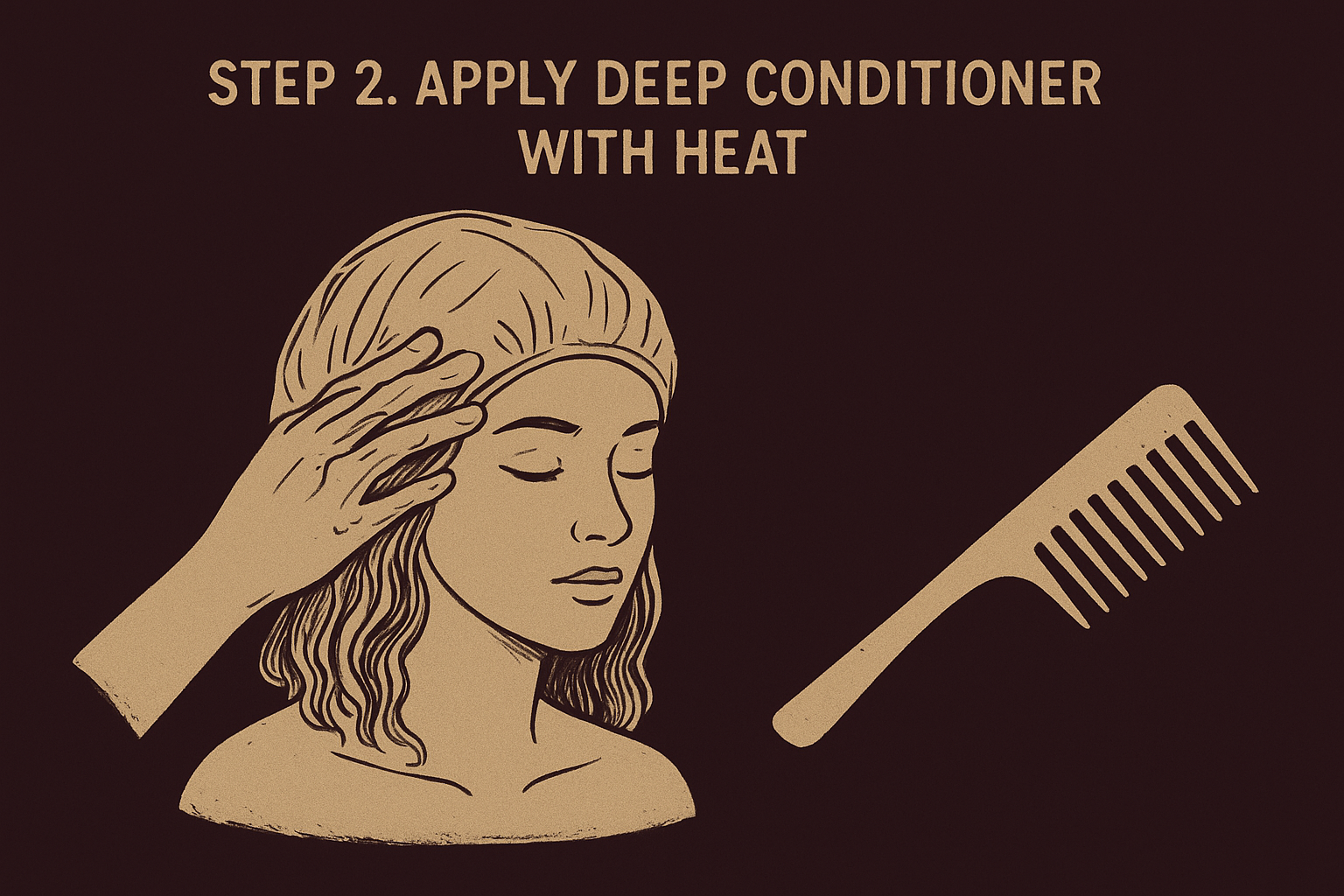
Apply your protein and oil based deep conditioner generously to each section, working from mid-shaft to ends. Your roots produce natural oils and don't need the same intensive treatment as your damaged lengths. Use enough product that each strand feels coated but not dripping, which typically means a quarter-sized amount per section for shoulder-length hair. The goal is complete saturation without waste.
How to distribute product evenly
Work the deep conditioner through each section with your fingers first, making sure you coat every strand from multiple angles. Then use a wide-tooth comb to pull the product from roots to ends, which distributes it evenly and detangles at the same time. Focus extra product on your ends and any areas with visible damage like split ends or breakage. These high-damage zones need more conditioning than the rest of your hair.
Finger-combing alone misses strands and creates uneven results. The wide-tooth comb ensures deep conditioning for high porosity hair reaches every part of each section without causing mechanical damage that a fine-tooth comb would create.
Using heat for deeper penetration
Cover your conditioner-coated hair with a plastic cap or plastic wrap to trap body heat against your scalp. Sit under a hooded dryer for 20 to 30 minutes at medium heat, or use a heat cap if you don't have a dryer. The heat opens your cuticles wider and pushes the proteins and oils deeper into your hair shaft, allowing them to repair damage at the cortex level instead of just coating the surface.
Heat transforms surface conditioning into deep structural repair by driving ingredients past the cuticle layer.
Skip the microwave method for heating caps, which creates uneven hot spots that can damage your hair.
Step 3. Rinse cool and seal thoroughly
After your heat treatment, the way you rinse and seal determines whether your deep conditioning for high porosity hair actually lasts or disappears within hours. This final step closes down your cuticles and creates a protective barrier that keeps all those proteins and oils locked inside your strands. Skip this part and you waste the entire treatment.
The cool rinse that locks in treatment
Turn your water to cool or cold temperature before you start rinsing. The cool water forces your raised cuticles to lie flat against the hair shaft, trapping the deep conditioner inside instead of letting it wash away. Rinse for 2 to 3 minutes until the water runs clear and your hair feels smooth but not slippery. Some product should remain on your strands, which is exactly what you want.
Hot or warm water during this rinse undoes everything you just accomplished by opening cuticles back up and allowing the treatment to escape. Your hair needs the temperature shock of cool water to seal properly.
Sealing with oils for lasting protection
Apply a lightweight oil to your damp hair immediately after rinsing, section by section. Focus on your ends and the most damaged areas. The best sealing oils for high porosity hair include:
- Argan oil (absorbs quickly without heaviness)
- Grapeseed oil (light texture, high in vitamin E)
- Jojoba oil (mimics natural sebum)
Use 3 to 5 drops per section, rubbing the oil between your palms before smoothing it over each strand from mid-shaft down. This oil layer acts as a waterproof coat over your freshly conditioned hair, preventing moisture loss as your hair dries.
Sealing while hair is still damp locks in maximum moisture because the oil traps water molecules inside your strands.
Conclusion
Deep conditioning for high porosity hair works when you combine the right ingredients with proper technique and smart sealing. Your three-step process starts with clean, sectioned hair that's ready to absorb treatment. The proteins and oils in your deep conditioner need 20 to 30 minutes under heat to penetrate those open cuticles and repair damage at the structural level. That final cool rinse and oil seal transform a temporary treatment into lasting moisture retention.
Your hair's ability to hold moisture depends entirely on following all three steps in order. Skip the heat and your proteins stay on the surface. Rush through the cool rinse and your cuticles stay open, letting everything escape. Forget the sealing oil and you lose half your moisture by the time your hair dries.
Building a consistent hair care routine makes the biggest difference in how your textured hair responds to styling. Scatter creates products specifically designed to work with your hair's natural texture, making it effortless to rock your unique look while keeping your strands healthy and hydrated.