

Frizz Control For Curly Hair: Routines, Tips And Products
You've done everything "right" - applied your products, diffused carefully, avoided touching your curls - and somehow your hair still looks like it lost a fight with static electricity. Frizz control for curly hair isn't just about finding the right product; it's about understanding why your curls rebel and building a routine that actually works for your specific texture.
Frizz happens when your hair's cuticle layer lifts, allowing moisture to pass through and causing strands to swell out of their curl pattern. Humidity, damage, and dryness are common triggers, but so are the wrong styling techniques and poorly formulated products. The good news? Once you understand your frizz triggers, you can address them directly instead of fighting a losing battle every wash day.
At scatterhair, we're building products specifically for people with textured hair who are tired of routines that don't deliver. This guide covers practical routines, proven tips, and product recommendations to help you manage frizz and style your curls with confidence. Let's break down what actually works.
What causes frizz in curly hair
Your curls aren't broken or "bad" - they're just naturally porous and vulnerable to factors that make hair swell and separate from its curl pattern. Understanding the structural reasons behind frizz helps you target the root causes instead of just masking symptoms with heavier products.
The structure difference that creates frizz
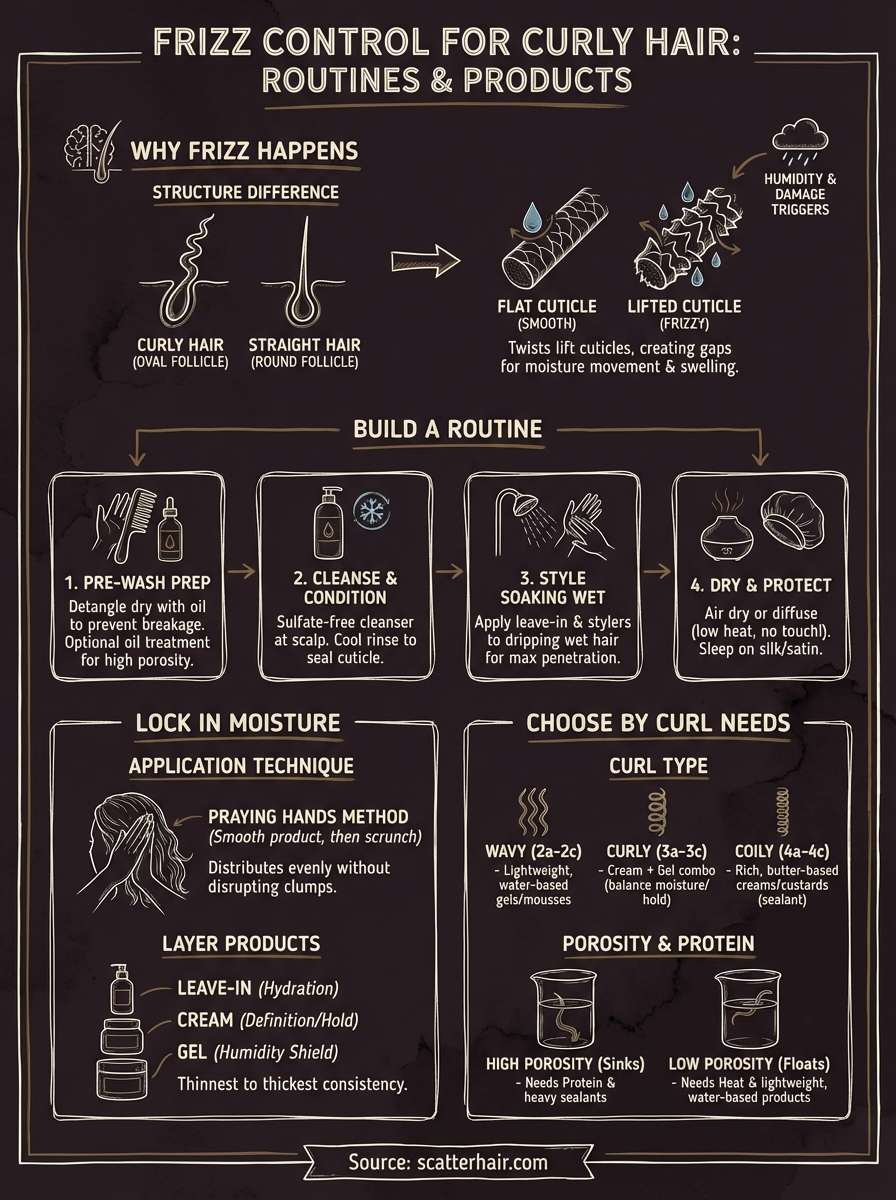
Curly hair grows from oval-shaped follicles instead of round ones, which creates a natural twist in each strand. This twisted structure lifts the cuticle layers (the outer protective scales of your hair) more than straight hair, leaving gaps where moisture can enter and exit freely. When water molecules penetrate these gaps, they cause the hair shaft to swell unevenly, which pushes individual strands away from their curl clumps.
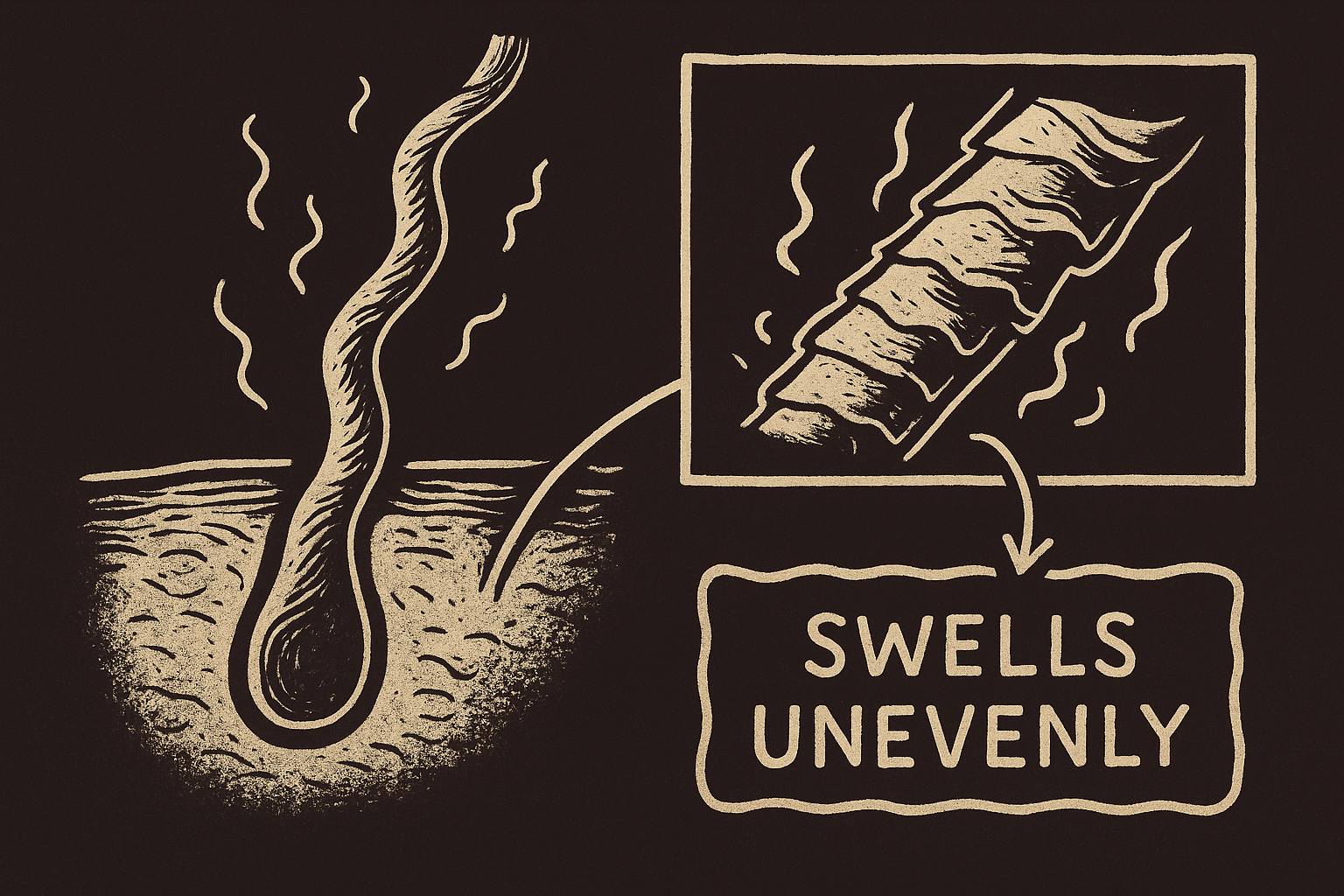
The cuticle on curly hair also tends to be thinner and more fragile in some areas due to the repeated bending along each curl. These weak spots become entry points for excess moisture during humid days or water loss during dry conditions. Both scenarios trigger frizz by disrupting the hydrogen bonds that hold your curl pattern together.
Think of your hair cuticle like roof shingles: when they lie flat, water rolls off. When they lift, moisture seeps in and causes swelling.
Environmental and damage triggers
Humidity creates the most obvious frizz because water vapor in the air seeks out dry, porous hair and binds to protein sites along the shaft. Your hair essentially tries to balance its moisture level with the surrounding environment, which causes strands to expand and break formation. This is why effective frizz control for curly hair requires both moisture retention and humidity resistance.
Physical damage compounds the porosity problem. Heat styling, chemical treatments, and mechanical friction (from towels, cotton pillowcases, or aggressive detangling) all chip away at the cuticle layer. Once damaged, your hair becomes even more porous and reactive to environmental changes. Bleach and color treatments are particularly destructive because they permanently alter the protein structure inside your hair shaft.
Product buildup creates a different type of frizz by preventing moisture from penetrating the hair properly. When silicones, oils, or styling products accumulate on your strands, they form a barrier that makes your hair feel dry and look frizzy even when it's technically "moisturized." This explains why your routine might work perfectly for a few weeks, then suddenly stop delivering smooth, defined curls without any obvious changes to your technique.
Build a wash-day routine that fights frizz
Your wash day sets the foundation for how your curls behave for the next several days. Proper cleansing, conditioning, and technique during this phase determine whether your cuticles lie flat or stay lifted and prone to frizz. The right routine doesn't just clean your hair - it actively prepares each strand to hold moisture and resist humidity.
Pre-wash preparation steps
Start by detangling on dry hair using a wide-tooth comb or your fingers with a slip-heavy conditioner or oil. This prevents the mechanical damage that happens when you try to work through knots on wet, swollen hair. Apply the detangler in sections, working from ends to roots to minimize breakage.
Consider a pre-wash oil treatment if your hair tends toward high porosity or damage. Apply coconut oil, olive oil, or a commercial pre-poo product to your hair 15-30 minutes before shampooing. This creates a protective barrier that prevents your hair from over-absorbing water during the wash, which reduces swelling and subsequent frizz.
Washing technique that seals the cuticle
Use a sulfate-free cleanser that won't strip your natural oils. Apply shampoo only to your scalp and let the suds rinse through your lengths - this removes buildup without over-cleansing fragile curls. Focus your scrubbing motion on your scalp, not your hair strands.
Washing in sections keeps your curl pattern intact and prevents the tangling that leads to frizz during styling.
Rinse your hair with cool or lukewarm water for the final rinse after conditioning. Cold water helps close the cuticle layers, which is essential for frizz control for curly hair. Apply your leave-in conditioner or styling products while your hair is still soaking wet - this is when your cuticle is most receptive to moisture and product penetration.
Style for definition and humidity defense
Styling isn't just about making your curls look good in the moment. The products you choose and how you apply them create a protective barrier that locks moisture inside your hair while keeping excess humidity out. Your styling technique determines whether your curls clump together smoothly or separate into frizzy, undefined pieces throughout the day.
Application techniques that lock in moisture
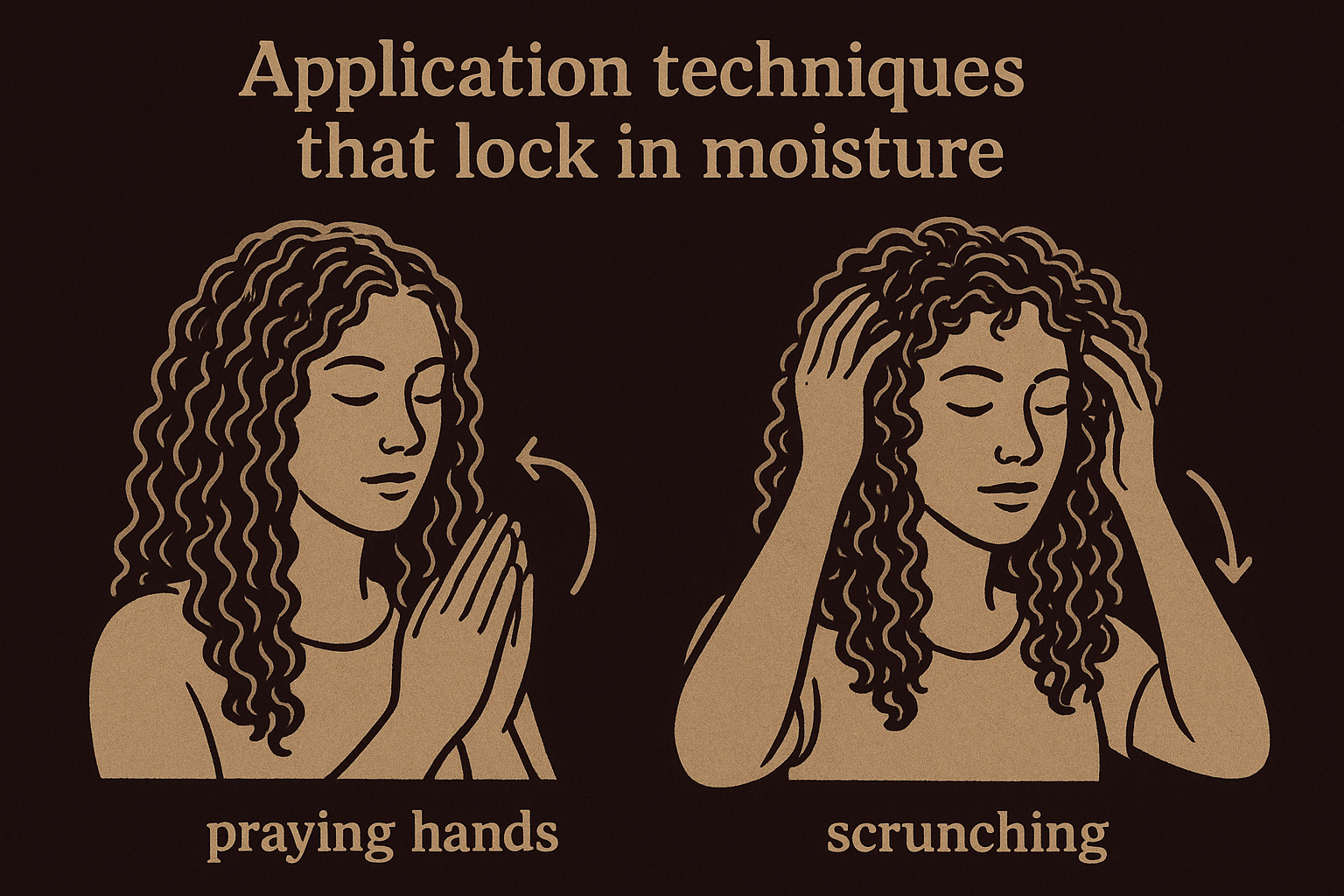
Apply your styling products using the "praying hands" method followed by scrunching. Smooth product down the length of your hair in sections with both palms pressed together, then gently squeeze your curls upward to encourage clumping. This approach distributes product evenly along the cuticle without disrupting your curl pattern through aggressive scrunching alone.
Use the "soaking wet method" for maximum frizz control for curly hair. Your hair should be dripping wet when you apply styling products, which helps them penetrate better and creates a stronger cast. Don't towel-dry or squeeze out excess water first. The water dilutes your products slightly and allows them to spread more thoroughly through each curl clump.
Apply products in sections rather than all at once to ensure every strand receives adequate coverage and protection.
Layering products for humidity protection
Layer your products from thinnest to thickest consistency to build an effective moisture barrier. This typically means leave-in conditioner first, then curl cream, then gel. Each layer adds different benefits: the leave-in provides hydration, the cream offers definition and some hold, and the gel creates a humidity-resistant cast that prevents environmental moisture from penetrating your hair shaft.
Apply a lightweight oil or anti-humidity serum as your final styling step if you live in a humid climate. Focus this product on your outer hair layer and surface strands, which face the most direct exposure to environmental moisture. This creates an additional water-repellent barrier that helps your curls maintain their definition even when humidity levels spike.
Dry, sleep, and refresh without creating frizz
The hours after styling and the days between wash days present the biggest opportunities to sabotage or preserve your frizz control for curly hair. Your drying method, sleeping technique, and refresh routine directly impact whether your cuticles stay sealed or lift open. These three phases require specific protective strategies that work together to maintain your curl definition long-term.
Drying methods that protect your cuticle
Air drying works best for preserving your gel cast, but you need to avoid touching your hair until it's completely dry and crunchy. Any manipulation while damp breaks up curl clumps and creates frizz. If you must speed up the process, use a diffuser on low heat with the airflow pointing down the hair shaft to flatten the cuticle rather than lifting it.
Microfiber towels or cotton t-shirts absorb water without the friction that rough terry cloth creates on fragile curl patterns.
Scrunch out the crunch only after your hair feels 100% dry to the touch. Use a small amount of lightweight oil on your hands and gently squeeze your curls to break the gel cast. This technique releases soft, defined curls without introducing the frizz that comes from breaking the cast too early or with dry hands.
Sleep protection and morning refresh techniques
Sleep on a silk or satin pillowcase to minimize friction against your curls overnight. Alternatively, use a silk bonnet or buff to contain your hair completely. Cotton pillowcases create drag that lifts your cuticle and separates curl clumps, which means you wake up with frizz that's difficult to tame through refreshing alone.
Refresh your curls by misting them with water mixed with a small amount of leave-in conditioner (use a 3:1 water-to-product ratio). Apply this mixture with a spray bottle held 6-8 inches away, then scrunch gently to reactivate your styling products. Add a small amount of gel to particularly frizzy sections and let them air dry completely before touching them again.
Choose products by curl type and hair needs
Your curl pattern and porosity level determine which products will actually work for frizz control for curly hair versus which ones will weigh you down or provide insufficient hold. Generic "curly hair" products often fail because they don't account for the massive differences between loose waves and tight coils. You need to match your product weight and ingredients to your specific hair characteristics to see consistent results.
Product formulations by curl pattern
Wavy hair (2a-2c) requires lightweight, water-based gels and mousses that define without weighing down your pattern. Avoid heavy creams and butters that will pull your waves straight and create grease rather than definition. Look for products with aloe vera, flaxseed, or lightweight polymers as primary ingredients.
Curly hair (3a-3c) needs a combination approach: leave-in conditioner plus cream plus gel to balance moisture and hold. Your curls require enough weight to combat frizz but not so much that they lose bounce. Products containing shea butter, coconut oil, or glycerin work well for maintaining definition without stiffness.
Coily hair (4a-4c) thrives with rich, butter-based creams and custards that provide maximum moisture retention. Your tighter curl pattern needs heavier products to seal the cuticle and prevent shrinkage-related frizz. Choose formulations with shea butter, mango butter, or castor oil as main ingredients.
Match your gel strength to your curl tightness: looser patterns need lighter holds, while tighter patterns benefit from strong-hold gels.
Selecting for porosity and protein balance
Test your porosity by placing a clean, dry strand in water. Hair that sinks immediately is high porosity and needs protein-rich products plus heavy sealants. Hair that floats is low porosity and requires lightweight, heat-activated products that penetrate more easily.
Add protein treatments (with hydrolyzed wheat, silk, or keratin) every 2-4 weeks for high porosity hair. Low porosity hair needs protein less frequently, around once monthly, to avoid buildup that creates stiffness and breakage.
Next steps to keep curls smooth
Mastering frizz control for curly hair takes experimentation and consistency. Track which products and techniques work best for your specific curl pattern by taking progress photos after each wash day and noting the weather conditions, products used, and styling methods. This approach helps you identify patterns and adjust your routine based on what actually delivers results rather than what sounds good in theory.
Commit to your routine for at least four weeks before making major changes. Your hair needs time to adjust to new products and techniques, especially if you're transitioning away from harsh ingredients or damaging practices. Small tweaks matter more than complete overhauls when you're trying to achieve consistent definition and long-term frizz control.
At scatterhair, we're developing styling products specifically for textured hair that needs real solutions, not empty promises. Join our community to get exclusive updates, early access, and styling guides designed for people who want their curls to actually cooperate with their lifestyle.