

Heat Protectant Serum vs Spray: Which One Fits Your Hair?
You've already decided to protect your hair from heat, smart move. But now you're stuck choosing between a heat protectant serum vs spray, and the difference matters more than most people think. Each format coats and shields your strands differently, and picking the wrong one can leave your hair either weighed down or barely protected at all. For textured hair especially, that choice has real consequences on how your style holds up and how your hair feels afterward.
Serums and sprays aren't interchangeable. They differ in weight, application, finish, and how well they perform on specific hair types. A lightweight mist that works perfectly on fine, straight hair might do almost nothing for thick, coily strands that need deeper penetration. And a rich serum that tames frizz on dense curls could turn thinner textures into a greasy mess. The format you choose should match your hair, not just your preference at the shelf.
At scatterhair, we're building styling products around one idea: textured hair deserves formulas that actually perform, no guesswork, no compromise. That obsession with getting the details right is exactly why breakdowns like this matter to us. Below, we'll walk through how serums and sprays compare on protection, application, finish, and hair type compatibility so you can pick the format that fits your hair and your routine.
Why heat protectant format matters
When you pick up a heat protectant, you're not just choosing a product. You're choosing how your hair responds to tools that can reach up to 450°F, and that decision comes down to more than brand or price. The format, whether it's a serum or a spray, determines how the product coats each strand, how much moisture it locks in, and whether it performs the way your hair actually needs it to.
What the formula actually does to your hair
Heat protectants work by forming a thermal barrier around each strand to limit the damage caused by direct heat from flat irons, curling wands, or blow dryers. That barrier slows down the rate at which heat penetrates the hair shaft, which means less protein breakdown, less moisture loss, and less structural damage over time. The key detail most people miss is that not all formulas deliver that barrier equally across every hair type.
A heat protectant only works as well as its ability to coat your specific strand, and that depends entirely on the formula's weight and consistency.
Serums tend to use denser, oil-based or silicone-based ingredients that cling to the cuticle more aggressively. Sprays are usually water-based or alcohol-based, which means they spread faster but may not penetrate or coat as deeply. For thicker, coarser strands, a serum's heavier grip makes a real difference. For finer textures, that same density can suffocate the strand and flatten any natural volume.
Why texture changes everything
Your hair's porosity, density, and curl pattern all affect how much protection it actually absorbs. High-porosity hair soaks up products quickly but also releases moisture faster under heat, which means it needs a formula with real staying power. Low-porosity hair sits on the opposite end; it tends to resist product absorption, so a lighter spray might sit on the surface instead of actually protecting the strand.
Understanding your hair's texture and porosity changes everything about how you approach the heat protectant serum vs spray decision. Dense, coily hair with high porosity needs a product with enough substance to penetrate and coat each strand. Fine, straight hair with low porosity needs something that distributes evenly without buildup. The format isn't about preference; it's a direct response to what your hair structure demands so that the protection actually reaches where it needs to go.
Heat protectant serum vs spray: the real differences
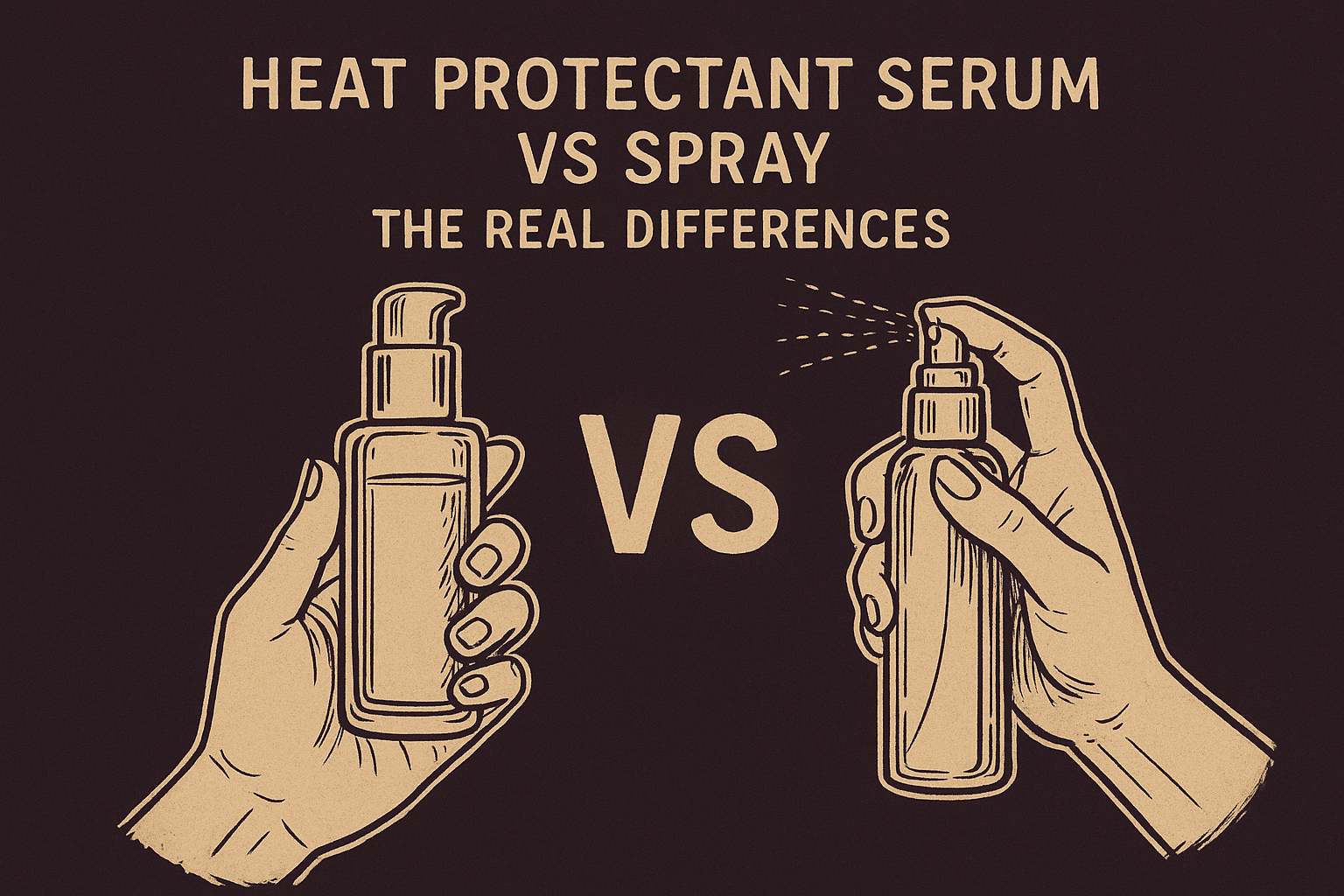
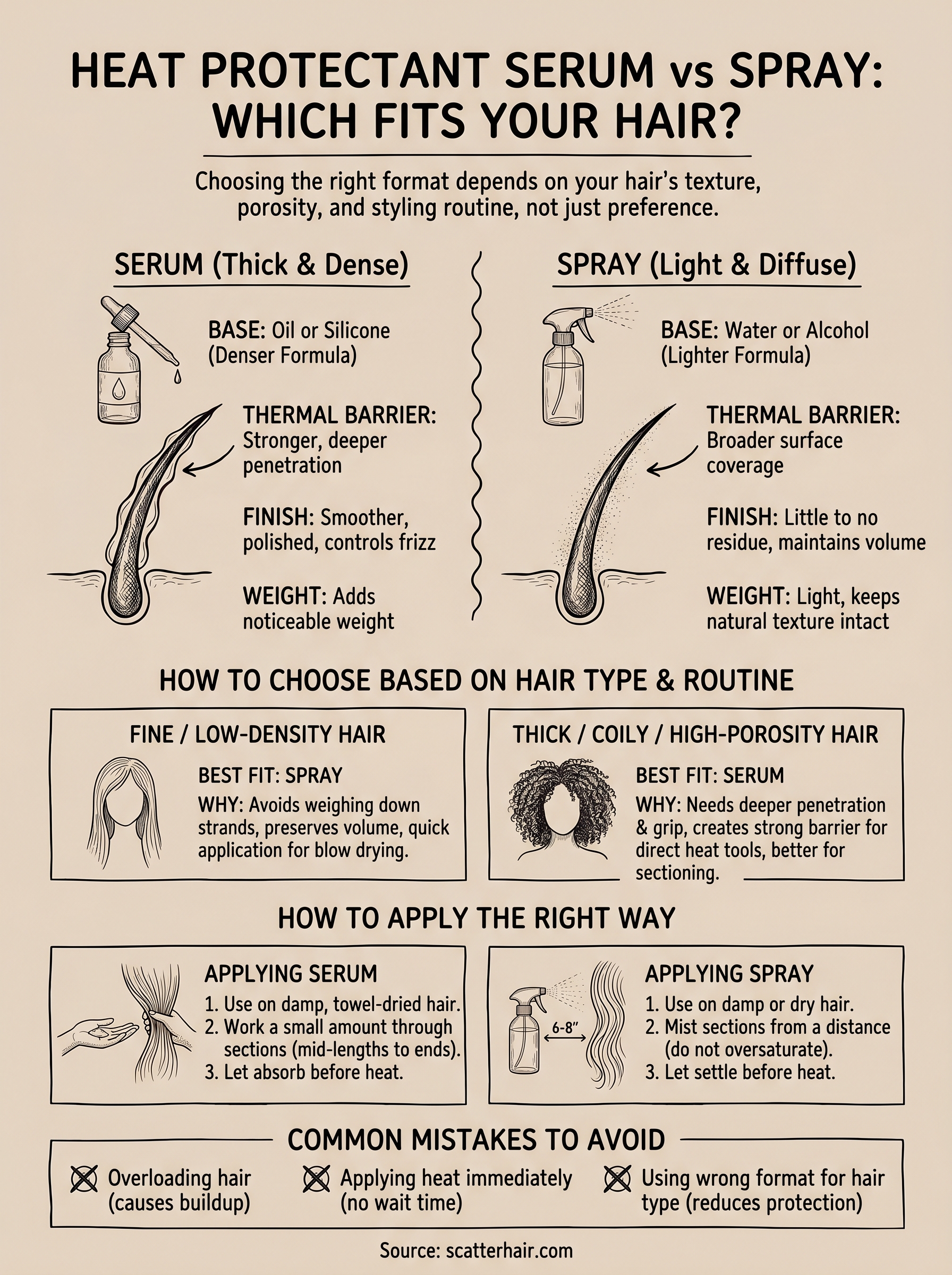
The most obvious difference between a serum and a spray is how they feel in your hand, but the real gap goes deeper than texture. Serums are typically thicker and more concentrated, using silicones or oils to coat each strand with a dense, clinging layer. Sprays are lighter and more diffuse, relying on water or alcohol as the base to spread a thinner film across more surface area in less time.
What each format delivers on protection
Both formats can genuinely shield your hair from heat damage, but they work through different mechanics. Serums create a thicker thermal barrier that holds up better under sustained, direct heat from tools like flat irons or curling wands. Sprays cover a wider surface area faster, which makes them more practical for blow drying, where heat is more dispersed and less concentrated on a single point.
The format you choose determines not just how protected your hair is, but how your hair looks and feels after styling.
Serums require you to work the product through sections of hair manually, which takes more time but ensures even distribution on dense or coily textures. Sprays offer faster, broader coverage that fits quicker routines and lighter styling sessions without the extra steps.
How finish and weight compare
Serums typically leave your hair with a smoother, more polished finish, which suits styles that need definition or serious frizz control. Sprays tend to leave little to no residue, giving you an advantage when you want volume or a more natural look after heat styling.
Weight is the other key variable. When you compare heat protectant serum vs spray head to head, serums add noticeable weight that can compress fine textures or loosen curl definition. Sprays stay light enough to keep your natural texture intact, which matters when your style depends on lift or bounce rather than sleekness.
How to choose based on hair type and routine
Choosing between a heat protectant serum vs spray comes down to two things: your hair's physical structure and how much time you actually spend styling. Once you match those two factors to the right format, you stop guessing and start getting consistent results.
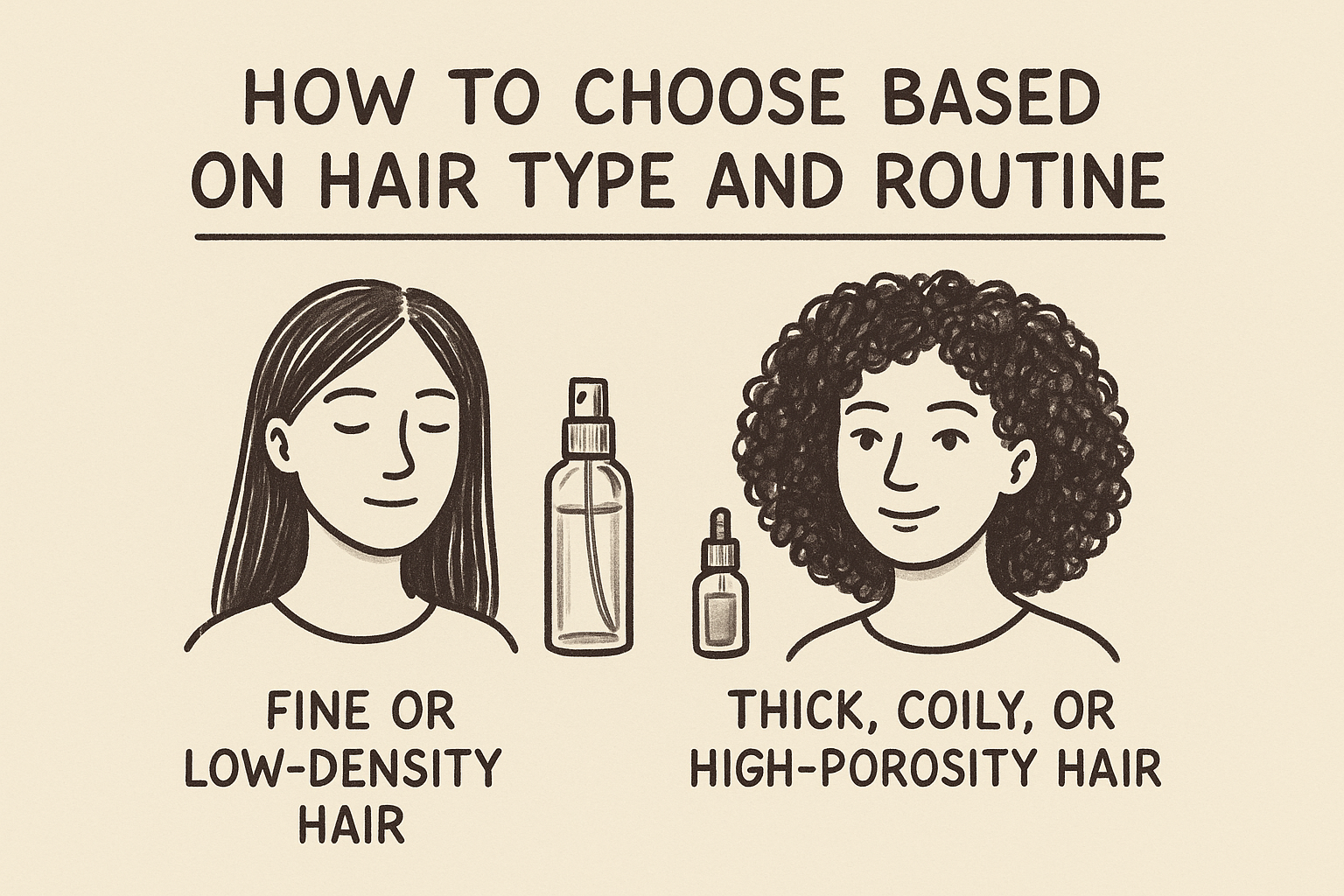
Fine or low-density hair
If your hair is fine, thin, or low-density, a spray is almost always the better call. Fine strands get weighed down fast, and a serum's heavier formula can collapse volume before you even pick up a tool. A lightweight spray distributes evenly across your hair without loading each strand with unnecessary product weight.
Your routine also matters here. If you blow dry regularly and move through styling quickly, a spray fits that pace. You can mist it through damp hair and start drying immediately, with no extra time spent working product through sections. That efficiency adds up when you're styling every day.
Thick, coily, or high-porosity hair
Thick, coily, or high-porosity hair needs a formula that can actually penetrate and cling to the strand. A spray often sits on top of dense textures without absorbing deeply enough to provide real protection when heat is applied directly. A serum gives you the staying power and grip your strands need to hold up under flat irons or curling wands.
If your hair absorbs products quickly and still feels dry, that's a clear sign your hair needs a heavier format to stay protected under heat.
Working in sections also becomes part of your routine when you use a serum, and that's not a downside. Sectioning your hair before heat styling actually improves both protection coverage and your final result, especially when you're working with dense, textured strands that need even product distribution to look and feel their best.
How to apply serum and spray the right way
Application technique is where most people lose the benefit of a good heat protectant. Even the right product for your hair type won't protect you if you apply it incorrectly. How you distribute the formula and when you apply it in your routine determines whether your strands are actually shielded or just coated on the surface.
Applying heat protectant serum
Start with damp, towel-dried hair, not soaking wet. Excess water dilutes the serum before it can form a proper barrier. Dispense a small amount into your palm, rub your hands together to warm the product, then work it through your hair in sections, focusing on the mid-lengths and ends first since those areas take the most direct heat damage.
Using too much serum in one area is one of the fastest ways to end up with heavy, greasy-looking results, so start with less than you think you need.
Distribute the serum evenly through each section before moving to the next, and comb through with a wide-tooth comb to make sure no strand is missed. Once applied, let it absorb for a minute before reaching for your styling tool.
Applying heat protectant spray
Spray application works best on damp or dry hair, depending on your styling routine. Hold the bottle 6 to 8 inches away from your head and mist in sections rather than blasting the whole head at once. That distance lets the product land evenly without oversaturating any single spot.
For blow drying, apply the spray to damp hair and work through each section with your fingers before drying. For flat irons or wands, a light mist on dry sections right before heat contact gives you targeted coverage exactly where you need it. Either way, let the product settle for a few seconds before applying heat so the formula has a moment to coat the strand properly.
Common questions and mistakes to avoid
Even when you understand the heat protectant serum vs spray comparison, it's easy to fall into habits that cancel out your product's effectiveness. Most heat protection mistakes are simple, and fixing them costs nothing except a small adjustment to how you apply or choose your formula.
Mistakes that reduce your protection
The most common error is applying too much product and assuming more means better protection. Overloading your hair with serum or spray leads to buildup, not better shielding. The formula only needs to coat the strand, not saturate it. Another frequent mistake is applying heat immediately after spraying or rubbing in serum, before the product has had even a few seconds to settle and bond to the strand.
Skipping the wait time after applying your heat protectant is one of the easiest ways to lose protection you thought you had.
Here are a few other mistakes worth avoiding:
- Using a serum on already dry, styled hair instead of applying it before heat
- Applying spray too close to the scalp, which causes product buildup at the roots
- Skipping reapplication after washing, assuming leftover residue still protects
- Choosing a format based on scent or packaging rather than your hair's actual needs
Questions people ask most
One question that comes up often is whether you can layer a serum and spray together. You can, but it only makes sense in specific situations, like using a light spray for blow drying first and then a serum before a flat iron pass. Doing both every session without that reasoning just adds weight.
Another common question is whether heat protectants expire. They do. Most formulas have a shelf life of 12 to 24 months after opening, and an expired product won't form a reliable thermal barrier. Check the period-after-opening symbol on your bottle and replace it if you've had it longer than the recommended window.
Quick recap and next steps
The heat protectant serum vs spray decision is not complicated once you know your hair. Serums work best for thick, coily, or high-porosity hair that needs a dense barrier and deep coverage before direct heat tools. Sprays suit fine, low-density hair that loses volume fast and needs lightweight, even distribution across the whole head.
Application matters as much as format. Using too much product, skipping wait time, or choosing your formula based on anything other than your hair's actual structure reduces protection regardless of which format you pick. Get those basics right, and your heat styling results will improve immediately.
Your hair deserves products built around what it actually needs, not generic formulas that ignore texture. Scatter is designing exactly that for people with textured hair who are tired of products that fall short. Get early access and follow the journey at scatterhair.com.