

How To Care For High Porosity Hair: Routine, Products+Tips
High porosity hair absorbs moisture fast, and loses it just as quickly. If your strands feel dry hours after washing, frizz at the first sign of humidity, or seem to drink up product without ever feeling hydrated, you're likely dealing with how to care for high porosity hair as your next challenge. The good news? Once you understand what's happening at the cuticle level, building an effective routine becomes straightforward.
Your hair's porosity affects everything from which products actually work to how you should layer them. Without the right approach, you'll keep chasing moisture that never seems to stick around. With it, you can finally achieve styles that hold, shine that lasts, and hair that feels healthy instead of brittle.
At scatterhair, we're all about making textured hair easier to manage, and that starts with understanding your hair's unique needs. Below, you'll find a complete breakdown of routines, product recommendations, and practical tips to keep high porosity hair thriving.
What high porosity hair is and what causes it
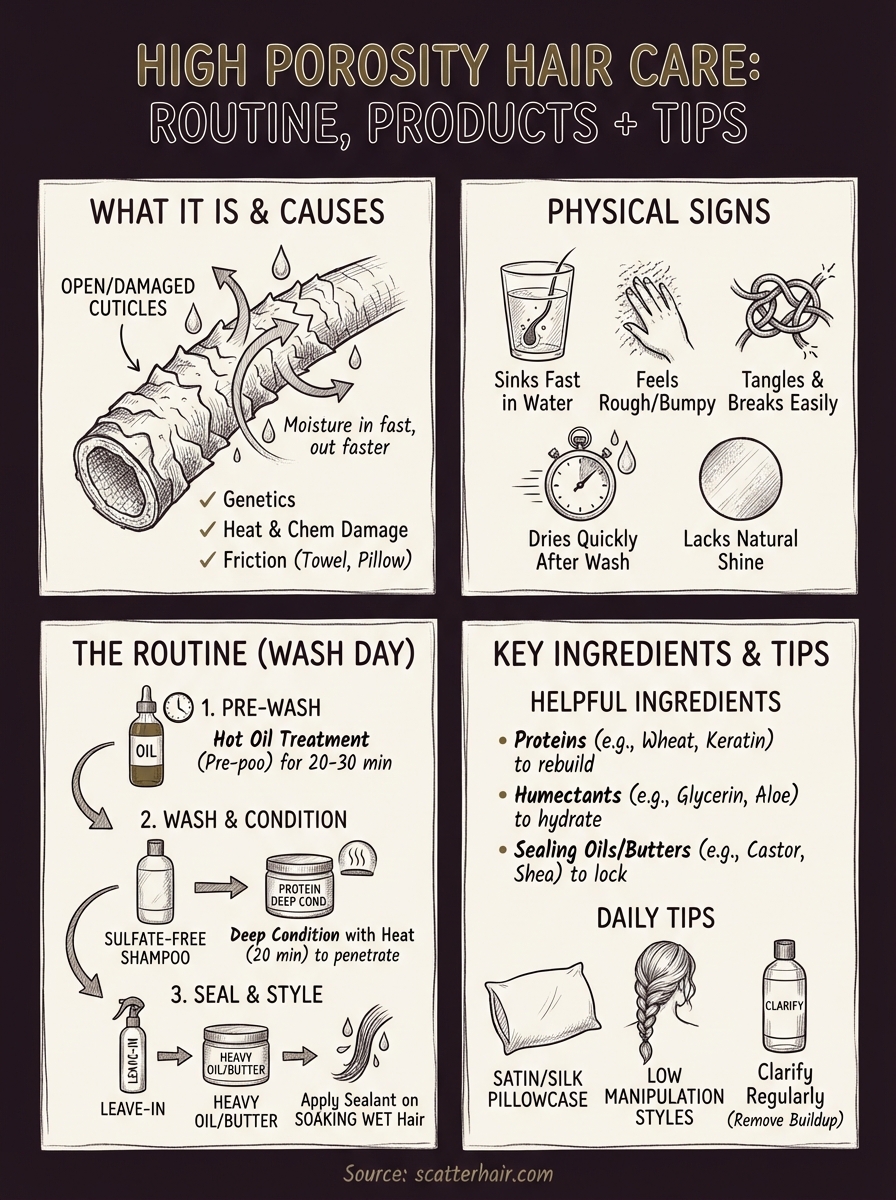
Your hair's porosity describes how easily moisture enters and exits the hair shaft. Think of it as the structural condition of your hair's outer layer, called the cuticle. When you have high porosity hair, those cuticle layers sit raised or damaged instead of lying flat and smooth. This creates gaps and openings that let water rush in fast, but also allow it to escape just as quickly.
The science of hair porosity
Hair porosity exists on a spectrum, from low to high. Low porosity hair has tightly sealed cuticles that resist moisture absorption. High porosity hair sits at the opposite end, with cuticles that remain open or damaged. Your hair strand resembles a roof made of overlapping shingles. When those shingles lift away from the surface, moisture flows in and out without any barrier to hold it inside.
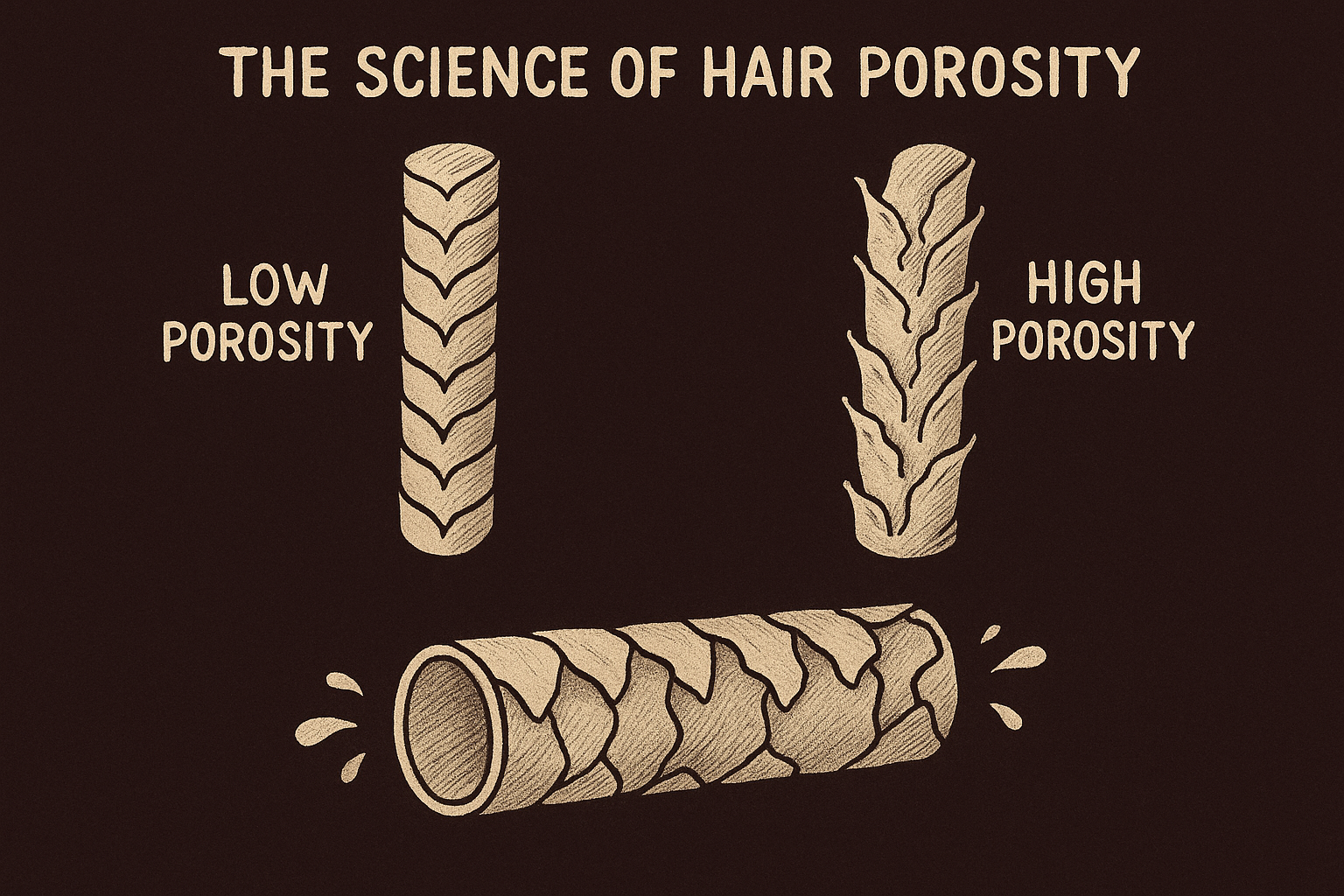
This explains why your hair might feel soaked immediately after washing but dry within hours. The open cuticles absorb products and water rapidly, yet they can't retain that hydration because nothing seals it in. Understanding how to care for high porosity hair starts with recognizing this fundamental structural difference.
High porosity hair isn't broken, it just needs a different approach to maintain moisture balance.
What causes high porosity
Some people inherit naturally high porosity hair from their genetics. Textured hair types often lean toward higher porosity because of the shape and structure of the follicle itself. Each curl, coil, or wave creates natural stress points where the cuticle can lift slightly.
Environmental and chemical damage create the other major pathway to high porosity. Heat styling, color treatments, relaxers, and bleach all strip away or lift the cuticle layers permanently. Even regular brushing, sun exposure, and chlorine from swimming pools contribute to cuticle damage over time. Years of these practices add up, leaving your hair with a compromised outer layer that struggles to hold moisture.
Physical manipulation plays a role too. Tight hairstyles, rough towel drying, and sleeping on cotton pillowcases create friction that lifts the cuticles. Your hair accumulates this damage gradually, which means high porosity can develop even if you weren't born with it. Recognizing the cause helps you prevent further damage while you work to restore and maintain healthier strands.
How to tell if you have high porosity hair
Testing your hair's porosity removes the guesswork from how to care for high porosity hair and helps you choose products that actually work. You can identify high porosity through simple at-home tests and by observing how your hair behaves daily. Most people notice patterns in how their strands respond to water, products, and styling before they ever confirm their porosity level.
The float test
Fill a glass with room temperature water and drop in a clean strand of hair from your brush or comb. Wait three to five minutes and watch where the strand settles. High porosity hair sinks quickly because the open cuticles allow water to penetrate the shaft immediately, making it heavier. Low porosity hair floats at the surface since the sealed cuticles resist water absorption. Medium porosity hair hovers somewhere in the middle of the glass.
This test works best on hair that's free from product buildup. Wash and dry a section of your hair thoroughly before collecting a strand for the most accurate results.
Physical signs to watch for
Your daily hair behavior tells you everything about its porosity level. High porosity hair shows these characteristics:
- Dries extremely fast after washing
- Feels rough or bumpy when you run fingers down the shaft
- Tangles easily and breaks frequently
- Absorbs color quickly but fades just as fast
- Looks dull or lacks natural shine
- Feels dry within hours of applying moisturizer
High porosity hair drinks up product instantly but never seems satisfied.
Run your fingers up a single strand from tip to root. Raised or rough texture indicates lifted cuticles and high porosity. Smooth texture suggests low porosity. Your hair might also display different porosity levels from root to tip, especially if you've applied chemical treatments or heat styling to the ends more frequently than the roots.
A simple high porosity wash day routine
Building a wash day routine for high porosity hair focuses on trapping moisture inside the hair shaft before it escapes. Your goal centers on sealing those open cuticles after hydrating them fully. This routine takes longer than a quick rinse and go, but it makes the difference between hair that feels dry by afternoon versus strands that stay moisturized for days.
Pre-wash preparation
Start with a hot oil treatment before you wet your hair at all. Warm coconut, olive, or avocado oil in the microwave for 15 seconds and apply it section by section to dry hair. This step fills the gaps in your cuticles with beneficial oils before water rushes in. Cover your hair with a plastic cap and wait 20 to 30 minutes. Your strands will absorb moisture more evenly during the wash when you create this protective barrier first.
Washing and conditioning steps
Rinse out the oil treatment with lukewarm water, then apply a sulfate-free shampoo to your scalp only. Massage gently and let the runoff cleanse the length of your hair. Follow with a protein-rich deep conditioner applied from roots to ends. High porosity hair loses protein through those open cuticles, so replenishing it strengthens the structure. Sit under a hooded dryer or use a heating cap for 20 minutes to help the conditioner penetrate deeply.
Deep conditioning with heat forces ingredients past lifted cuticles and into the hair shaft where they actually work.
Post-wash sealing and styling
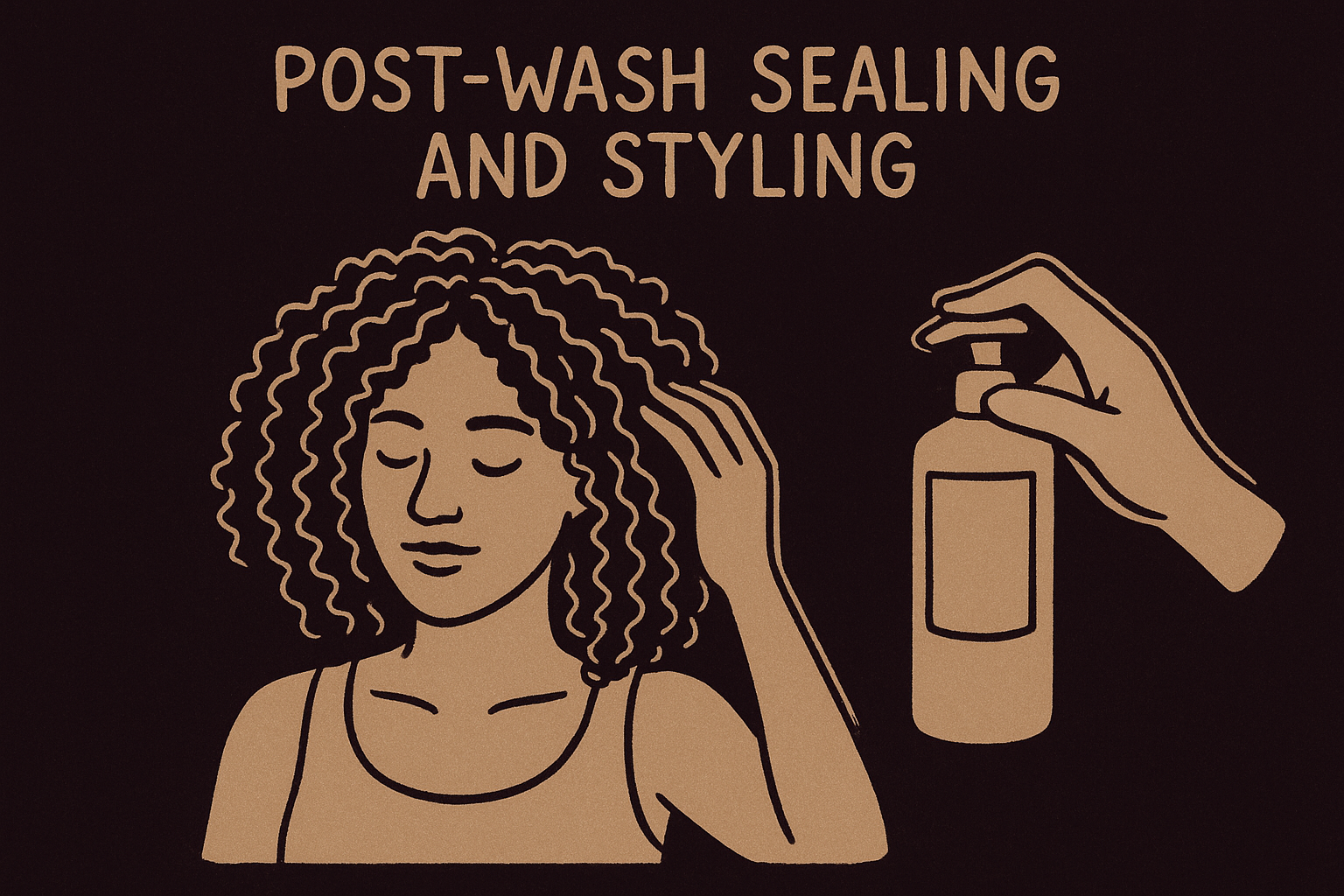
After rinsing the conditioner with cool water to encourage cuticle closure, apply a leave-in conditioner while your hair remains soaking wet. Layer a heavy butter or oil on top immediately to seal that moisture inside. Understanding how to care for high porosity hair means working quickly during this step before water evaporates. Your strands stay hydrated when you trap the moisture with the right products in the right order.
Products and ingredients that actually help
Choosing the right products transforms how to care for high porosity hair from a daily struggle into a manageable routine. Your ingredient list matters more than brand names because specific compounds address the structural gaps in your cuticles. Focus on products that either strengthen the hair shaft or create a protective barrier to trap moisture inside.
Proteins that rebuild structure
High porosity hair loses protein through those open cuticles, which makes your strands weak and prone to breakage. Hydrolyzed wheat protein, keratin, and silk amino acids penetrate the hair shaft to fill in damaged areas and reinforce the structure. Look for these ingredients in your deep conditioner or protein treatment. Apply a protein treatment every two to three weeks if your hair feels mushy or stretches without bouncing back.
Protein treatments work best when you balance them with moisture to prevent stiffness.
Humectants and emollients for hydration
Glycerin, aloe vera, and honey act as humectants that pull moisture from the air into your hair. These ingredients work when you live in humid climates but can backfire in dry environments by drawing moisture out instead. Panthenol and sodium PCA hydrate without depending on environmental humidity levels. Your leave-in conditioner should contain at least one of these ingredients to maintain consistent moisture between wash days.
Sealing oils and butters
Your final layer determines whether moisture stays locked inside or evaporates within hours. Castor oil, shea butter, and jojoba oil create a protective coating over the cuticle that prevents water loss. Lighter oils like argan work for fine high porosity hair, while thicker butters suit coarse textures. Apply these sealants to soaking wet hair immediately after your leave-in to trap maximum hydration.
Tips to prevent frizz, breakage, and buildup
Managing high porosity hair extends beyond wash day into your daily habits and environmental choices. Small adjustments to how you handle, protect, and maintain your strands prevent damage accumulation that makes porosity worse over time. These prevention strategies keep your hair healthier between washes and reduce the constant need for intensive treatments.
Protective styling and sleeping habits
Your nighttime routine determines whether you wake up with moisturized hair or a dry, tangled mess. Switch to a satin or silk pillowcase that creates less friction against your strands while you sleep. Cotton pillowcases absorb moisture from your hair and lift the cuticles through constant rubbing. Alternatively, wrap your hair in a satin bonnet or scarf before bed to maintain the moisture you sealed in after washing.
Low manipulation hairstyles reduce physical stress on already vulnerable cuticles. Braids, twists, and buns keep your ends tucked away and minimize daily handling. Understanding how to care for high porosity hair includes accepting that your strands need protection from constant styling, brushing, and environmental exposure.
Protective styling isn't just about length retention, it directly prevents further cuticle damage.
Avoiding product buildup
High porosity hair absorbs products quickly, but heavy butters and silicones create layers that prevent moisture from reaching your strands. Clarify your hair every four to six weeks with a chelating shampoo that removes mineral deposits and product residue. This reset lets your hair absorb treatments and moisture effectively instead of sitting on top of buildup layers.
Apply products in thin layers rather than dumping large amounts at once. Your hair only needs enough to coat each strand, not saturate it completely. Excess product sits on the surface where it attracts dirt and weighs down your style without providing extra benefits.
Your next wash day plan
Mastering how to care for high porosity hair transforms your entire styling routine once you understand the fundamentals. Your strands need consistent moisture, sealed cuticles, and protection from further damage. Start with the pre-wash oil treatment, follow with protein-rich deep conditioning, and finish by sealing moisture into soaking wet hair. These steps create a foundation that keeps your hair hydrated between washes instead of drying out within hours.
Track what works for your specific texture and adjust products based on how your hair responds. High porosity hair thrives when you protect it at night, minimize heat styling, and clarify regularly to prevent buildup. The routine takes practice, but your hair rewards consistency with less frizz, stronger strands, and styles that actually hold.
Ready to rock your texture with products designed for your needs? Scatter makes styling textured hair effortless with formulas that understand high porosity struggles. Your next wash day starts with the right approach.