

Signs Of Low Porosity Hair: At-Home Tests, Traits, Care Tips
You apply a moisturizing product and it just sits on top of your hair like an unwanted guest. Water takes forever to actually soak into your strands. Your hair might look healthy and shiny, but getting moisture where it needs to go feels impossible. These are classic signs of low porosity hair, and if you have textured hair, understanding this can completely change how you approach your styling routine. Low porosity means your hair cuticles are tightly packed together, creating a barrier that makes it harder for moisture and products to penetrate your strands.
This guide walks you through simple at-home tests to determine if you actually have low porosity hair, the telltale characteristics that confirm it, and practical care strategies that work specifically for textured hair types. You'll learn which products absorb better, which styling techniques actually help instead of leaving you frustrated, and the myths you can stop believing right now. Whether your hair is coily, curly, or kinky, knowing your porosity level helps you stop wasting time and money on products that were never going to work for your hair in the first place.
Why knowing hair porosity matters for textured hair
Your textured hair already has a unique curl pattern that creates natural twists and turns along each strand. These curves make it harder for natural oils from your scalp to travel down the hair shaft compared to straight hair types. When you add low porosity into the equation, you're dealing with a double barrier that affects how your hair responds to every single product you apply. Understanding your porosity level directly impacts whether your styling routine actually works or leaves you frustrated with crunchy, greasy, or dry results.
The moisture absorption challenge
Textured hair shapes create more surface area along each strand, which means moisture has further to travel and more opportunities to evaporate before it reaches your hair's core. Low porosity adds another layer of complexity because those tightly sealed cuticles physically block hydration from getting inside your strands. You might spend twenty minutes trying to wet your hair in the shower, only to have it repel water like a raincoat. This combination explains why many people with textured, low porosity hair struggle with dryness despite using what seem like heavy, moisturizing products that just sit on top of their strands.
When your hair cuticles stay closed, even water struggles to penetrate, which means your expensive treatments never reach the areas that actually need them.
Product selection and your budget
Knowing you have low porosity hair saves you from buying thick butters and heavy oils that will never absorb into your strands. These products work beautifully for high porosity hair, but on low porosity textured hair, they create buildup that weighs down your curls and leaves a greasy film. You stop wasting money on deep conditioners that promise miracles but deliver sticky, coated strands instead. Understanding the signs of low porosity hair helps you identify which lighter, water-based products will actually penetrate your cuticles and which styling techniques (like heat application during conditioning) give products a fighting chance to work. Your shopping decisions become strategic instead of hopeful, and you build a routine based on your hair's actual structure rather than what worked for someone with completely different porosity levels.
How to test for low porosity hair at home
You don't need expensive salon visits or complicated equipment to figure out your hair's porosity level. Three simple tests you can perform in your bathroom give you reliable answers about how your hair cuticles behave and whether you're dealing with low porosity strands. These tests work best on clean, product-free hair because buildup from styling products can interfere with accurate results and make your hair behave like it has low porosity even when it doesn't. Plan to test your hair right after washing it with a clarifying shampoo, then let it air dry completely before you start any of these methods.
The float test
This classic method takes about five minutes and requires nothing more than a glass of room temperature water and a few strands of your hair. Pull out two or three clean strands from your brush or directly from your head, making sure they don't have any product residue on them. Drop the strands into the water and watch what happens over the next two to four minutes without touching or disturbing them.
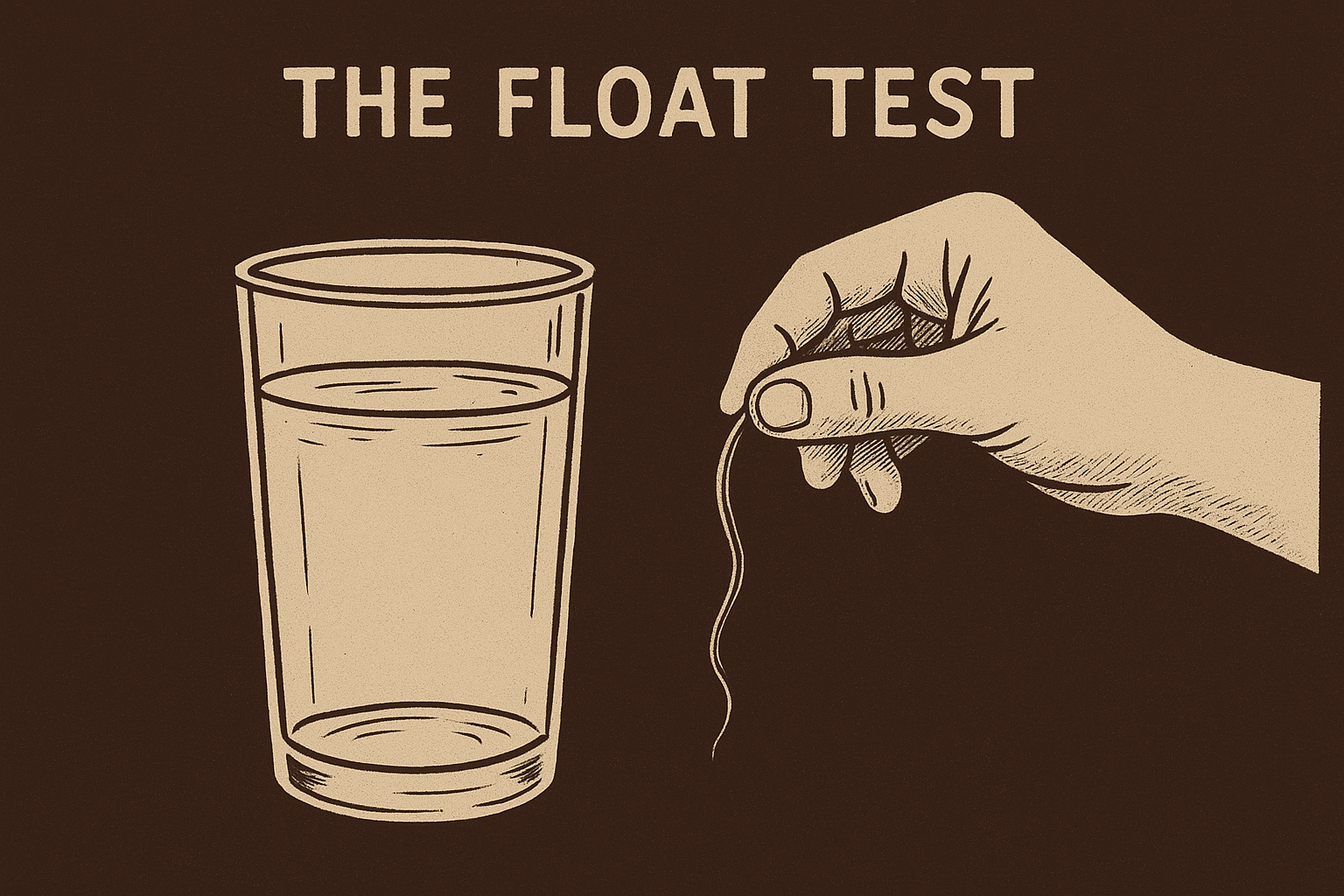
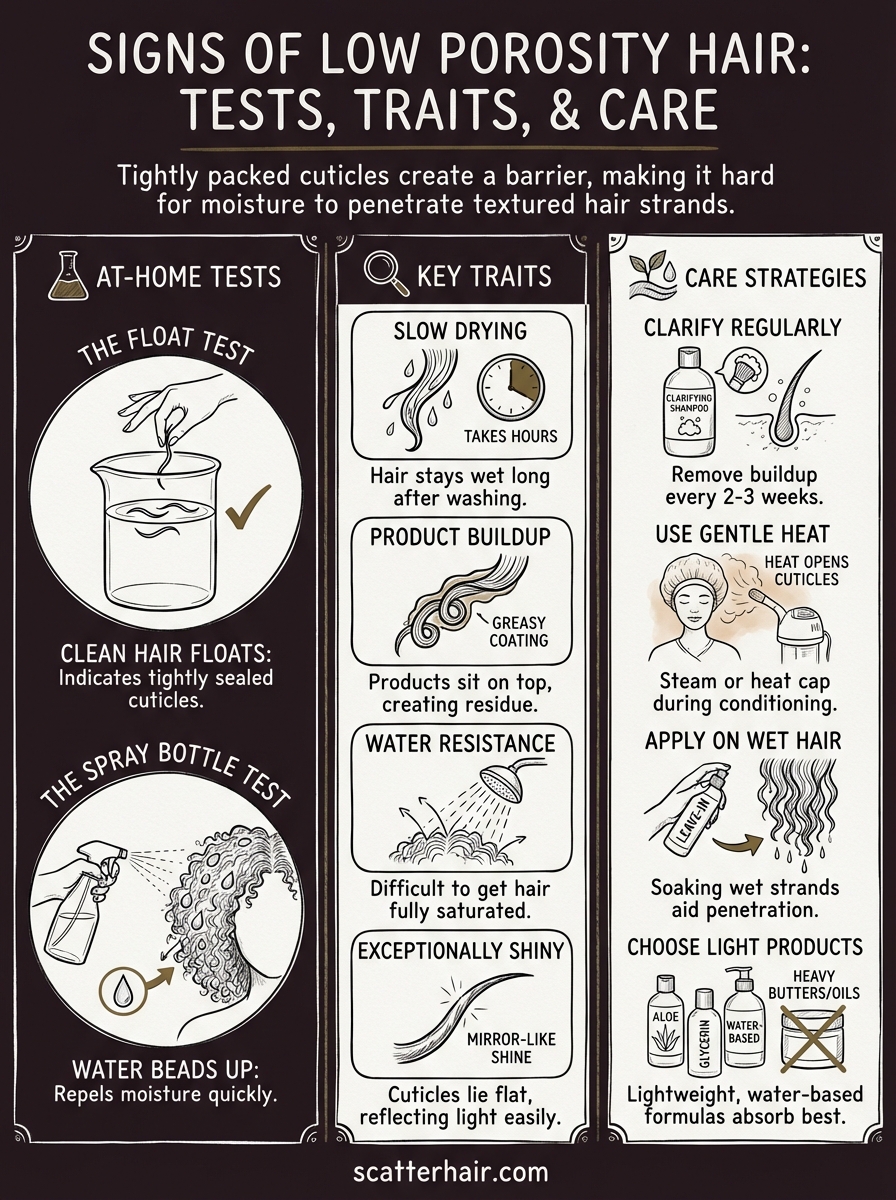
Strands that float on the surface or take a long time to sink indicate low porosity hair because those tightly closed cuticles resist water absorption. Hair that sinks immediately suggests high porosity, while strands that slowly drift toward the middle of the glass typically signal medium porosity. The float test shows you one of the most obvious signs of low porosity hair in action: your strands literally repel water instead of welcoming it in.
The spray bottle test
Fill a clean spray bottle with plain water and mist a section of your dry, product-free hair from about six inches away. You want to apply enough water to see how your hair responds, but not so much that you're drenching it completely. Watch carefully what happens to the water droplets in the first thirty seconds after you spray.
Low porosity hair causes water to bead up and sit on top of your strands like raindrops on a freshly waxed car, rather than absorbing quickly into the hair shaft.
Those visible beads of water tell you your cuticles are sealed tight and not allowing moisture to penetrate easily. Hair with higher porosity absorbs the water almost immediately, leaving your strands looking wet rather than decorated with tiny droplets. This test gives you instant visual feedback about how your hair handles moisture in real-world styling situations.
The strand texture test
Run your fingers along a single strand of your hair from root to tip, paying attention to how the surface feels under your fingertips. You're checking for smoothness versus roughness, which tells you about your cuticle structure. Start with clean, dry hair and use light pressure so you can actually feel the texture without just sliding past it.
Extremely smooth strands that feel almost slippery suggest low porosity because those flat, closed cuticles create an even surface. Hair that feels bumpy or rough indicates raised cuticles associated with higher porosity levels. Your fingers can detect texture differences that your eyes might miss, especially on textured hair where the natural curl pattern can make visual assessment trickier.
Key signs and traits of low porosity textured hair
Your textured hair gives you specific clues when it has low porosity, and learning to recognize these signs of low porosity hair helps you understand why certain products work while others fail spectacularly. These characteristics show up consistently across different curl patterns, from loose waves to tight coils, because they all stem from the same root cause: those tightly sealed cuticles that resist moisture penetration. You might notice several of these traits working together, creating a pattern of behavior that becomes predictable once you know what to look for.
Water behavior and drying time
Your hair takes an unusually long time to get fully saturated when you wash it, almost like the water is rolling off instead of soaking in. You stand in the shower for several minutes, running water over your strands, and they still don't feel completely wet at the roots. This water resistance happens because your closed cuticles physically block moisture from entering the hair shaft quickly.
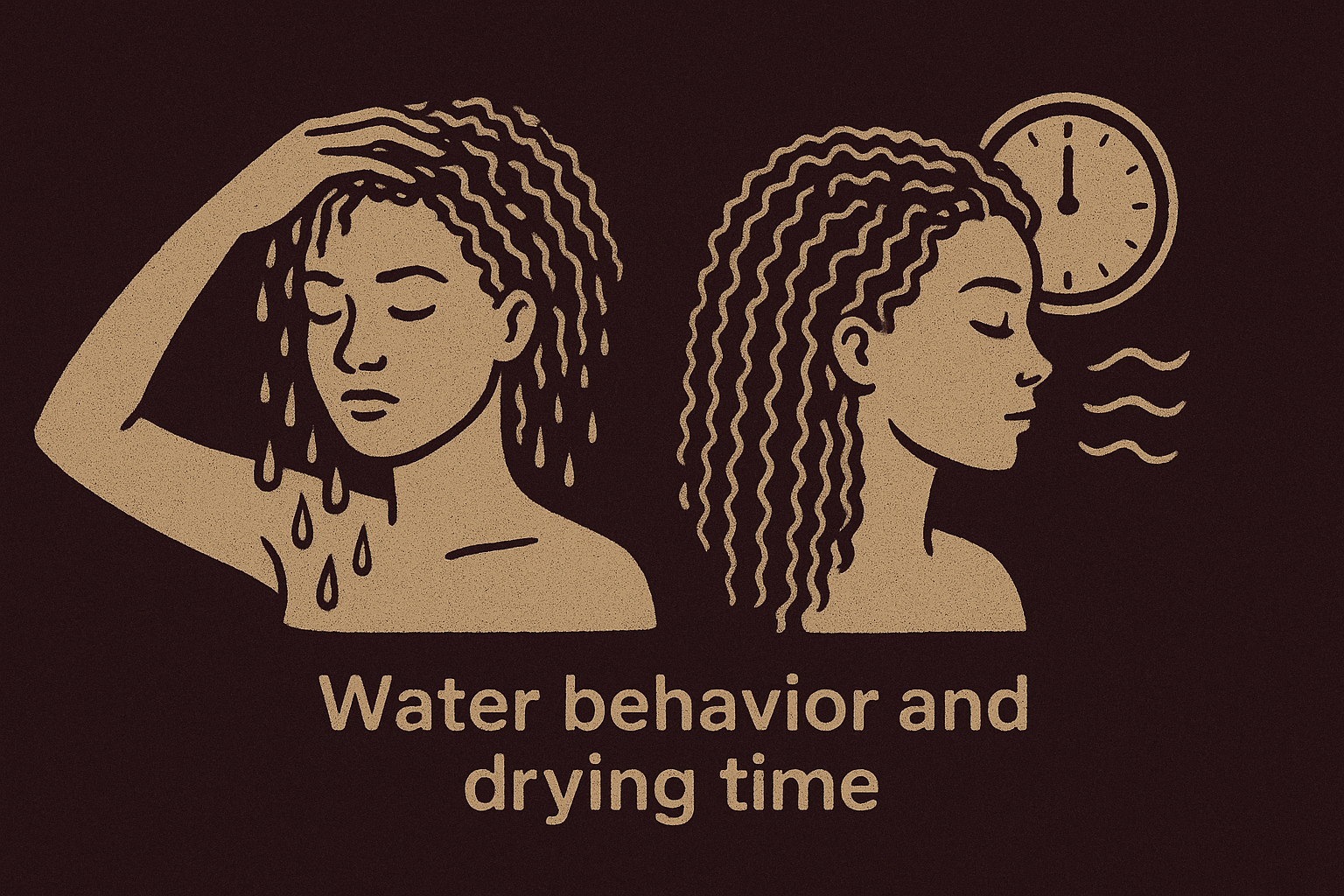
After washing, your hair takes hours to air dry completely, even when you live in a dry climate or use a fan. Some people with low porosity textured hair find their strands still feel damp the next morning after washing the night before. This extended drying time occurs because the same sealed cuticles that kept moisture out now trap it inside once it finally penetrates your hair structure.
Product interaction and buildup
Products sit on top of your hair instead of absorbing, creating a greasy or sticky coating that weighs down your curls. You apply a leave-in conditioner and can still see white residue or feel slickness on your strands hours later. This surface accumulation happens because your hair's protective barrier prevents ingredients from penetrating, so they have nowhere to go except pile up on the outside.
Your hair resists deep conditioning treatments and protein masks, showing little improvement even after following the instructions perfectly and leaving products on for extended periods.
Chemical processes like coloring, relaxing, or perming take longer than expected and sometimes don't take at all. Stylists might need to leave processing products on your hair for the maximum recommended time or slightly beyond it to achieve results. Your cuticles resist chemical penetration just as stubbornly as they resist moisture, making it harder to alter your hair's structure or color.
Visual and textural characteristics
Your hair looks exceptionally shiny and smooth when it's healthy, almost like it has a natural gloss coating. This mirror-like appearance comes from light reflecting evenly off those flat, tightly closed cuticles. People often compliment your hair's shine, not realizing it actually indicates your moisture absorption challenges rather than perfect hydration levels.
When you run your fingers through your hair, individual strands feel slippery and extremely smooth rather than rough or bumpy. This sleek texture confirms your cuticles lie flat against the hair shaft instead of lifting or separating. Your hair also tends to maintain its style well once set because those closed cuticles resist humidity and environmental moisture that would otherwise disrupt your curl pattern.
Everyday care tips for low porosity textured hair
Your understanding of the signs of low porosity hair becomes valuable when you translate it into a daily routine that actually works with your hair's structure instead of fighting against it. These practical strategies help you overcome the moisture barriers your tightly sealed cuticles create while maintaining your hair's natural health and shine. You need techniques that gently open those cuticles enough to let hydration in without causing damage or creating more problems than you solve.
Cleansing and clarifying strategies
Regular clarifying sessions prevent the product buildup that low porosity hair attracts like a magnet. Use a clarifying shampoo every two to three weeks to strip away the residue that accumulates from products sitting on your hair's surface. This reset gives your subsequent moisturizing products a clean slate to work with instead of piling onto existing layers of unabsorbed ingredients.
Between clarifying treatments, choose lightweight shampoos that clean without leaving heavy residues behind. Avoid products with silicones, thick butters, or heavy oils listed in the first five ingredients because these create the coating effect that makes low porosity hair feel suffocated. Look for water-based formulas and ingredients like aloe vera or glycerin that can actually penetrate your sealed cuticles.
Strategic product application techniques
Apply products to soaking wet hair immediately after washing, while your strands still hold maximum water content. The water already present helps carry product ingredients deeper into your hair shaft before those cuticles seal back up completely. Section your hair and work products through thoroughly rather than just smoothing them over the surface, making sure each strand gets adequate coverage.
Your low porosity hair responds better to thin layers of lightweight products than thick applications of heavy ones, even when those heavy products promise intense moisture.
Layer products from thinnest to thickest consistency, starting with water-based leave-ins before moving to slightly heavier styling products. This sequencing lets each layer absorb as much as possible before you add the next one. Skip the thick creams and butters that work beautifully on high porosity hair but will suffocate your tightly sealed strands.
Heat optimization methods
Incorporate gentle heat during your conditioning treatments to temporarily lift those stubborn cuticles and allow deeper product penetration. Sit under a hooded dryer or use a heat cap for fifteen to twenty minutes while your deep conditioner processes. The warmth opens your cuticles just enough to let moisturizing ingredients slip inside without causing the damage that comes from direct heat styling tools.
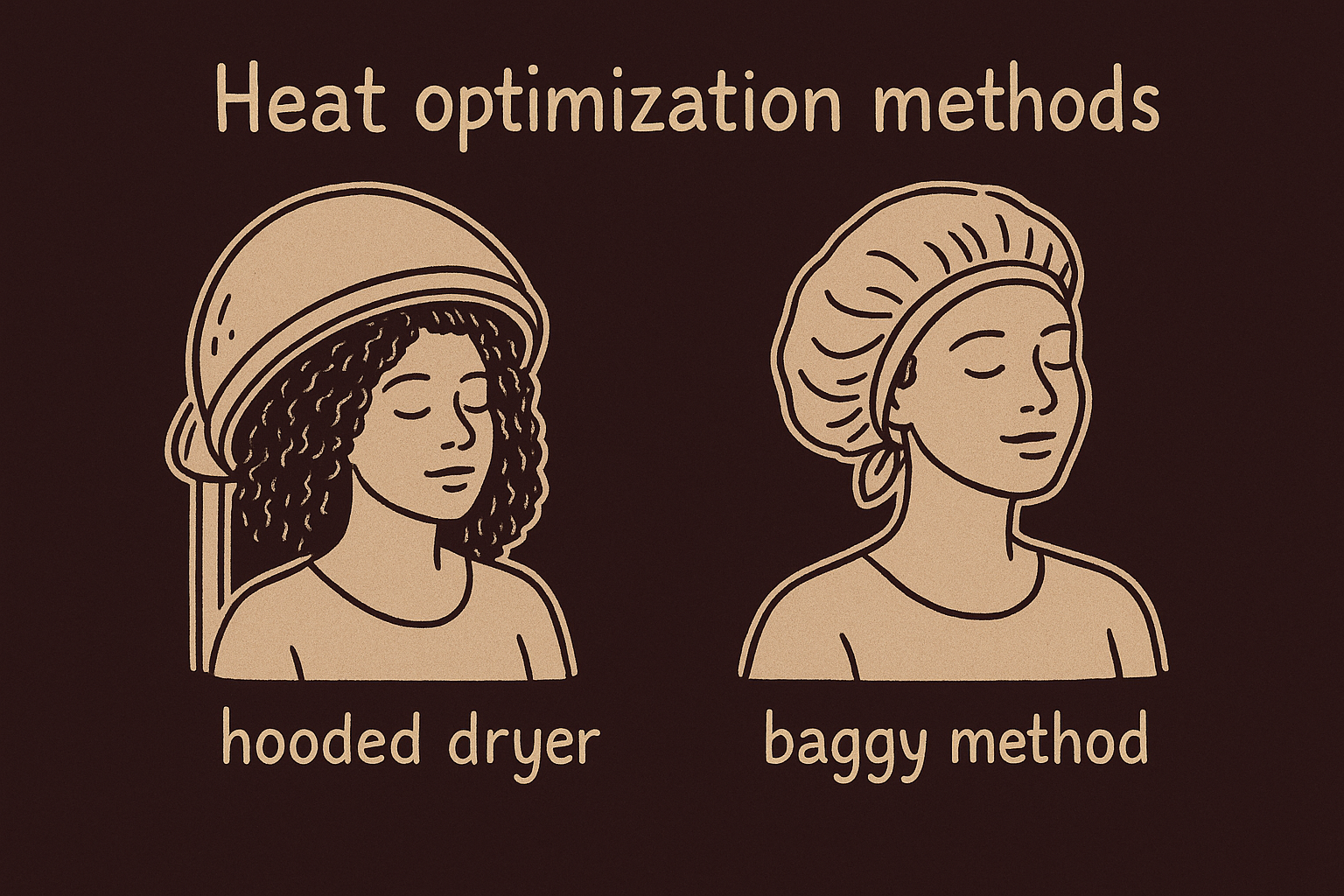
Try the baggy method for overnight moisture treatments by applying a light leave-in conditioner, covering your hair with a plastic cap, and securing it with a satin bonnet. Your body heat creates a gentle warming effect throughout the night that helps products absorb slowly. Wake up with softer, more hydrated hair that actually retained the moisture instead of letting it evaporate or wipe off on your pillowcase.
Steam treatments work exceptionally well for low porosity textured hair because they use moisture and heat together to convince those sealed cuticles to open. You can invest in a hair steamer or simply lean over a bowl of hot water with a towel draped over your head for ten minutes during conditioning. The combination of warmth and water vapor gives your hair the best possible conditions for accepting moisture without forcing harsh chemicals or excessive manipulation.
Common myths and mistakes to avoid
You've probably heard conflicting advice about managing the signs of low porosity hair, and some of these recommendations work directly against your hair's actual needs. Understanding which common beliefs are actually myths helps you avoid wasting time, money, and effort on approaches that make your hair situation worse instead of better. These misconceptions spread quickly through social media and well-meaning friends, but they ignore the basic science of how your sealed cuticles actually function.
The heavy oil myth
Many people believe low porosity hair needs thick oils and butters to "force" moisture into resistant strands, but this approach creates the opposite result. Those heavy ingredients sit on your already impenetrable cuticle layer, adding more buildup to hair that already struggles with product absorption. Your hair ends up looking greasy and feeling weighed down without receiving any actual hydration benefits from these products.
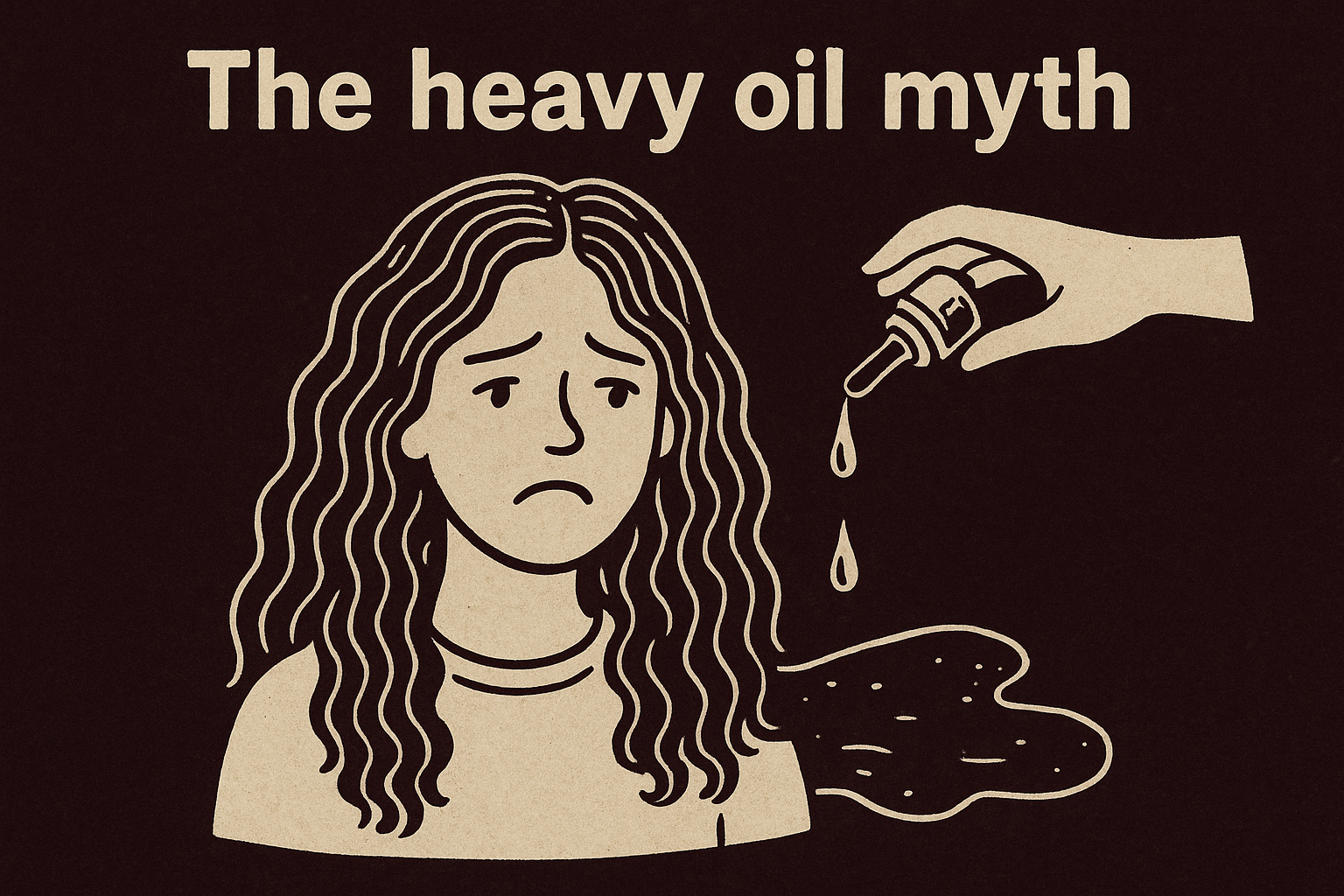
Light, water-based products penetrate your sealed cuticles far more effectively than heavy oils ever will. Ingredients like aloe vera, glycerin, and lightweight botanical extracts slip through the tiny spaces between cuticles that thick butters cannot access. You get better moisture retention by choosing products your hair can actually absorb rather than piling on heavier formulas that promise intense hydration but deliver only surface coating.
The "skip conditioner" mistake
Some people think they should skip conditioner entirely because products don't absorb well into low porosity hair anyway. This logic ignores the fact that your hair still needs moisture and protection, even if delivering it requires different techniques than other hair types use. Avoiding conditioner altogether leaves your strands dry, brittle, and more prone to breakage over time.
Your low porosity hair benefits from lightweight conditioners applied on soaking wet strands with gentle heat, which temporarily opens those sealed cuticles just enough for hydration to enter.
The product overload trap
You might apply extra product thinking more volume compensates for poor absorption, but this approach backfires spectacularly on low porosity hair. Multiple thick layers of unabsorbed products create a suffocating coating that blocks even the smallest amounts of moisture from reaching your hair shaft. Your curls lose definition, movement, and life under all that buildup.
Start with smaller amounts of properly chosen products and work them through thoroughly before deciding you need more. This measured approach prevents the accumulation that makes your hair feel sticky, stiff, or heavy while giving each product the best chance to actually penetrate your cuticles.
Next steps for your textured hair
You now have the tools to identify the signs of low porosity hair and adjust your routine accordingly. The float test, spray bottle test, and strand texture check give you concrete answers about your hair's structure, while the care strategies help you work with your sealed cuticles instead of against them. Stop buying products that promise miracles but deliver buildup, and start choosing lightweight, water-based formulas that your hair can actually absorb.
Your textured hair deserves styling products specifically designed to penetrate those resistant cuticles without weighing down your natural curl pattern. Scatter Hair creates custom-formulated solutions that understand how textured hair actually behaves, making it effortless to achieve the looks you want without fighting your hair's natural porosity level. Test your hair this week, adjust your product choices based on what you learned, and embrace the healthy shine that comes from finally giving your low porosity strands exactly what they need to thrive.