

How To Use Clarifying Shampoo: Steps, Timing, Aftercare
Product buildup is the silent killer of great texture. All those styling products, oils, and even hard water minerals layer up over time, leaving your hair feeling heavy, dull, and impossible to style. If you've noticed your curls, coils, or waves just aren't hitting the way they used to, there's a good chance buildup is the problem, and knowing how to use clarifying shampoo is the fix.
But here's the thing: clarifying shampoo isn't your everyday wash. It's stronger, more stripping, and using it wrong can leave textured hair dry and brittle. The difference between a great reset and a moisture disaster comes down to how you apply it, how often you reach for it, and, crucially, what you do afterward.
At scatterhair, we're building styling products specifically for textured hair, and we know that styling starts with a clean foundation. This guide walks you through every step of using clarifying shampoo the right way, from timing and technique to the aftercare that keeps your texture healthy, hydrated, and ready to style.
What clarifying shampoo does and when to use it
Clarifying shampoo is a deep-cleaning formula built to remove the residue that regular shampoo can't touch. Standard shampoos clean the surface, but they leave behind silicones, waxes, mineral deposits, and heavy oils that bond to the hair shaft over time. Clarifying shampoo breaks through all of that and gives you a true clean foundation before any styling begins.
How buildup affects textured hair
Textured hair, whether curly, coily, or wavy, is naturally more porous than straight hair. That means product ingredients absorb into the hair shaft more readily, and buildup accumulates faster. You might notice your wash-and-go looking flat, your curls clumping unevenly, or your deep conditioner sitting on top instead of absorbing. Those are all signs that product residue is blocking moisture from reaching the cortex.
If your hair feels coated no matter how much conditioner you apply, buildup is likely the reason your moisture isn't penetrating.
Buildup sources include leave-in conditioners, curl creams, oils, dry shampoo, and even hard water minerals from your shower. Each wash day adds another layer if you're not periodically resetting. Knowing what's driving your buildup helps you decide how often clarifying actually needs to happen.
When to reach for a clarifying shampoo
Knowing how to use clarifying shampoo effectively starts with recognizing when your hair is asking for it. You don't need to clarify on a rigid schedule; instead, let what your hair is showing you guide the decision. Here's a quick reference for the most common signals:
| Signal | What it likely means |
|---|---|
| Curls look limp or stretched out | Product or mineral buildup weighing hair down |
| Hair feels waxy after washing | Silicone or oil residue still coating the shaft |
| Deep conditioner sits on top | Buildup blocking moisture absorption |
| Scalp feels itchy or congested | Sweat, oil, and product clogging follicles |
| Color looks dull between salon visits | Mineral deposits coating the hair shaft |
Most people with textured hair benefit from clarifying once every two to four weeks, but that window shifts based on your routine. Heavy product users or anyone who exercises daily will need to clarify more frequently than someone running a minimal wash-day routine.
Step 1. Prep your hair and choose the right clarifier
Before you even open the bottle, prep work determines how well the clarifier actually performs. Textured hair needs a specific setup before any product touches it, and skipping this step means the shampoo has to fight through tangles and dry patches instead of targeting buildup directly. Getting the prep right is the first real move in learning how to use clarifying shampoo effectively.
Wet your hair completely before applying
Saturate your hair with warm water before application. Warm water opens the cuticle slightly, which helps the clarifying formula penetrate the shaft and lift buildup instead of just sitting on the surface. Cold water works against you here because it keeps the cuticle sealed.
Spend at least 60 seconds under the water before applying anything. Textured hair takes longer to fully saturate than straight hair, so rushing this step leaves dry patches that the clarifier will miss.
Work the water from scalp to ends and use your fingers to separate any clumped sections. You want every strand fully wet, not just damp on the surface.
Pick the right clarifying formula for your hair type
Not every clarifying shampoo works equally well for every texture. Sulfate-based formulas give the deepest clean and work well for oily scalps or heavy buildup, but they strip moisture aggressively. Sulfate-free clarifying shampoos are a better fit for high-porosity or color-treated hair that needs a reset without full moisture loss.
| Hair type | Best clarifier option |
|---|---|
| Fine or oily scalp | Sulfate-based formula |
| Coily or high-porosity | Sulfate-free formula |
| Color-treated textured hair | Chelating, sulfate-free formula |
| Hard water damage | Chelating shampoo targeting minerals |
Choose your formula based on what your hair is actually dealing with, not just what's available.
Step 2. Apply to the scalp and let it work
Now that your hair is fully saturated and you have the right formula in hand, application technique is what separates a deep reset from a wasted wash day. The goal of how to use clarifying shampoo correctly is to target the scalp and roots first, not the ends, because that's where the heaviest buildup lives.
Focus on the scalp first
Pour a quarter-sized amount of clarifying shampoo into your palm, then work it directly into your scalp using your fingertips. Avoid your nails, which can scratch and irritate the scalp. Start at the hairline, move to the crown, and work toward the nape of your neck so you cover the full scalp zone systematically.
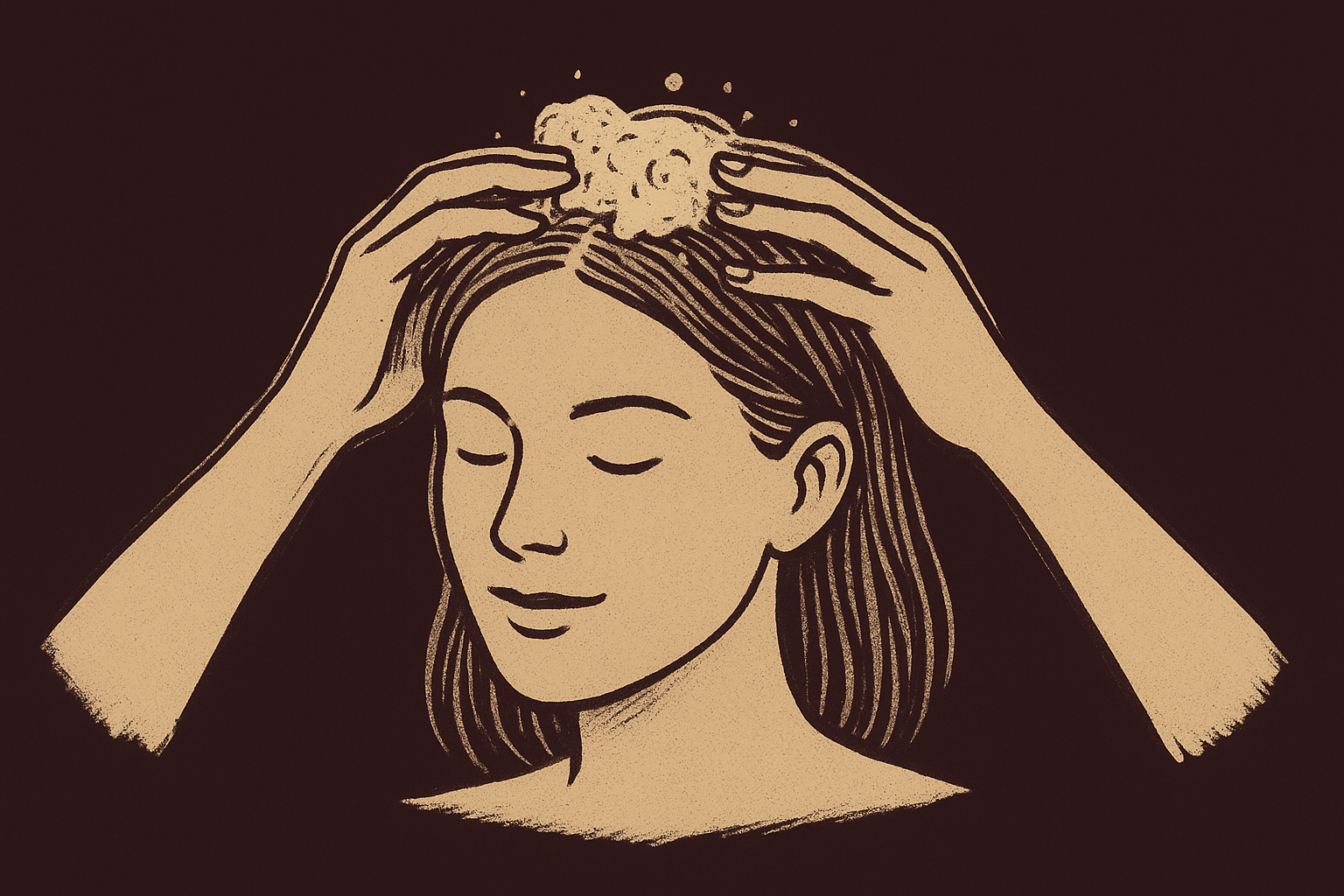
The ends of your hair pick up shampoo as the lather rinses down, so you don't need to apply directly to them. Direct application to dry ends leads to unnecessary stripping.
Use this technique for thorough coverage:
- Divide your hair into four sections before washing
- Apply shampoo to each section's scalp area separately
- Use small circular motions with your fingertips to lift buildup
How long to leave it on
After working up a full lather, let the shampoo sit for 60 to 90 seconds before rinsing. Most clarifying shampoos don't require a long processing time because the formula works on contact. Leaving it on for more than two minutes doesn't increase effectiveness and only adds drying time.
Check your specific product label for guidance, but staying in that 60 to 90 second window works for most textured hair types without over-stripping.
Step 3. Rinse thoroughly and repeat only if needed
The rinse is where most people rush, but how long you rinse matters just as much as how you applied the shampoo. Residual clarifying formula left on the scalp or hair shaft can cause irritation and dryness, so a full, deliberate rinse is a non-negotiable part of knowing how to use clarifying shampoo correctly.
Rinse with warm water for at least two minutes
Keep the water warm rather than hot and rinse from scalp to ends for a full two minutes minimum. Use your fingers to separate sections while water runs through, making sure no lather remains anywhere from the nape of your neck to your tips. Textured hair holds product between coils and curls, so water needs direct contact with each section to carry the shampoo out completely.
Running clean water through your hair for an extra 30 seconds beyond what feels like enough is a simple way to confirm you've cleared all the formula.
When a second lather is worth it
A second application is only necessary when your hair still feels coated or waxy after the first rinse. If your hair squeaks slightly when you run your fingers through a wet section, that's your signal that buildup is cleared and a second lather would only strip moisture without adding any benefit. Stick to one round in most cases.
If you do go for a second round, use half the original amount of product and focus only on sections that still feel heavy or congested. Limit yourself to a maximum of two applications per wash session to avoid over-stripping your strands.
Step 4. Aftercare, frequency, and red flags
A clean scalp and freshly stripped strands are the starting point, not the finish line. Clarifying shampoo removes buildup effectively, but it also pulls out natural oils in the process. What you do in the next 10 minutes after rinsing determines whether your texture bounces back hydrated or dries out completely. This final step is where knowing how to use clarifying shampoo correctly pays off.
Lock in moisture right after rinsing
Apply a rich, protein-free conditioner immediately after you rinse out the clarifying shampoo. Focus on your mid-lengths and ends, where the strands are most vulnerable to moisture loss. Let the conditioner sit for three to five minutes minimum, then follow with your usual leave-in or sealant to lock that hydration in place before styling.
Skipping conditioner after clarifying is the single most common mistake people make, and it's the main reason textured hair feels brittle after a reset wash.
Set a clarifying schedule that fits your routine
How often you clarify depends on your product load, not a fixed date on the calendar. Light product users can go four to six weeks between sessions. Heavy gel, cream, or oil users need a reset closer to every two weeks. Hard water exposure accelerates mineral buildup, so if your shower runs hard, clarify more frequently regardless of your product routine.
Red flags that signal you're over-clarifying
Watch your hair for these warning signs that clarifying is happening too often:
- Excessive breakage or shedding concentrated around wash day
- Curls that feel rough and lose definition after drying
- Scalp irritation or tightness that lingers even after deep conditioning
- Hair that dries out within 24 hours despite a full moisture routine
Final wash-day recap
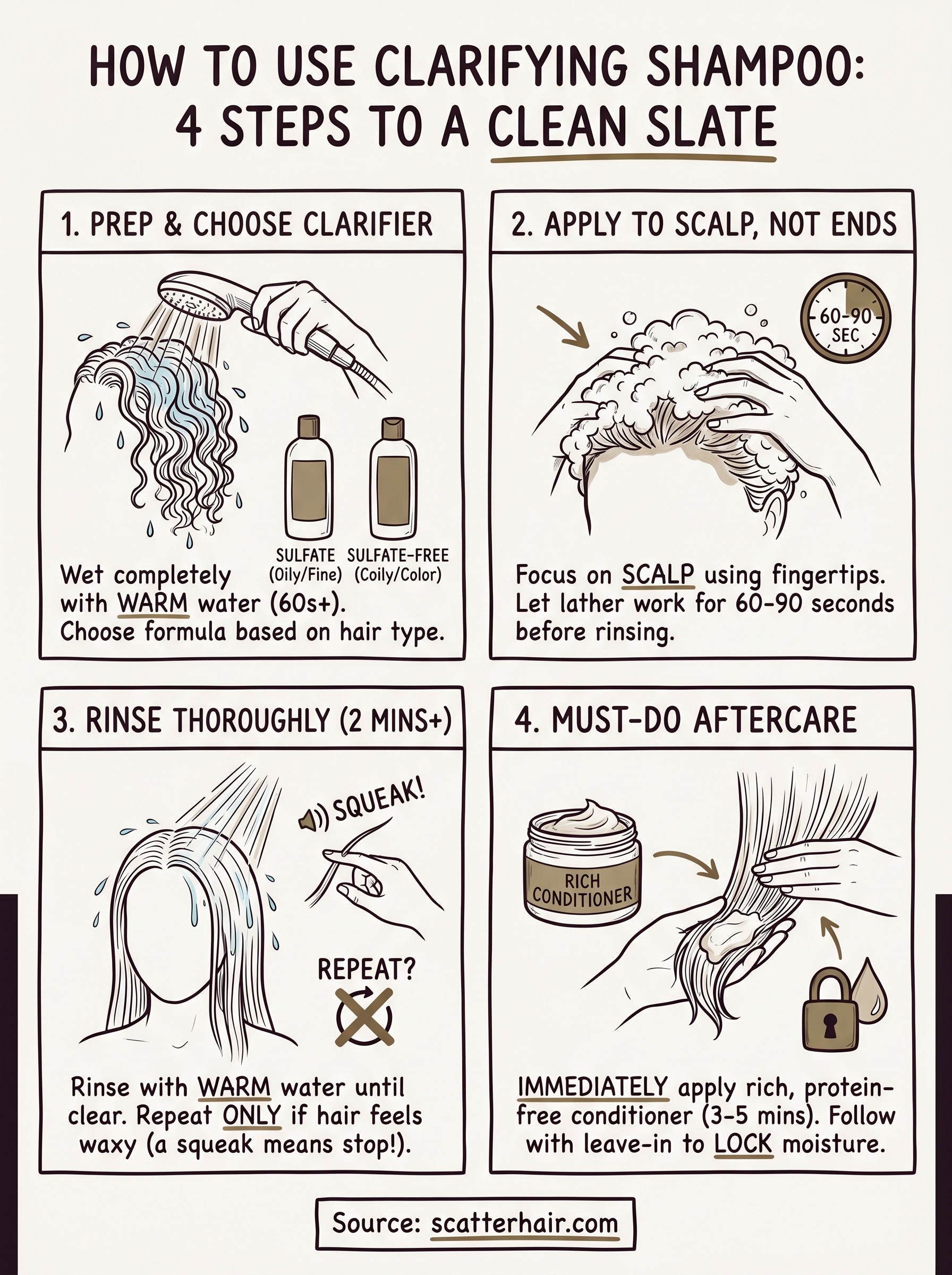
Knowing how to use clarifying shampoo comes down to four repeatable steps: saturate completely, apply to the scalp first, rinse for a full two minutes, and follow immediately with a rich conditioner. Each step builds on the last, and skipping any one of them reduces the reset your hair actually gets.
Your clarifying routine only works as well as the products you use after it. A clean slate means nothing if you load the same heavy buildup back onto freshly stripped strands without sealing in moisture first. Treat your post-clarify conditioner and leave-in as required steps, not optional add-ons, and your texture will come back stronger every time.
At Scatter, we're building styling products formulated specifically for textured hair, so every wash day sets you up to actually style with confidence. Sign up for early access and be the first to know when products drop.