

Low Porosity Wash Day Routine: Products, Steps, Pro Tips
Low Porosity Wash Day Routine: Products, Steps, Pro Tips
Your products sit on top of your hair like they're afraid to go in. You follow tutorials and use the same products everyone raves about, but your curls stay dry and frizzy no matter what you try. That frustration hits different when you have low porosity hair because the usual wash day advice just doesn't work for you.
Low porosity hair needs heat, lightweight products, and a routine that actually opens those tightly sealed cuticles. The good news is that once you understand how your hair works, wash day stops being a battle and starts delivering the moisture and definition you've been chasing.
This guide walks you through every step of a low porosity wash day routine. You'll learn how to prep your hair for maximum moisture absorption, which products to use and when, how to deep condition properly with heat, and how to seal everything in so your curls stay defined for days. No complicated science lessons or product lists a mile long. Just the exact routine that works for tightly sealed cuticles that refuse to let moisture in the easy way.
Why low porosity needs a different wash day
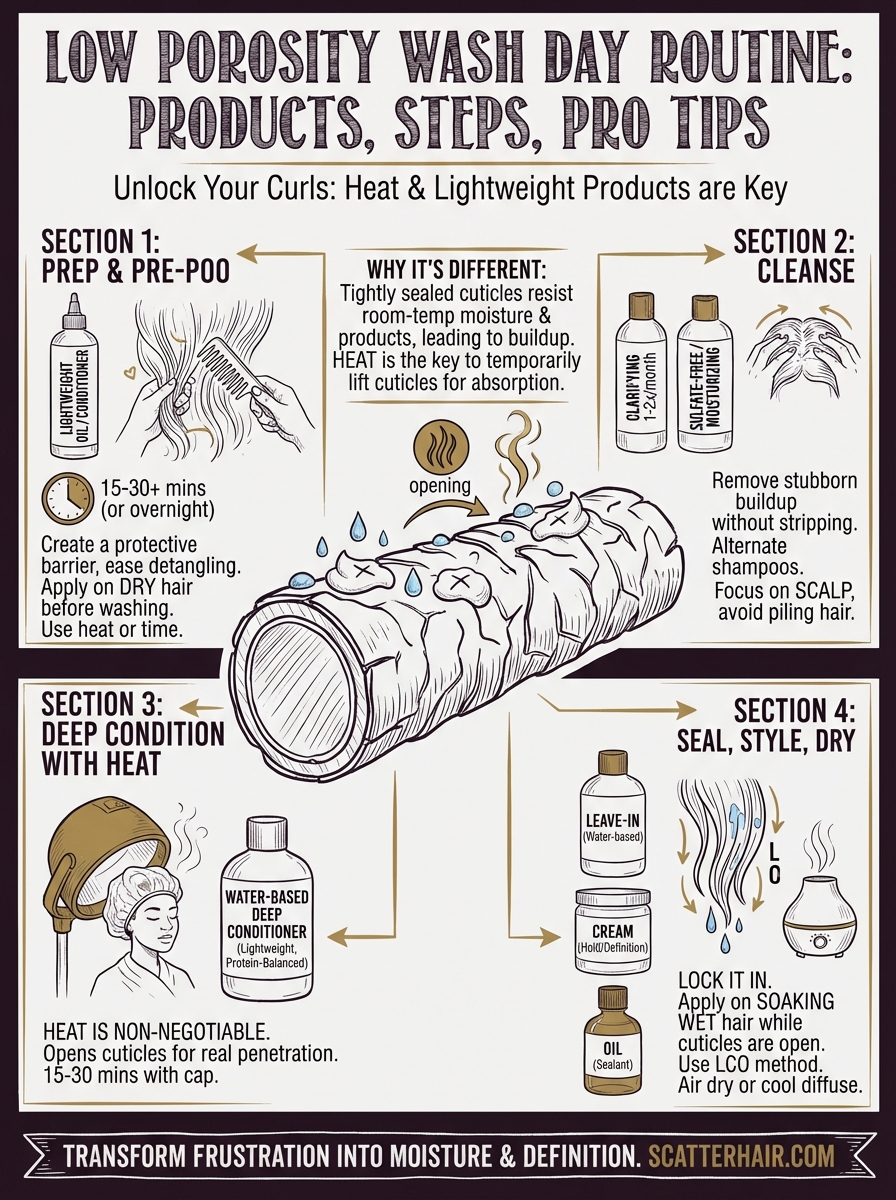
Your hair cuticles lay flat and tight against each strand, creating a protective barrier that keeps everything out, including the moisture you're desperately trying to add. This tight seal means water and products sit on top of your hair instead of penetrating the shaft, which is why your curls can feel coated and dry at the same time. Normal wash day routines assume your hair will absorb moisture easily, but low porosity hair laughs at that assumption.
Your cuticles refuse room-temperature moisture
Most conditioners and stylers work at room temperature because they're designed for hair with raised or slightly open cuticles. Your low porosity cuticles stay sealed tight without help, so products that work for everyone else just build up on your strands. You need heat to temporarily lift those cuticles during your low porosity wash day routine, which is why deep conditioning under a dryer or steamer makes such a massive difference for your hair type.
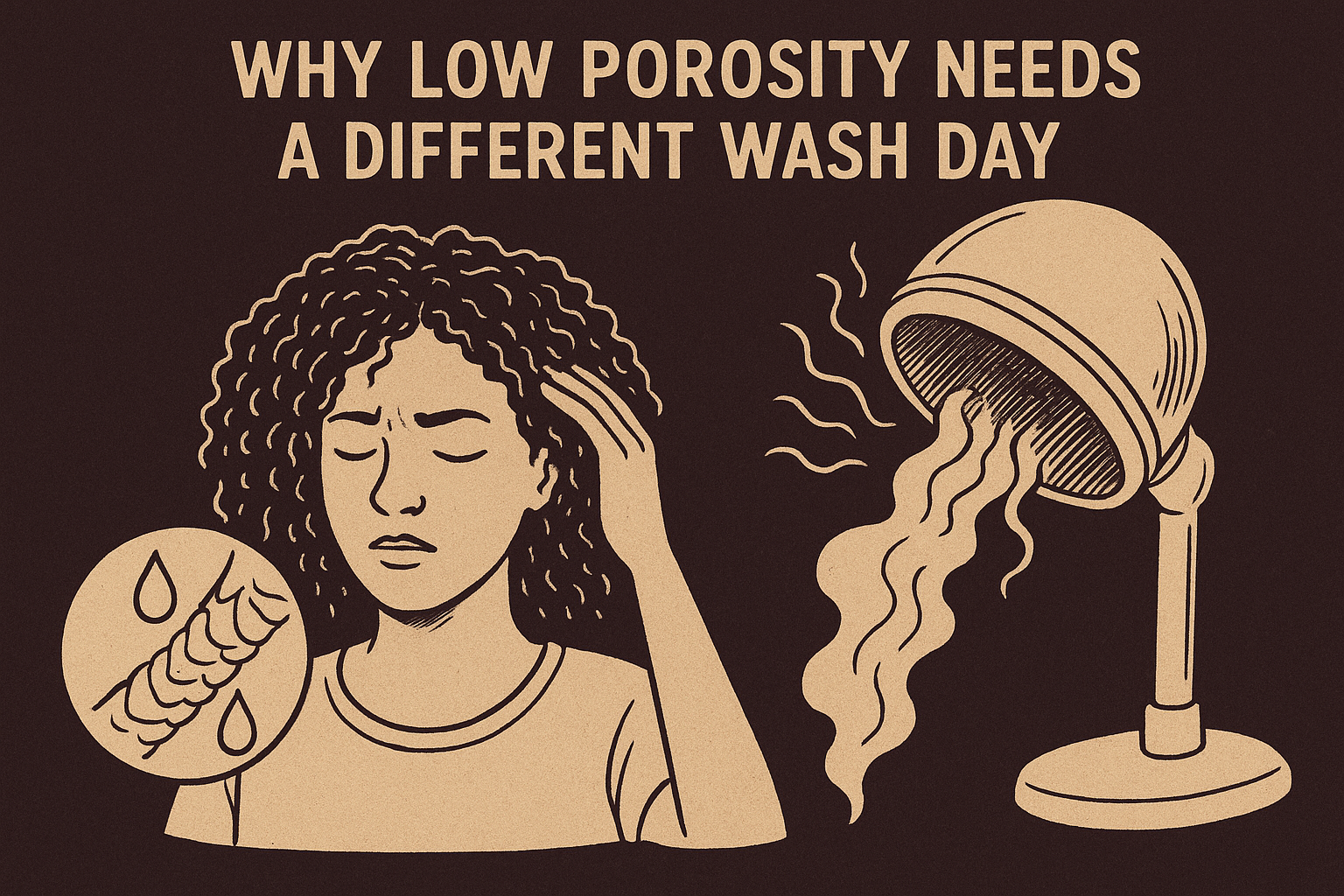
Heat is the key that unlocks low porosity cuticles, turning product buildup into actual moisture.
The products you choose matter just as much as the technique. Heavy butters and oils coat low porosity hair without penetrating, while lightweight, water-based products slip through those opened cuticles when you apply heat. Skip the heat or use the wrong products, and you'll stay stuck in that dry, coated cycle that makes every wash day feel pointless.
Step 1. Prep and pre poo for easier detangling
Pre-pooing creates a protective barrier between your hair and the shampoo that's about to strip it. This step matters even more for low porosity hair because your tight cuticles make detangling a nightmare when your hair is dry. Apply a lightweight oil or conditioner to dry hair before you wash, and you'll glide through knots instead of ripping through them.
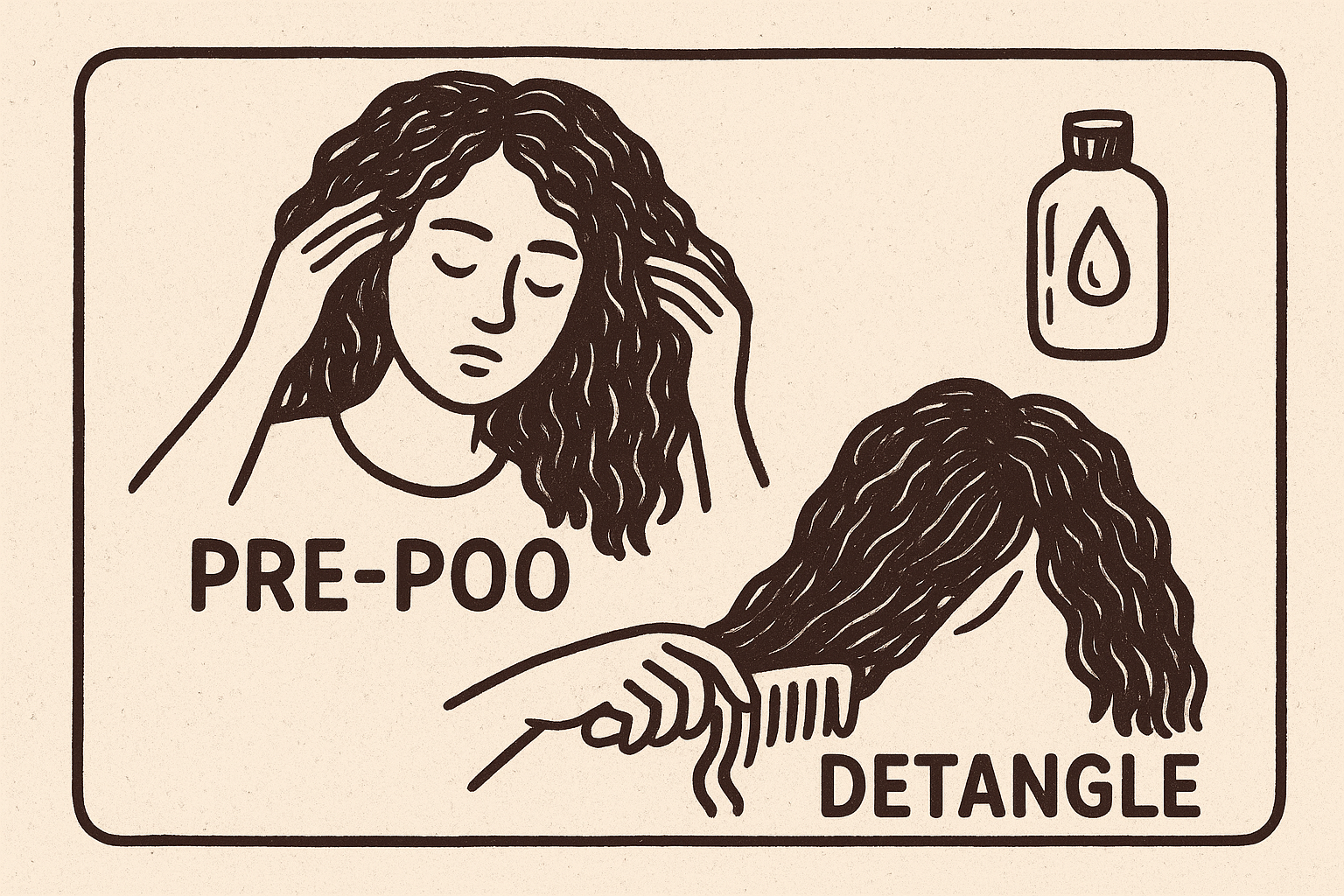
What to apply before you shampoo
Skip heavy butters and reach for liquid oils like jojoba, argan, or sweet almond oil that won't just sit on your low porosity strands. You can also use a cheap conditioner with good slip if oils feel too greasy on your hair. Apply your chosen product generously to dry hair, focusing on the ends and any sections that tangle easily.
Pre-pooing turns painful detangling sessions into smooth, damage-free prep work.
Work the product through with your fingers first, then use a wide-tooth comb to gently detangle from ends to roots. Section your hair if it's thick or long because trying to tackle everything at once leads to breakage and frustration.
Apply it the night before or right before washing
Cover your pre-pooed hair with a plastic cap and sleep on it for maximum moisture penetration, or let it sit for 15 to 30 minutes if you're washing the same day. The longer your pre-poo sits, the easier your low porosity wash day routine becomes because your hair softens and loosens stubborn tangles while you wait.
Step 2. Cleanse without stripping your curls
Shampooing low porosity hair means walking a thin line between removing buildup and stripping away the moisture you just worked to add. Your tight cuticles trap product residue on the surface of your strands, which is why you need a clarifying shampoo more often than people with other porosity types. Regular moisturizing shampoos can't cut through the coating that builds up on low porosity hair, leaving your curls looking dull and feeling waxy no matter how much you condition.
Switch between clarifying and moisturizing shampoos
Use a clarifying shampoo once or twice a month to strip away stubborn buildup from oils, butters, and styling products that sit on your low porosity strands. Between clarifying sessions, reach for a gentle, sulfate-free shampoo that cleanses without completely drying out your hair. Your low porosity wash day routine should include both types because clarifying too often leaves your hair stripped, while never clarifying leaves it coated and unable to absorb moisture.
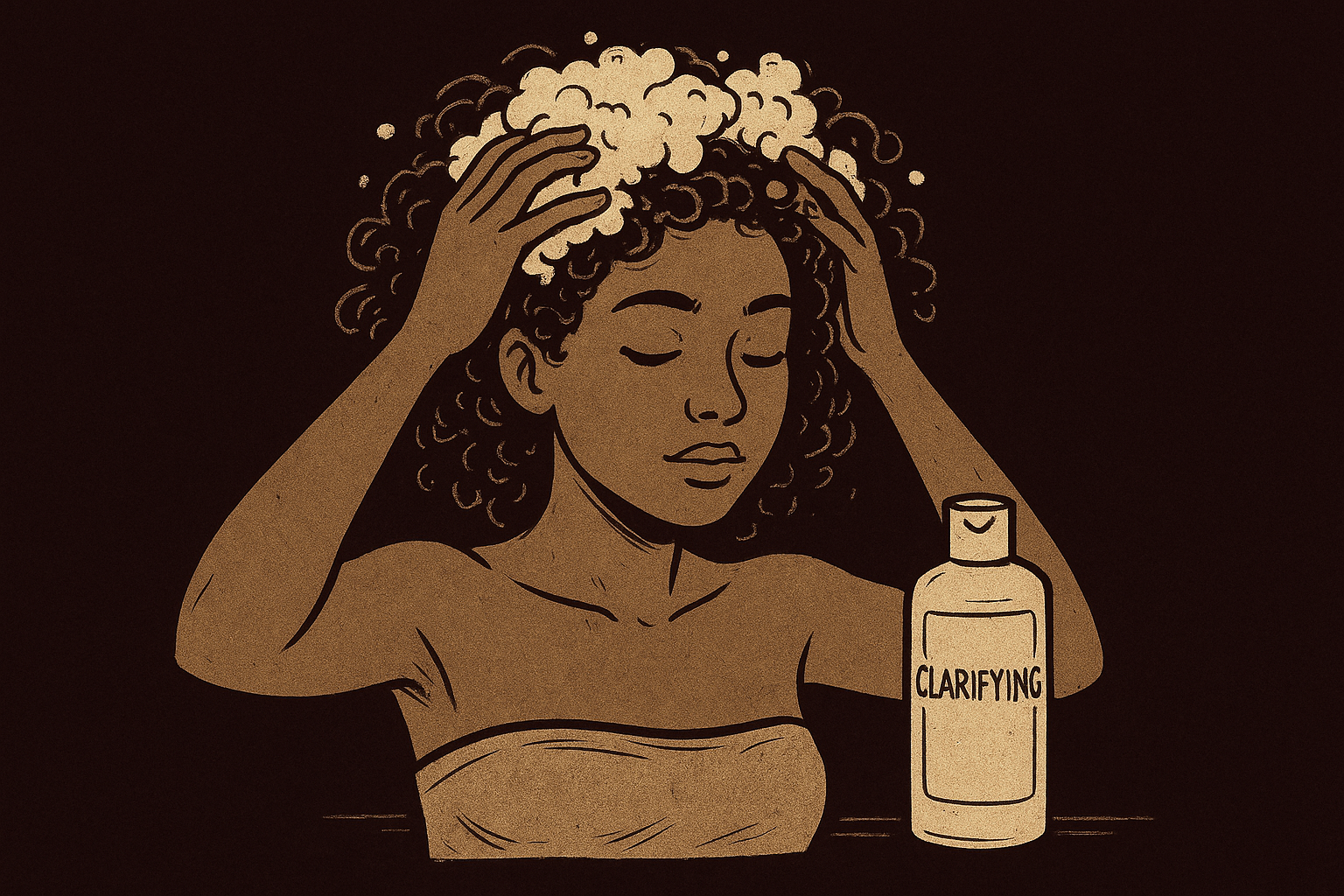
Alternating between clarifying and moisturizing shampoos keeps low porosity hair clean without damage.
Apply shampoo directly to your scalp and roots where oil and product accumulate most, then let the suds rinse down through your lengths. Focus your cleansing efforts on your scalp by massaging with your fingertips in circular motions, which stimulates blood flow and removes debris without roughing up your hair shaft. Skip piling all your hair on top of your head because that tangles low porosity curls and makes rinsing harder than it needs to be.
Step 3. Deep condition with heat for real moisture
This step separates low porosity hair care from every other routine because heat is non-negotiable for moisture penetration. Your sealed cuticles won't budge without it, which means that expensive deep conditioner you love does absolutely nothing sitting on your hair at room temperature. Apply a water-based deep conditioner to your freshly cleansed hair, then add heat to temporarily open those stubborn cuticles and let the product actually do its job.
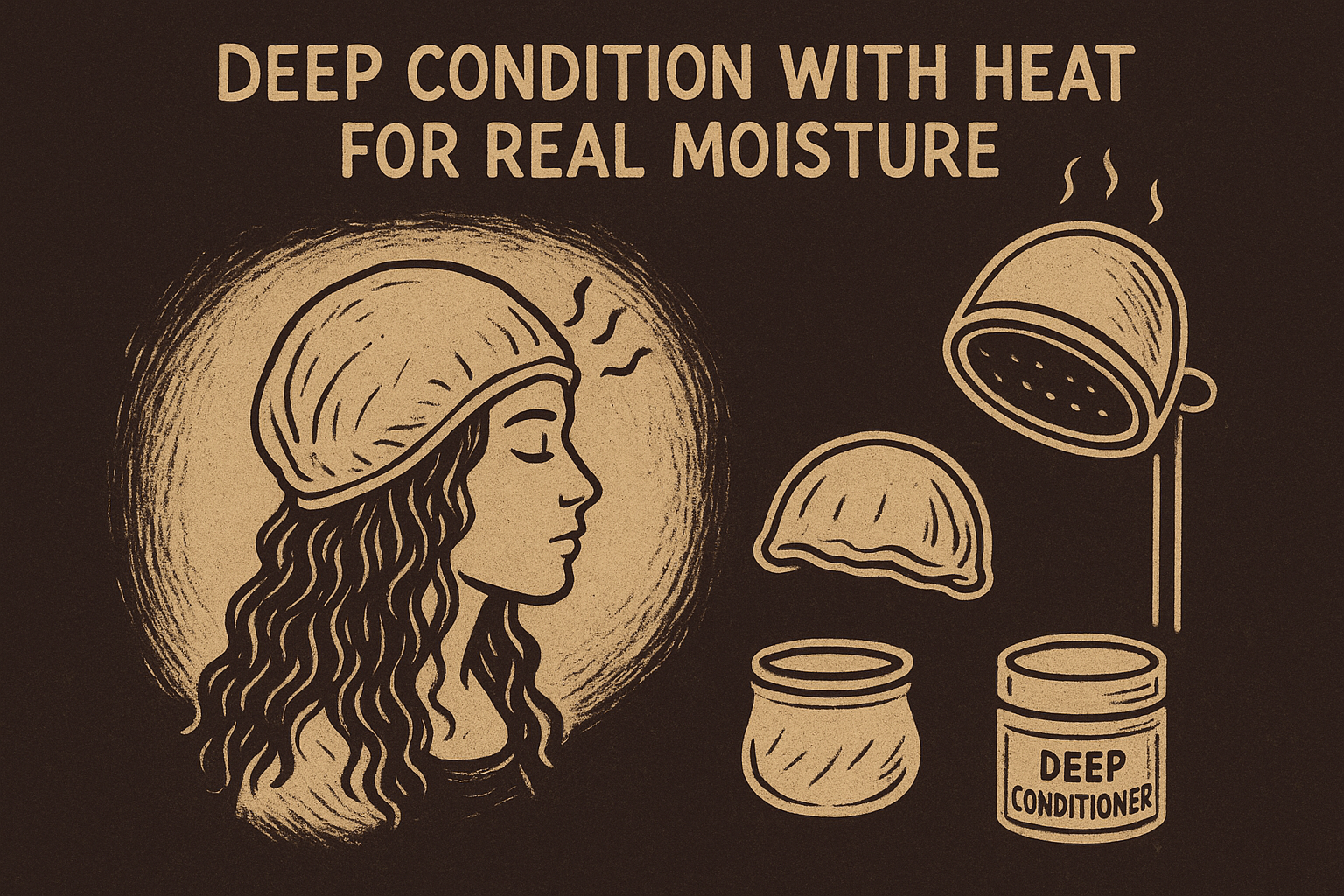
Pick your heat source and timing
Use a hooded dryer, steamer, or heat cap for 15 to 30 minutes after applying your deep conditioner generously to soaking wet hair. A steamer works best for low porosity hair because the moisture-rich heat penetrates deeper than dry heat, but any heat source beats no heat at all. Cover your conditioner-coated hair with a plastic cap before sitting under your heat source to trap warmth and prevent the product from drying out before it can penetrate.
Heat transforms deep conditioning from a waste of time into the moisture breakthrough your low porosity wash day routine desperately needs.
Choose lightweight, protein-balanced formulas
Skip thick, butter-heavy deep conditioners that coat your hair instead of penetrating it. Look for water-based formulas with humectants like glycerin or aloe vera that draw moisture into your strands once heat opens your cuticles. Balance your moisture and protein by using a protein treatment every 4 to 6 weeks, then following immediately with a moisturizing deep conditioner under heat to prevent brittleness and breakage.
Step 4. Seal, style, and dry for lasting definition
Your deep conditioner just opened your cuticles and filled them with moisture, which means you need to lock everything in before those cuticles snap shut and trap dry air instead of hydration. This final step in your low porosity wash day routine determines whether your curls stay defined and moisturized for days or shrivel up by tomorrow. Apply your products in the right order on soaking wet hair while your cuticles are still open from the heat treatment you just finished.
Layer your products using LOC or LCO
Start with a water-based leave-in conditioner applied generously to dripping wet hair, working it through with your fingers or a wide-tooth comb. Next comes your choice: oil then cream (LOC method) or cream then oil (LCO method). Low porosity hair responds better to LCO because the cream provides hold and definition before the oil seals everything in without weighing down your curls.
Lock in your deep conditioning results immediately while your cuticles are still receptive to product.
Air dry or use indirect heat
Skip rubbing your hair with a towel and use a microfiber towel or t-shirt to gently squeeze out excess water instead. Let your hair air dry completely if you have time, or use a hooded dryer on low heat to speed up the process without causing frizz. Diffusing works but keep it on the cool setting and hover it around your head instead of directly touching your curls.
Bring your wash day to life
Your low porosity wash day routine transforms from frustrating to foolproof when you follow these heat-powered steps consistently. Pre-pooing protects your strands from harsh shampoo damage, heat opens your cuticles for deep conditioning that actually penetrates, and layering products on soaking wet hair locks in that moisture before your cuticles seal shut again. The right technique matters far more than expensive products for low porosity hair.
Scatter is building styling solutions specifically designed for textured hair that actually works with your unique needs. Join our waitlist for early access to products made for curls that refuse to cooperate with standard routines.