

How To Build A Natural Hair Routine For Beginners That Works
How To Build A Natural Hair Routine For Beginners That Works
You finally decide to embrace your natural texture. Then reality hits. Your hair feels dry by day three. You watch ten different tutorials and still end up with frizz instead of definition. Products pile up under your sink while your hair stays the same. Most beginners quit because nobody shows them a simple routine that actually works.
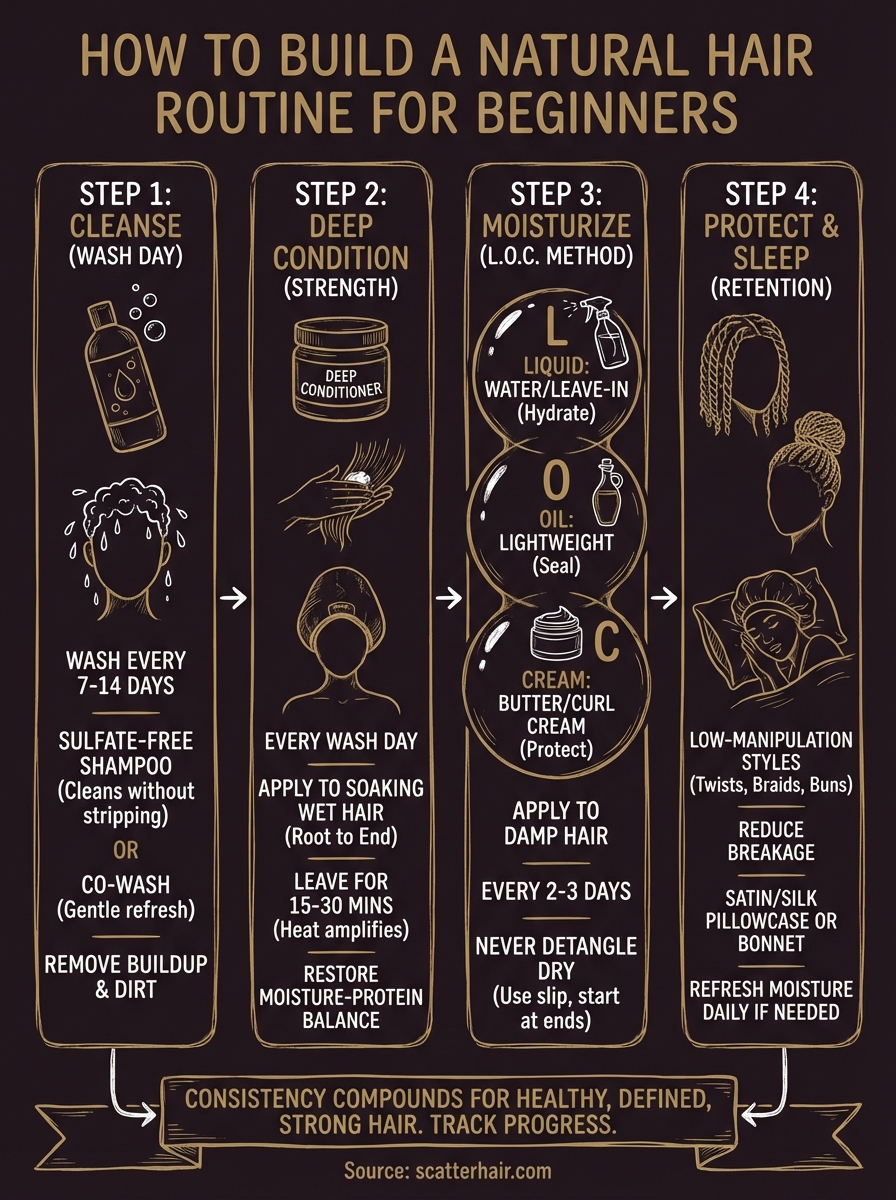
The fix is not more products or complex techniques. You need a consistent routine built on four basic steps: cleanse right, condition deep, moisturize smart, and protect always. Once you nail these fundamentals, healthy hair becomes automatic.
This guide walks you through building a natural hair routine from scratch. You'll learn exactly what to do on wash day, how to keep moisture locked in between washes, and which protective steps prevent breakage. No confusion, no overwhelm, just a clear path to the hair you want.
Why a routine matters for natural hair
Your natural hair operates differently than chemically treated hair. The natural curl pattern prevents sebum (your scalp's natural oil) from traveling down the hair shaft easily. This means your ends stay dry while your roots might feel greasy. Without a consistent routine, you end up treating your hair randomly, which leads to inconsistent results and frustration.
A solid routine removes guesswork and builds healthy habits that compound over time.
What happens without structure
Random product use creates buildup that blocks moisture. You might deep condition one week, skip it for three weeks, then wonder why your hair feels brittle. Inconsistent cleansing lets dirt and product residue accumulate on your scalp, which can slow growth and cause itching. Your hair needs predictable care to thrive.
The compound effect of consistency
When you follow a natural hair routine for beginners consistently, each step builds on the last. Regular deep conditioning strengthens your hair over weeks. Proper moisturizing prevents breakage that would otherwise set you back months. You start seeing actual progress instead of cycling between good hair days and bad hair weeks. The routine becomes your baseline for healthy hair, making it easier to identify what works and what needs adjustment.
Step 1. Understand your hair and goals
Before you buy a single product, you need to know what you're working with. Your hair type (the curl pattern from 3A to 4C) and porosity (how your hair absorbs and holds moisture) determine which products and techniques actually work. Skipping this step means wasting money on products that don't match your hair's needs.
Identify your hair type and porosity
Your curl pattern tells you how tight or loose your curls form naturally. Type 3 hair shows defined spirals, while Type 4 hair forms tighter coils or zigzag patterns. Check your hair when it's wet and product-free to see the true pattern. Each type needs different styling approaches.
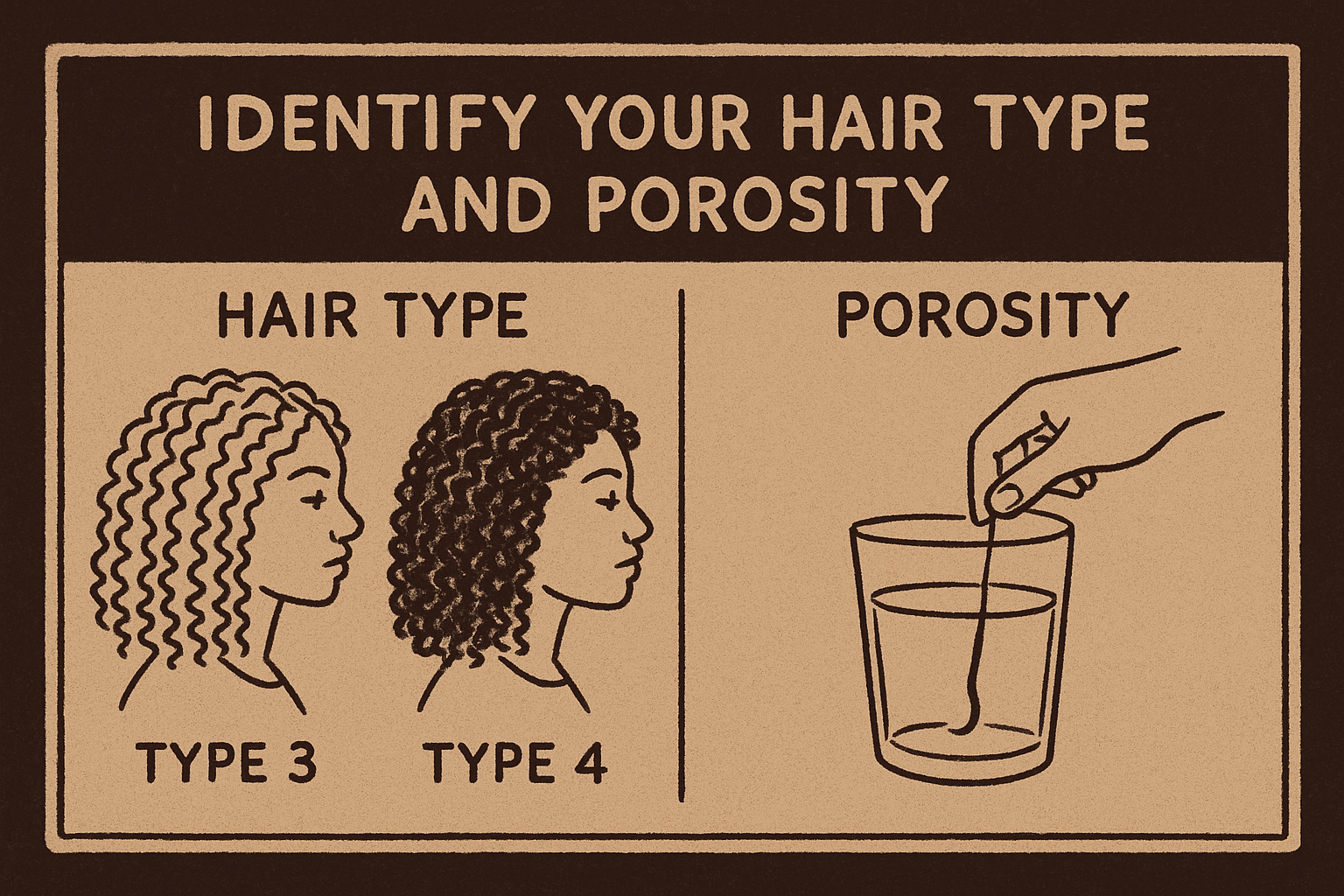
Porosity matters even more than curl pattern. High porosity hair absorbs water quickly but loses it just as fast. Low porosity hair repels moisture initially but holds it longer once absorbed. Test yours with a simple glass of water: drop a clean strand in and wait. If it sinks quickly, you have high porosity. If it floats, you have low porosity. Medium porosity sinks slowly.
Understanding your porosity changes everything about product selection and application timing.
Set realistic goals
Write down what you want from your natural hair routine for beginners. Maybe you want length retention, less breakage, or better curl definition. Be specific. "Healthy hair" is too vague. "Retain one inch of growth every two months" or "eliminate single-strand knots" gives you something measurable.
Your goals shape your routine. If growth is your priority, you'll focus on scalp health and protective styling. If definition matters most, you'll invest time in styling techniques and hold products. Pick two main goals to start. Trying to fix everything at once spreads your effort too thin and makes it harder to track what actually works.
Step 2. Build your wash day foundation
Wash day sets the tone for everything that follows in your natural hair routine for beginners. You clean your scalp, reset your hair, and create a fresh canvas for moisture and styling. The products you choose here and how often you use them determine whether your hair stays hydrated or becomes dry and brittle within days.
Choose your cleansing approach
Your scalp needs regular cleansing to remove buildup, dirt, and excess oil that can block hair follicles. Most beginners should wash every 7 to 14 days, depending on how much product you use and how active your lifestyle is. If you work out daily or use heavy styling products, wash weekly. If you keep products minimal, stretch to every two weeks.
Sulfate-free shampoos clean without stripping your hair of its natural oils. Look for ingredients like coconut-derived cleansers or gentle surfactants that create lather without harshness. Co-washing (using conditioner instead of shampoo) works for mid-week refreshes but should not replace regular shampooing. Product buildup happens when you skip proper cleansing, which blocks moisture from penetrating your hair shaft.
Regular cleansing removes the barriers that prevent your products from actually working.
Deep condition for strength
Deep conditioning rebuilds your hair's protein-moisture balance after cleansing. Apply a thick conditioner from roots to ends immediately after shampooing, while your hair is still soaking wet. The water helps the conditioner penetrate your hair cuticle. Cover your hair with a plastic cap and let it sit for 15 to 30 minutes minimum.
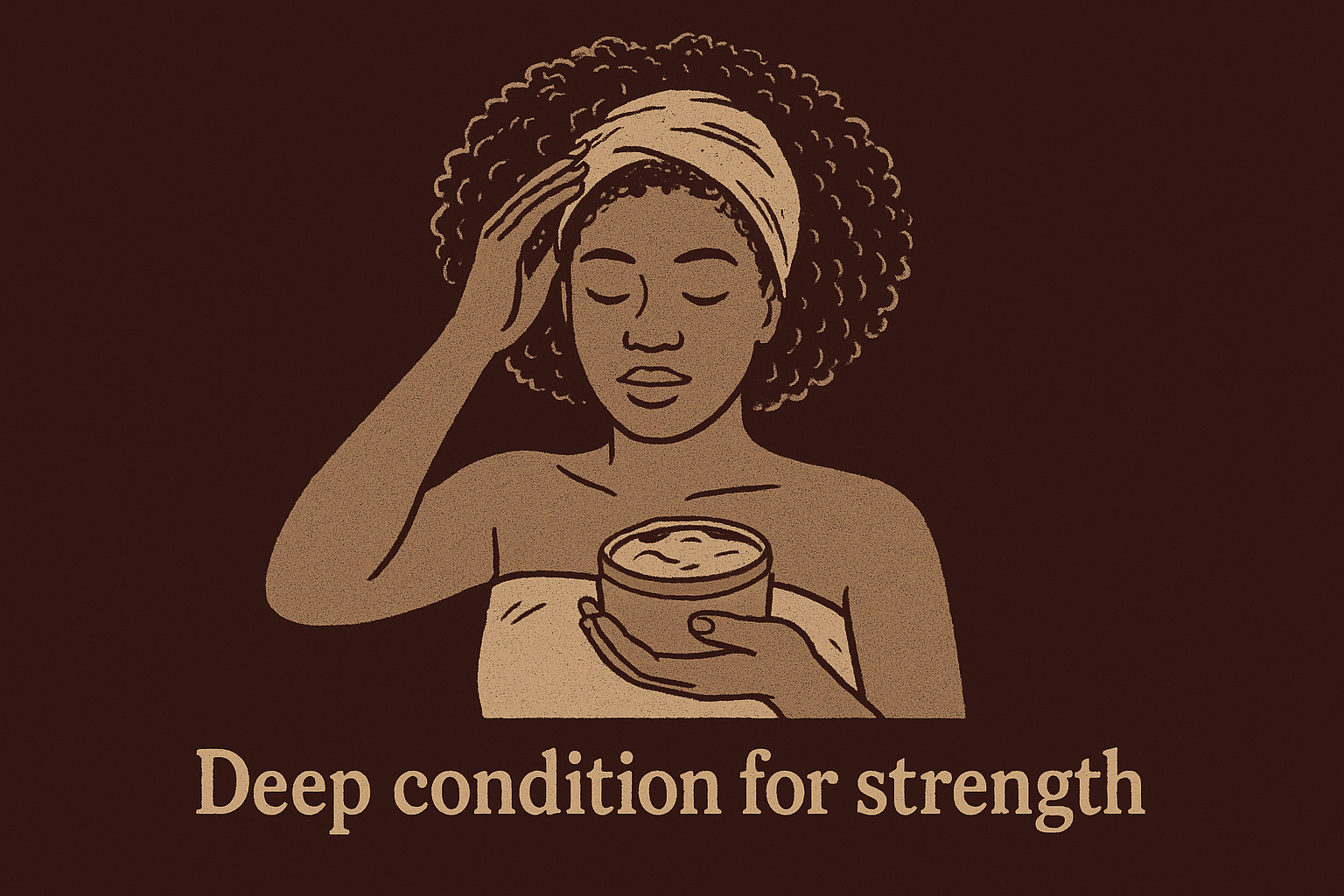
Heat amplifies the conditioning effect. Sit under a hooded dryer or use a heat cap if you have one. Without heat, extend the time to 45 minutes or longer. Focus on your ends since they're the oldest and driest part of your hair. You should deep condition every single wash day without exception. This step prevents breakage and keeps your hair elastic enough to handle styling without snapping.
Protein treatments belong here too, but use them once per month maximum unless your hair shows signs of severe damage. Too much protein makes hair stiff and brittle. Alternate between moisture-rich deep conditioners and protein treatments to maintain balance.
Step 3. Moisturize, seal, and detangle
Between wash days, your hair loses moisture through evaporation and daily manipulation. Proper moisturizing keeps your strands flexible and prevents the brittleness that leads to breakage. The L.O.C. method (Liquid, Oil, Cream) gives you a proven framework for locking moisture into your natural hair routine for beginners.
The L.O.C. method explained
Start with water or a water-based leave-in conditioner as your liquid layer. Spray or apply it to damp (not soaking wet) hair, section by section. Water is your primary moisturizer, everything else just helps trap it inside your hair shaft.
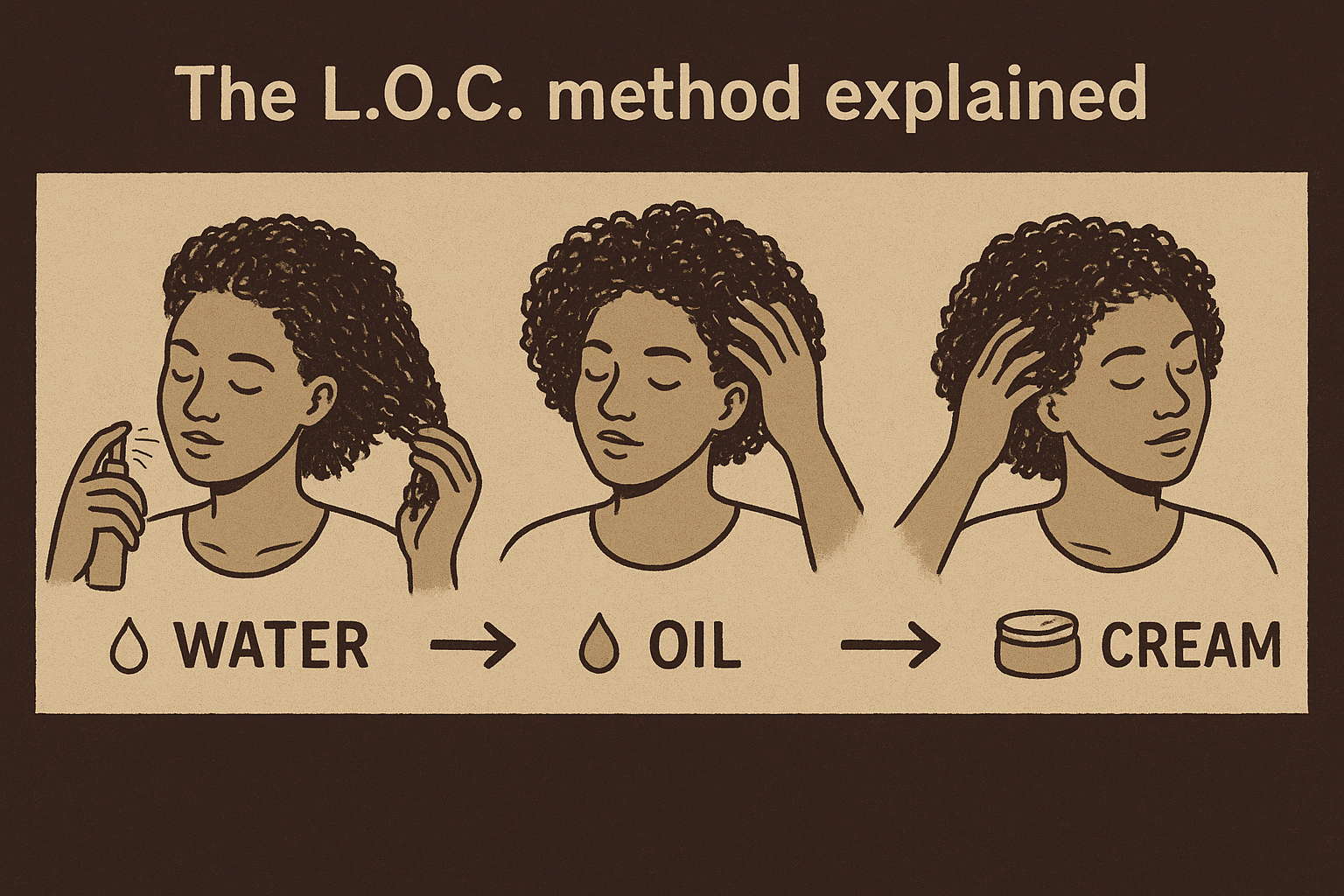
Next, apply a lightweight oil like jojoba, grapeseed, or argan oil to seal that moisture in. Use your palms to smooth the oil down each section, focusing on your ends. Skip heavy oils like castor oil for this step unless you have extremely thick, high-porosity hair.
The order matters because oil creates a barrier that locks in the water underneath.
Finish with a butter or cream to add an extra protective layer. Shea butter mixtures or curl creams work well here. This three-layer system keeps your hair moisturized for days instead of hours. Repeat this process every 2 to 3 days or whenever your hair feels dry to the touch.
Detangle with intention
Never detangle dry hair. Apply your leave-in conditioner or detangling spray first to add slip. Start at your ends and work upward in small sections, using a wide-tooth comb or your fingers. Forcing through knots from root to tip causes unnecessary breakage.
Hold each section at the root while you work out tangles below. This prevents pulling on your scalp and reduces the stress on each strand. Detangle on wash day after applying conditioner, or mid-week when you refresh your moisture. Patient detangling saves more hair than any product ever will.
Step 4. Style, protect, and sleep right
Your styling choices either protect your progress or undo it. Low-manipulation styles keep your hands out of your hair, which reduces breakage and helps you retain length. How you sleep matters just as much as what you do during the day, since friction against cotton pillowcases can unravel a full week of moisturizing work.
Pick low-manipulation styles
Protective styles like two-strand twists, braids, or buns tuck your ends away from rubbing against clothes and pillows. These styles should feel comfortable, never tight enough to cause tension on your scalp. Install them on freshly moisturized hair using the L.O.C. method to lock in hydration before styling.
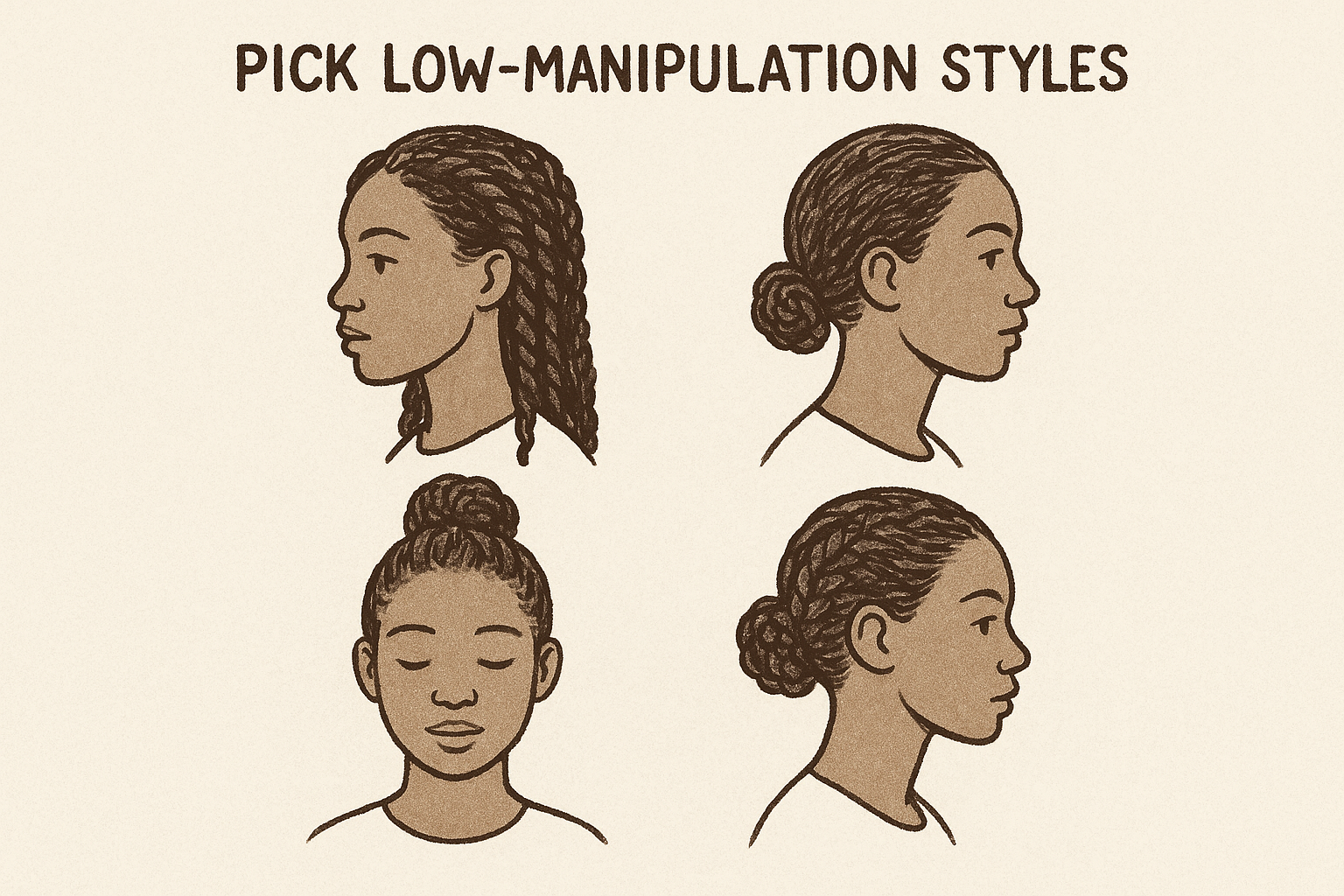
Keep protective styles in for 1 to 2 weeks maximum before taking them down and redoing your natural hair routine for beginners from scratch. Leaving styles in too long leads to matting and makes detangling harder. When you take down braids or twists, apply oil to your fingers first to minimize frizz and breakage.
Protective styling only works when your hair enters the style already moisturized and healthy.
Wash-and-go styles work well for tighter curl patterns but require daily or every-other-day refreshing with your moisturizing spray. Apply your styling cream or gel to soaking wet hair, then scrunch or rake it through for definition.
Protect at night
Sleep on a satin or silk pillowcase to reduce friction that causes frizz and breakage. Even better, wrap your hair in a satin bonnet or scarf before bed. Pineappling (gathering your hair loosely at the crown) works for longer hair, while shorter styles benefit from simply wrapping with a scarf.
Refresh your moisture each morning if needed. Spray water lightly, add a small amount of oil, and reshape any flattened sections with your fingers.
Bring your new routine to life
Your natural hair routine for beginners starts with four simple steps: wash right, condition deep, moisturize consistently, and protect always. Pick a wash day schedule that fits your lifestyle, stick to the L.O.C. method between washes, and commit to protective styling. Track your progress monthly by taking photos and noting what works.
Building healthy habits takes patience, but the results compound faster than you think. Your hair will respond to consistent care with better retention, stronger strands, and the texture you've been chasing. When you're ready to style with products that actually work for textured hair, check out Scatter for effortless styling solutions designed specifically for your natural texture.