

Curl Pattern Quiz: Find Your Curl Type and Best Products
You've scrolled through a dozen hair type charts, squinted at your curls in the mirror, and still can't tell if you're a 3B or a 4A. That's exactly why a curl pattern quiz exists: it takes the guesswork out of a system that was never as simple as the letter-and-number chart made it look. Curl typing gets complicated fast when your hair has two or three patterns in one head, which is normal, not a mistake on your part.
A good quiz doesn't just hand you a label. It walks through your curl shape, your strand thickness, your porosity, and how your hair actually behaves when it's wet versus dry, then translates that into product recommendations you can actually shop for. That's the real point: knowing you're a 4B does nothing for you if you don't know what that means for gel, cream, or diffusing technique.
In this article, you'll take a self-assessment that goes beyond the classic hair type chart, learn what each pattern actually needs in terms of moisture and hold, and walk away with a clear next step for styling your specific texture instead of copying a routine that was built for someone else's curls.
Why your curl pattern matters for styling
Your curl pattern decides how your hair reacts to water, product, and air, so guessing it wrong means fighting your texture instead of working with it. A 2A wave and a 4C coil absorb moisture at completely different speeds, hold curl memory differently, and need totally different amounts of product to look defined instead of crunchy or greasy. Skip the identification step and you end up copying a routine built for someone else's strands, which explains why that viral gel technique worked for your friend and left your hair a frizzy mess.
Curl shape also drives porosity and density, two factors that decide how much moisture your hair can hold and how fast it dries out again. Tighter curl patterns tend to shrink more, dry out faster, and need heavier creams or butters to seal in water. Looser patterns get weighed down by the same products and end up limp instead of bouncy. That's why a curl pattern quiz asks about more than just shape. It's checking how your hair drinks up water, how it feels when it's dry, and how much shrinkage you see between wet and dry length.
Get your curl pattern wrong and every product recommendation after it is wrong too.
Styling technique matters just as much as product choice. Diffusing, plopping, and finger coiling all produce different results depending on your pattern, and using the wrong one can flatten curls that need volume or frizz out curls that need smoothing. Someone with 3C curls plopping in a cotton t-shirt might get frizz because the fabric is too rough for their strand thickness, while a satin or microfiber towel would have worked. Knowing your pattern before you start experimenting saves you money on products that were never going to work and time spent blaming your hair for a mismatch that was really about technique.
How to take a curl pattern quiz accurately
A curl pattern quiz only works if you feed it accurate information, and most people sabotage their results before they even start. Timing matters more than people think: taking a quiz right after a fresh wash and air dry, with zero product in your hair, gives you the truest read on what your curls do naturally.
Prep before you answer
Wash with a clarifying shampoo to strip old product buildup, then let your hair air dry completely without touching it. Touching, scrunching, or twisting while it dries changes the curl formation you're trying to identify.
- Skip heat styling for at least a week before quizzing
- Let hair dry untouched, no diffuser, no scrunching
- Check multiple sections: crown, nape, and front often differ
- Answer based on your driest ends, not your roots
A curl pattern quiz is only as accurate as the hair you show up with.
Answer honestly, not aspirationally
Answer every question about the hair you actually have, not the curl definition you're chasing. Quizzes fail when people describe their goal texture instead of their real one, which sends you toward products built for a completely different pattern.
Curl types explained from 2A to 4C
Curl typing runs on a scale created by stylist Andre Walker, and it groups hair into four broad categories: straight, wavy, curly, and coily, each split into A, B, and C subtypes based on how tight the curl or wave is. Curl diameter shrinks as you move from 2A to 4C, meaning the loop your hair forms gets smaller and the shrinkage between wet and dry length gets bigger. This scale is a starting point, not a diagnosis, since most heads carry two or three patterns at once.
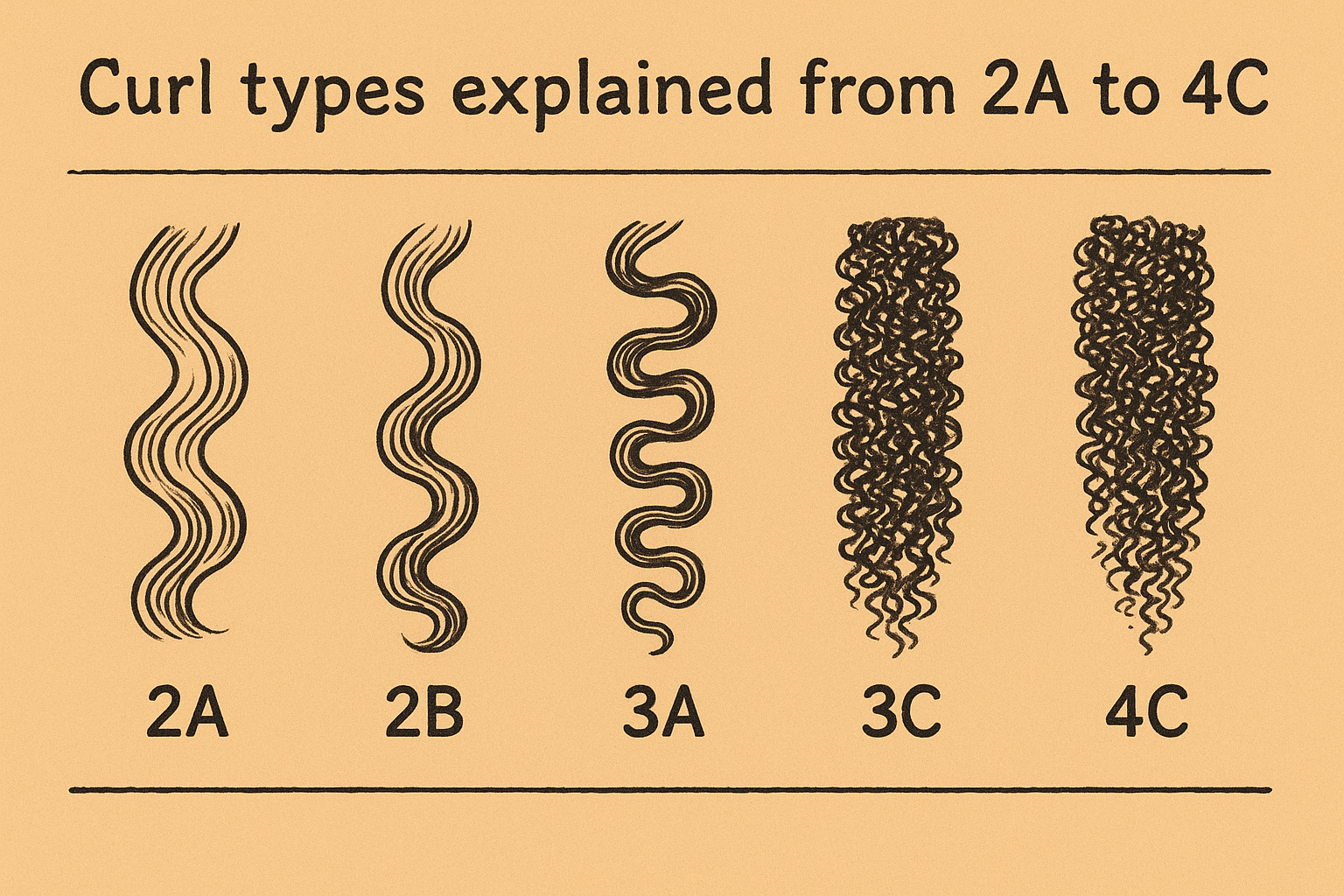
No chart replaces looking at your own strands wet and dry.
Here's a quick reference for what each range typically looks like:
| Type | Shape | What it looks like |
|---|---|---|
| 2A-2C | Wavy | S-shaped waves, gets tighter toward 2C |
| 3A-3B | Curly | Loose loops to springy corkscrews |
| 3C-4A | Curly/Coily | Tight corkscrews, pencil-sized coils |
| 4B-4C | Coily | Z-shaped bends, tight zigzag or no visible curl pattern |
Use this table as a rough map, then confirm with a quiz that checks your strand thickness and porosity too.
Best products and techniques for each curl type
Once your quiz confirms a pattern, the product hunt gets a lot simpler. Wavy hair (2A-2C) needs lightweight gels and mousses that add hold without weighing down the wave, while coily hair (4B-4C) needs rich butters and creams that seal in moisture fast, since coils dry out quicker than any other pattern.
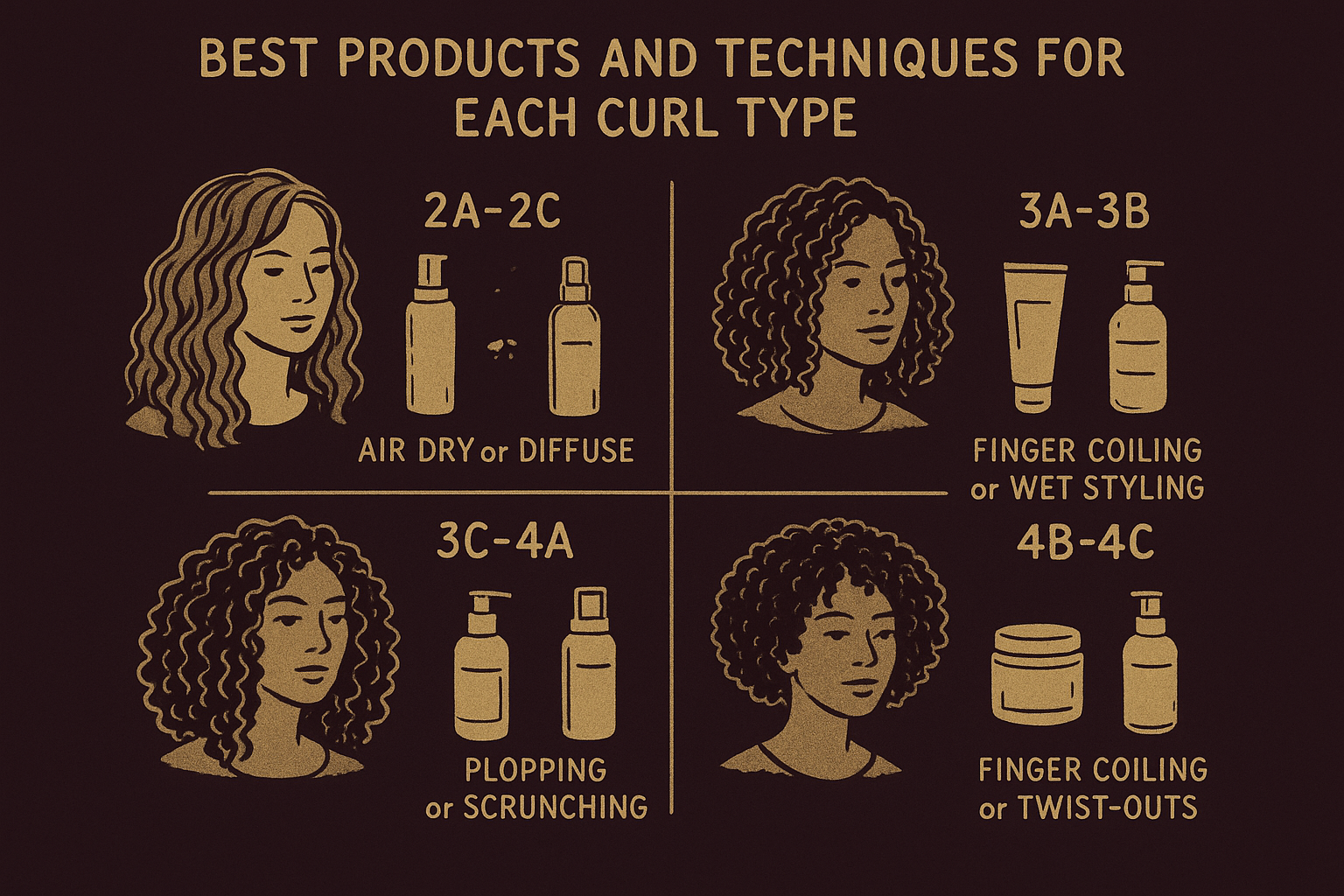
Match products to your actual pattern
| Curl Type | Best Products | Best Technique |
|---|---|---|
| 2A-2C | Lightweight mousse, sea salt spray | Air dry or diffuse on low |
| 3A-3B | Curl cream, medium-hold gel | Finger coiling, wet styling |
| 3C-4A | Gel-cream combo, leave-in conditioner | Plopping, scrunching |
| 4B-4C | Heavy butter, LOC method products | Finger coiling, twist-outs |
The right product for your pattern feels obvious once you actually know your pattern.
Technique changes the outcome as much as product
Gel alone won't fix a technique mismatch. Someone with 3C hair using the LOC method built for 4C coils ends up greasy, while a 4A curl using a light 2C mousse ends up dry and undefined by noon. Test one product change at a time so you know what's actually working.
Common mistakes that skew your quiz results
Even a well-designed curl pattern quiz gives bad results if you feed it bad information. The most common slip is answering based on product-styled hair instead of your natural, product-free texture, which inflates your curl definition and points you toward the wrong recommendations entirely.
Watch for these red flags
- Quizzing right after a fresh blowout or flat iron session, when heat has temporarily changed your curl shape
- Judging your pattern from roots only, when ends often reveal your true, driest texture
- Skipping the porosity questions because they feel confusing, when porosity changes your entire product plan
- Comparing your results to a friend's answers instead of your own strands
- Retaking the quiz obsessively hoping for a "better" type, instead of accepting the one your hair actually shows
Your quiz results are only as honest as the hair you show up with.
Humidity throws people off too. Testing on a dry winter day versus a humid summer afternoon can shift how much frizz or shrinkage you see, so weather conditions matter more than most people realize. If you're unsure, retake the quiz on a neutral, low-humidity day and compare notes before committing to a routine.
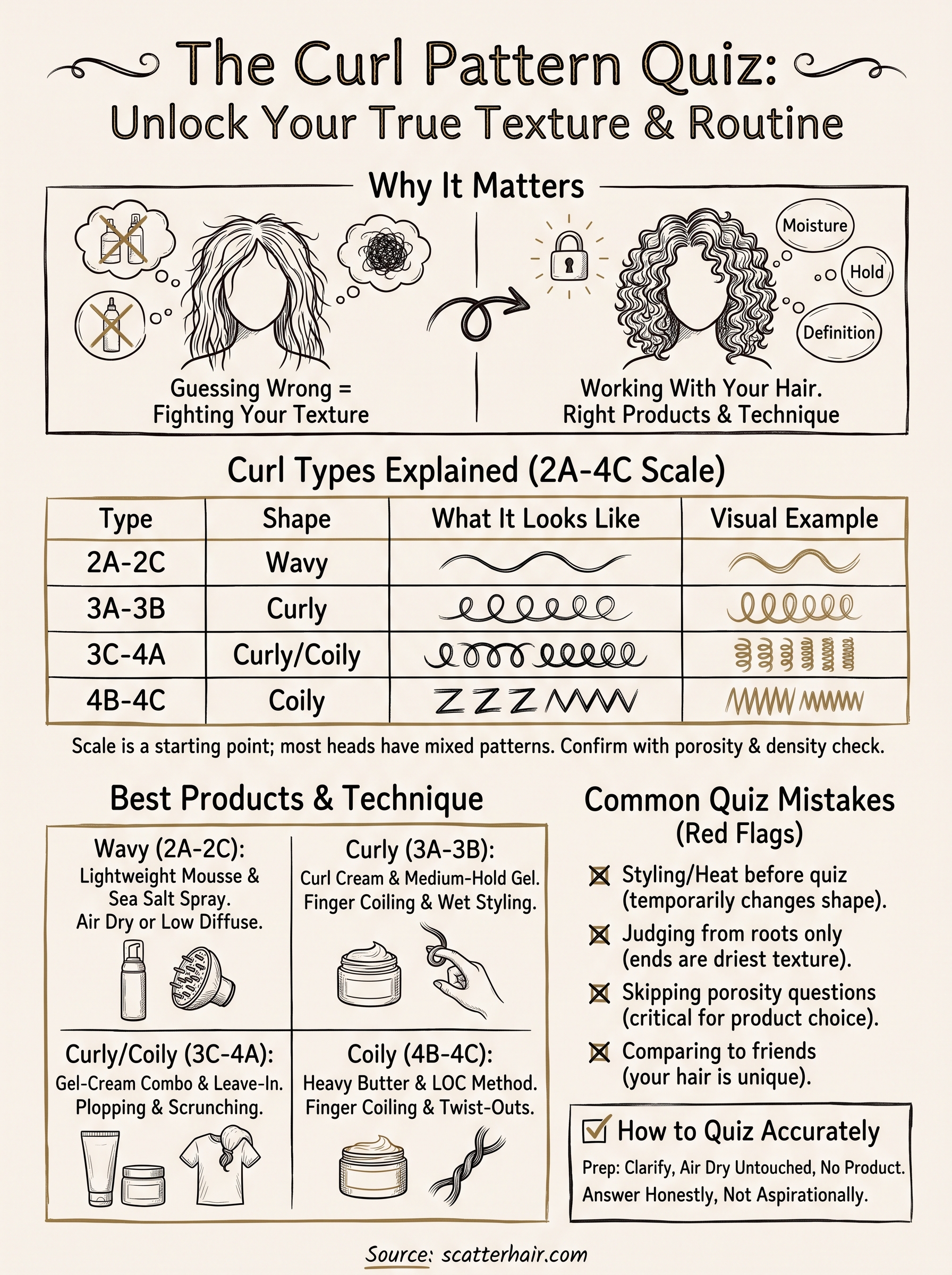
Getting to know your curls
A curl pattern quiz only tells you so much. The real work happens after, when you start paying attention to how your hair actually behaves wet, dry, humid, or fresh out of the shower. Treat your first result as a starting point, not a permanent label, and keep adjusting your products and technique as you learn more about your specific texture.
Building a routine around your real curl pattern, not the one you wish you had, saves you money and frustration. Once you know whether you're chasing moisture, hold, or definition, shopping gets a lot less overwhelming. That's the whole goal here: fewer guesses, better results.
If you want styling tips built specifically for textured hair, along with early access to products designed for real curl patterns, join the Scatter community and get on the list before launch.