

6 Ingredients To Avoid for Low Porosity Hair (And Why)
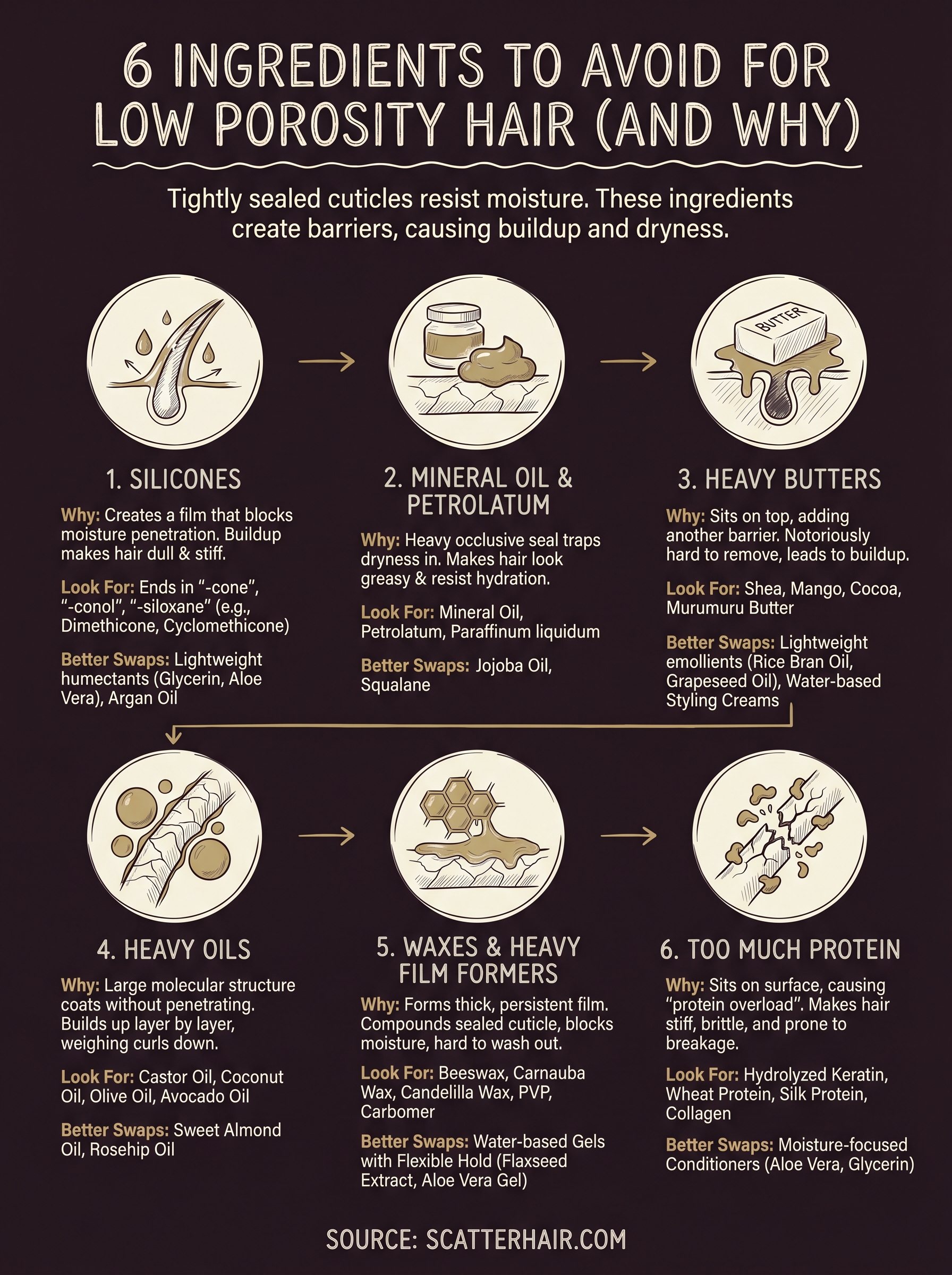
Low porosity hair has tightly sealed cuticles. That means moisture struggles to get in, and the wrong products just sit on top, leaving your hair greasy, weighed down, and still dry underneath. If you've ever followed a routine that works for everyone else but does nothing for you, the problem probably isn't your technique. It's your ingredients. Knowing the ingredients to avoid for low porosity hair is one of the most practical things you can do to fix that.
The tricky part is that many of these ingredients aren't "bad" in general. They work great for other hair types. But on low porosity strands, they create a barrier that blocks moisture from penetrating the hair shaft, which is the opposite of what you need. Products pile up, wash days get harder, and your hair never quite looks or feels the way it should. It's frustrating, and most product labels won't warn you about it.
At scatterhair, we're building styling products specifically formulated for textured hair, products that actually perform without fighting against your hair's natural structure. That means we spend a lot of time thinking about what goes into a formula and, just as importantly, what stays out. Below, we're breaking down six specific ingredients you should steer clear of if you have low porosity hair, and exactly why each one causes problems.
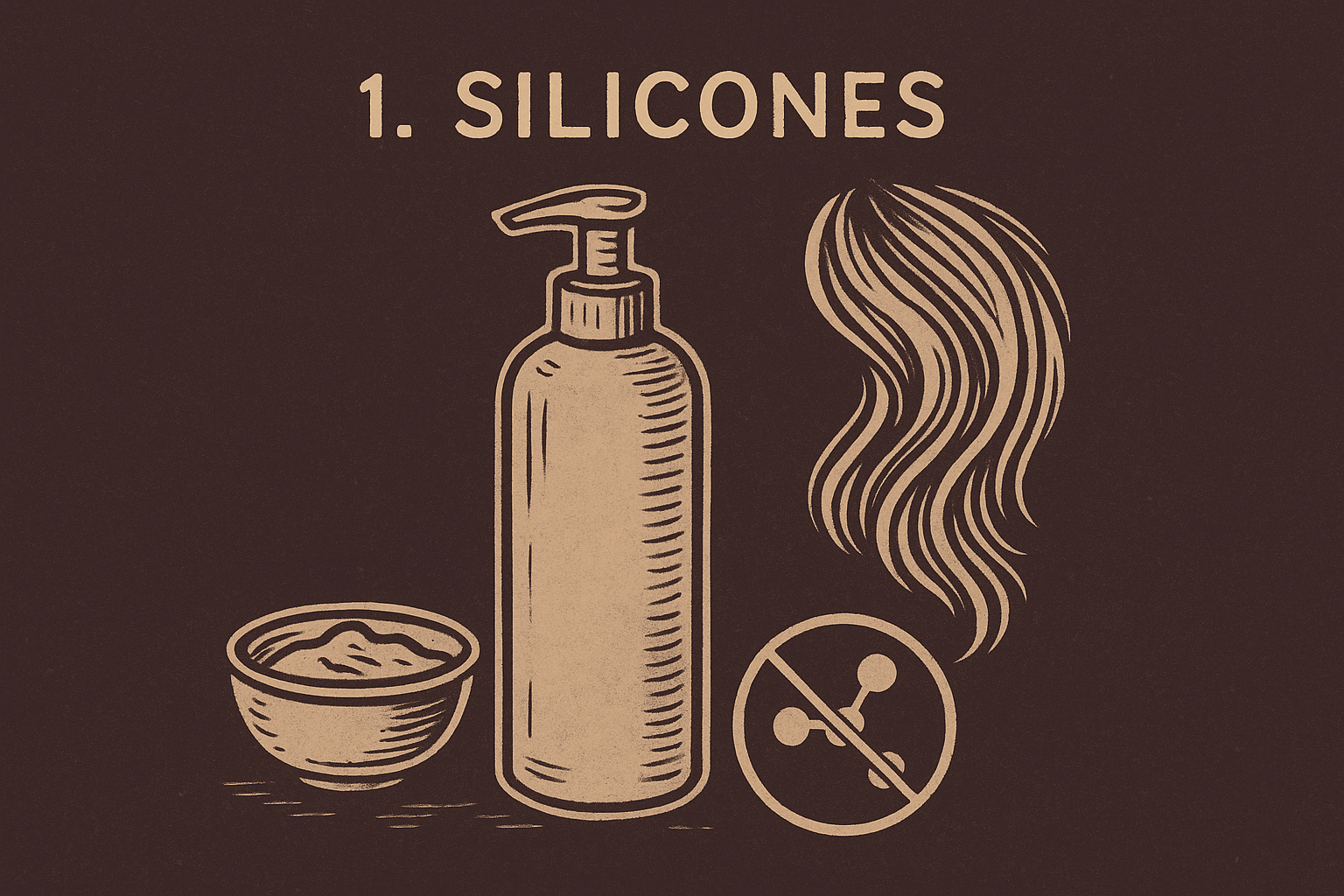
1. Silicones
Silicones are one of the most common ingredients to avoid for low porosity hair. They appear in a huge range of products and work by coating the hair shaft to deliver a smooth, shiny finish. That coating effect sounds appealing on the surface, but for low porosity hair, it creates a real problem.
Why it causes issues for low porosity hair
Low porosity hair already has cuticles that lie tightly flat against the strand. Layering a silicone on top adds an additional film over a surface that already resists penetration. Moisture can't get through, and neither can the conditioning agents in your other products. Buildup accumulates fast, and your hair ends up looking dull and feeling stiff even right after wash day.
Silicones don't moisturize your hair. They create the illusion of moisture by adding slip and shine while sealing out the actual hydration your hair needs.
Ingredient names to look for on labels
Reading labels carefully is essential here because silicones often hide behind technical-sounding names. Look for anything ending in "-cone," "-conol," or "-siloxane" as a starting point.
- Dimethicone
- Cyclomethicone
- Cyclopentasiloxane
- Amodimethicone
- Trimethylsilylamodimethicone
- Bis-aminopropyl dimethicone
Water-soluble silicones, like PEG-modified versions, are less likely to build up since they rinse out more easily. Non-water-soluble ones, however, accumulate on low porosity strands quickly and require a clarifying wash to remove.
Common products where you'll find it
Silicones appear most often in smoothing serums, heat protectants, and shine sprays. You'll also find them in many conditioners and leave-in treatments marketed for frizz control. Both drugstore and salon brands use them heavily because they make hair feel instantly soft and look polished right after application, which is great short-term but damaging to your hair's hydration over time.
Better swaps for low porosity hair
Instead of silicone-based smoothers, reach for products that use lightweight humectants like glycerin or aloe vera. These pull moisture into the hair rather than coating it. Argan oil is also a solid lighter-weight alternative that adds shine without the buildup risk.
2. Mineral oil and petrolatum
Mineral oil and petrolatum are petroleum-derived ingredients that show up in a surprising number of hair care and scalp products. They're cheap, widely available, and effective at reducing moisture loss in some contexts, but for low porosity hair, that same property works directly against you.
Why it causes issues for low porosity hair
Both ingredients create a heavy, occlusive seal on the hair shaft. On high porosity hair, that seal can help lock in moisture that's already inside the strand. On low porosity hair, there's little moisture present to begin with, and the coating simply blocks anything else from getting through. The result is buildup that makes your hair feel coated, look greasy, and resist hydration entirely.
Occlusive ingredients only work when moisture is already inside the hair. On low porosity strands, they trap dryness in rather than seal hydration in.
Ingredient names to look for on labels
Check your labels for these specific names:
- Mineral oil
- Petrolatum
- White petrolatum
- Paraffinum liquidum
Common products where you'll find it
These ingredients to avoid for low porosity hair turn up most often in edge control products, scalp oils, and hair grease, as well as some moisturizing creams designed for thick or coily textures.
Better swaps for low porosity hair
Jojoba oil and squalane are lighter alternatives that add slip and shine without the occlusive weight. Both absorb more readily into the strand and won't pile up on tightly closed cuticles.
3. Heavy butters
Heavy butters are a staple in textured hair care, and for good reason. They provide intense moisture and definition for many curl types. But when it comes to ingredients to avoid for low porosity hair, butters that are thick and dense at room temperature consistently cause problems.
Why it causes issues for low porosity hair
These ingredients sit on top of the hair shaft rather than absorbing into it. Your cuticles are already tightly sealed, and a dense butter layer compounds that problem by adding another barrier that traps dryness underneath. Buildup from butters is also notoriously hard to remove without a proper clarifying wash.
If your hair feels soft to the touch but still seems dry after a few days, heavy butter buildup is often the reason.
Ingredient names to look for on labels
Watch for these on the ingredient list:
- Shea butter
- Mango butter
- Cocoa butter
- Murumuru butter
Common products where you'll find it
Heavy butters appear most often in curl creams, LOC method products, and deep conditioners marketed toward coily and kinky hair types. You'll also find them in hair masks and pre-poo treatments where the goal is maximum moisture retention.
Better swaps for low porosity hair
Instead, look for lightweight emollients like rice bran oil or grapeseed oil. These offer conditioning benefits without the heaviness that clogs already-sealed cuticles. For definition and hold, a water-based styling cream with minimal oils will serve your hair much better.
4. Heavy oils
Heavy oils are another key category in the list of ingredients to avoid for low porosity hair. Unlike lighter oils that absorb into the strand relatively quickly, heavy oils have large molecular structures that can't pass through the cuticle layer. They stay on the surface, and that accumulation adds up fast on already-sealed hair.
Why it causes issues for low porosity hair
Your cuticles don't have space to let large molecules through, so heavy oils simply coat the outside of the strand without delivering any real internal conditioning. Over time, this coating builds up layer by layer, leaving your hair feeling greasy and looking flat. The added weight also pulls curls and coils down, which kills definition.
The issue with heavy oils isn't the oil itself but the molecular size. Your hair can't use what it can't absorb.
Ingredient names to look for on labels
Check your labels for these common offenders. All four rank among the heaviest, densest oils used in hair care formulas:
- Castor oil (including Jamaican black castor oil)
- Coconut oil
- Olive oil
- Avocado oil
Common products where you'll find it
You'll find heavy oils in pre-poo treatments, hot oil treatments, and sealing products. Many deep conditioners and leave-in conditioners also include them, often listed as primary moisturizing ingredients.
Better swaps for low porosity hair
Sweet almond oil and rosehip oil are significantly lighter alternatives with smaller molecular structures. Both penetrate more easily and condition your strands without feeding the buildup cycle.
5. Waxes and heavy film formers
Waxes and heavy film formers are among the most stubborn ingredients to avoid for low porosity hair. They're often used in styling products to deliver hold and definition, but the way they coat the hair strand creates a layer that's extremely difficult to remove without serious clarifying.
Why it causes issues for low porosity hair
These ingredients work by forming a thick, persistent film over each strand. For low porosity hair, that film compounds the already-sealed cuticle, blocking moisture from entering and trapping dryness underneath. They also make subsequent wash days harder, since most regular shampoos can't fully break them down.
The longer waxes sit on low porosity hair, the more layers accumulate, and the harder it becomes to get real moisture into the strand.
Ingredient names to look for on labels
Knowing what to search for on a label gives you an actual advantage at the store. These are the most common waxes and film-forming ingredients found in styling products:
- Beeswax
- Carnauba wax
- Candelilla wax
- PVP (polyvinylpyrrolidone)
- Carbomer
Common products where you'll find it
Waxes show up most in edge controls, pomades, and twisting products. Heavy film formers like PVP are common in gels and styling creams that market strong or long-lasting hold.
Better swaps for low porosity hair
Look for water-based gels and stylers that use flexible hold agents like flaxseed extract or aloe vera gel. These deliver definition and hold without creating the layered residue that waxes leave behind.
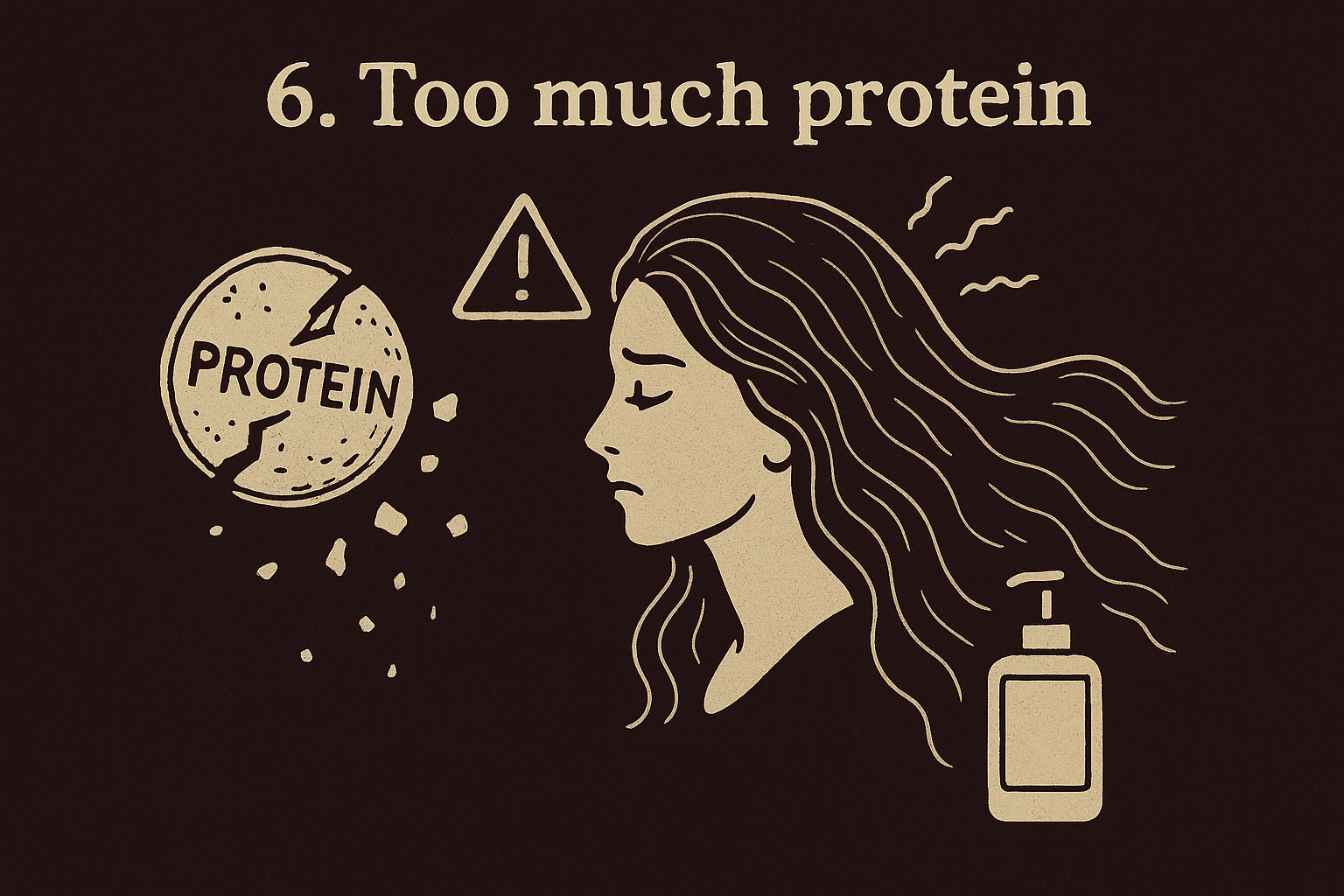
6. Too much protein
Protein is a necessary part of hair health, but low porosity hair already has a strong, compact cuticle structure. Adding too much protein makes your strands stiff, brittle, and prone to breakage. Among the ingredients to avoid for low porosity hair, excess protein is the one people overlook most because it sounds inherently beneficial.
Why it causes issues for low porosity hair
Low porosity hair resists penetration, so protein sits on top of the cuticle rather than bonding where it's needed. That surface accumulation causes protein overload, which makes your hair feel hard and snaps off instead of stretching. Unlike other buildup, protein overload can actually damage the strand if it continues long-term.
Your hair needs a balance of moisture and protein. Low porosity hair typically needs far more moisture than protein to stay healthy.
Ingredient names to look for on labels
These are the most common protein ingredients that trigger overload on low porosity strands:
- Hydrolyzed keratin
- Hydrolyzed wheat protein
- Hydrolyzed silk protein
- Collagen
Common products where you'll find it
Protein appears most often in deep conditioners, bond-repair treatments, and leave-in conditioners. Many products marketed for strength and damage repair carry heavy protein loads.
Better swaps for low porosity hair
Choose moisture-focused conditioners that list humectants like aloe vera or glycerin as primary ingredients instead of protein-heavy formulas.
What to do next
Now that you know the ingredients to avoid for low porosity hair, the most practical next step is to audit what's already in your bathroom. Pull out your current products and scan the ingredient lists against the six categories covered above. You'll likely find at least a few repeat offenders hiding in products you've been using for months.
Start with a clarifying wash to remove any existing buildup before switching to lighter, moisture-forward formulas. This gives your hair a clean baseline and lets you actually see how it responds to better ingredients without layers of residue getting in the way. From there, keep your routine simple and intentional about what you're putting on your strands.
If you're looking for products built around these principles from the start, check out what Scatter is building for textured hair. Formulated for performance, not just feel.