

Mousse for Wash and Go: Steps for Definition and Soft Hold
Gel gets all the credit for wash and go styles, but mousse for wash and go routines is a solid option that most people overlook. If you have curly or coily hair, you've probably dealt with that frustrating tradeoff: strong hold that feels crunchy, or soft hair that loses definition by lunchtime. Mousse sits right in the middle, and it deserves more attention than it gets.
The truth is, mousse can give you real curl definition without weighing your hair down or leaving it stiff. It works differently than gel, and that's actually the point. For textured hair especially, that lightweight hold can mean the difference between curls that move naturally and curls that look like they're trying too hard. But technique matters. The way you apply mousse changes everything about your results.
In this guide, we'll walk you through exactly how to use mousse for a wash and go, from prep to application to drying. You'll also learn when mousse works best on its own and when layering it with other products makes sense for your curl type.
What mousse does in a wash and go
Mousse works as a foam-based styling product that coats each strand lightly without the heavy film that gels tend to leave behind. When you work it through wet hair, it distributes evenly and dries flexible, which means your curls can move without snapping apart or clumping into stiff pieces.
How mousse interacts with your curl pattern
Your curl pattern determines how much definition mousse can deliver on its own. If you have looser curl types (2c to 3b), mousse often provides all the hold you need, and the lightweight formula keeps your hair from feeling weighed down. For tighter coils (3c to 4c), mousse works best as a layering product, applied on top of a leave-in or cream to lock in the definition you've already built.
Mousse doesn't just add hold. It helps preserve the curl shape you create during the application process, so your technique matters as much as the product itself.
The way mousse dries is also different from gel. It dries into a soft, flexible cast rather than a hard one, which means you don't need to scrunch out crunch after drying. That's one reason a mousse for wash and go routine tends to feel less high-maintenance once you land on the right amount to use.
Mousse vs. gel: what actually changes
Gel creates a strong film around each strand, which delivers high definition and long hold but can also make hair feel stiff. Mousse uses a lighter polymer structure, so the hold is softer and more touchable from the start. That tradeoff means mousse may not hold up as long in humidity, but for everyday wear and natural movement, it often feels more comfortable.
Choosing between the two really comes down to your hair's porosity and density. Fine, low-porosity hair usually responds well to mousse alone, while thick, high-porosity hair may need mousse layered over a cream to maintain lasting definition throughout the day.
Step 1. Prep your hair so mousse can work
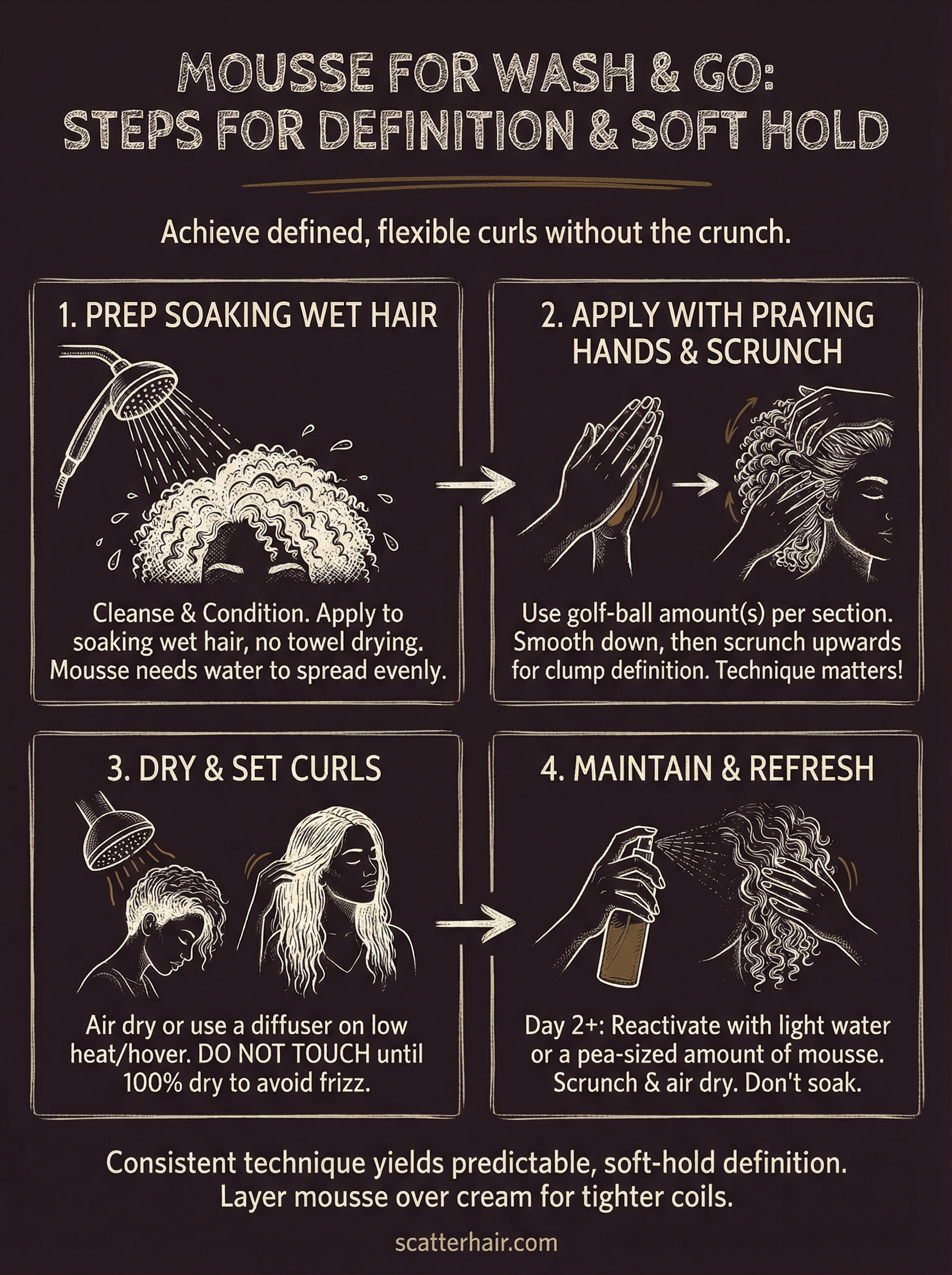
Mousse performs best on soaking wet hair, not just damp. The more water in your hair at application, the better mousse can spread and the more definition you'll build. Skipping proper prep is the most common reason a mousse for wash and go routine falls flat before it even starts.
Cleanse and condition first
Start with a sulfate-free shampoo to clear buildup without stripping your natural oils. Follow with a moisturizing conditioner, and detangle in sections using your fingers or a wide-tooth comb while the conditioner is still in. This step keeps your curl pattern intact before you ever reach for a styling product.
- Rinse shampoo fully before conditioning
- Detangle from ends to roots to minimize breakage
- Leave some conditioner slip in your hair before the final rinse
Keep your hair soaking wet for application
After rinsing, do not grab a towel right away. Lightly blot with a microfiber towel only if water is actively dripping, then move straight into product application. Mousse needs that moisture to coat each strand evenly and help your curls hold their shape through the entire drying process.
Soaking wet hair is not optional for mousse. Applying to damp or dry hair reduces product coverage and noticeably weakens your curl definition.
Step 2. Apply mousse for definition and soft hold
Application amount and technique will make or break your results. Too little mousse leaves your curls undefined, while too much collapses them. A golf ball-sized amount is a solid starting point for medium-length hair; adjust up or down based on your hair's thickness and length.
How much mousse to use
Dispense mousse into your palm and rub your hands together lightly to spread it before touching your hair. Work in sections so every strand gets covered. Most people need two to three applications across different sections rather than trying to coat everything in one pass.
- Short hair: 1 to 2 golf ball-sized amounts
- Shoulder-length hair: 2 to 3 golf ball-sized amounts
- Long hair: 3 to 4 golf ball-sized amounts
Apply with the praying hands and scrunching method
The praying hands method smooths mousse along each section from root to tip without disrupting your curl pattern. Follow that with scrunching upward toward your scalp to encourage curl clumping and definition.
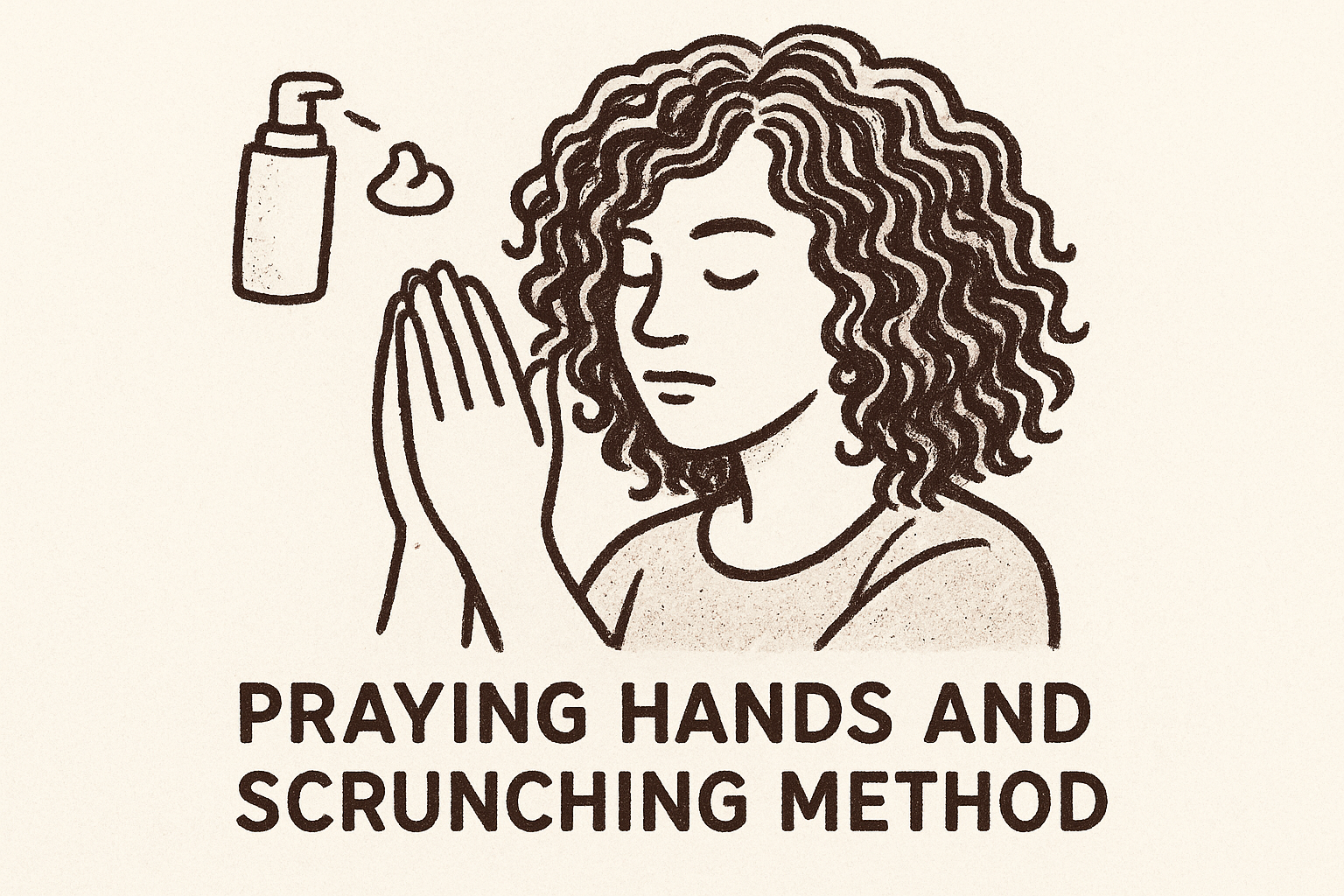
Apply mousse section by section so you control coverage and avoid overloading any one area.
Repeat across all sections before moving on. A mousse for wash and go routine built on consistent technique gives you more predictable results each time you style.
Step 3. Dry and set your curls for longer wear
How you dry your hair after applying mousse directly affects how long your curls hold their shape and how much definition carries through the day. Touching or disturbing your curls before they fully dry is the fastest way to lose the results you built during application.
Air dry or diffuse: picking your method
Air drying keeps your curls undisturbed and works well if you have the time. Lean your head forward and let gravity pull your curls down naturally. Diffusing speeds up the process and can add extra volume, but use low heat to avoid frizz.
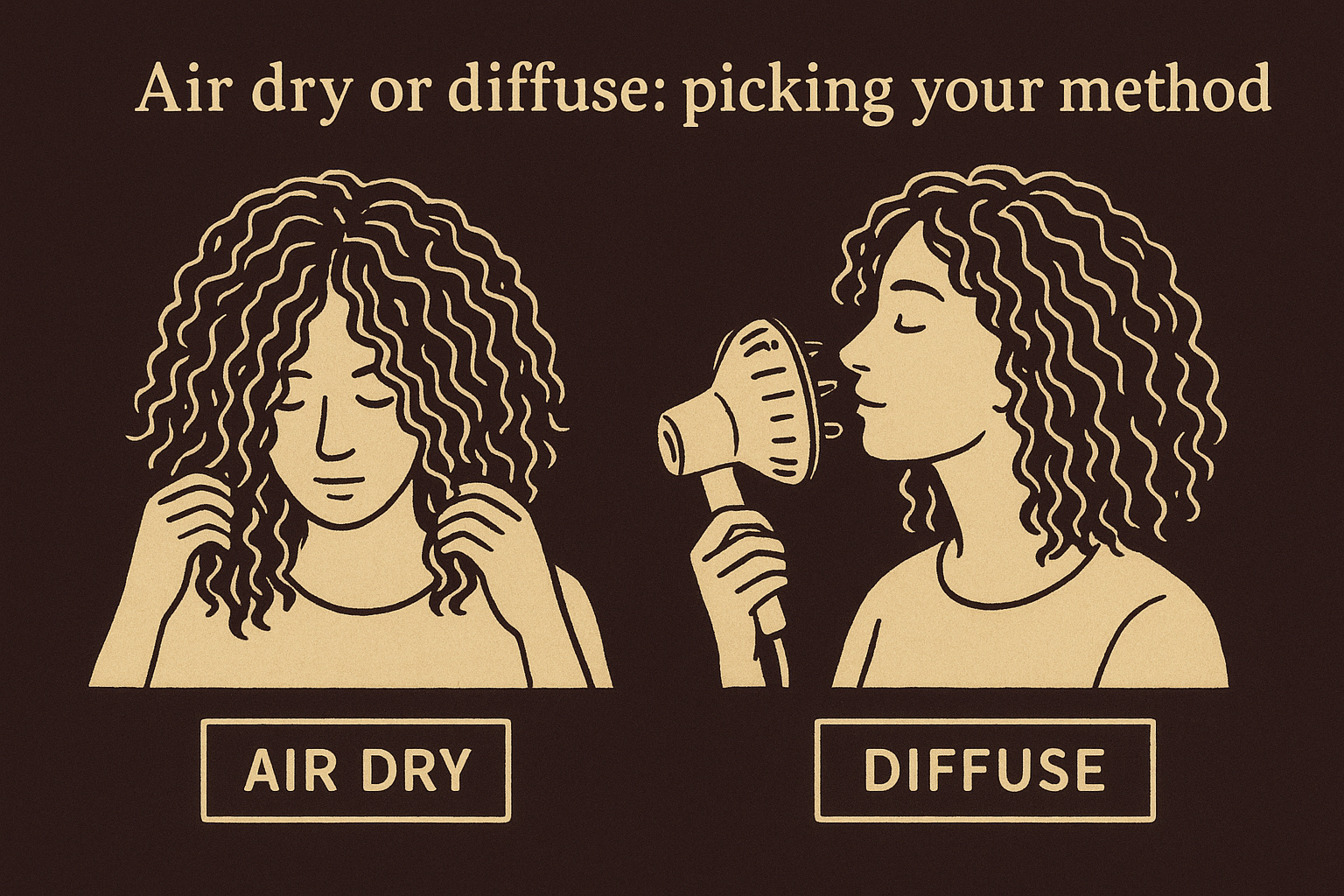
Resist the urge to touch your curls mid-dry. Every time you handle wet hair, you risk breaking up the curl clumps mousse helped form.
- Air dry: flip hair forward, avoid touching until fully dry
- Diffuse: use low heat, medium airflow, hover the diffuser without pressing down
How to know your curls are fully set
Your curls are fully set when they feel cool to the touch and no wet sections remain at the root. For a mousse for wash and go, rushing this step usually means shorter wear time and more frizz by mid-afternoon. Check the thickest sections last since they hold moisture the longest.
Step 4. Maintain and refresh without losing definition
Your curls won't look the same on day two as they did right after drying, but that doesn't mean you need to start over every morning. Second-day maintenance is mostly about reactivating what's already in your hair rather than reapplying everything from scratch. A little water and the right technique goes a long way.
How to refresh second-day curls
The fastest way to revive your mousse for wash and go style is to lightly wet your hands and scrunch them through your curls section by section. This reactivates the mousse still coating your strands and reshapes any curls that flattened overnight. If your hair feels dry or lacks definition, add a small amount of fresh mousse on top, then scrunch again and let it air dry.
Avoid soaking your hair completely on refresh days. Light moisture is enough to reactivate your existing product without weighing your curls down.
- Wet your hands, not your whole head
- Scrunch from the ends upward
- Add a pea-sized amount of mousse only to flat or frizzy sections
- Let curls air dry after refreshing, do not touch them mid-dry
Quick wrap-up
Using mousse for wash and go styles comes down to four things: soaking wet hair at application, consistent sectioning technique, patience while your curls dry, and light refresh habits on day two. Skip any one of those steps and your results will show it. Mousse works best when you give it the right conditions from the start.
Your curl type and hair density decide how much product you need and whether mousse holds up on its own or benefits from layering over a leave-in. Fine hair and looser curl patterns usually do well with mousse alone, while thicker, tighter coils get better mileage when mousse follows a cream or leave-in. Once you find the right combination, this becomes one of the most low-effort styles you can repeat consistently without rebuilding your entire routine from scratch.
Scatter's first product is Slip, a 2% hyaluronic acid hair serum. Work it through wet-to-damp hair, then air dry for texture or blow dry for body. It's on pre-order now.