

Olaplex Split Ends: Does It Really Work, and Which to Use
Split ends don't care how expensive your haircare routine is. You've probably typed olaplex split ends into Google after noticing those frayed, dry tips again, wondering if the brand everyone raves about actually fixes the problem or just makes your hair feel nicer for a day. That's a fair question when a single bottle of No. 3 runs you close to $30.
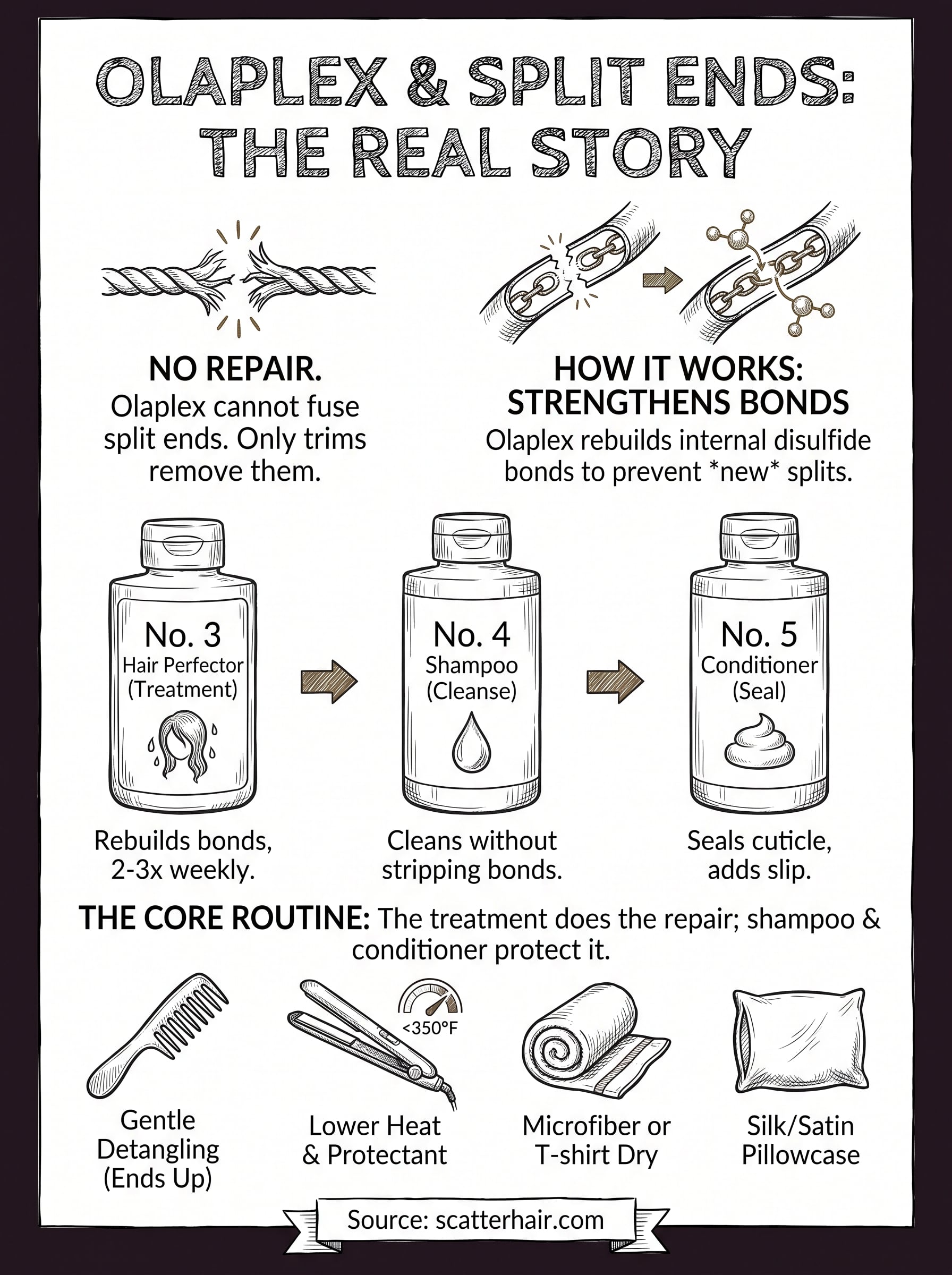
Here's the direct answer: Olaplex doesn't repair split ends, because nothing can, once the hair shaft splits, it's structurally done. What Olaplex does well is strengthen the bonds inside the hair strand so fewer new splits form, and it can make existing splits look less obvious by smoothing the cuticle. Knowing which products target this specific issue, versus which ones are just good general conditioners, makes a real difference in your results.
We've tested and researched enough textured hair routines at Scatter to know that managing damage matters more than chasing a myth. Below, we break down exactly how Olaplex works on damaged hair, which products in the lineup are worth your money for split ends, and what you should pair them with to actually see fewer breakages over time.
Why Olaplex can't fully repair split ends
Every strand of hair on your head is dead. Once keratin pushes past the follicle, your body stops maintaining it, which means there's no biological process left to heal a split once it happens. Split ends occur when the outer cuticle wears away and the inner cortex frays into two or more strands, kind of like a rope losing its casing. No shampoo, mask, or serum can fuse that frayed rope back into one solid piece. This is basic hair science, not a marketing gap specific to Olaplex, and it's confirmed by dermatology resources like the American Academy of Dermatology, which lists trimming as the only true fix for split ends.
What Olaplex's bond-building actually targets
Olaplex's patented ingredient, bis-aminopropyl diglycol dimaleate, works on disulfide bonds inside the hair cortex, the internal structure that gives each strand its strength and elasticity. These bonds get broken by heat, coloring, bleaching, and mechanical stress like brushing or towel-drying rough hair. Reconnecting them makes hair more resilient and less prone to snapping, which matters because breakage further up the strand is often what creates new split ends in the first place. So Olaplex isn't lying when it says it repairs bonds, it just isn't repairing the visible split itself.
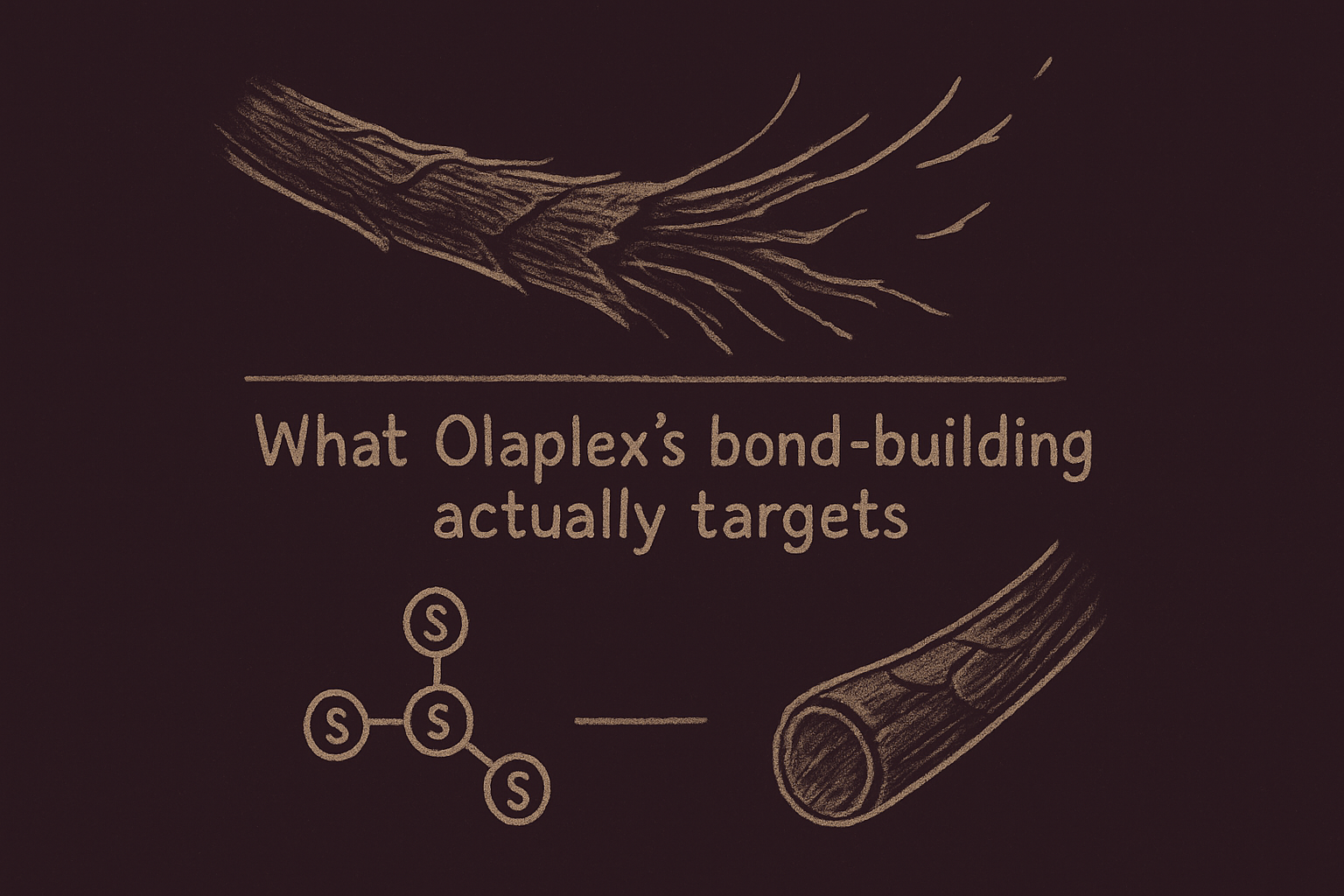
Olaplex strengthens what's still intact; it doesn't reattach what's already broken apart.
Why your hair looks smoother anyway
What you're noticing when Olaplex "fixes" your ends is really cuticle smoothing. The formulas coat the hair shaft and temporarily flatten the lifted cuticle scales around a split, so the frayed section catches less light and feels less rough between your fingers. That's a real, visible improvement, just not a structural one. The effect fades with washing, which is why people who skip trims but use Olaplex regularly still end up back at the salon eventually. Treat the product as damage prevention for the hair that's still healthy, not a repair kit for the hair that's already split.
How to use Olaplex to minimize split ends
Getting results from Olaplex isn't about slapping on a mask once a month and hoping for the best. Consistency matters more than which specific product you grab, and the order you apply things in changes how well the bonds actually rebuild. If you're dealing with textured hair that's prone to breakage from styling, this routine matters even more than it does for straight hair, since curls and coils already take more mechanical stress just from detangling.
Building a routine that actually works
Order and frequency make the difference between a product that sits on your hair and one that changes it. Follow this sequence for the best shot at fewer new splits:
- Apply No. 3 Hair Perfector to damp, towel-dried hair before you shampoo, focusing on mid-lengths and ends where damage concentrates.
- Leave it on for 10 minutes minimum, longer if your hair is chemically treated or heat-styled often.
- Follow with a sulfate-free shampoo, since sulfates strip the bonds you just worked to rebuild.
- Use the No. 3 treatment two to three times weekly, not daily. Overuse doesn't speed up bond repair, it just wastes product.
Skipping the shampoo step after Olaplex undoes most of the work you just did.
Timing it around heat and color
Heat tools and bleach break bonds faster than daily wear does, so timing your Olaplex use around those events pays off more than random weekly use. Apply it the night before a color appointment or blowout, and again within 48 hours after, when your hair is most vulnerable to new olaplex split ends forming.
Which Olaplex products work best for split ends
Not every bottle in the Olaplex lineup pulls the same weight against damage. No. 3 Hair Perfector stays the standout for split ends because it's concentrated enough to rebuild bonds without the dilution you get from a shampoo or conditioner formula. Pairing it with No. 4 and No. 5, the daily shampoo and conditioner, keeps those rebuilt bonds intact between treatments instead of letting sulfates or heavy silicones wash the benefit away.
The core lineup for damage
Here's how the main products stack up when your goal is fewer new splits:
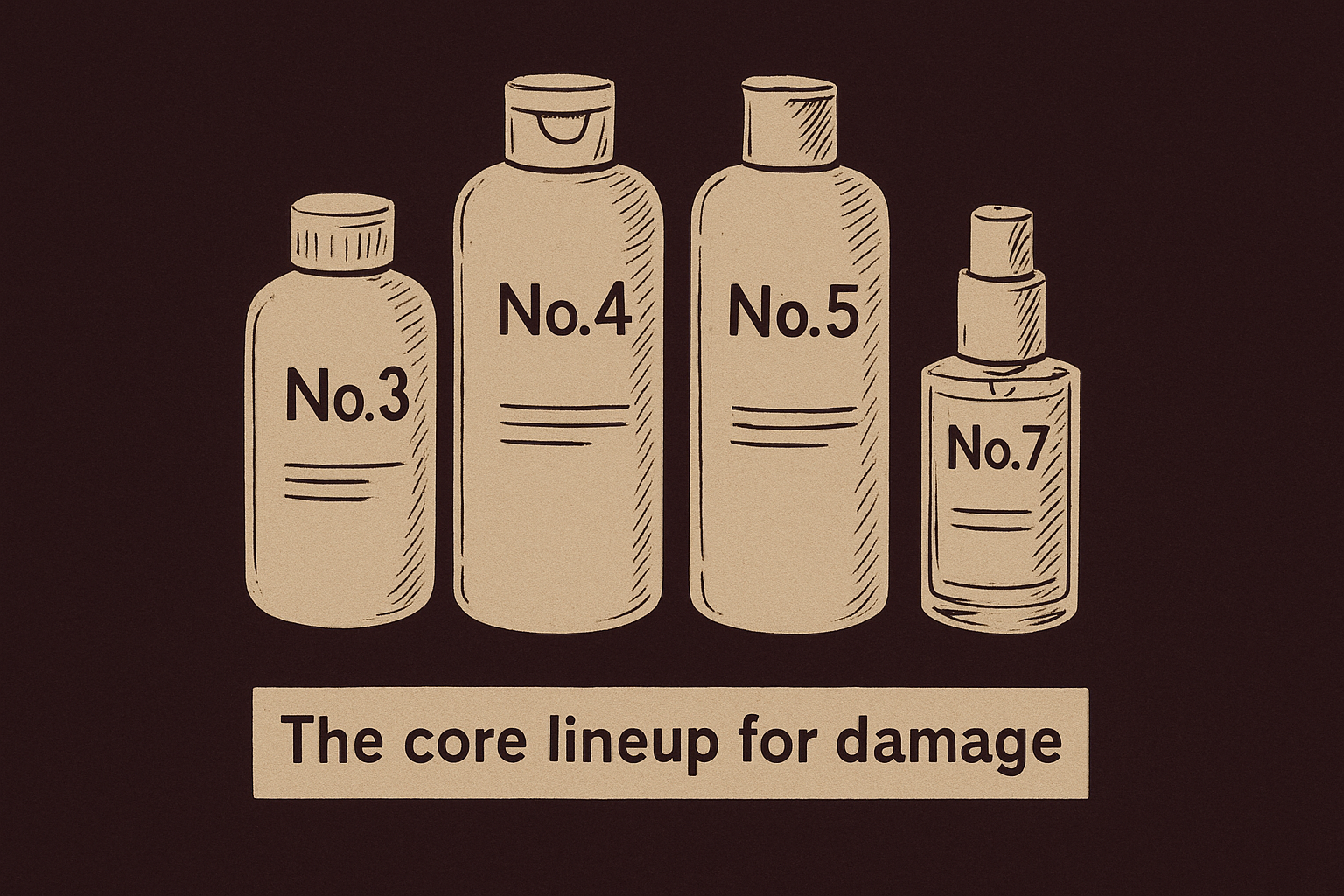
| Product | What it does | How often |
|---|---|---|
| No. 3 Hair Perfector | Rebuilds internal bonds | 2-3x weekly |
| No. 4 Bond Maintenance Shampoo | Cleans without stripping bonds | Every wash |
| No. 5 Bond Maintenance Conditioner | Seals cuticle, adds slip | Every wash |
| No. 7 Bonding Oil | Smooths visible frizz and ends | Daily, small amount |
The treatment does the repair work; the shampoo and conditioner just protect it.
Where people waste money
Skip the styling gels and mousses in the lineup if split ends are your only concern. Those products handle hold and texture, not bond repair, so they won't move the needle on damage no matter how often you use them. No. 6 Bond Smoother is worth adding only if frizz, not breakage, is your bigger complaint, since it's a styling cream first.
Other ways to prevent and manage split ends
Olaplex works best as one piece of a bigger routine, not a standalone fix. Regular trims remain the only way to physically remove split ends, and everything else on this list just slows down how fast new ones show up. Skipping these basics while relying only on bond treatments is why some people feel stuck in a cycle of damage no matter how much product they buy.
Habits that actually reduce breakage
Small changes in how you handle wet or styled hair prevent more splits than any single product can fix:
- Detangle with a wide-tooth comb starting at the ends, working up, never dragging through knots from the root.
- Lower your heat tool temperature below 350°F and always use a heat protectant first.
- Switch to a microfiber towel or cotton t-shirt instead of rough terry cloth to dry hair.
- Sleep on a silk or satin pillowcase to cut down on friction overnight.
- Trim every 8 to 12 weeks, even if you're growing your hair out, since a small trim removes far less length than letting splits travel up the strand.
Prevention habits do more long-term work than any single bottle on your shelf.
Protecting textured hair specifically
Curly and coily textures lose moisture faster, which makes them more prone to splitting between trims. Sealing ends with a lightweight oil after every wash and protective styling during high-friction weeks, like windy days or gym sessions, keeps strands intact longer between salon visits.
Setting realistic expectations for your hair
Olaplex earns its reputation, but not for the reason most people buy it. It won't glue split ends back together, nothing will, but it will slow down how fast new ones show up and make your existing damage look smoother between trims. That's a legitimate reason to keep it in your routine, as long as you pair it with regular trims and the daily habits that actually prevent breakage in the first place. Textured hair takes more mechanical stress than straight hair does, so treating bond repair as maintenance, not magic, saves you money and disappointment down the line.
If you're building a styling routine around textured hair that's easier to manage day to day, see what Scatter is working on for products designed specifically around performance, not just damage control after the fact.