

How To Prevent Split Ends: 5 Tips For Textured Hair At Home
Split ends are textured hair's most persistent problem. You detangle gently, deep condition on schedule, do everything right, and those frayed tips still show up. If you've been looking up how to prevent split ends, especially on curls, coils, or waves, you already know most advice online isn't written with your hair type in mind. Textured hair operates differently, and it deserves solutions that account for that.
At scatterhair, we're building styling products around one idea: textured hair should be easy to work with, not a constant battle. But good styling starts with healthy hair, and healthy hair means protecting your ends. Strong ends hold definition better, resist breakage, and make every wash day less of a headache.
Below, we break down five straightforward tips you can put into practice at home today. No expensive treatments. No overhaul of your entire routine. Just targeted adjustments that tackle the actual causes of split ends on textured hair before they start.
1. Build a low-manipulation styling routine
Every time you touch your hair, you create friction. Textured hair has a naturally raised cuticle layer that snags easily, and repeated styling, restyling, and touching throughout the week adds up fast. A low-manipulation routine is one of the most direct ways to prevent split ends on textured hair because it cuts down on that contact, giving your ends fewer opportunities to fray.
What this tip protects your ends from
Constant restyling pulls on the weakest part of the hair shaft: the ends. Those tips are the oldest section of each strand, already slightly worn from months of growth. Mechanical stress from daily manipulation accelerates cuticle damage, which leads directly to split ends before any chemical or heat damage even enters the picture.
How to do it at home on textured hair
The goal is to style once and leave it alone. Protective styles like two-strand twists, braids, or buns let you go several days without touching your hair. When you do restyle, work in sections, apply products with a smoothing motion rather than scrubbing, and avoid re-combing dry hair mid-week.
The fewer times you disrupt your ends between wash days, the longer they stay intact.
Tools and products that make it easier
A light-hold styling cream or gel that keeps your style in place reduces the urge to constantly refresh it. Satin bonnets and pillowcases also matter here: cotton fabric grabs at your ends overnight and creates friction that unravels even a well-set style. Satin or silk accessories cut that friction significantly without adding buildup.
How to tell it's working
Your ends will start to feel smoother at the tips after a few weeks. You'll also notice less breakage on your pillowcase or in your hands during the day. If your style holds two to three days without losing definition, your routine is doing the protective work it should.
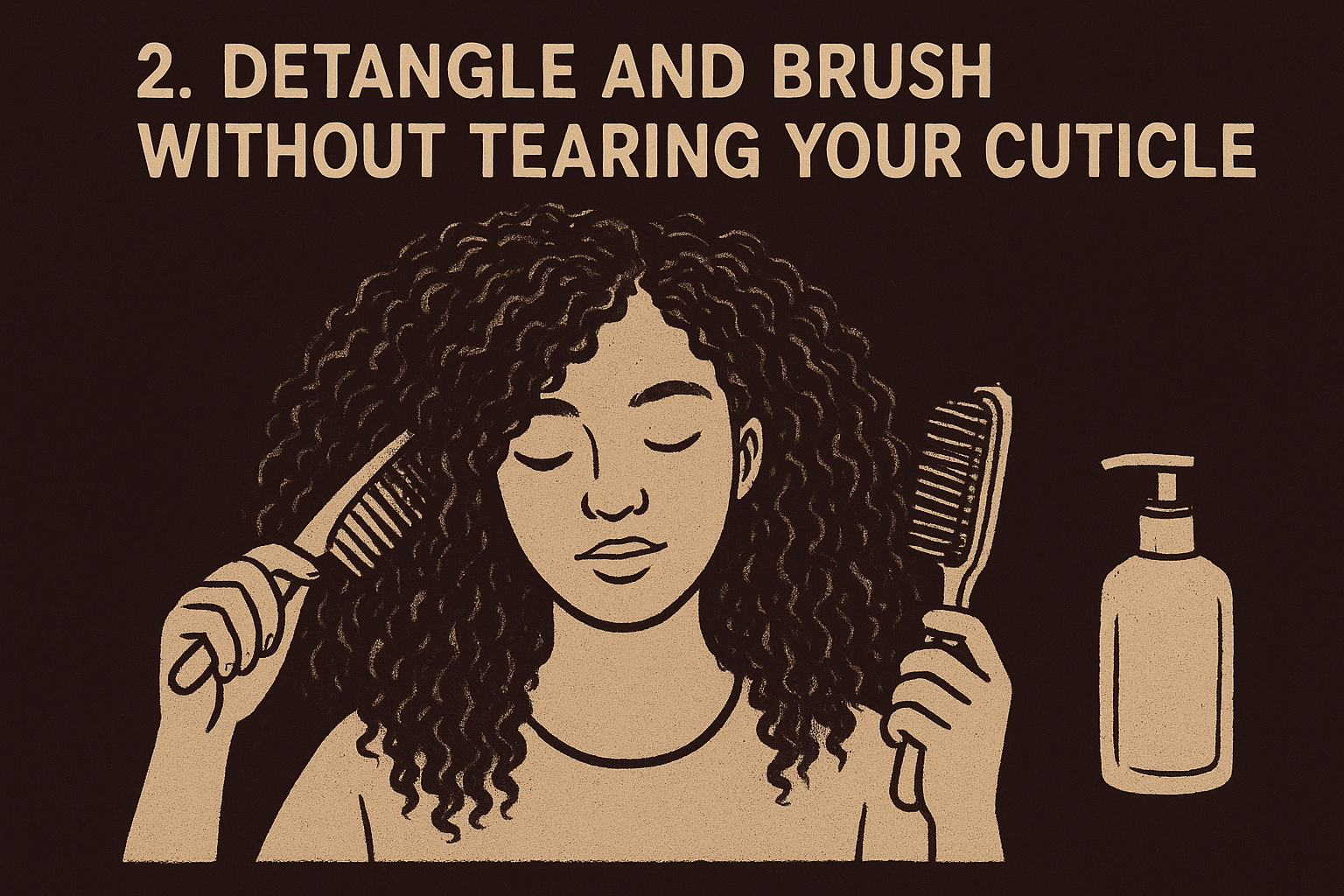
2. Detangle and brush without tearing your cuticle
Detangling is one of the highest-risk moments for your ends. On textured hair, the natural curl pattern creates knots that resist combing, and forcing a brush through dry or tangled sections tears the cuticle layer open before you even start styling. Learning how to prevent split ends means paying close attention to this step.
What this tip protects your ends from
Aggressive detangling pulls multiple strands at once and snaps the ends off cleanest. Mechanical tearing from a fine-tooth comb or stiff brush drags the cuticle scales backward, which is exactly how split ends start on curly and coily hair types.
How to do it at home on textured hair
Always detangle on wet or damp hair with a slip product applied first. Work in small sections from the ends upward toward the roots, releasing knots gradually instead of dragging them down. This approach prevents tension from concentrating at your tips.
Never detangle dry textured hair without a product with slip.
Tools and products that make it easier
A wide-tooth comb or detangling brush with flexible bristles moves through curls without catching. Pair either tool with a leave-in conditioner to add slip and reduce the friction that tears ends apart.
How to tell it's working
You'll shed fewer broken strands during detangle sessions. Your ends will also feel smoother after combing rather than rough or frayed at the tips.
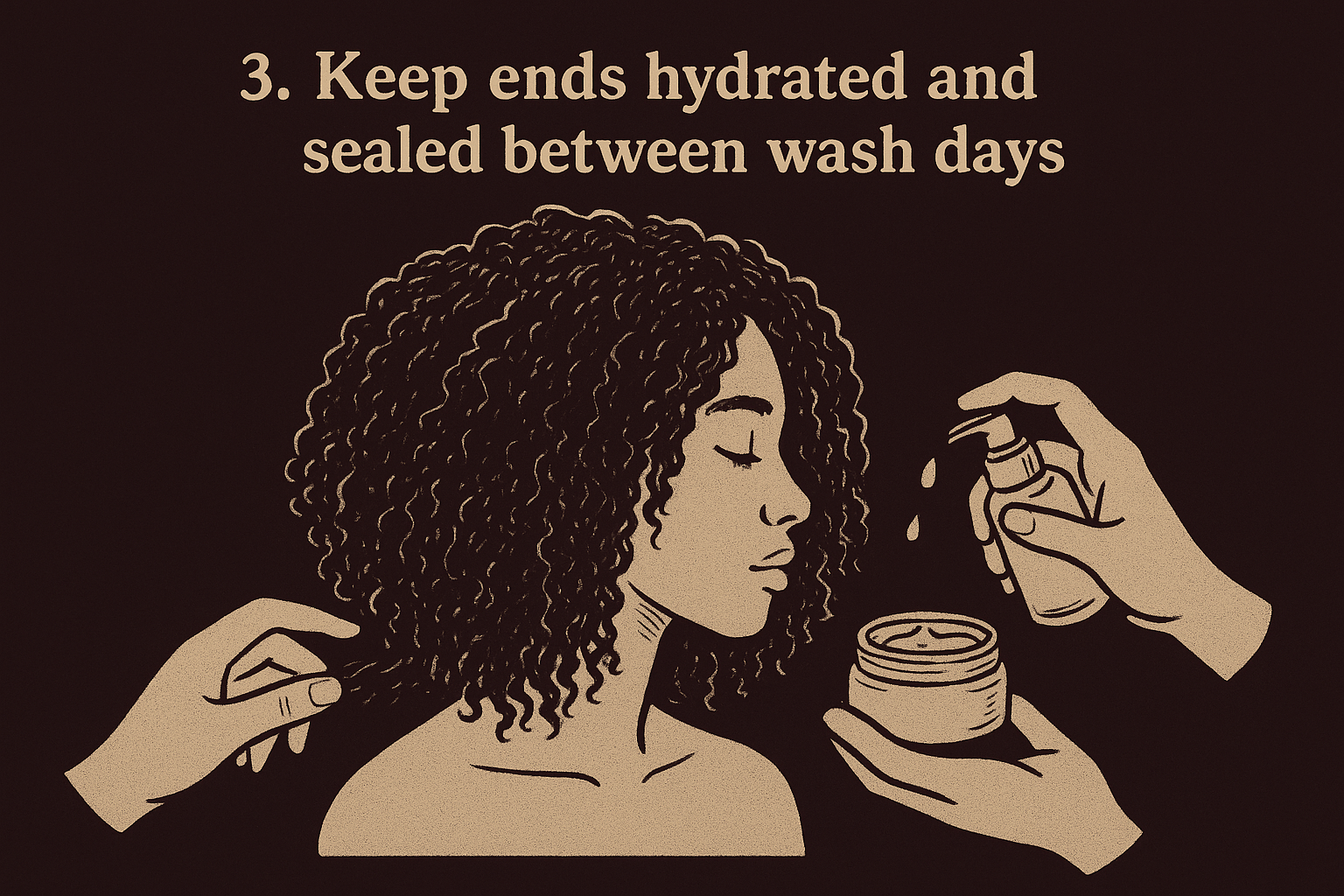
3. Keep ends hydrated and sealed between wash days
Textured hair loses moisture faster than straight hair because the curl pattern makes it hard for natural oils to travel down the strand. Your ends sit at the bottom of each strand and receive the least moisture of all. Dry ends crack, then split. Knowing how to prevent split ends on textured hair means keeping those tips consistently hydrated between wash days, not just on wash day itself.
What this tip protects your ends from
Moisture loss weakens your hair's internal fiber structure, making ends brittle and prone to snapping. When ends dry out completely, the cuticle lifts and the cortex beneath becomes exposed, which is exactly where splits begin.
How to do it at home on textured hair
Apply a light water-based moisturizer to your ends mid-week, then follow with a sealing oil or butter to trap that moisture in. Work specifically from the tips upward rather than just coating the length.
A water-then-oil approach done every few days keeps ends flexible rather than brittle.
Tools and products that make it easier
A spray bottle filled with water lets you add moisture mid-week without disrupting your style. Follow immediately with a lightweight sealing oil like jojoba or argan to close the cuticle back down.
How to tell it's working
Your ends will feel soft and pliable to the touch rather than rough or crunchy. You'll also notice they stay moisturized longer between wash days without needing constant reapplication.
4. Limit heat, chemicals, and environmental stress
Heat tools, relaxers, and sun exposure all target the same structure: the cuticle layer that protects your ends. Textured hair already has a naturally porous cuticle, so adding direct thermal or chemical stress compounds the damage fast. Understanding how to prevent split ends means knowing when to step back from the tools and products that feel helpful in the short term but weaken your ends over time.
What this tip protects your ends from
High heat lifts and cracks the cuticle permanently, while chemical processing (relaxers, color, bleach) breaks down the disulfide bonds that hold your strand together. UV exposure adds oxidative damage on top of both. Your ends absorb the worst of it.
How to do it at home on textured hair
Use heat tools no more than once a week, always with a heat protectant applied to dry hair first. Space chemical services at least 8 to 12 weeks apart and cover your hair in direct sun with a hat or UV-protective product.
Even one unprotected heat session can undo weeks of moisture work on textured ends.
Tools and products that make it easier
A heat protectant spray rated for your tool's temperature range and a wide-brim hat for outdoor protection cover most scenarios without adding steps to your routine.
How to tell it's working
Your ends will snap less when stretched and feel noticeably softer after styling. You'll also notice less frizz and fewer flyaways at the tips, which signals the cuticle is staying closed.
5. Trim on purpose so splits don't travel upward
A split end doesn't stay at the tip. Once the cuticle cracks, the split travels up the strand toward the root, and the only fix is to remove it. Regular, intentional trims are a core part of how to prevent split ends from spreading into otherwise healthy hair.
What this tip protects your ends from
Splits that go untrimmed weaken the entire strand from the tip upward. On textured hair, that damage travels several inches before you notice it, and by then you lose far more length than a small trim would have cost.
How to do it at home on textured hair
Trim every 8 to 12 weeks, or sooner if you feel rough, dry tips during your moisture routine. Work on stretched or straightened hair so you can see exactly where the damage starts.
Removing a quarter inch now prevents losing a full inch later.
Tools and products that make it easier
Use sharp hair shears only, never household scissors, which crush the shaft instead of cutting cleanly.
- Hair shears: purpose-built for clean cuts on all hair types
- Cutting comb: holds each section taut so you trim straight across the damage
How to tell it's working
Your ends will hold moisture longer and feel consistently smooth at the tips between wash days without needing constant product touch-ups.
Keep your ends smooth and strong
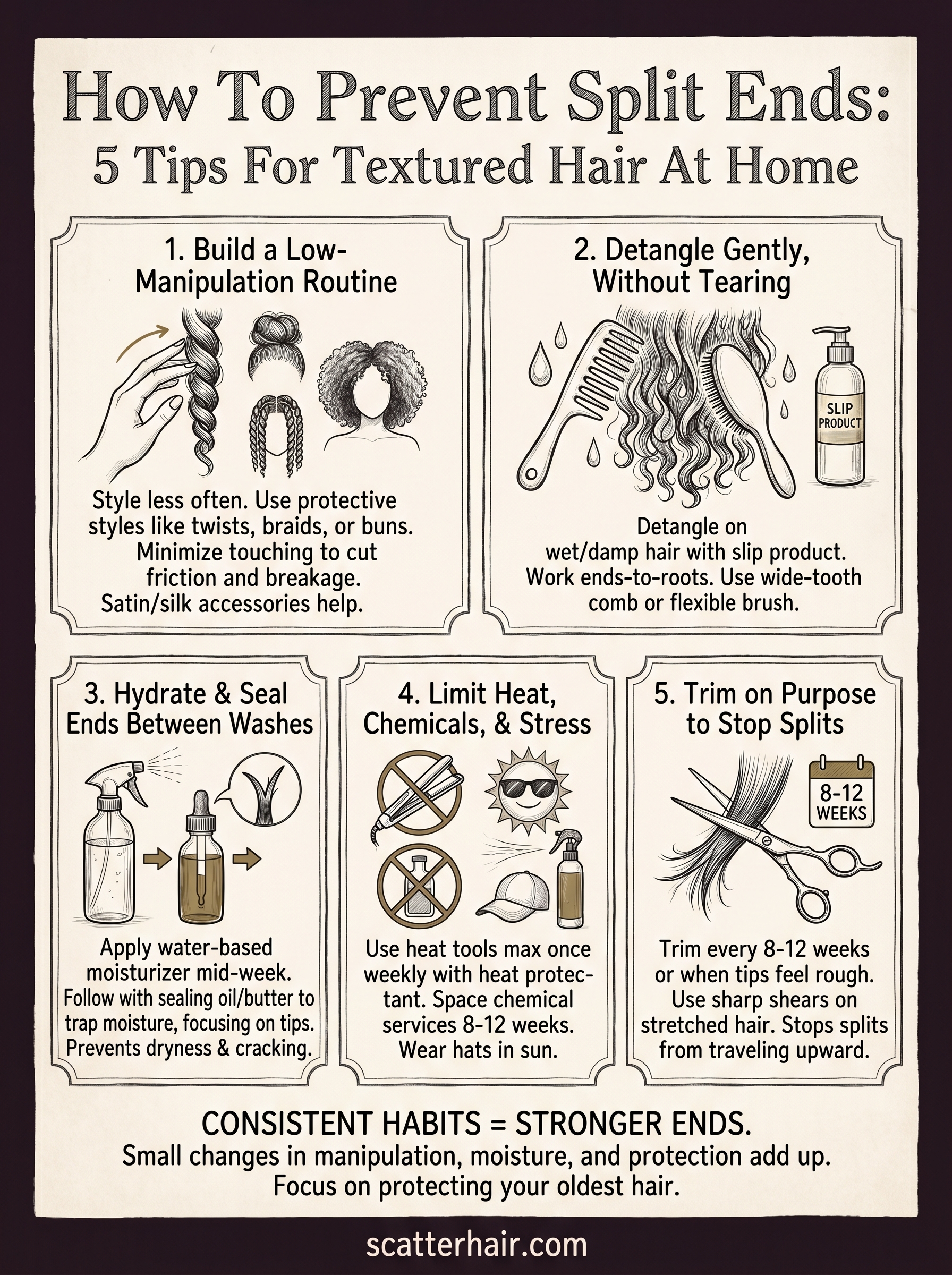
Preventing split ends on textured hair comes down to a handful of consistent habits: less manipulation, gentler detangling, steady moisture, reduced heat and chemical exposure, and regular trims. None of these tips require a complete routine overhaul. Pick one or two and put them into practice this week, then layer in the rest as each step becomes second nature.
The truth about how to prevent split ends is that it's less about finding a miracle product and more about protecting what you already have. Your ends are the oldest, most vulnerable part of each strand, and they respond quickly when you treat them with care. Small changes add up to noticeably stronger, smoother tips over time.
Ready to take your textured hair further? Explore what we're building at Scatter and get early access to styling products made specifically for your texture.