

How to Do a Scalp Massage for Relaxation and Stress Relief
Your shoulders are up by your ears, your jaw is tight, and your scalp feels like it's been clenched all day. A scalp massage for relaxation is one of the fastest ways to release that tension, and you don't need a spa appointment or fancy tools to do it. Just your fingers, a few minutes, and a little pressure in the right spots.
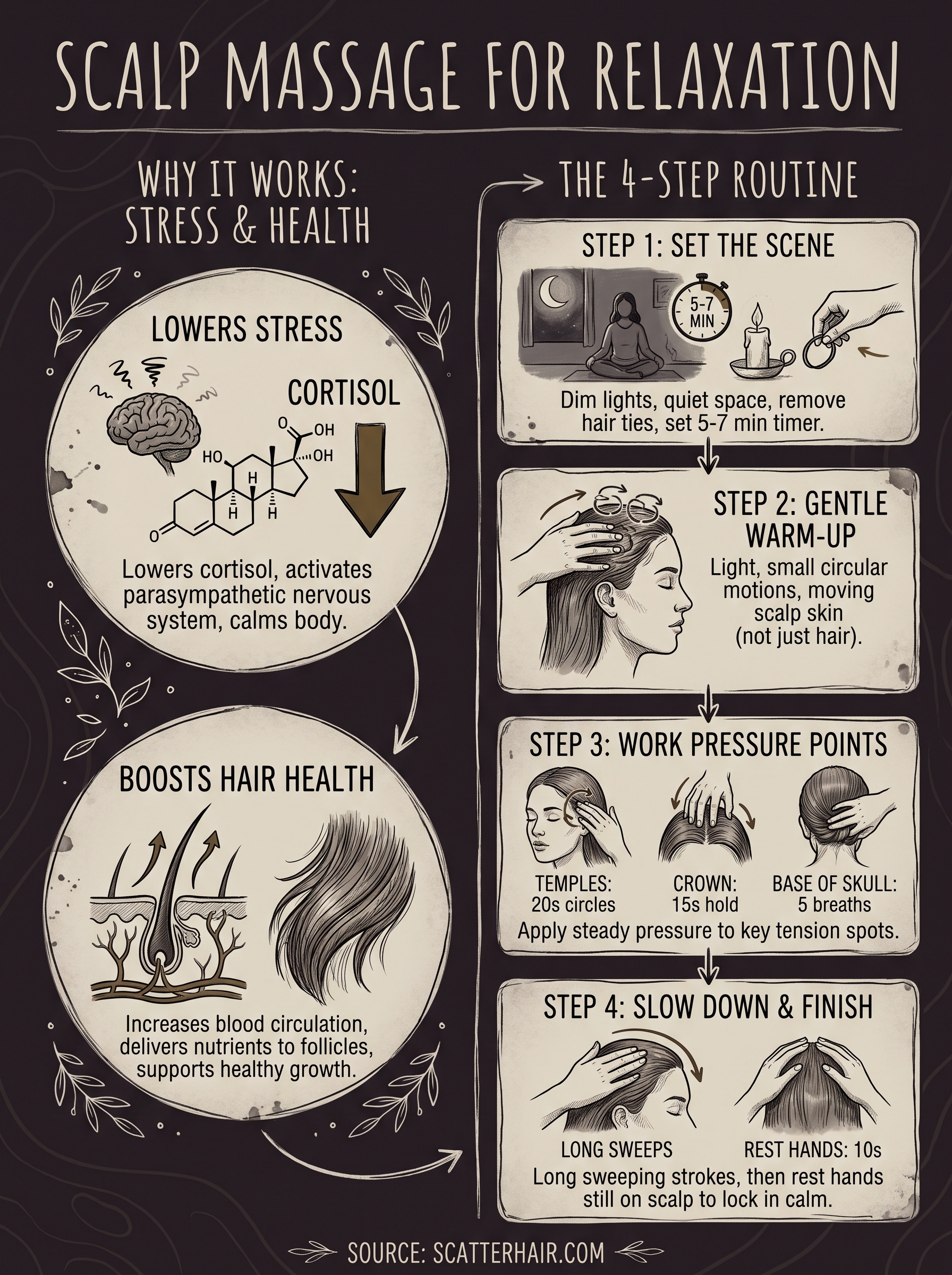
Done correctly, a scalp massage triggers a real physical response. It lowers cortisol, the stress hormone that keeps your body on edge, and activates your parasympathetic nervous system, the part responsible for calming you down. That's why five minutes of circular pressure at your temples or the base of your skull can leave you feeling noticeably lighter, almost like a mental reset button.
This guide walks you through exactly how to do it: hand positioning, pressure techniques, and a simple routine you can repeat daily or whenever stress spikes. We'll also cover how scalp massage supports healthier, more manageable texture, which matters if you're already working with curls or coils that need less tension, not more.
Why scalp massage eases stress and tension
Your scalp holds more tension than most people realize. It's covered in a thin layer of muscle and connective tissue that tightens right along with your jaw, neck, and shoulders whenever stress builds up. That's why a scalp massage for relaxation does more than just feel good, it physically releases muscle fibers that have been clenched for hours, sometimes days.
The nervous system connection
Underneath your scalp sits a dense network of nerve endings, including branches connected to the vagus nerve, which plays a major role in shifting your body out of fight-or-flight mode. When you apply steady, rhythmic pressure, you stimulate those nerves and trigger a parasympathetic response, the state where your heart rate slows and your breathing deepens. Research published through the National Institutes of Health has linked scalp and head massage to measurable drops in cortisol and reductions in perceived stress, which explains why even a short session can leave you feeling noticeably calmer.
A few minutes of steady pressure on your scalp can shift your body from fight-or-flight into genuine rest.
What it does for blood flow and hair health
Beyond the calming effect, massage increases blood circulation to your scalp, which delivers more oxygen and nutrients to hair follicles. Better circulation supports a healthier growth environment, and for anyone managing textured hair, that matters even more. Coils and curls are naturally more fragile at the root, so anything that reduces tension at the scalp, rather than adding to it, helps your hair behave better between wash days.
Why this beats other relaxation methods
Unlike meditation or deep breathing, which take practice to master, a relaxing scalp massage works almost immediately because it's a direct physical intervention, not something you have to mentally talk yourself into. Also, it requires zero equipment. You can do it at your desk, in the shower, or lying in bed before sleep. Combined, the stress-hormone drop and the circulation boost make scalp massage one of the few self-care habits that benefits both your mind and your hair at the same time, which is exactly why it's worth learning to do properly.
Step 1. Set the scene for relaxation
Getting real relaxation out of a scalp massage starts before your fingers even touch your head. Your body needs cues that it's safe to power down, and environment does most of that work. Rushing through it at your desk between meetings won't trigger the same parasympathetic response as five quiet, uninterrupted minutes.
Pick a low-stimulation space
Find somewhere you won't be interrupted. That might be your bathroom before bed, a quiet corner of your bedroom, or even your car during a lunch break. Dim the lights if you can. Bright overhead lighting keeps your nervous system alert, which works against the calming effect you're after.
Remove physical barriers
Take down buns, braids, or tight ponytails. Any pulling at the root sends a low-grade tension signal to your scalp that competes with the massage. If your hair is textured and prone to tangling, finger-detangle gently first so you're not fighting knots mid-massage.
Set a short timer
Giving yourself a defined window removes the temptation to check your phone or cut the session short. Five to seven minutes is enough for a noticeable scalp massage for relaxation effect.
- Sit or lie down somewhere you won't be disturbed
- Dim harsh lighting
- Loosen or remove hair ties, clips, and headbands
- Set a timer for 5-7 minutes
- Take three slow breaths before you begin
The setup matters as much as the technique, because your nervous system relaxes faster when it trusts the environment first.
Once you've built that quiet window, your body is already primed to respond to touch, which makes every stroke that follows more effective.
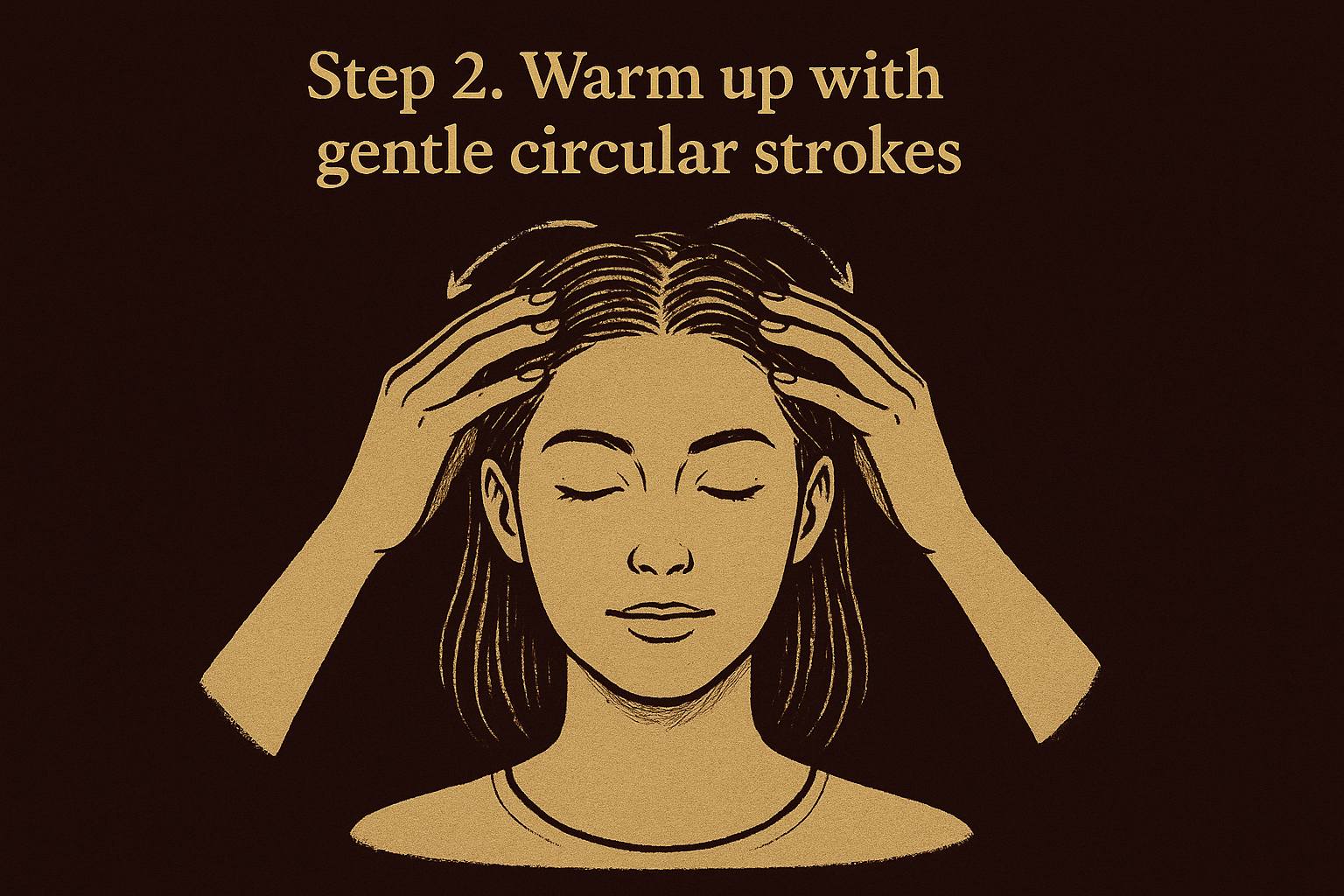
Step 2. Warm up with gentle circular strokes
Once you're settled, start with light contact rather than diving straight into pressure. Place your fingertips, not your nails, at your hairline and begin small circular motions, moving the skin of your scalp rather than sliding over your hair. This distinction matters. Dragging your fingers through strands feels nice but does nothing for the muscle layer underneath, while moving the scalp itself is what triggers the parasympathetic response you're after.
Where to begin
Work from the front hairline back toward your crown, using both hands so the pressure feels even on both sides. Keep the circles slow and small, roughly the size of a dime, and let each pass overlap slightly with the last so you don't skip patches of scalp. Ten to fifteen seconds per section is plenty before moving on.
Reading your own tension
Pay attention to spots that feel tighter or more sensitive than others. Those areas usually hold the most built-up stress and are worth circling back to later in the massage. If a section feels tender, ease off the pressure slightly rather than pushing through it, since the goal is calming your nervous system, not working out a knot.
Warming up the scalp first means every technique that follows lands on tissue that's already primed to release.
A simple warm-up sequence
- Hairline to mid-scalp: 15 seconds per side
- Mid-scalp to crown: 15 seconds
- Sides above the ears: 15 seconds per side
- Base of the skull: 15 seconds
By the time you finish this pass, your scalp should feel noticeably looser, which sets up the pressure-point work in the next step.
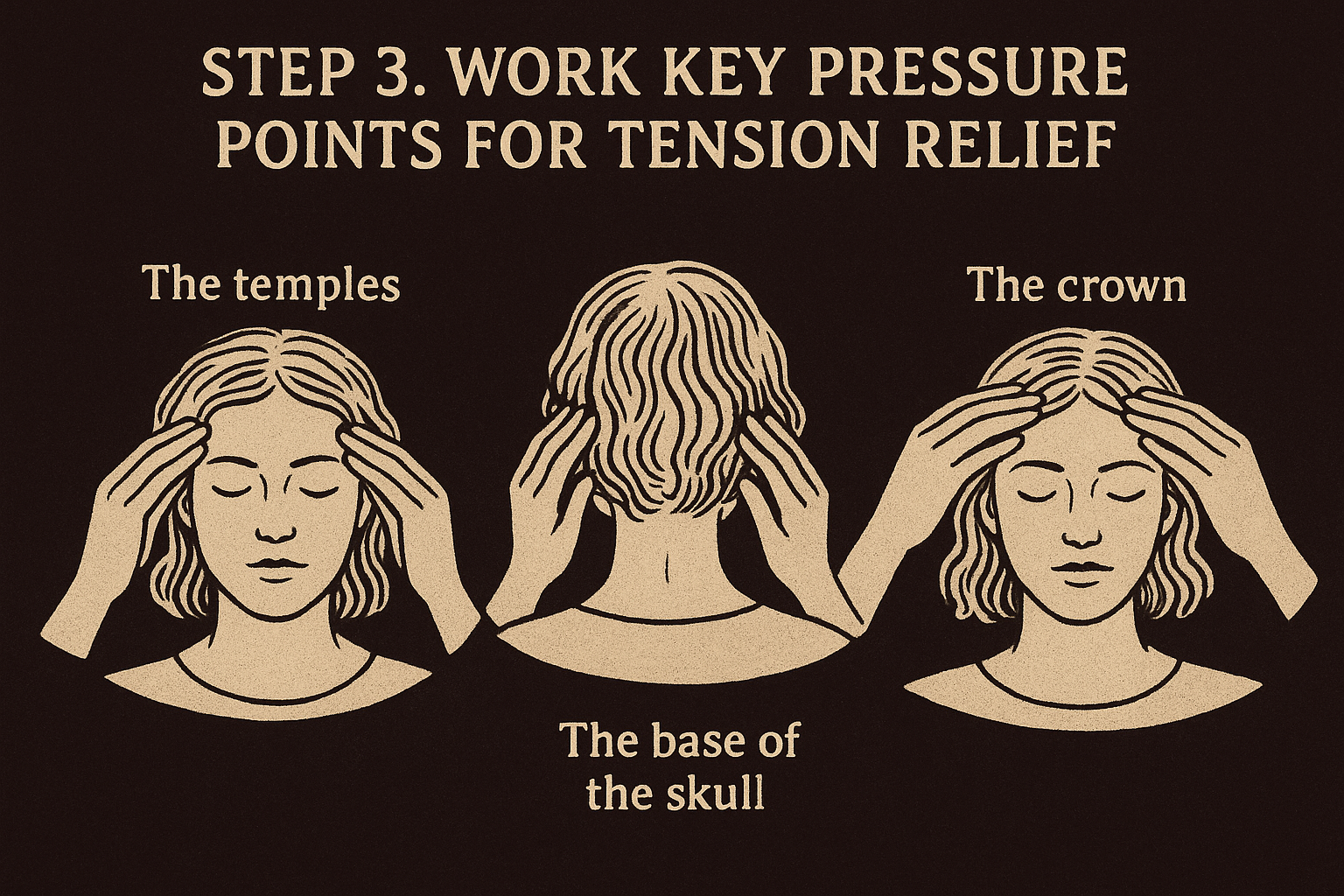
Step 3. Work key pressure points for tension relief
With your scalp warmed up, shift from broad circles to focused pressure on the spots that hold the most tension. This is where a scalp massage for relaxation starts to feel therapeutic rather than just pleasant, since firm, sustained pressure on specific points signals your nervous system to let go more deeply than light strokes alone.
The temples
Place your middle and ring fingers on both temples and press firmly in small circles for about 20 seconds. This spot sits close to muscles that tighten during eye strain and stress headaches, so steady pressure here often brings quick relief. Ease up if you feel any throbbing, since the goal is calm, not discomfort.
The base of the skull
Hook your fingers under the ridge where your skull meets your neck and press upward and inward. This is one of the densest pressure points for tension relief because so much stress collects at the neck and upper shoulders. Hold for five slow breaths before releasing.
The base of the skull holds the deepest tension, so patient pressure there does more for relaxation than speed anywhere else.
The crown
Use your fingertips to press gently at the very top of your head, where hair often parts. Circle slowly for 15 seconds, then hold still for a few seconds of firm, direct pressure.
- Temples: 20 seconds, small circles
- Base of skull: hold 5 breaths, upward pressure
- Crown: 15 seconds circling, then hold
Moving through these points in order builds on the release you started in the warm-up phase.
Step 4. Slow down and finish the massage
After working the pressure points, taper off instead of stopping abruptly. A sudden stop can jolt you out of the calm state you just built, so spend the last minute easing back into slow, light strokes across the whole scalp. This closing phase is what locks in the relaxation response rather than letting it fade the second you stand up.
Long, sweeping strokes
Use your full palm, not just fingertips, and glide from your hairline back over your crown toward the base of your skull. Keep the pressure light, almost like you're smoothing the tension away rather than working it out. Repeat this sweep five or six times, slowing down with each pass.
Sit with the stillness
Once you finish the sweeps, rest your hands on your scalp for ten seconds without moving. This brief pause gives your nervous system a chance to register the shift before you jump back into whatever you were doing. Notice how your jaw, shoulders, and breathing feel compared to when you started.
Ending slowly is what tells your body the relaxation is real, not just a passing sensation.
Quick finishing sequence
- Palm sweeps from hairline to crown: 5-6 passes
- Reduce pressure with each repetition
- Rest hands still on scalp for 10 seconds
- Take one final slow breath before opening your eyes
Most people notice looser shoulders and a quieter mind within a minute of finishing. If tension crept back into your neck during the day, a quick 90-second repeat of the base-of-skull hold works well without needing the full routine again.
Making scalp massage a regular habit
Consistency turns a scalp massage for relaxation from a nice moment into an actual stress-management tool. Doing this once won't undo weeks of tension, but tying it to something you already do daily, like brushing your teeth or winding down before bed, makes it stick without needing extra willpower.
Give yourself grace on busy days. Even a 90-second version, just the base-of-skull hold and a few sweeping strokes, keeps the habit alive when a full five-minute session isn't realistic. What matters is showing up for it regularly, not doing it perfectly every time.
Your scalp works hard for you, holding onto stress so the rest of your body doesn't have to carry it alone. Treat it with the same care you'd give sore shoulders or a tight neck, especially if you're already protecting textured strands from unnecessary tension. If you want more guides like this on caring for your scalp and hair the right way, visit Scatter for what's coming next.