

Twist Out On 4C Hair: Step-By-Step Definition That Lasts
You've watched the tutorials, bought the products, and followed every step, yet your twist out on 4c hair still falls flat by day two. Maybe the curls clump together, frizz takes over, or definition disappears the moment you touch it. You're not doing anything wrong. The problem usually comes down to technique, timing, and the products you're layering.
4c hair has the tightest curl pattern, which means it needs a specific approach to hold a twist out with real definition. Generic advice doesn't cut it. What works on looser textures often leaves 4c hair dry, undefined, or weighed down. Your coils deserve better than guesswork.
This guide breaks down exactly how to prep, twist, and maintain a twist out that actually lasts, with tips built around what 4c hair needs to thrive. At scatterhair, we're all about making textured hair styling effortless, and that starts with understanding the techniques that work for your specific curl pattern.
What you need for a 4C twist out that lasts
Your product lineup and prep tools determine whether your twist out looks sharp or falls apart before lunch. You don't need twenty products, but you do need the right combination of moisture, hold, and tools that work with 4c hair's texture. Skipping even one key step or ingredient can throw off the entire style.
Products for moisture and hold
Start with a leave-in conditioner that actually hydrates without leaving your hair stiff or coated. Look for ingredients like glycerin, aloe vera, or marshmallow root that pull moisture into each strand. Curl creams or styling custards add definition and hold without the crunch. You want something thick enough to coat your coils but light enough to layer. Finally, grab a lightweight oil or butter to seal everything in. Options like jojoba oil, grapeseed oil, or shea butter work well for locking moisture without grease buildup.
The right product combination keeps your twist out defined and soft, not stiff or greasy.
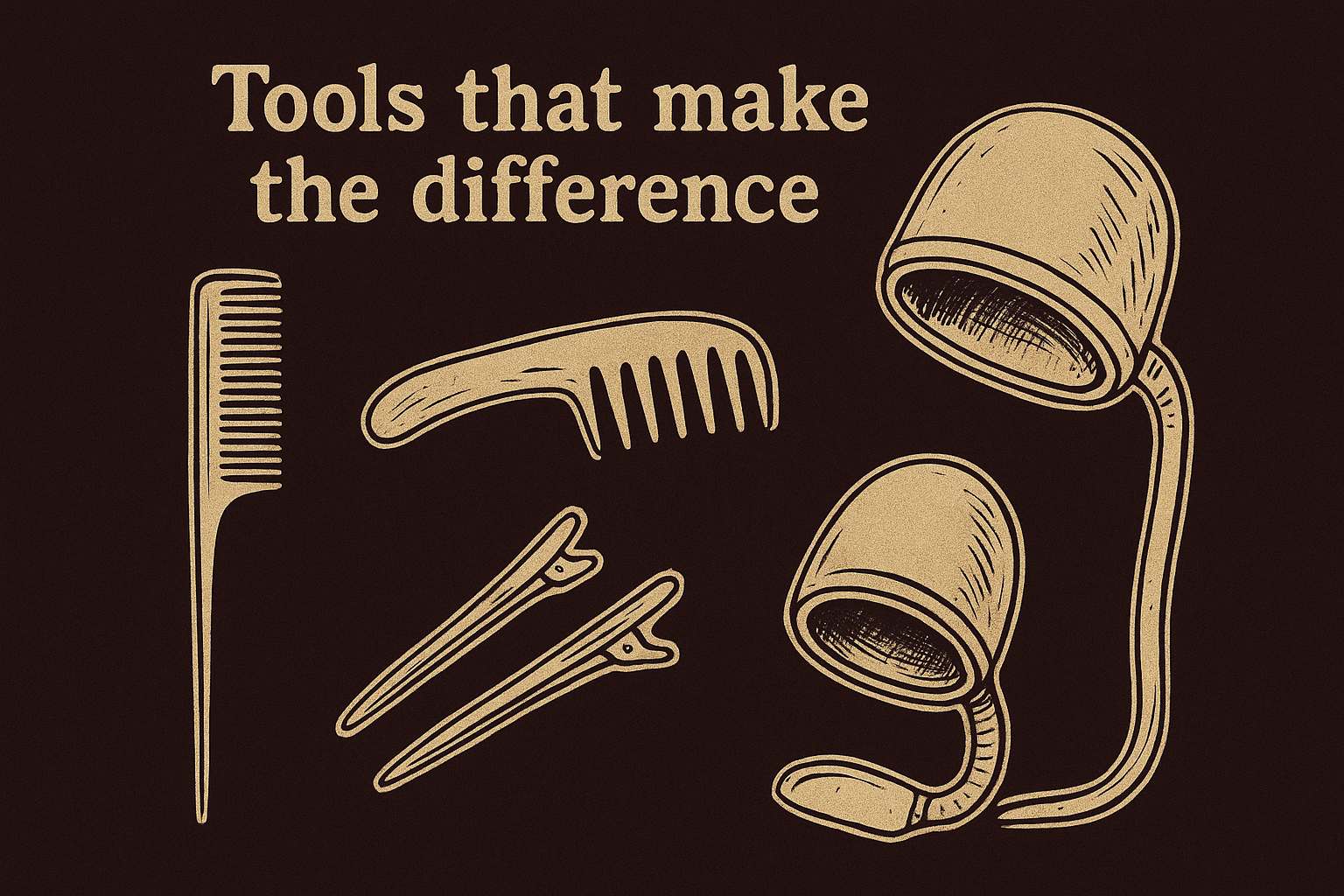
Tools that make the difference
You'll need rat-tail combs for clean parts and wide-tooth combs for gentle detangling without breakage. Finger detangling works too if you prefer less tension. Hair clips keep sections separated while you work, which speeds up the process and prevents tangling. A hooded dryer or bonnet attachment dries your twists evenly, which locks in definition far better than air drying. If you don't have a dryer, plan to air dry overnight with a satin bonnet or scarf. Never skip the drying step completely. Damp hair unravels faster and loses shape, which means your twist out on 4c hair won't last past day one.
Step 1. Start with clean, conditioned, detangled hair
Your foundation determines everything. Product buildup, dirt, and tangles will sabotage your twist out on 4c hair before you even start twisting. Clean hair grabs onto styling products better, and detangled strands twist smoothly without snags or breakage. Skip this step, and you'll fight frizz all week.
Wash with focus
Use a sulfate-free shampoo or cleansing conditioner to remove buildup without stripping natural oils. Focus on your scalp first, massaging gently with your fingertips to lift dirt and dead skin. Let the suds run down your hair length instead of scrubbing the strands directly, which creates unnecessary friction. Follow up with a deep conditioner for at least 15 minutes under a plastic cap. Your 4c coils need serious moisture to hold definition, so this isn't optional.
Clean, conditioned hair holds styling products better and twists more smoothly without breakage.
Detangle section by section
Work through your hair in four to six sections, starting from the ends and moving toward your roots. Use a wide-tooth comb or your fingers, whichever causes less breakage for your hair. Apply more conditioner or a detangling spray as you go to keep slip. Never detangle dry 4c hair. The friction will snap your strands and leave you starting from a damaged base. Once every section glides through smoothly, rinse with cool water to seal your cuticles and prep for styling.
Step 2. Layer moisture and hold the right way
Your product application order makes or breaks your twist out on 4c hair. Stack products wrong, and you'll end up with flakes, crunch, or limp twists that won't hold. The LOC or LCO method works best for 4c hair because it layers lightweight to heavy, sealing moisture at each stage. Miss a step or apply too much of any single product, and you're either left with buildup or hair that dries out overnight.
Apply in the right order
Start with leave-in conditioner on damp hair, working it through each section from root to tip. Your hair should feel soft but not soaking wet. Next, add your curl cream or styling custard to define and hold the pattern. Use enough to coat every strand without drowning it. Finish with a lightweight oil or butter to lock everything in. This three-step sequence keeps moisture trapped inside while giving your twists the grip they need to last.
Layering products from thinnest to thickest locks in moisture and prevents your twist out from drying out too fast.
Section and saturate evenly
Work in four to eight sections depending on your hair density, clipping away what you're not styling. Apply each product with downward smoothing motions, not circular rubbing, to keep your cuticles flat and frizz low. Make sure every twist gets the same amount of product. Uneven application shows up as some twists popping while others fall flat.
Step 3. Twist with tension, then dry all the way
How you twist and dry directly impacts whether your twist out on 4c hair holds definition or unravels into frizz. Loose twists create weak curl patterns that separate too fast, while skipping full drying leaves your hair damp and prone to shrinkage. Both mistakes waste the time you spent on prep and product application. Consistent tension and complete drying set the foundation for a style that lasts multiple days.
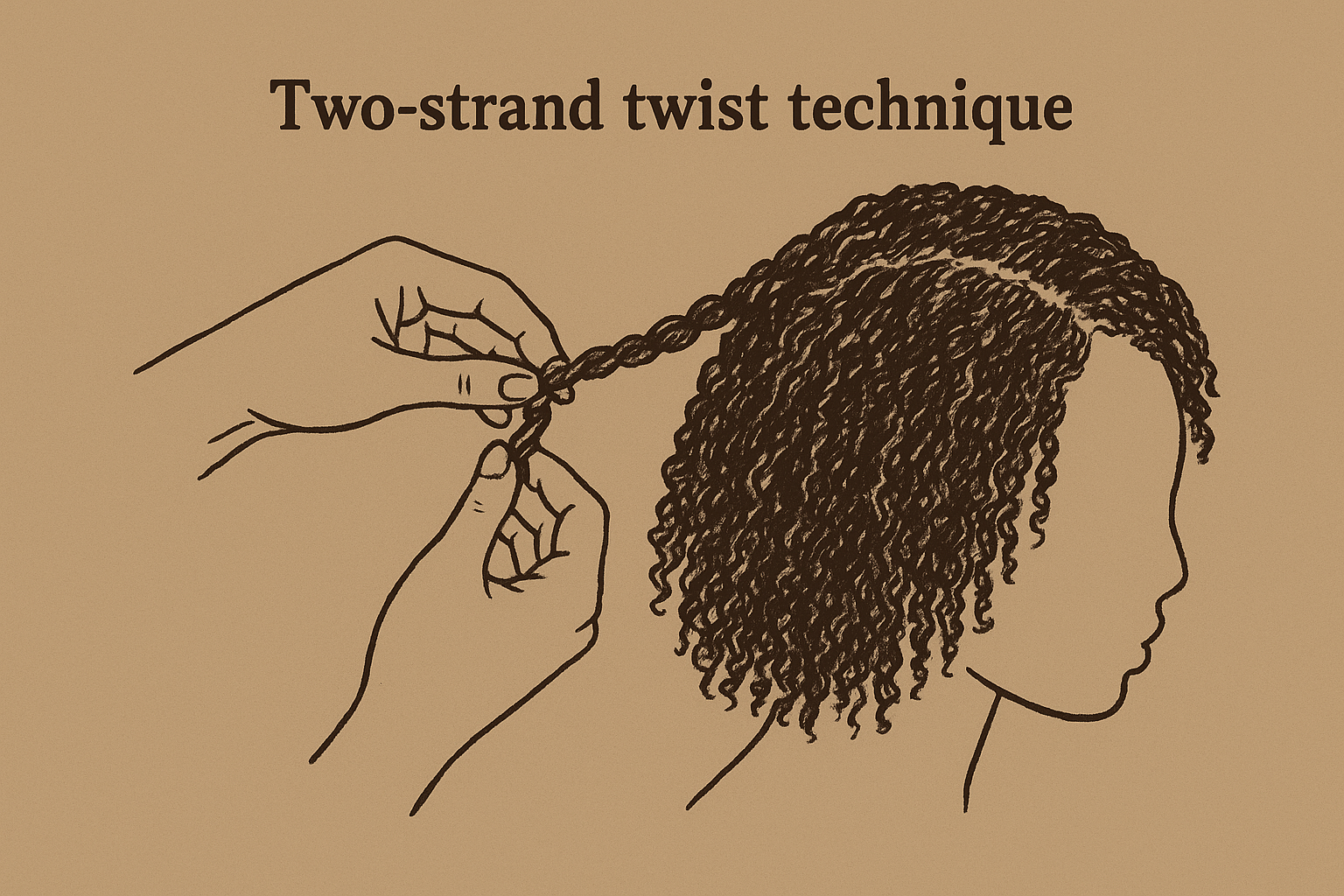
Two-strand twist technique
Take small to medium sections depending on how tight you want your curls. Smaller twists give tighter definition, larger ones create looser waves. Divide each section in half, then twist the two strands around each other from root to tip. Keep steady, even tension throughout each twist without pulling so hard that your scalp feels tight. Secure the ends by twisting tightly or using a small clip. Work through your entire head methodically, keeping your parts clean and your sections consistent in size.
Dry completely before touching
Use a hooded dryer or bonnet attachment for 45 minutes to an hour, or air dry overnight with a satin bonnet. Your twists must feel completely dry to the touch, not cool or slightly damp. Half-dry hair unravels too fast and loses its curl pattern by morning.
Fully dried twists lock in definition and prevent premature frizz when you separate them.
Step 4. Takedown, separate, and keep frizz low
Your takedown technique determines whether your twist out on 4c hair looks polished or falls into a frizz cloud. Rush through this step, and you'll undo all the definition you spent hours building. The right approach separates each coil without disrupting the curl pattern, while strategic maintenance keeps your style fresh for three to five days. Handle your hair gently, and you'll preserve volume without sacrificing definition.
Unravel and separate carefully
Apply a lightweight oil to your fingertips before touching any twists. This creates slip that prevents snagging and static. Untwist each section from the ends up, never pulling apart from the roots. Once a twist is fully unraveled, separate each strand into two or three smaller sections by gently pulling apart at the root. Work through your entire head this way, fluffing at the roots for volume but avoiding excessive touching on the lengths.
Oil on your fingers prevents frizz during separation and keeps your curl pattern intact.
Maintain definition throughout the day
Pineapple your hair at night by gathering it loosely at the top of your head with a satin scrunchie. Sleep on a satin or silk pillowcase to reduce friction that causes frizz. Refresh flattened sections in the morning by misting lightly with water mixed with leave-in conditioner, then smoothing with oil.
A simple wrap-up
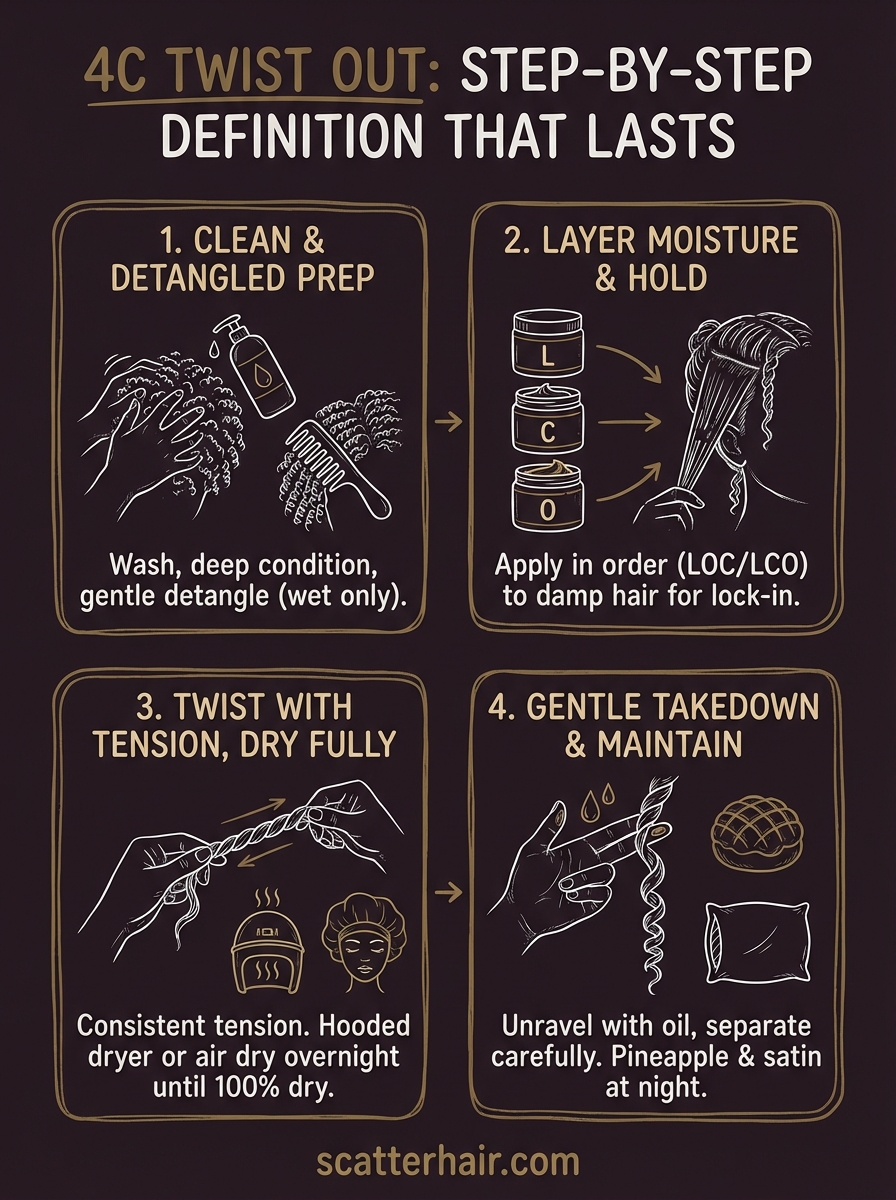
Your twist out on 4c hair comes down to four core steps: clean prep, layered moisture, proper tension, and careful takedown. Each stage builds on the last, which means skipping any part leaves you with weak definition or frizz that takes over too fast. Follow the sequence, and your style lasts three to five days with minimal touch-ups.
The difference between a twist out that holds and one that falls apart isn't about having more products or spending more time. It's about technique and timing. Dry your twists completely, separate them gently, and protect your hair at night. These small adjustments create consistent results every time you style.
At scatterhair, we're building styling products that make textured hair easier to manage without the guesswork. Rock your texture, embrace the process, and make every twist count.