

Braid Out vs Twist Out: Differences, Pros and How to Choose
You've probably heard people talk about braid outs and twist outs when styling textured hair. Both are protective styling techniques where you section your hair, either braid it or twist it while damp, then let it set overnight before unraveling for a defined curl pattern. The main difference? Braid outs use three strand braids while twist outs use two strand twists. Each creates a distinctly different look and works better for different hair types and textures.
This guide breaks down everything you need to know about both styles. We'll compare the key differences in definition, volume and stretch. You'll learn the pros and cons for your specific hair type and texture. Plus, we'll walk you through step by step instructions for each style so you can nail the look at home without the guesswork.
Why braid outs and twist outs matter
These two styling methods give you defined curls without heat damage and protect your hair while creating versatile looks that last multiple days. The low manipulation approach prevents breakage and preserves your natural texture, making both techniques essential for healthy hair maintenance.
Protection meets style
Understanding the braid out vs twist out debate helps you make better styling choices for your specific hair needs. Both techniques stretch your hair and reduce shrinkage while locking in moisture overnight. You get salon-quality results at home without expensive tools or products, which saves money over time. This matters because you reduce your weekly styling time while maintaining healthy hair growth and length retention.
These styles work as both protective techniques and statement looks that adapt to any occasion from casual to professional.
How to choose between a braid out and twist out
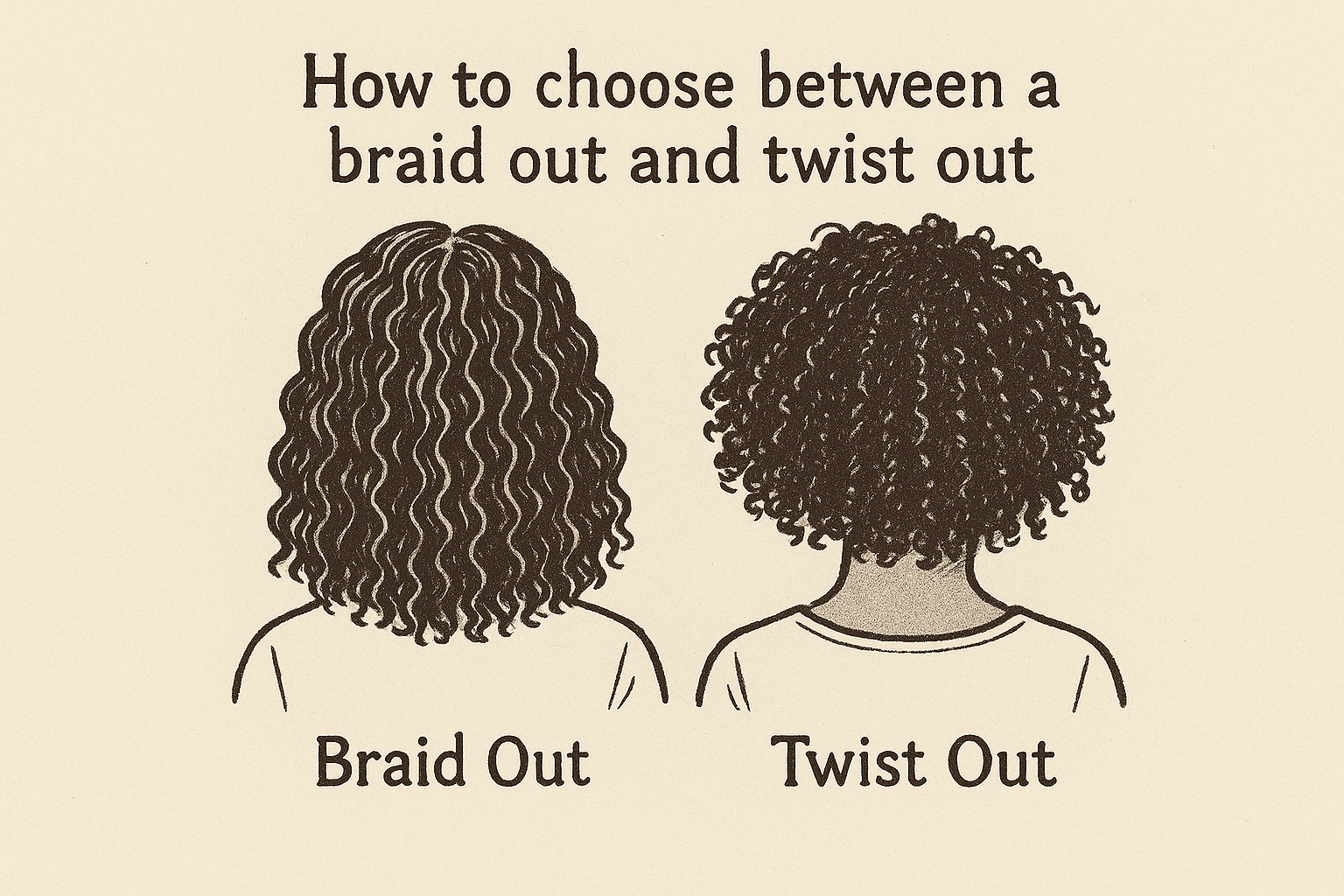
Your hair texture and desired outcome determine which technique works best for you. Start by assessing your natural curl pattern and the look you want to achieve. If you have looser curl patterns (3a-3c), braid outs typically give you more definition and hold better over time. Twist outs work well for tighter curl patterns (4a-4c) because they create more visible separation and volume in your curls.
Consider your hair texture and pattern
Evaluate your strand thickness and density before choosing between these styles. Fine hair responds better to twist outs because braids can pull too tight and cause breakage at the roots. You'll get more volume with twists since they create a looser curl pattern. Thick, dense hair holds up well with either method, but braid outs provide longer lasting definition and control. Coarse textures benefit from the extra tension in braids, which smooths the cuticle and reduces frizz throughout the week.
The braid out vs twist out decision comes down to matching your natural texture with the level of definition and volume you want.
Think about your desired look
Choose braid outs when you want defined, elongated waves that last four to five days without major touch ups. This style gives you more stretch and length, making it ideal for professional settings or occasions where you need polished, consistent curls. Pick twist outs when you prefer fluffy, voluminous curls with a softer, lived-in appearance. They take less time to install (usually 30-45 minutes versus 60-90 for braids) and work well for casual, everyday styling. Your lifestyle matters too: active schedules benefit from the durability of braid outs, while twist outs suit people who restyle frequently.
Key differences in definition, volume and stretch
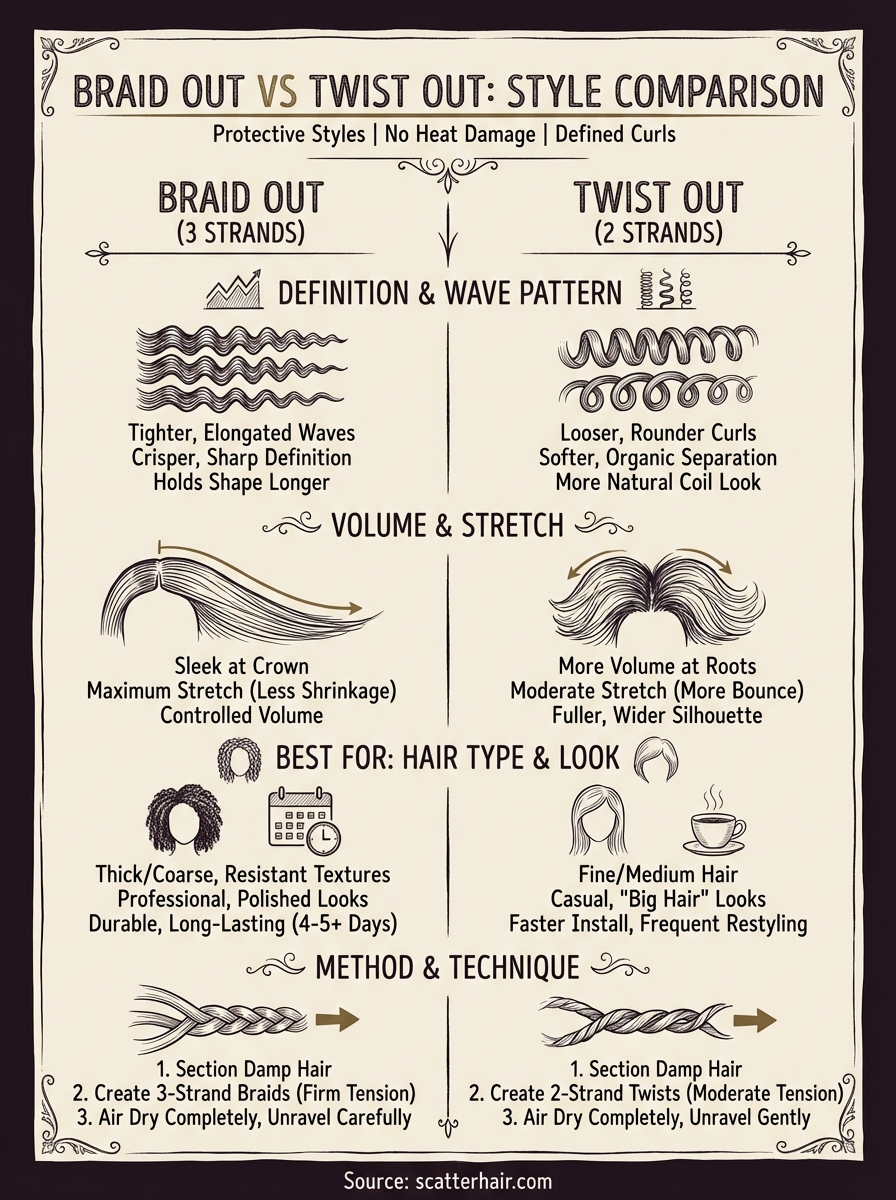
The braid out vs twist out comparison reveals distinct differences in how each technique shapes your curls. Braid outs create tighter, more elongated wave patterns because three strands compress together more firmly than two strand twists. You get sharper definition with crisper edges that hold their shape for days. Twist outs produce looser, rounder curls with softer separation between each section, giving you a more organic, fluffy appearance that mimics your natural curl pattern but with extra definition.
Volume and fullness differences
Twist outs give you noticeably more volume at the roots because the two strand technique creates less tension against your scalp. Your hair springs up and out, creating a fuller, wider silhouette that works perfectly for big hair looks. Braid outs flatten your roots slightly from the extra tension of three strands, but you gain sleeker styling at the crown with more volume concentrated at the ends. This makes braid outs ideal when you want controlled volume rather than all over fullness.
Stretch and length retention
Braid outs provide maximum stretch with up to 70 percent more visible length compared to your natural shrinkage rate. The three strand braiding technique pulls your hair straighter as it sets, reducing shrinkage significantly and showcasing your true length. You'll see more hang time and less spring back throughout the day. Twist outs offer moderate stretch, typically showing 40 to 50 percent of your actual length while maintaining more natural coil formation. Your curls bounce and spring more readily with twists because the looser structure allows your hair to contract closer to its natural state.
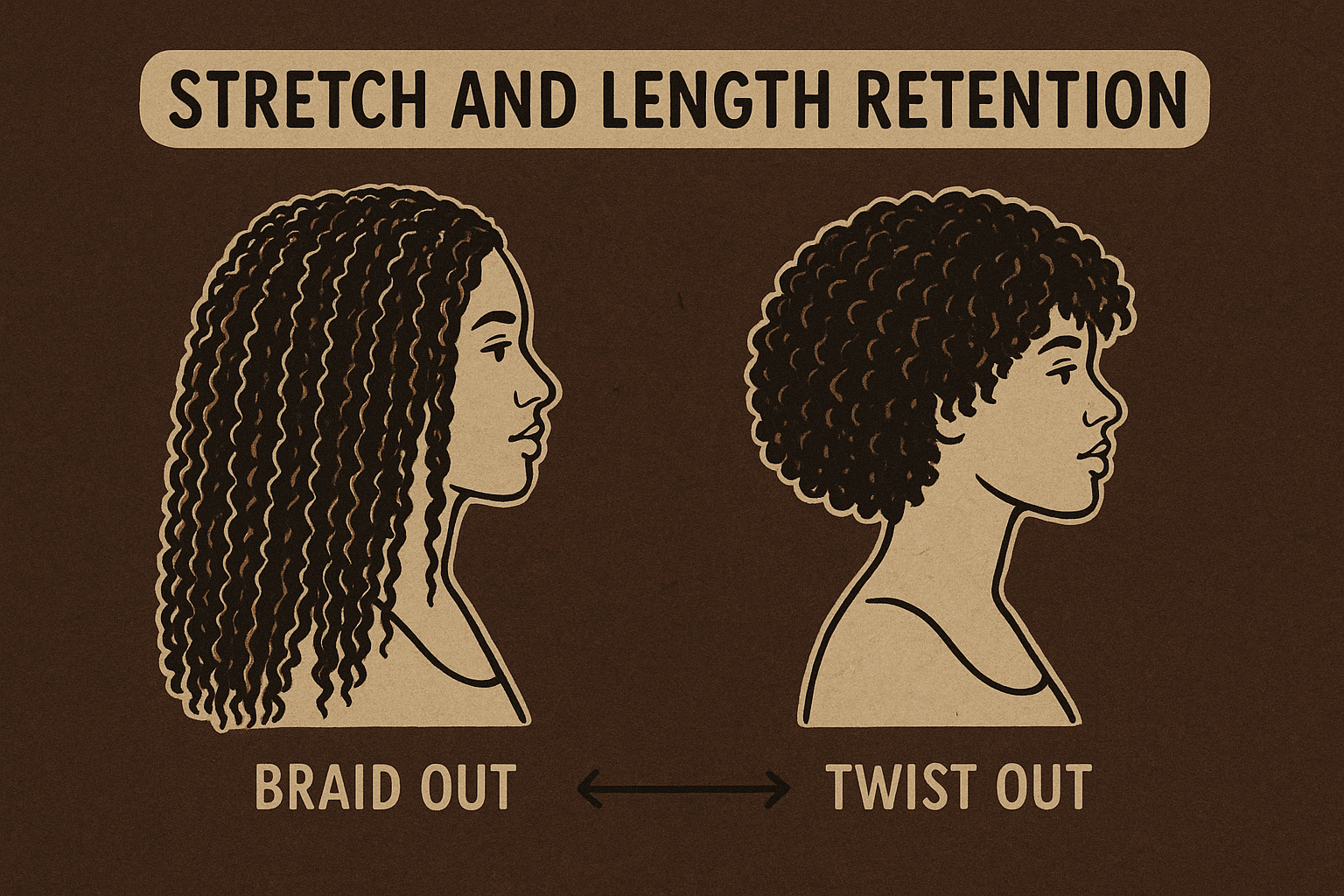
Each technique manipulates your curl pattern differently, so understanding these physical differences helps you choose the right style for your goals.
Pros and cons by hair type and texture
The braid out vs twist out debate shifts depending on your specific hair characteristics. Your strand thickness and curl pattern determine which technique delivers better results and longer lasting hold. Fine hair faces different challenges than thick hair, and loose curls respond differently than tight coils when you apply these styling methods.
Fine to medium textures
Twist outs work better for fine and medium hair because they create less tension at your roots and reduce the risk of breakage from tight braiding. You get lightweight volume without the weight of dense braids pulling on delicate strands. The main drawback: twist outs on fine hair lose definition faster, typically lasting two to three days before needing a refresh. Braid outs can damage fine hair if you braid too tightly, but when done correctly with gentle tension, they give you crisp definition that lasts up to five days. Your hair appears fuller at the ends with braids while twists distribute volume more evenly from root to tip.
Thick and coarse textures
Thick, coarse hair handles both techniques well, but each offers distinct advantages. Braid outs excel at taming frizz and smoothing the cuticle because the three strand technique applies enough pressure to control resistant textures. You maintain definition longer (five to seven days) with minimal puffing or separating between curls. Twist outs on thick hair create dramatic volume and fullness that showcases your texture beautifully, though you'll notice more frizz by day three. Coarse strands benefit from the faster installation time of twists when you're working with dense, time consuming hair that takes hours to section and style.
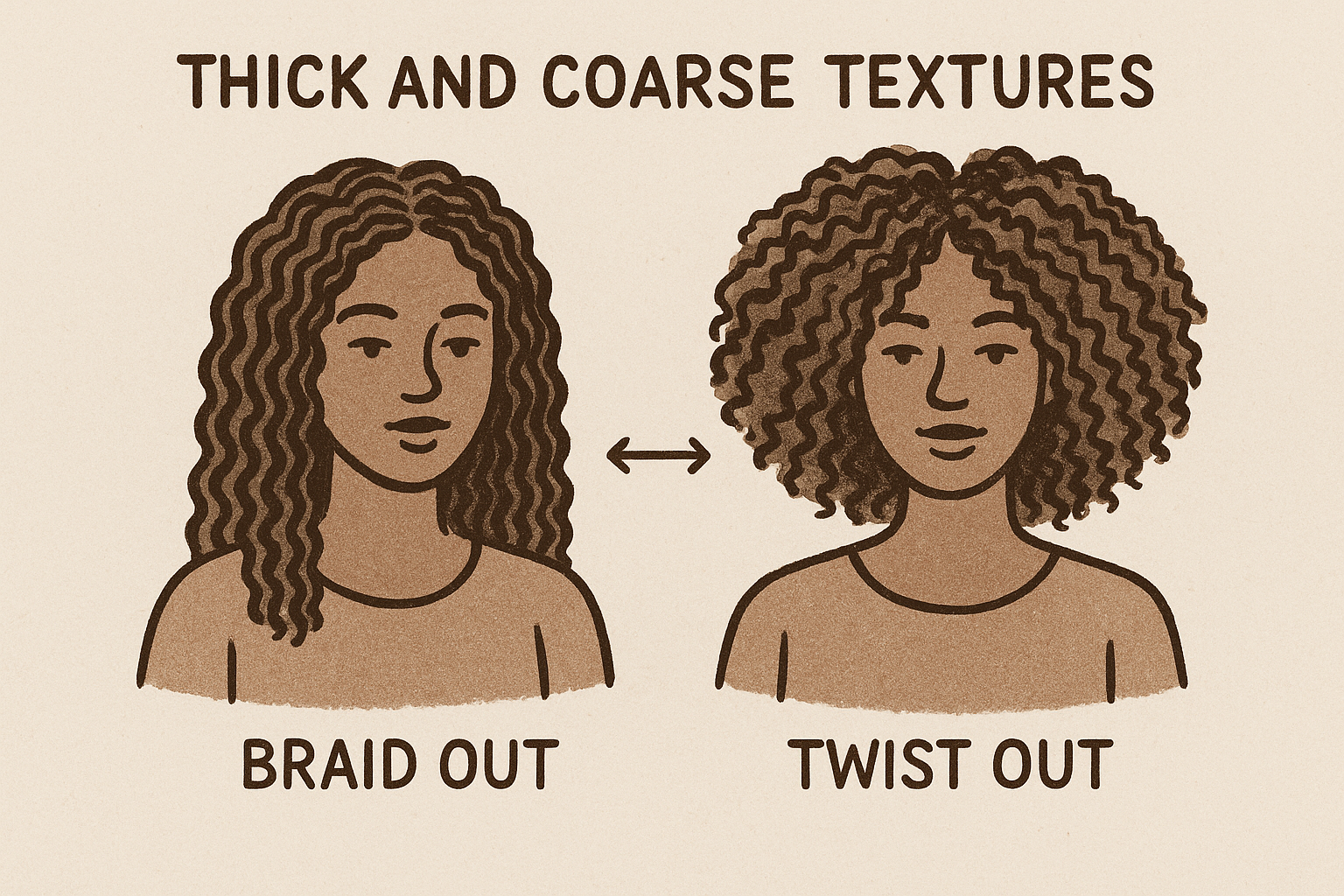
Matching your texture to the right technique prevents damage while maximizing your styling results.
Step by step guide for each style
Mastering the braid out vs twist out techniques requires understanding the specific steps for each method. Both styles start with clean, damp hair and quality styling products, but the sectioning and manipulation differ significantly. You achieve the best results when you work with hair that has at least 70 percent moisture retained after washing and conditioning, allowing products to distribute evenly throughout each section.
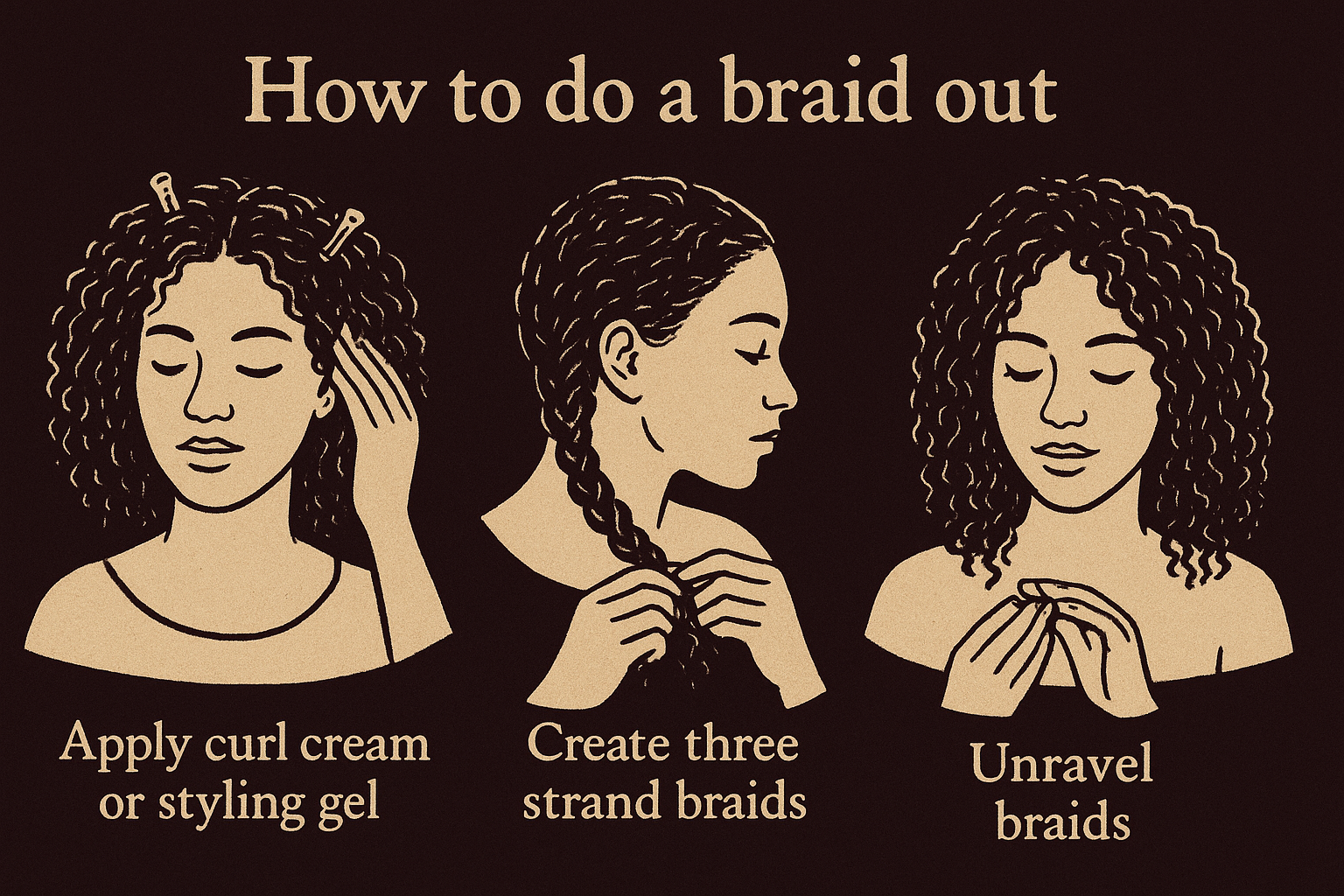
How to do a braid out
Apply a curl cream or styling gel to damp hair, working in sections no larger than one inch wide. Start by dividing your hair into four main quadrants using clips, then take smaller subsections from each area. Create three strand braids from root to tip, maintaining consistent tension throughout without pulling too tight at the scalp. Secure each braid end with a small elastic or tuck it under itself. Allow your hair to air dry completely (six to eight hours) or sit under a hooded dryer for 45 minutes. Once fully dry, apply a light oil to your fingertips and gently unravel each braid from the bottom up, separating the sections carefully to avoid frizz.
How to do a twist out
Section damp hair into quadrants and apply your styling product evenly through each area. Take half inch to one inch sections and divide each piece into two strands. Twist the strands around each other from root to tip in a spiral motion, keeping moderate tension without creating stress on your scalp. Let your hair dry completely overnight or speed the process with a diffuser on low heat. Unravel twists gently with oiled fingers, starting at the ends and working toward your roots for maximum definition and minimal disruption.
The key difference in technique: braids require three strands while twists only need two, making twists faster but potentially less defined.
Final thoughts
The braid out vs twist out decision comes down to your hair texture, desired definition, and time investment. Choose braid outs when you want elongated waves with lasting hold, or pick twist outs when you prefer volume and faster styling. Both techniques protect your hair while creating beautiful, defined curls that work for any occasion. Experiment with each method to discover what works best for your natural texture and lifestyle needs. Discover more styling tips and exclusive content at Scatter as we prepare to launch products that make textured hair styling effortless.