

What Causes Hair Breakage? 5 Causes + Fixes For Curls
You're doing everything right, styling with care, using products meant for curls, and still finding broken strands on your pillowcase and in your sink. If you've ever wondered what causes hair breakage, especially on textured hair, you're not alone. It's one of the most common frustrations people with curls, coils, and waves deal with.
The truth is, breakage rarely comes from a single source. It's usually a combination of everyday habits, environmental exposure, and sometimes things happening inside your body. The good news? Once you identify the real culprits, most of them are fixable.
At scatterhair, we're building styling products specifically for textured hair, formulas designed to work with your curl pattern, not against it. That mission started by understanding exactly how and why textured hair breaks down. Below, we're breaking down five major causes of hair breakage and what you can actually do about each one.
1. Using the wrong products for your curl type
Products formulated for straight hair often strip natural oils and moisture from curls and coils. When your hair doesn't get the hydration and protein balance it needs, the strands become brittle and snap under everyday tension.
Why it causes breakage in textured hair
Textured hair has a naturally elliptical shape that makes it harder for scalp oils to travel down the strand. Using sulfate-heavy shampoos or alcohol-based stylers pulls moisture out faster than your hair can replace it. That dryness leads directly to breakage, which is one of the core reasons behind what causes hair breakage in curly and coily hair types.
Moisture loss is the starting point for most breakage in textured hair, and the wrong products accelerate it significantly.
Quick signs it's happening
Your hair feels rough and straw-like after washing, even when you've conditioned it. You'll also notice more single-strand knots and mid-shaft splits than usual, and your curls may lose definition quickly after styling.
Fixes that work on wash day and styling day
Switch to a sulfate-free, pH-balanced cleanser and follow up with a deep conditioner that lists water as the first ingredient. On styling day, apply products to soaking wet hair to lock in moisture before it evaporates from the strand.
Prevention checklist for your routine
- Use a moisturizing leave-in conditioner after every wash
- Avoid products with drying alcohols like isopropyl alcohol
- Add a protein treatment every four to six weeks
- Choose stylers with humectants like glycerin or aloe vera
When to see a stylist or dermatologist
If switching products doesn't reduce breakage within six to eight weeks, book a consultation. A licensed stylist who specializes in textured hair can assess whether your current routine matches your hair's porosity level and what adjustments will actually make a difference.
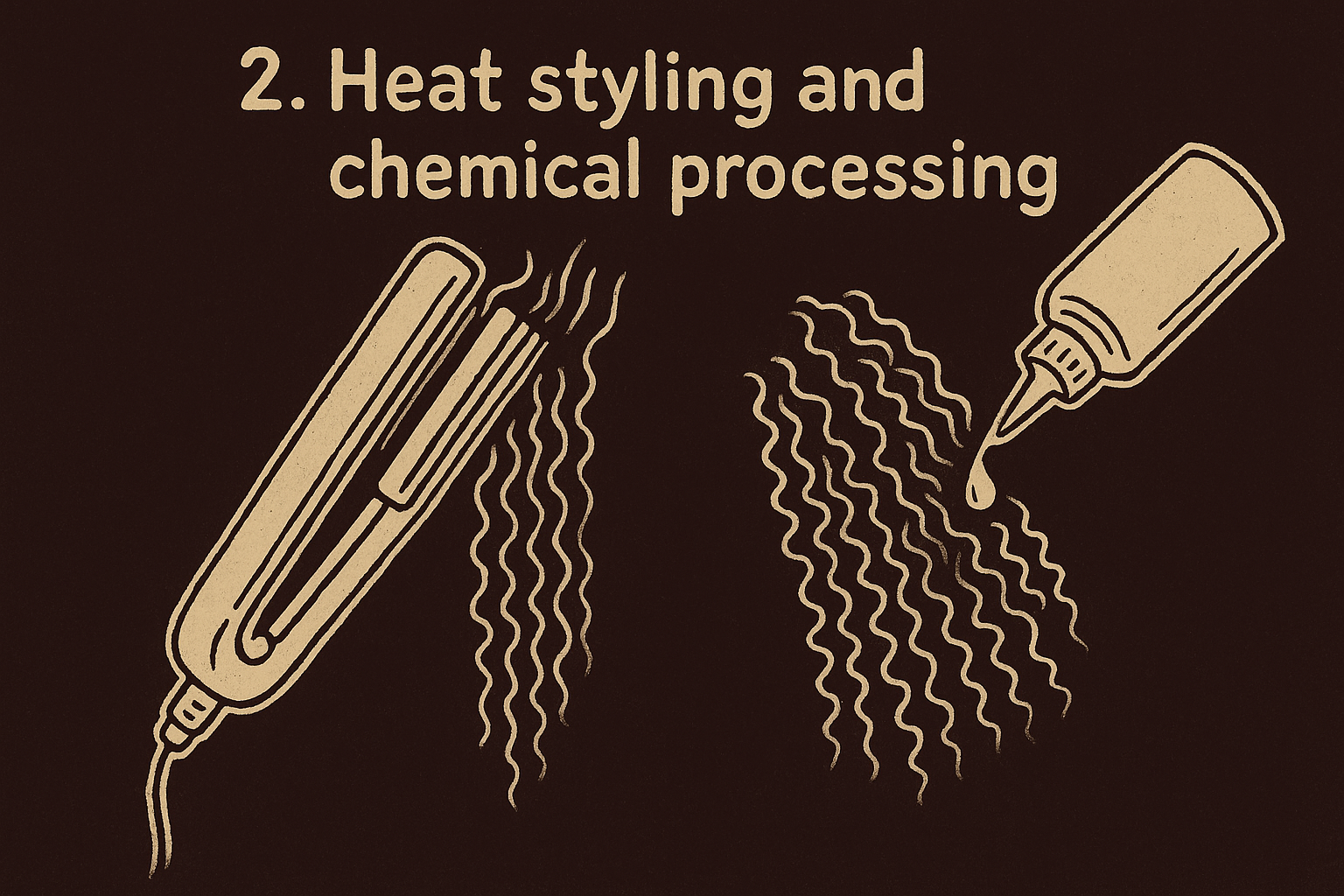
2. Heat styling and chemical processing
Direct heat and chemical processes weaken the protein bonds inside your hair shaft. For curly and coily textures, this damage compounds faster because the strand's natural shape creates more points of vulnerability throughout the strand.
Why it causes breakage in curls and coils
Flat irons, blow dryers, and chemical relaxers all break down keratin bonds that hold your strand together. Repeated exposure leaves curls porous and prone to snapping, which explains what causes hair breakage in many textured hair routines.
Once heat damage sets in, the curl pattern begins to change, and breakage follows quickly.
Quick signs it's happening
Your curls lose their spring and start looking limp or straight at the roots. You may also notice white nodules along the strand, a clear sign of severe structural damage.
Fixes that work on wash day and styling day
Apply a bond-repairing treatment on wash day to rebuild keratin links between sessions. Always use a heat protectant before any tool use and keep your temperature under 350°F.
Prevention checklist for your routine
Small habit shifts make the biggest difference in reducing heat-related breakage over time.
- Limit heat styling to once per week
- Do a clarifying wash before any chemical service
- Rotate between heat-free styling methods regularly
When to see a stylist or dermatologist
If your curls no longer revert to their natural pattern after washing, see a professional before applying more heat or chemicals to already compromised strands.
3. Mechanical damage from detangling and tension
Textured hair tangles frequently because of its curl pattern, and forcing through those knots adds real stress to fragile strands. This physical force is one of the most underrated factors in what causes hair breakage for curly and coily textures.
Why it causes breakage in textured hair
Pulling a fine-tooth comb through dry knots creates micro-tears along the strand instantly. Tight styles like braids and high ponytails also pull at your roots, weakening the hair shaft at its base over time.
Detangling dry hair generates more breakage than almost any other single habit in a textured hair routine.
Quick signs it's happening
You'll find short broken pieces in your brush rather than full shed strands with a root bulb attached. Your edges and nape may also thin noticeably from repeated tension over weeks.
Fixes that work on wash day and styling day
Detangle on wet, conditioner-coated hair with a wide-tooth comb, starting at the ends and working upward. This habit cuts mechanical stress significantly on every wash day.
Prevention checklist for your routine
- Detangle only on wet or damp hair
- Remove protective styles after six to eight weeks maximum
- Sleep on a satin or silk pillowcase to reduce overnight friction
When to see a stylist or dermatologist
If your edges are thinning or you notice patchy areas near your hairline, see a dermatologist. That pattern often signals traction alopecia, which needs professional care rather than just a routine adjustment.
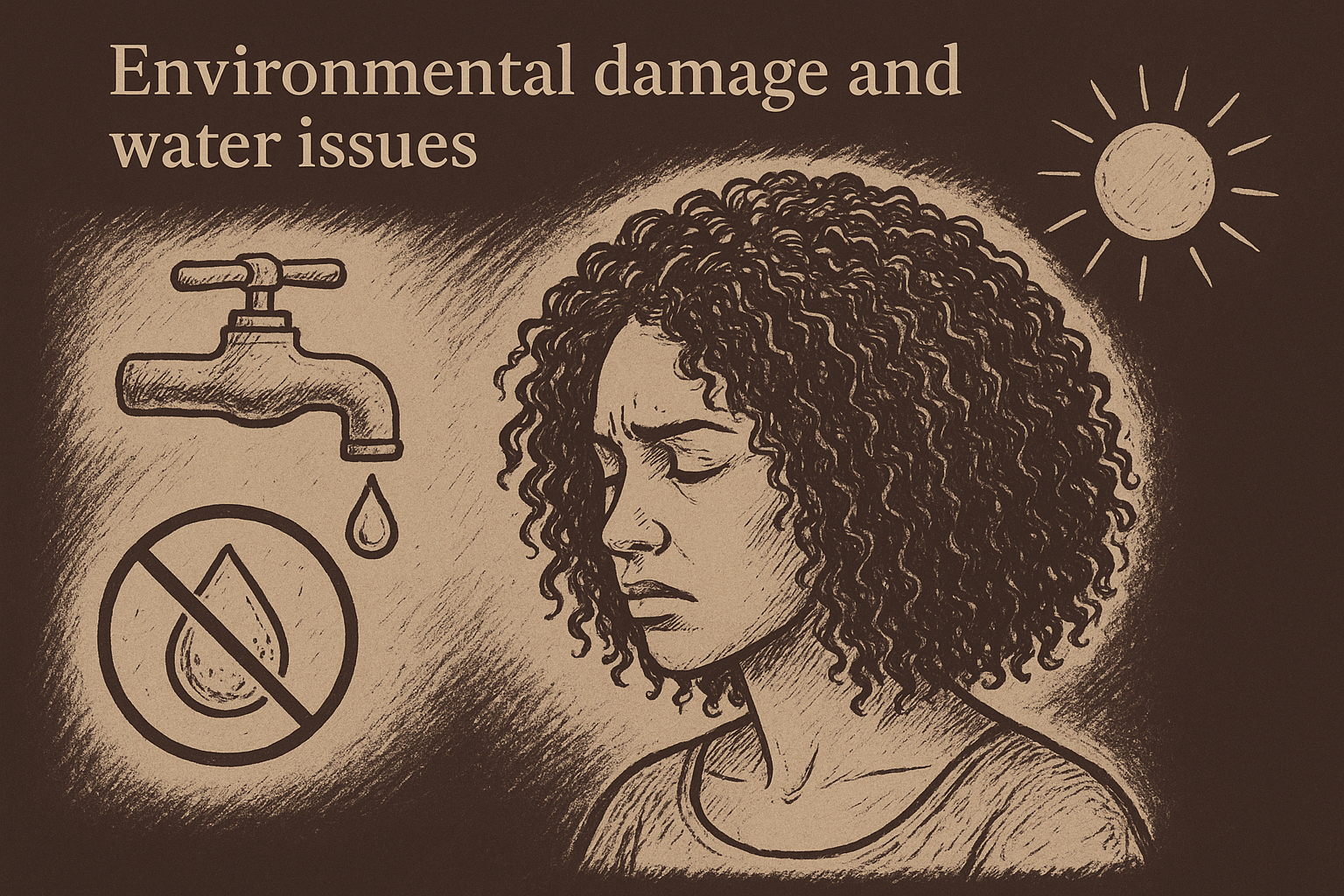
4. Environmental damage and water issues
Your environment works against your hair every single day. Hard water minerals, UV exposure, and humidity fluctuations all strip moisture and weaken your strand's outer layer, and together they form a major part of what causes hair breakage in textured hair.
Why it causes breakage in curls and coils
Hard water deposits calcium and magnesium directly onto your hair shaft, blocking moisture from entering and leaving strands dry and rigid. UV rays also degrade the cuticle layer that protects your curl's core protein structure.
Hard water buildup is invisible, but the brittleness and dullness it causes are unmistakable signs something is blocking your moisture intake.
Quick signs it's happening
Your hair feels dull and coated even after conditioning, and your products stop performing the way they used to. Frizz that won't smooth down despite leave-in application is another reliable signal.
Fixes that work on wash day and styling day
Use a chelating or clarifying shampoo monthly to strip mineral buildup from your strands. Follow immediately with a deep conditioning treatment to restore lost moisture before styling.
Prevention checklist for your routine
- Install a shower filter to reduce hard water exposure
- Apply UV-protective products before outdoor activity
- Limit prolonged sun exposure during peak hours
When to see a stylist or dermatologist
If your scalp becomes dry or flaky alongside increased breakage, a dermatologist can rule out mineral-related scalp conditions that need targeted treatment.
5. Nutrition, stress, and health-related causes
What happens inside your body shows up directly on your strands. Nutritional deficiencies and chronic stress are frequently overlooked factors in what causes hair breakage, but both affect how strong each new strand grows from the follicle up.
Why it causes breakage and what your body may lack
Your hair needs iron, zinc, and biotin to build strong strands from the follicle outward. Low levels of these nutrients weaken your hair's structure before the strand even leaves your scalp.
Chronic stress triggers telogen effluvium, which pushes follicles into a shedding phase prematurely and leaves new growth weaker than normal.
Quick signs it's happening
You'll notice increased shedding alongside breakage, and your nails may also become brittle around the same time. Both signals often point to the same nutritional gap.
Fixes that work on wash day and styling day
Focus on protein-rich deep conditioning treatments to reinforce strands while you address internal causes. Hydrating masks help protect vulnerable hair while your body recovers.
Prevention checklist for your routine
- Eat foods rich in iron and protein daily
- Manage stress through consistent sleep and movement
- Stay hydrated to support scalp health
When to see a stylist or dermatologist
If breakage continues despite dietary changes, ask your doctor to run bloodwork checking ferritin and thyroid levels to rule out underlying conditions.
Your next steps
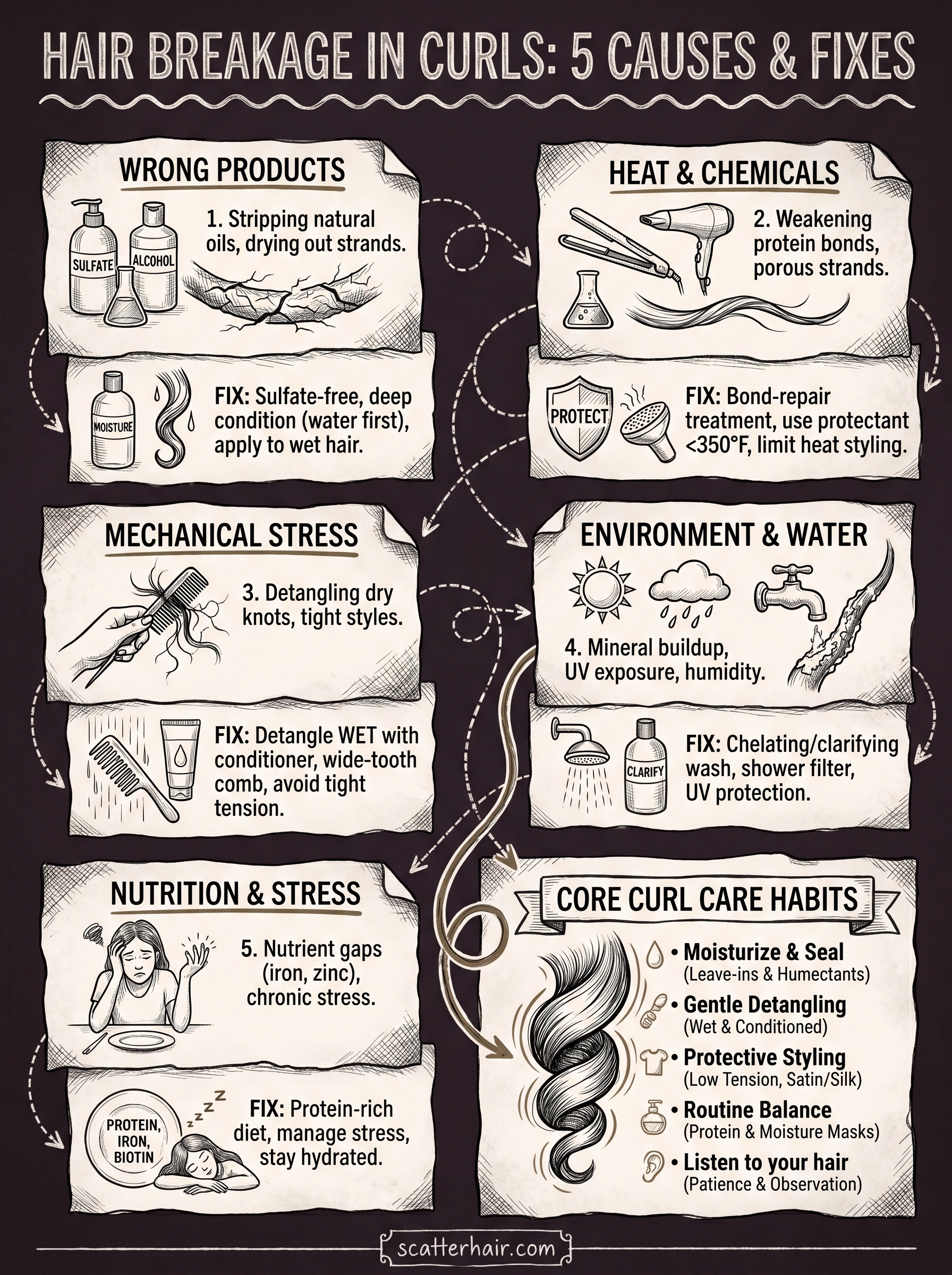
Now you know what causes hair breakage and, more importantly, what to do about each cause. The five areas covered here, products, heat, mechanical stress, environment, and nutrition, rarely act alone. Most breakage comes from two or three of these factors combining in your routine at the same time, which is why identifying your personal pattern matters before you start swapping products or changing habits.
Start with the section that sounds most like your current situation and make one change at a time. Stacking too many adjustments at once makes it impossible to know what's actually working. Give each fix four to six weeks before moving on to the next.
Textured hair thrives with the right formulas behind it. Scatter is building styling products designed specifically for curls and coils, formulas that support your texture instead of fighting it. Get on the list for early access.