

What Is Deep Conditioning For Hair? Benefits, How To Do It
If you've ever wondered what is deep conditioning for hair, the short answer is: it's one of the most effective ways to restore moisture, strength, and softness to strands that feel dry or damaged. But the full picture goes deeper than that, especially if you have textured hair that tends to lose moisture faster than straight hair types.
Deep conditioning isn't just a spa-day luxury. It's a practical step that can make a real difference in how your hair feels, holds styles, and responds to products. For anyone with curls, coils, or waves, skipping deep conditioning often means fighting your hair instead of working with it. And that's exactly the kind of struggle we're building scatterhair to solve, styling products that work with your texture, not against it.
This guide breaks down everything you need to know: what deep conditioning actually does at the hair shaft level, how it differs from regular conditioner, who benefits most from it, and a step-by-step process for doing it at home. Whether you're new to a haircare routine or refining one you've had for years, this is the foundation worth getting right.
Deep conditioning explained
Deep conditioning is a treatment that delivers concentrated moisture and nutrients directly into the hair shaft, not just the surface. Unlike quick-rinse products, a deep conditioner uses heavier, more active ingredients like proteins, humectants, and emollients to penetrate the cortex of each strand. The result is hair that behaves differently after the treatment, feeling softer, responding better to styling, and breaking less during daily handling.
What happens at the hair shaft level
When you apply a deep conditioner, the product works to temporarily lift the hair cuticle, which is the outermost protective layer surrounding each strand. This lifting allows the active ingredients to reach the cortex, the inner layer where your hair's structural integrity actually lives. Heat from a steamer or a simple plastic cap accelerates this process by expanding the cuticle and increasing absorption.
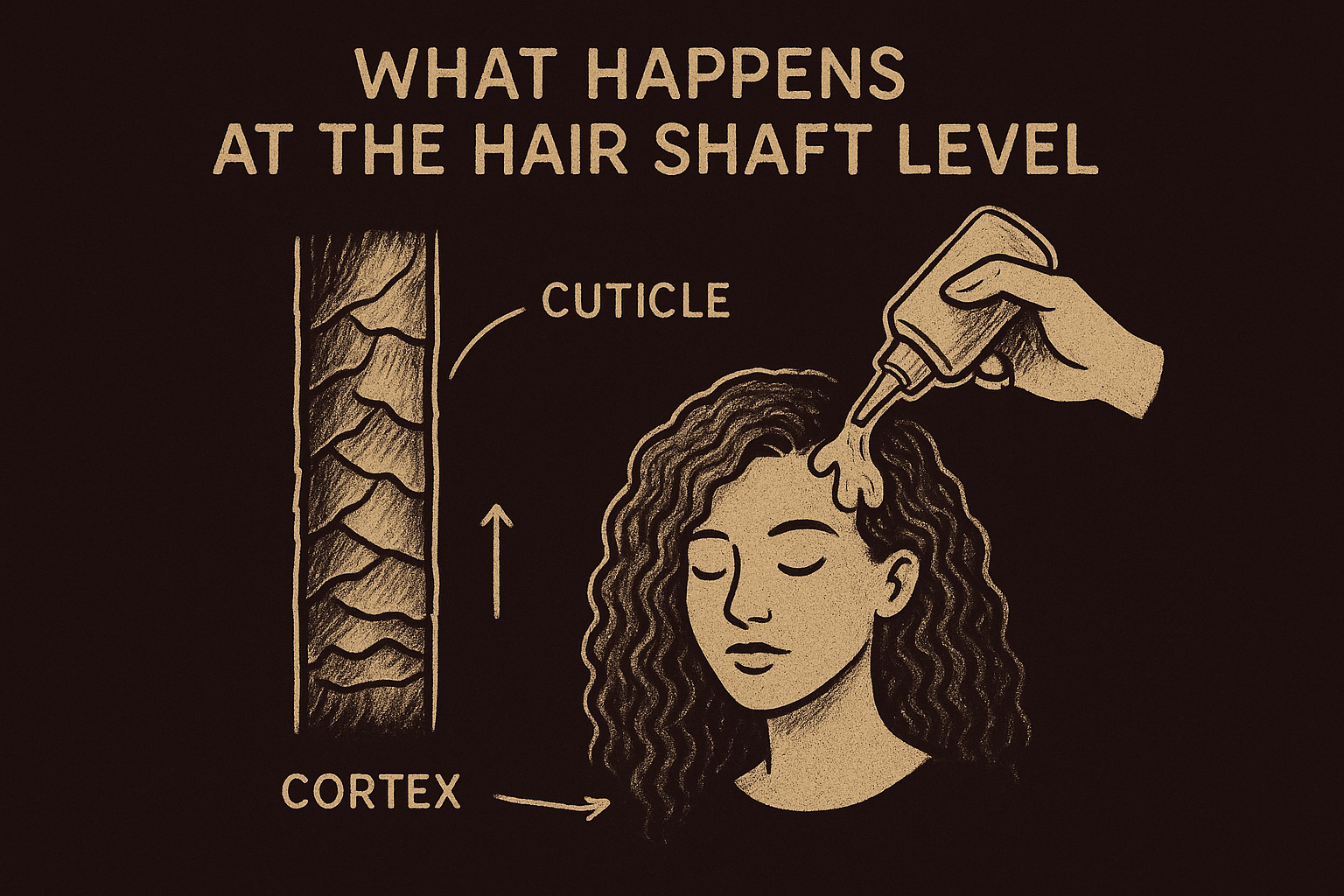
The cortex is where your hair holds its proteins and moisture. Reaching it consistently is what separates a deep conditioner from a product that only coats the surface.
Once you rinse, the cuticle seals back down and locks in what was absorbed. That's why your hair feels noticeably softer and more manageable after a proper deep conditioning session compared to a standard rinse-out conditioner.
Why textured hair needs it most
If you're exploring what is deep conditioning for hair and wondering why it matters specifically for textured hair, the answer comes down to follicle structure. Curly and coily strands have a curved shape that makes it harder for scalp-produced oils to travel down the full length of the hair. Straight hair gets coated naturally; textured hair does not. That structural gap is why deep conditioning shifts from being a helpful add-on to a core part of your haircare routine. Without it, even the best styling products have a harder time performing on dry, brittle strands.
Deep conditioner vs regular conditioner
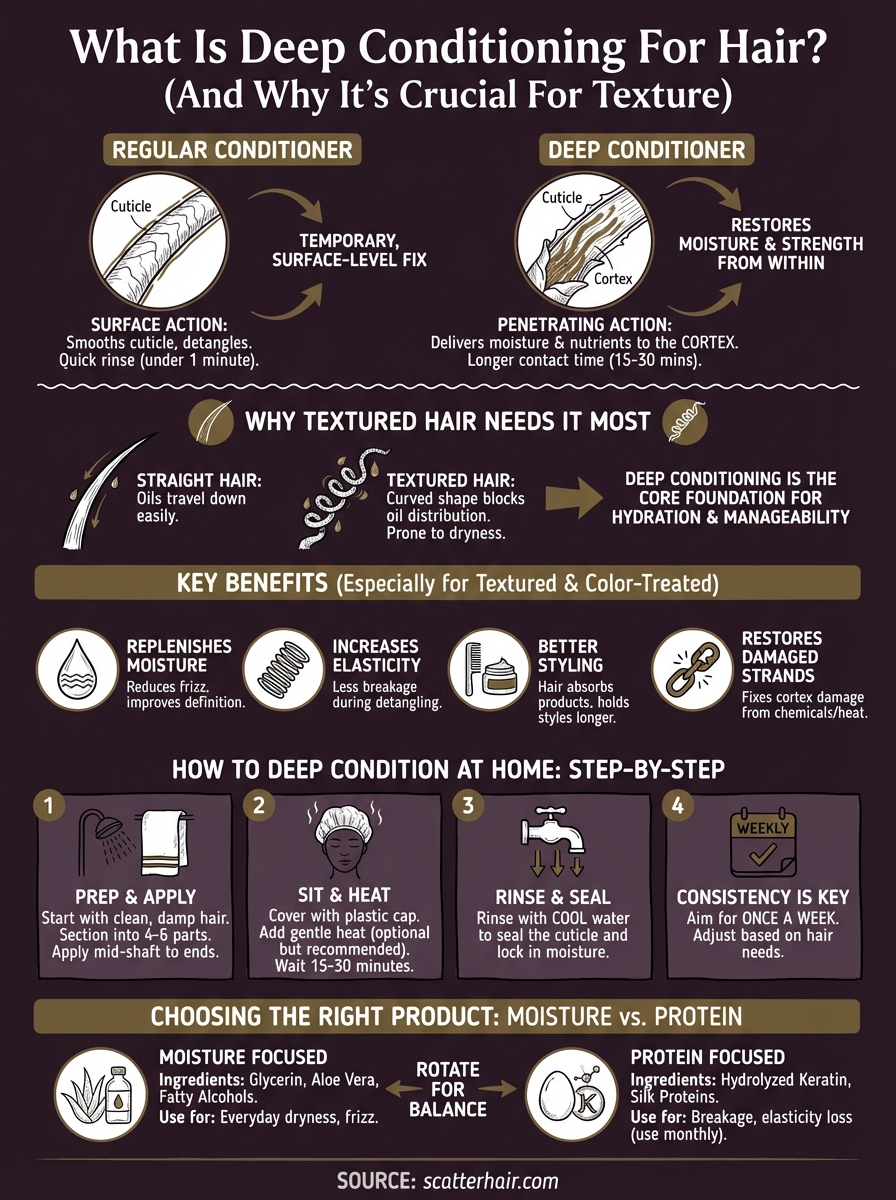
The biggest difference comes down to formulation and contact time. A regular conditioner is designed to smooth the cuticle and detangle after shampooing, and you rinse it out in under a minute. A deep conditioner contains higher concentrations of moisturizing and strengthening ingredients that need time to penetrate past the cuticle surface into the cortex. You're not just coating the strand; you're feeding it from the inside.
Rinsing out a regular conditioner quickly is fine because it was never meant to absorb deeply. Deep conditioner needs 15 to 30 minutes to do its job.
What makes the formulas different
If you look at what is deep conditioning for hair from a formulation standpoint, deep conditioners typically list heavier humectants like glycerin, fatty alcohols, and hydrolyzed proteins near the top of the ingredient list. Regular conditioners lean on lighter silicones and detanglers to coat and smooth quickly.
Neither product is wrong for what it does, but swapping one for the other won't get you the same result. Using a regular conditioner in place of a deep conditioner means your hair misses the deeper hydration and protein replenishment that makes textured hair manageable and resilient over time.
Benefits for textured and color-treated hair
Understanding what is deep conditioning for hair means understanding what it fixes. The two hair types that benefit most are textured hair and color-treated hair, and for different but equally important reasons.
Why textured hair responds so well
Curly, coily, and wavy hair loses moisture faster than straight hair because the natural oils from your scalp can't travel down a curved strand easily. Deep conditioning directly replenishes that lost moisture, reducing frizz, improving curl definition, and giving your hair more elasticity so it stretches without snapping.
Better elasticity means fewer breakage points during detangling, which is one of the most common causes of length retention issues for textured hair.
A consistent deep conditioning routine also makes styling products perform better because your hair can actually absorb and hold them instead of sitting on top of a dry, rough surface.
Why color-treated hair needs it too
Chemical processes like bleaching and coloring lift the cuticle aggressively and strip moisture from the cortex. That's what causes the brittleness and dullness you notice after coloring. Deep conditioning restores hydration to the cortex and temporarily patches weakened areas of the cuticle, keeping color-treated strands flexible and less prone to snapping between touch-up appointments.
How to deep condition at home step by step
The process is straightforward once you understand what is deep conditioning for hair and what you're trying to achieve. You don't need professional tools or a salon visit. A plastic cap and 20 to 30 minutes are enough to get real results at home.
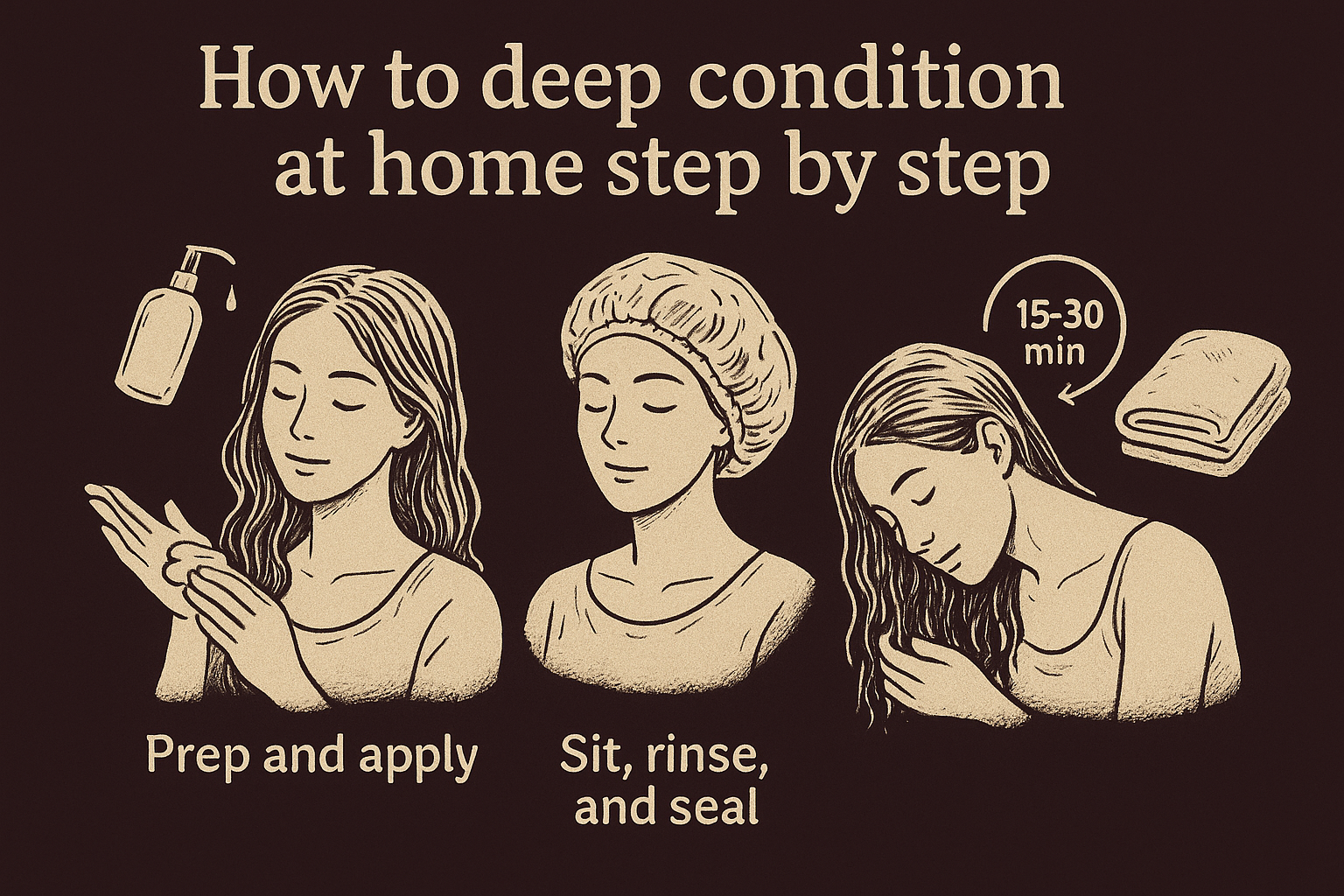
Prep and apply
Start on freshly shampooed, damp hair. Shampoo clears product buildup that blocks absorption, and damp strands help the conditioner spread and penetrate evenly. Here's the basic sequence to follow:
- Shampoo and towel dry to damp
- Section hair into four to six parts
- Apply deep conditioner from mid-shaft to ends
- Skip the roots to avoid follicle buildup
Sit, rinse, and seal
Cover your hair with a plastic cap and let the treatment sit for 15 to 30 minutes. Adding gentle heat from a warm towel or hooded dryer speeds up cuticle absorption noticeably. When the time is up, rinse with cool water to seal the cuticle back down and lock in the moisture you just put in.
Cool water is key at the end. Warm water keeps the cuticle open and lets moisture escape right after you've worked to put it in.
How often to deep condition and what to use
How often you deep condition depends on your hair's current condition and how much stress it handles weekly. For most people with textured hair, once a week is the right starting point. If your hair is particularly dry, color-treated, or heat-damaged, twice a week works better. If your hair holds moisture well between wash days, scaling back to every two weeks keeps it balanced without over-saturating the strands.
Your hair after washing tells you everything: if it feels rough or tangles easily, it needs deep conditioning more frequently.
Choosing the right deep conditioner
When thinking about what is deep conditioning for hair and what to actually use, focus on the ingredient list before anything else. Moisture-focused deep conditioners typically contain glycerin, aloe vera, and fatty alcohols, and they work best for everyday dryness and frizz. Protein-based treatments contain hydrolyzed keratin or silk proteins and target breakage and elasticity loss directly.
Rotating between the two is a smart approach. Use a moisture treatment most weeks and a protein treatment once a month to keep your hair balanced. Too much protein without moisture makes hair stiff and brittle, while too much moisture without protein leaves it limp and weak.
Your deep conditioning game plan
Now that you understand what is deep conditioning for hair, the path forward is simple: pick a frequency, choose the right product type, and stay consistent. Once a week works for most textured hair, and rotating between moisture and protein treatments keeps your hair balanced over time. The results build session by session, not overnight.
Your hair will tell you when the routine is working. Detangling gets easier, styles hold longer, and breakage decreases. Those changes happen because your hair is actually hydrated at the cortex level, not just coated on the surface. That foundation is what makes every styling product you use perform better.
If you have textured hair and want products built specifically for your texture, explore what scatterhair is building before the 2026 launch. The whole line is designed around making styling effortless for textures that have been underserved for too long.