

10 Tips: How To Care For Low Porosity Hair And Moisturize
You've tried everything, deep conditioners, leave-ins, oils, but your hair still feels dry and refuses to absorb moisture. If this sounds familiar, you're likely dealing with low porosity hair, and learning how to care for low porosity hair starts with understanding why it behaves the way it does.
Low porosity hair has tightly closed cuticles that act like a barrier, making it tough for water and products to penetrate. The result? Product buildup, limp strands, and frustration. But here's the thing: once you know the rules, low porosity hair can actually be one of the easiest textures to maintain.
At scatterhair, we're building products specifically for people with textured hair who are tired of one-size-fits-all solutions. This guide breaks down 10 practical tips to help you moisturize, style, and care for your low porosity hair, no guesswork required.
1. Build a lightweight routine you can actually repeat
The biggest mistake people make when learning how to care for low porosity hair is overcomplicating their routine. You don't need 10 different products or a complex layering system. Low porosity hair responds best when you keep things simple, use lightweight formulas, and focus on consistency over product hoarding.
What to do
Start by trimming your routine down to the essentials: a clarifying shampoo, a water-based leave-in conditioner, and one lightweight oil for sealing. Your hair needs moisture to penetrate, not sit on top, so you're looking for products that absorb quickly and don't leave a heavy residue.
Apply products to soaking wet hair while you're still in the shower or right after. This is when your cuticles are slightly lifted from the warm water, giving moisture a better chance to get in. Layer your leave-in first, then seal with a small amount of oil. Don't overdo it; a little goes a long way with low porosity hair.
What to use or avoid
Choose liquid leave-ins over creams and look for ingredients like glycerin, aloe vera, or hyaluronic acid at the top of the ingredient list. These water-attracting ingredients help pull moisture into your hair without weighing it down. For oils, stick to lightweight options like grapeseed, argan, or sweet almond oil.
Avoid thick butters, heavy creams, and products with mineral oil or petroleum high on the ingredient list. These sit on your cuticles and create buildup, which is the last thing you need when you're trying to get moisture in.
The key to low porosity hair care isn't more products; it's the right products used consistently.
Mistakes to watch for
Switching products every week is a common trap. Your hair needs time to adjust to a routine, usually 3-4 weeks, before you can tell if it's working. If you're constantly trying new products, you'll never know what actually helps and what creates buildup.
Another mistake is applying products to dry or damp hair instead of wet hair. This reduces absorption and leaves you with product sitting on top of your strands. Finally, don't assume more product equals more moisture. With low porosity hair, using too much of anything just creates a barrier that blocks hydration instead of delivering it.
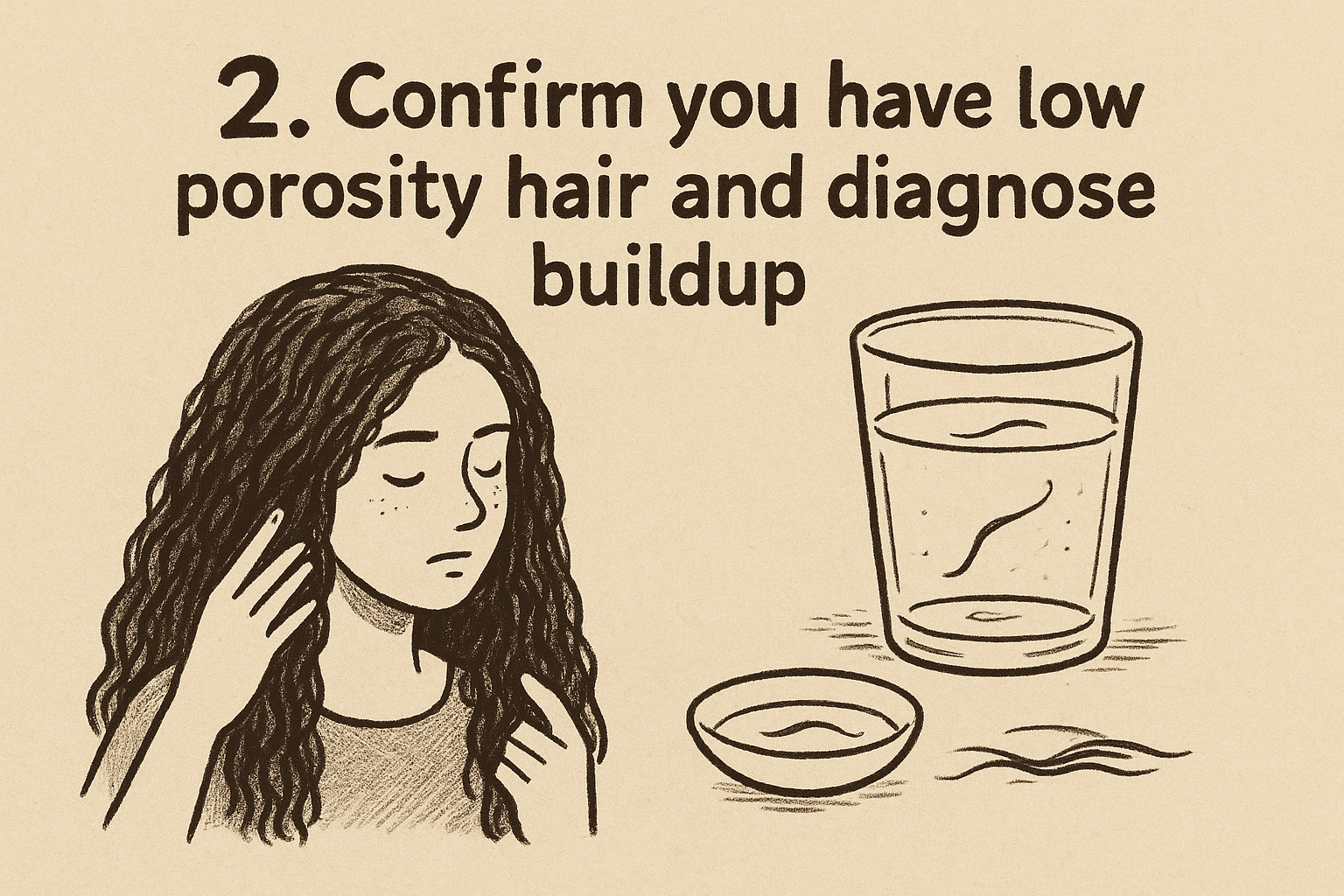
2. Confirm you have low porosity hair and diagnose buildup
Before you commit to a new routine, you need to know for sure that low porosity is your actual problem. Many people assume they have low porosity hair when they're really dealing with product buildup or damage. The good news is that confirming your hair type takes less than a minute with the right test.
What to do
Try the float test: drop a clean strand of hair into a glass of water and wait a few minutes. If it floats on top or takes forever to sink, you likely have low porosity hair. If it sinks quickly, your hair is high porosity. This isn't foolproof, but it gives you a starting point.
Next, check for buildup. Run your fingers along your strands after washing. If your hair feels slippery, coated, or oddly smooth instead of clean and defined, you've got buildup blocking moisture. This is especially common if you've been using heavy creams or silicone-based products.
What to use or avoid
Use a clarifying shampoo once every two weeks to strip away buildup and reset your hair. Look for formulas with ingredients like apple cider vinegar or tea tree oil that remove residue without stripping natural oils completely.
Avoid diagnosing your porosity based on how products sit on your hair if you haven't clarified recently. Buildup mimics low porosity symptoms perfectly, so you need a clean slate to get an accurate read.
Understanding how to care for low porosity hair starts with knowing you actually have it, not just guessing based on one bad product experience.
Mistakes to watch for
Don't skip the clarifying step before testing your porosity. Testing dirty or product-coated hair gives you false results every time. Another mistake is assuming your entire head has the same porosity. Your hairline and ends often have different porosity levels due to heat damage or chemical treatments, so pay attention to how different sections behave.
3. Clarify regularly so moisture can get in
Buildup is the silent killer of low porosity hair care. Every time you use a product, especially one with oils, silicones, or heavy conditioners, a thin layer of residue accumulates on your cuticle surface. Over time, this creates a waterproof barrier that blocks moisture from entering your strands, no matter how much deep conditioner you pile on. Clarifying removes this barrier and gives your hair a clean slate to absorb hydration properly.
What to do
Use a clarifying shampoo once every two weeks, or more often if you use heavy styling products regularly. Apply it to wet hair, massage it into your scalp and along your strands, and let it sit for one to two minutes before rinsing. This gives the surfactants time to break down buildup without stripping your hair dry.
After clarifying, your hair should feel squeaky clean, almost stripped. This is exactly what you want because it means your cuticles are free of residue and ready to absorb moisture. Follow up immediately with a water-based deep conditioner to take advantage of this clean state.
What to use or avoid
Look for clarifying shampoos with sulfates (yes, sulfates are fine here), chelating agents like EDTA, or natural cleansers like apple cider vinegar. These ingredients are strong enough to remove buildup without multiple washes.
Skip daily clarifying or using clarifying shampoo as your regular cleanser. This strips your hair too much and causes dryness. Also avoid co-washing exclusively if you have low porosity hair. Conditioner-only washing leaves residue behind, which defeats the entire purpose of learning how to care for low porosity hair properly.
Clarifying isn't harsh; it's essential maintenance that lets everything else in your routine actually work.
Mistakes to watch for
Don't clarify and then immediately apply heavy products. You've just cleared the path for moisture, so use lightweight, water-based products that can penetrate instead of sitting on top. Another mistake is waiting until your hair feels terrible before clarifying. By then, you've wasted weeks fighting buildup instead of preventing it.
4. Get hair fully wet and use warm water strategically
Water temperature matters more than you think when learning how to care for low porosity hair. Cold water keeps your cuticles sealed tight, which works against you when you're trying to get moisture in. Warm water temporarily lifts the cuticle layer, giving conditioners and treatments a fighting chance to penetrate instead of sliding off. This simple adjustment changes everything about how your hair absorbs products.
What to do
Start your wash routine with warm water, not scalding hot, but warm enough that your scalp feels relaxed. Spend at least two to three minutes soaking your hair completely before applying any products. You want every strand saturated, not just damp on the surface.
Apply your conditioner or treatment while your hair is still dripping wet from the warm water. The lifted cuticles and the moisture already present in your strands create the perfect environment for products to absorb. After conditioning, you can finish with a cool water rinse to close the cuticles back down and seal in the moisture you just added.
What to use or avoid
Use lukewarm to warm water for the bulk of your routine, especially during the conditioning phase. Think bath water temperature, not coffee temperature. Avoid ice-cold water until the very end, and skip it entirely if you're in a hurry.
Warm water is your entry point; it opens the door for everything else you apply to your low porosity hair.
Mistakes to watch for
Don't rush through the wetting process. Partially wet hair absorbs products unevenly and leaves you with dry patches no matter what you apply. Another mistake is using hot water the entire time, which can cause frizz and damage. Save the temperature shift for strategic moments, not random application.
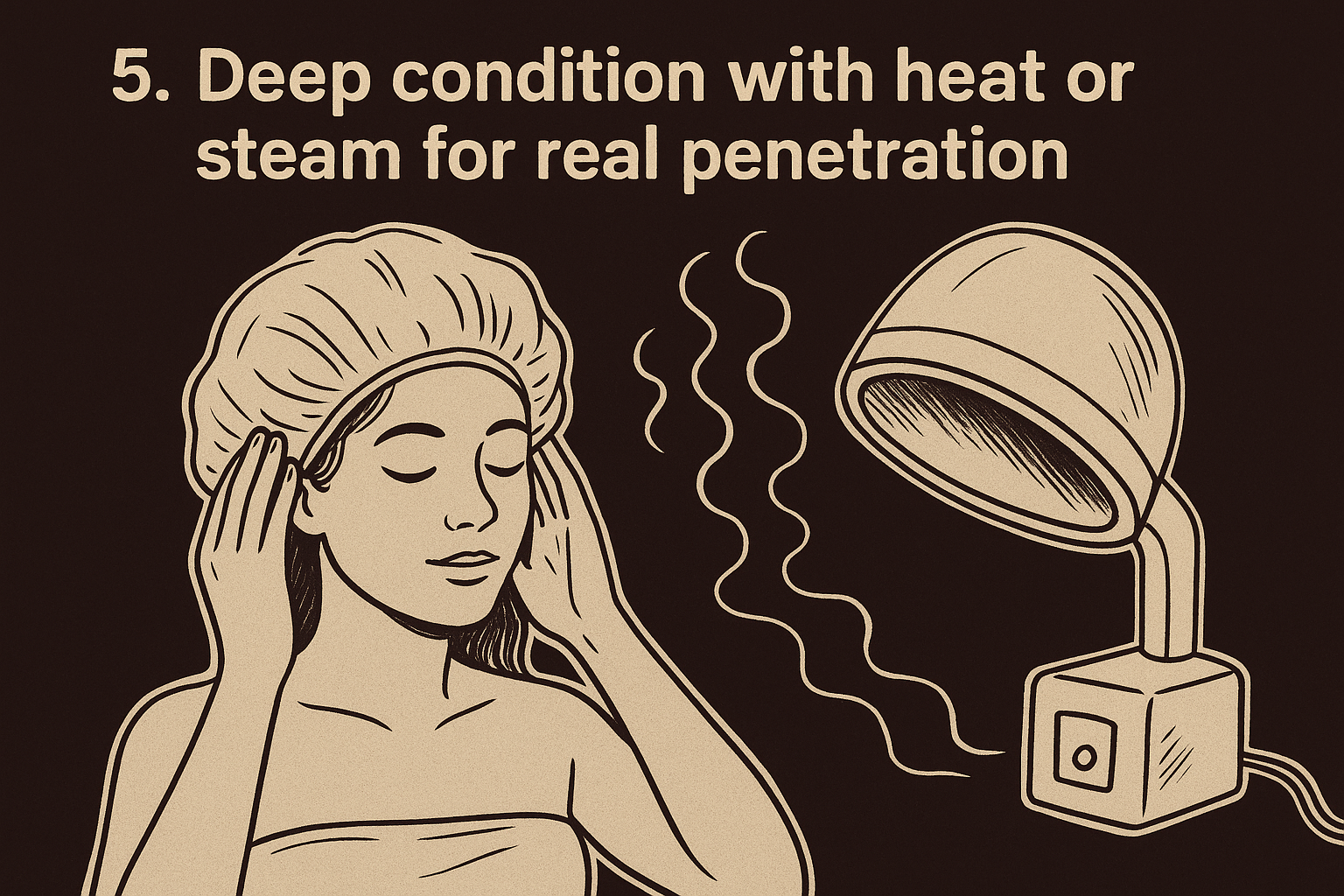
5. Deep condition with heat or steam for real penetration
Heat is the game-changer that transforms deep conditioning from a surface treatment into actual moisture penetration. Low porosity hair's tightly closed cuticles need help opening up, and gentle heat provides that boost without causing damage. When you apply heat during deep conditioning, you temporarily lift the cuticle layer just enough for conditioner molecules to slip inside your hair shaft instead of sitting on top. This single step makes the difference between wasting product and actually hydrating your strands.
What to do
Apply your deep conditioner to freshly washed, soaking wet hair and cover it with a plastic cap or shower cap. Use a hooded dryer set to medium heat for 20 to 30 minutes, or sit under a steamer if you have access to one. The enclosed heat creates a humid environment that opens your cuticles while keeping moisture locked in.
If you don't have a hooded dryer, use a heated cap or wrap a warm towel around your plastic-covered hair. You can also blast your capped hair with a blow dryer on medium heat for 10 to 15 minutes. The key is consistent warmth, not intense heat.
Heat turns deep conditioning from a routine step into the most effective moisture treatment in your low porosity hair care arsenal.
What to use or avoid
Choose deep conditioners with penetrating ingredients like hydrolyzed proteins, amino acids, or honey. These molecules are small enough to enter the hair shaft when heat is applied. Steam is ideal because it adds moisture to the air while heating your hair, but any consistent heat source works.
Avoid using high heat directly on your hair without a protective cap. This dries your strands out instead of helping them absorb moisture.
Mistakes to watch for
Don't skip the plastic cap. Without it, heat evaporates the water in your conditioner instead of driving it into your hair. Another mistake is deep conditioning for too long without heat. Time alone doesn't compensate for the lack of cuticle-lifting that heat provides when learning how to care for low porosity hair properly.
6. Pick water-based products and the right humectants
Water is the only true moisturizer for low porosity hair, and everything else either helps it get in or blocks it. Water-based products list water (aqua) as the first ingredient, delivering hydration instead of sitting on your cuticles. Humectants pull moisture from the air into your strands and help it stay there. Understanding how to care for low porosity hair means choosing products where water and the right humectants work together.
What to do
Look for leave-ins with water as the first ingredient, followed by humectants like glycerin, aloe vera juice, or honey within the first five ingredients. These absorb quickly without heavy coating.
Apply water-based products to soaking wet hair right after washing. Your hair is already full of water, and humectants lock that moisture in instead of letting it evaporate. Layer from thinnest to thickest consistency to avoid blocking absorption.
What to use or avoid
Use glycerin-based products in moderate humidity (45-65%), where they pull moisture without making your hair sticky. Aloe vera juice, panthenol, and honey work reliably in most climates.
Avoid oil-based or butter-heavy products as your first layer. These create barriers that keep water out. Skip products with alcohol high on the ingredient list, which evaporates and takes moisture with it.
Water-based formulas with smart humectants turn your low porosity hair into a moisture magnet instead of a moisture repellent.
Mistakes to watch for
Don't use glycerin in extreme humidity (above 70%) or very dry conditions (below 30%). High humidity causes frizz from too much moisture, while low humidity means there's no moisture to pull.
Check the full ingredient list because heavy thickeners or silicones later in the formula can still create buildup despite water being first.
7. Use lightweight oils to seal, not to "moisturize"
Oils don't moisturize your hair; they lock in the moisture that's already there. This matters because many people apply oils to dry low porosity hair expecting hydration, only to end up with greasy strands that still feel parched underneath. Understanding this difference changes how you use oils and transforms them from frustrating products into your final step for moisture retention. When you apply lightweight oils correctly, they create a protective layer that keeps water from evaporating without creating the heavy, coated feeling that sabotages low porosity hair care.
What to do
Apply oils as your last step after water-based leave-ins and conditioners have already delivered moisture to your strands. Use them on soaking wet hair, ideally while you're still in the shower or immediately after. This timing seals in the water that's already absorbed instead of blocking new moisture from getting in.
Work with small amounts, usually three to five drops for shoulder-length hair, and distribute them by raking through your strands with your fingers. Focus on your mid-lengths and ends where moisture escapes fastest. Your roots rarely need oil unless your scalp is extremely dry.
What to use or avoid
Choose lightweight oils like grapeseed, argan, sweet almond, or jojoba that absorb quickly and don't leave heavy residue. These oils have smaller molecular structures that sit on low porosity cuticles without creating buildup.
Avoid heavy oils like castor oil, coconut oil, or olive oil as your daily sealant. These create thick coatings that trap dirt and block moisture during your next wash. Save heavier oils for pre-wash treatments where you'll clarify them out afterward.
Oils seal moisture in; they don't add it, which is why understanding how to care for low porosity hair means applying them last, not first.
Mistakes to watch for
Don't apply oils to dry hair expecting moisture. You're just adding grease to already-dehydrated strands. Another mistake is using too much oil because your hair doesn't feel moisturized. More oil won't fix dryness; it just creates buildup that makes the problem worse.
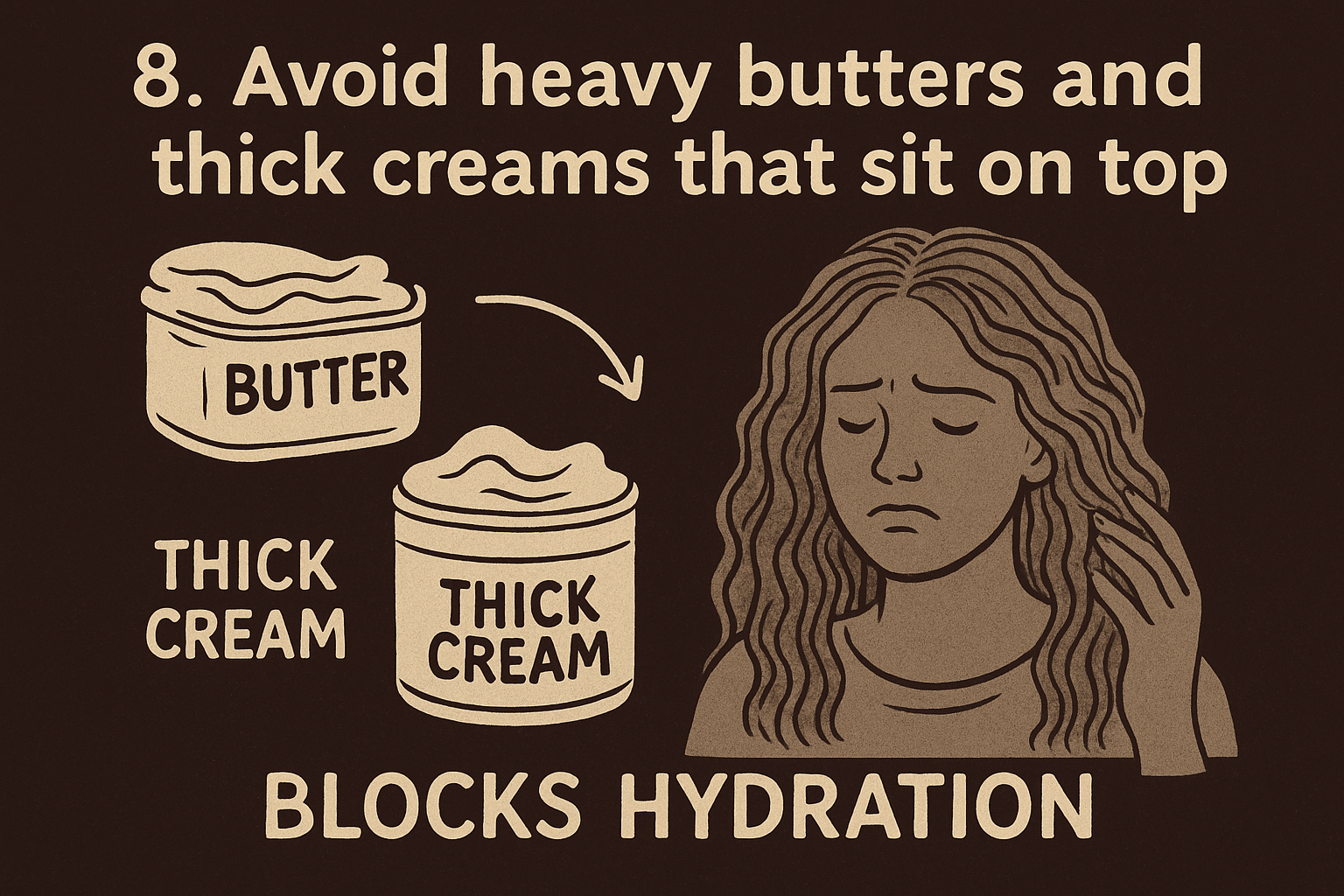
8. Avoid heavy butters and thick creams that sit on top
Heavy butters and thick creams are the worst offenders for low porosity hair because they create a waxy coating that prevents moisture from reaching your strands. Shea butter, mango butter, and dense leave-in creams might work for high porosity hair, but on low porosity hair, they sit on your cuticles like a greasy film that blocks hydration instead of locking it in. These products also trap dirt and debris between washes, forcing you to clarify more often and creating a frustrating cycle of buildup and dryness.
What to do
Check product labels and avoid anything with butters or oils listed in the first five ingredients. These formulas are too heavy for your tightly closed cuticles to benefit from. Instead, focus on liquid and lotion-based products that absorb quickly without leaving residue.
Test new products on a small section of hair first. Apply the product, wait 10 minutes, and run your fingers along the strands. If they feel coated, slippery, or sticky instead of soft and defined, the formula is too heavy for your hair.
What to use or avoid
Use water-based leave-ins with thin, milky textures that soak in fast. Look for lotions labeled as "lightweight" or "for fine hair" because these formulas skip the heavy emollients that cause problems when learning how to care for low porosity hair.
Avoid products marketed as "intense moisture" or "deep repair" creams unless you're using them as a rinse-out treatment with heat. These usually contain thick butters and occlusive ingredients designed for damaged or high porosity hair.
Heavy products don't add moisture to low porosity hair; they just add weight and buildup that blocks real hydration.
Mistakes to watch for
Don't assume expensive products work better. Premium price tags often mean richer, creamier formulas loaded with butters that create more problems than they solve. Another mistake is mixing heavy creams with lightweight products, thinking you'll get the best of both. You just end up with uneven absorption and patchy buildup.
9. Manage protein and silicones so hair stays flexible
Protein and silicones aren't inherently bad for low porosity hair, but they become problems when you use them incorrectly. Too much protein creates stiff, brittle strands that snap easily, while certain silicones create buildup that blocks moisture and leaves your hair feeling waxy. Learning how to care for low porosity hair means knowing when to use these ingredients and when to back off completely.
What to do
Pay attention to how your hair feels after using protein treatments. If your strands feel hard, straw-like, or snap easily when you stretch them, you've overdone the protein. Balance this by using a moisture-focused deep conditioner without protein for the next two to three weeks.
For silicones, stick to water-soluble versions like dimethicone copolyol or PEG-modified silicones that wash out easily. Use products with these silicones sparingly, maybe once or twice a week, and clarify regularly to prevent accumulation.
What to use or avoid
Use light protein treatments (hydrolyzed wheat or silk protein) once every four to six weeks, not weekly. Choose silicone-free styling products as your daily routine and save silicone serums for special occasions when you need extra shine.
Avoid products with dimethicone, cyclomethicone, or amodimethicone listed in the first five ingredients unless you clarify frequently. Skip protein-heavy treatments marketed for damaged hair if your hair already feels strong.
Protein strengthens, silicones smooth, but both create problems when you use them too often on low porosity hair.
Mistakes to watch for
Don't assume all protein is the same. Heavy proteins like keratin and collagen cause stiffness faster than lighter versions. Another mistake is using leave-in products with non-water-soluble silicones daily, which guarantees buildup between clarifying sessions.
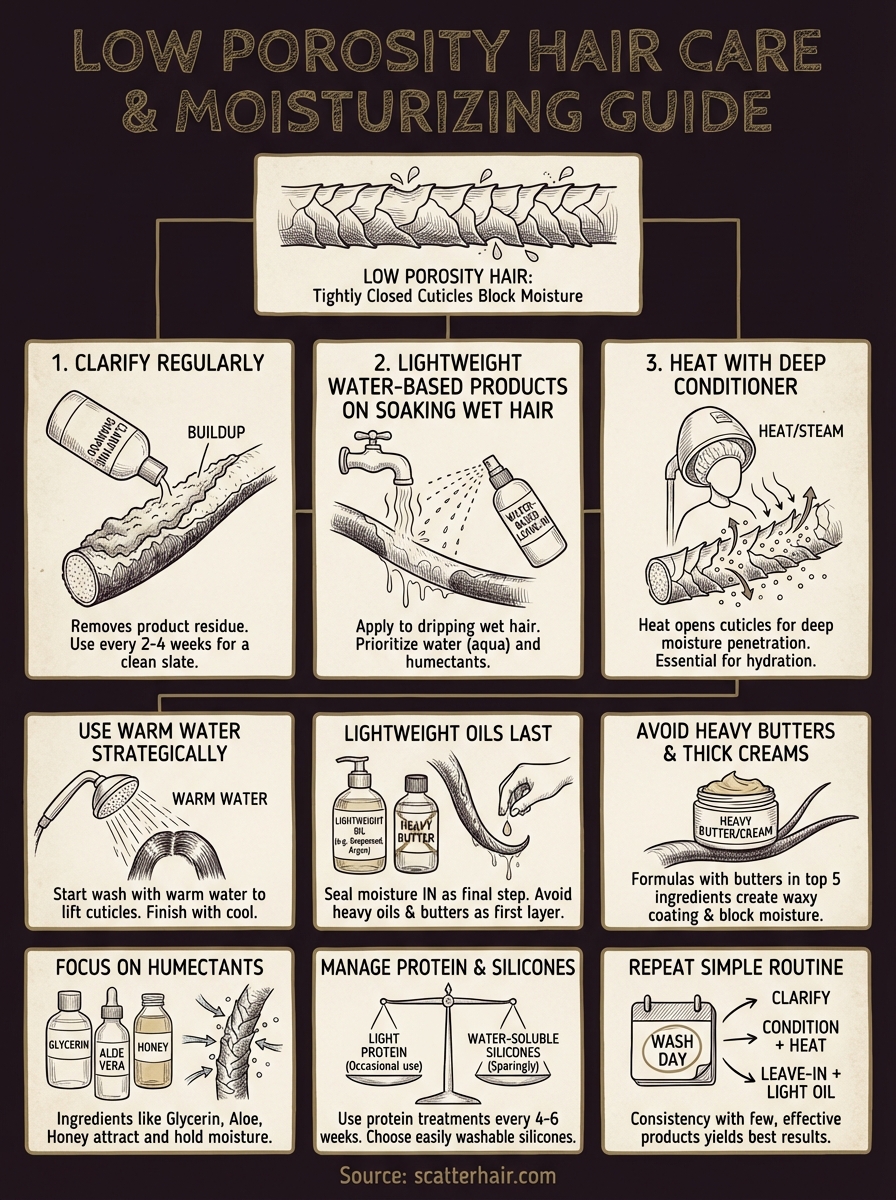
Your low porosity routine, simplified
Learning how to care for low porosity hair doesn't require a complicated system or endless products. Your routine comes down to three core principles: clarify regularly to remove buildup, use lightweight water-based products on soaking wet hair, and apply heat when deep conditioning. Everything else is just noise that wastes your money and creates more problems.
The biggest shift happens when you stop treating your hair like it needs heavy creams and butters. Light layers absorb, heavy products sit, and buildup blocks everything. Once you understand this, you can build a routine that actually works instead of fighting your hair texture every single day.
At scatterhair, we're creating styling products specifically for textured hair that works with your natural patterns instead of against them. Our launch in 2026 brings formulas designed for people tired of products that promise moisture but deliver buildup. Join our community now for exclusive behind-the-scenes content, styling guides, and early access to products that actually understand your hair.