

How to Get Rid of Split Ends Without Cutting Your Hair
You've been growing your hair out for months and the last thing you want to hear is "just cut it." If you're searching for how to get rid of split ends without cutting hair, you already know trimming works, you just don't want to lose the length you've worked for. The good news is you have real options that don't involve scissors.
While nothing permanently fuses a split fiber back together, you can seal, smooth, and protect your strands so the damage stops spreading and looks far less noticeable day to day. That means the right combination of deep conditioning treatments, protective styling, and product choices matters more than people realize, especially if you have textured hair that's already prone to dryness and breakage.
Below, you'll find practical, tested methods for disguising split ends and slowing new ones from forming, from at-home hair masks to smarter styling habits and the ingredients worth looking for in your products. Think of it as damage control while you grow out your length, not a miracle fix, but a way to buy yourself time and keep your hair looking healthy in the meantime.
1. Deep condition with a hydrating hair mask
Split ends happen when the outer cuticle layer wears away and the inner strand starts to fray, usually from dryness, friction, or heat damage. A hydrating hair mask works by flooding that damaged cuticle with moisture and emollients, temporarily swelling the strand so the frayed fibers lie flatter against each other. This won't repair the internal structure, but it does make the split less visible and less likely to snag on your comb or catch on fabric, which is often what makes a small split turn into a bigger one.
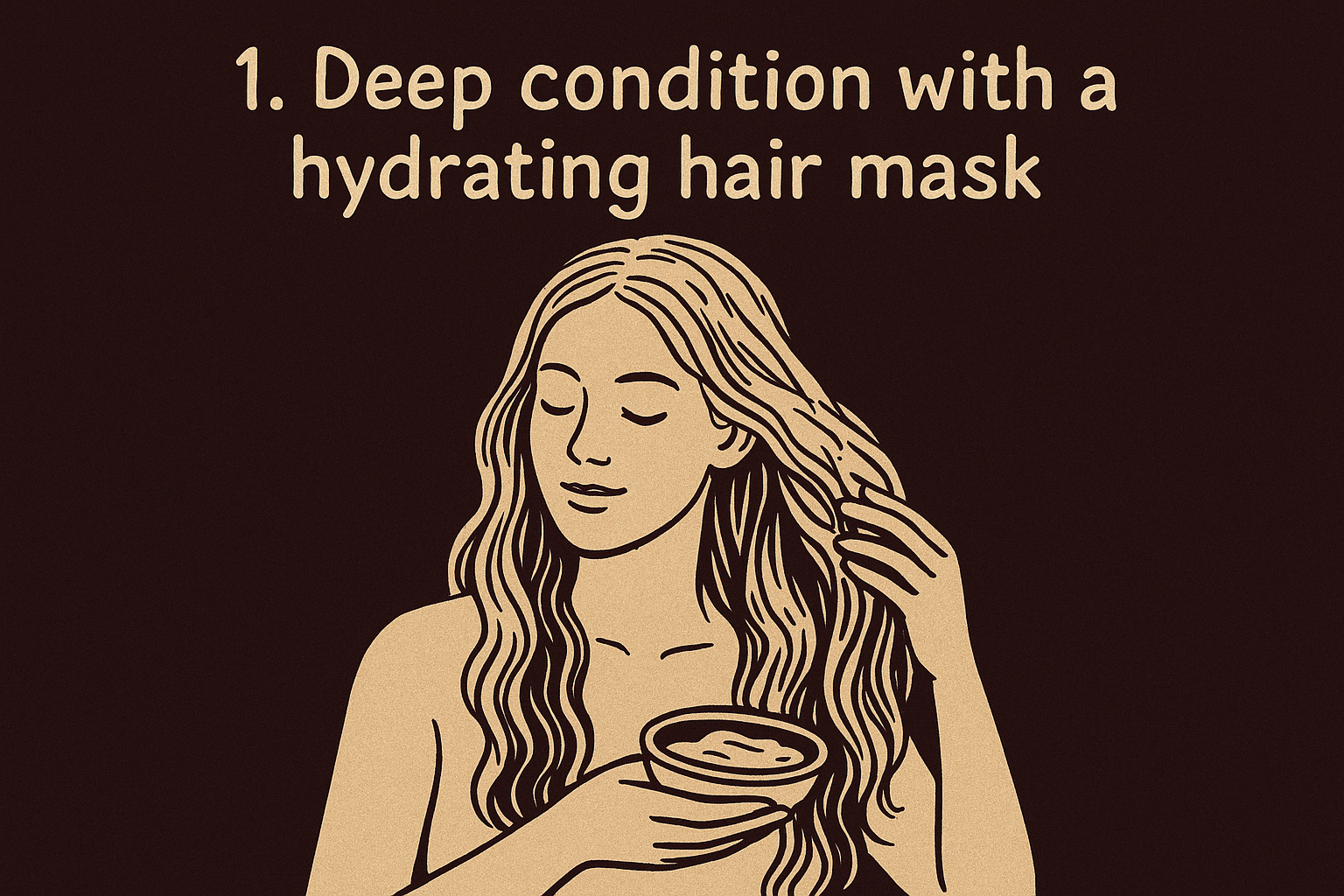
A hydrating mask can't glue split ends back together, but it can stop them from catching, snagging, and splitting further up the strand.
This method suits anyone with textured hair, since curl patterns naturally make it harder for scalp oils to travel down the length of the strand, leaving ends chronically dry. It's also a smart pick if you color-treat, heat-style regularly, or live somewhere humid or dry, since all of those speed up moisture loss at the ends specifically.
Doing this at home doesn't require anything fancy, just consistency. Look for masks with shea butter, ceramides, or fatty alcohols on the ingredient list, since these coat and cushion the cuticle rather than just sitting on top of the hair.
- Apply the mask to damp, freshly washed hair, focusing on the bottom two to three inches.
- Comb it through with a wide-tooth comb so it distributes evenly along the ends.
- Cover with a shower cap and let it sit for 20 to 30 minutes, adding gentle heat from a warm towel if you have one.
- Rinse thoroughly with cool water to help seal the cuticle before styling.
- Repeat once or twice a week depending on how dry your hair feels.
Stick with this routine for a month before judging results. Split ends won't disappear, but the frizz and roughness around them usually calm down noticeably.
2. Seal ends with a nourishing hair oil or serum
How it works
Oils and serums don't hydrate the way a mask does, but they excel at sealing in moisture and smoothing the cuticle so light reflects evenly along the shaft. A few drops of oil coat the frayed fibers of a split end, essentially gluing them down temporarily so they stop separating and catching on your fingers or clothing. Serums often contain silicones or dimethicone, which form a thin protective film that reduces friction between strands, one of the biggest culprits behind split ends worsening over time.
Sealing your ends with oil won't heal them, but it stops the fraying from spreading and keeps hair looking polished between wash days.
Who it's best for
This works well for anyone dealing with frizz-prone or textured hair, especially if you've already deep conditioned and need something lightweight to lock that moisture in. It also suits people who style their hair daily, since oil reduces the mechanical stress that combs, brushes, and hair ties place on already-weak ends.
How to do it at home
- Choose a lightweight oil like argan, jojoba, or grapeseed for finer hair, or a heavier option like castor oil for coarser textures.
- Rub two to three drops between your palms and smooth them over dry or damp ends, avoiding your roots.
- Reapply throughout the day if ends feel rough or start catching.
3. Strengthen strands with a protein treatment
How it works
Split ends often signal that your hair's internal protein structure has weakened, since hair is roughly 90% keratin and constant heat, color, or friction breaks down those protein bonds over time. A protein treatment temporarily fills in the gaps along the damaged cuticle with hydrolyzed keratin or wheat protein, essentially patching microscopic holes so the strand feels firmer and resists further splitting. Think of it as spackle for your hair, not a permanent fix, but enough reinforcement to stop weak spots from tearing further up the shaft.
Protein treatments won't rebuild hair from the inside, but they patch weak spots so existing splits don't travel further up the strand.
Who it's best for
Anyone with chemically treated or heat-damaged hair benefits most here, since bleach, relaxers, and hot tools strip protein faster than natural aging does. If your hair feels mushy or overly stretchy when wet, that's usually a sign you need protein rather than more moisture.
How to do it at home
- Use a protein treatment every two to four weeks, not more, since overdoing it makes hair brittle and prone to snapping.
- Apply to clean, towel-dried hair and follow the timing on the label exactly.
- Always follow with a moisturizing conditioner to rebalance the strand.
- Watch for stiffness or increased breakage, a sign to dial back frequency.
4. Detangle gently with a leave-in conditioner
How it works
Tangles put constant tension on your ends, and every time you rip a comb through a knot, you're pulling at the weakest, most fragile part of the strand. A leave-in conditioner coats the hair shaft with slip, letting your comb or fingers glide through without catching on already-frayed fibers. Less friction during detangling means fewer new splits and less stress on the ones you're already trying to manage.
Detangling is where most split ends get worse, so a good leave-in is really damage prevention disguised as a styling step.
Who it's best for
Curly, coily, and wavy hair types benefit most, since textured strands tangle more easily and require more manipulation to smooth out. It's also worth adopting if you notice hair snapping off in your hands during brushing, a clear sign your ends need less friction, not more force.
How to do it at home
- Apply leave-in conditioner to soaking wet hair right after rinsing out your regular conditioner, since hair is most pliable then.
- Work it through with your fingers first, starting at the ends and moving upward.
- Switch to a wide-tooth comb or detangling brush, always starting at the tips and slowly working toward the roots.
- Section hair into two or four parts if it's thick or prone to knotting.
- Reapply a small amount to dry ends midweek if they start feeling rough or catching on clothing.
5. Switch to a sulfate-free shampoo and conditioner
How it works
Sulfates are the harsh detergents responsible for that thick lather in most drugstore shampoos, and while they clean effectively, they also strip natural oils from your scalp and ends. A sulfate-free shampoo uses gentler surfactants that clean without stripping, so your ends stay coated in the moisture they need instead of drying out with every wash. Pair that with a sulfate-free conditioner, and you're reducing the daily wear that pushes existing split ends further up the strand.
Washing your hair shouldn't be the thing that makes split ends worse, and switching formulas is one of the easiest fixes on this list.
Who it's best for
This switch matters most if you wash frequently or have color-treated hair, since sulfates fade dye faster and leave chemically processed strands more vulnerable. It's also worth prioritizing if your ends feel straw-like right after washing, a sign your current shampoo is too stripping for what your hair can handle.
How to do it at home
- Check labels for sodium lauryl sulfate or sodium laureth sulfate and avoid both.
- Look for cleansing agents like cocamidopropyl betaine instead, which clean gently.
- Wash two to three times a week rather than daily to preserve natural oils.
- Follow immediately with a moisturizing conditioner focused on the ends.
6. Choose heatless, low-manipulation hairstyles
How it works
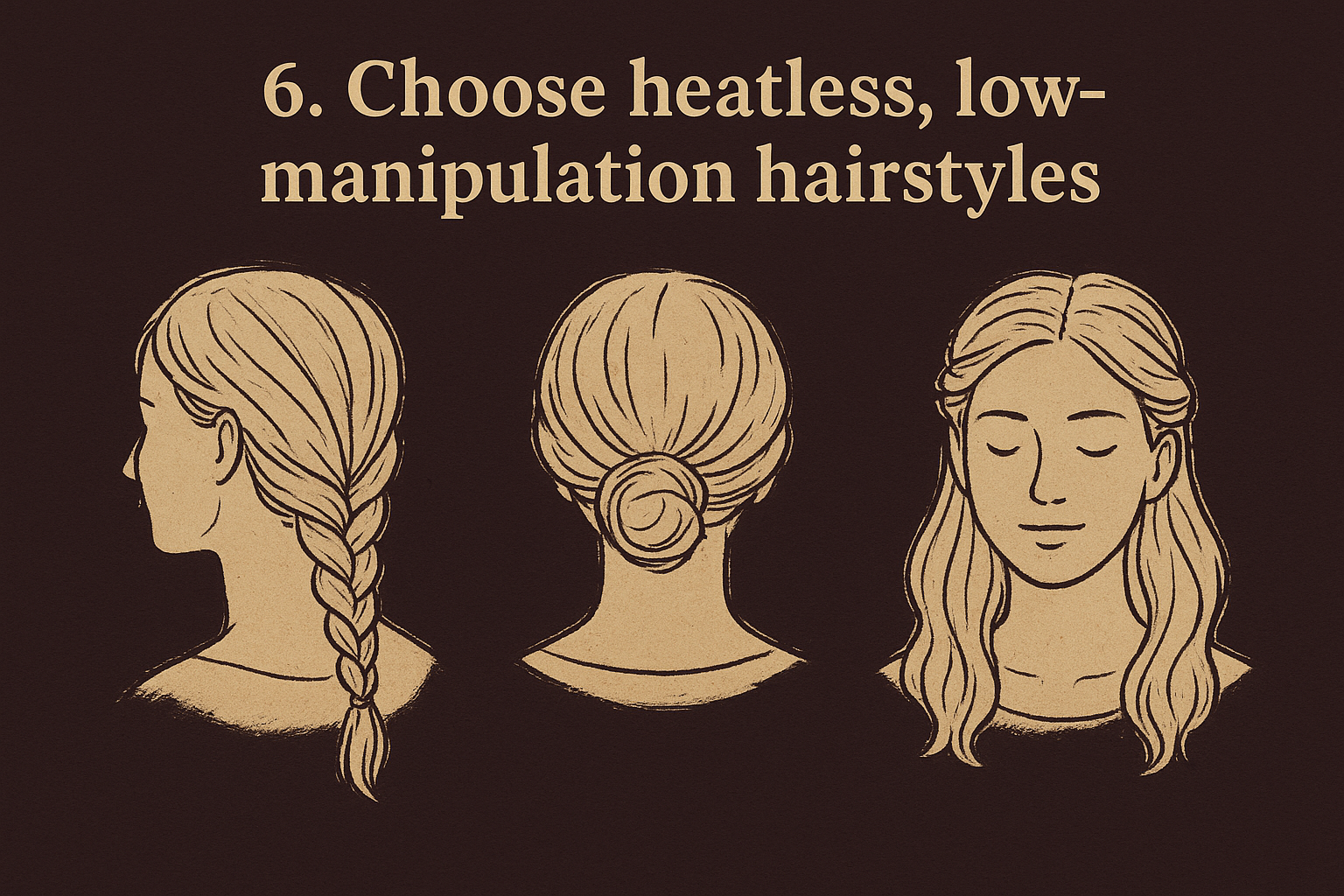
Heat tools and constant restyling put mechanical stress on your ends every single day, and that stress is exactly what turns a small split into a longer one. Low-manipulation styles like braids, twists, and buns keep your ends tucked away from friction, air, and repeated brushing, giving them a break from the wear that speeds up damage. Skipping the flat iron also matters here, since heat dries out the cuticle and makes already-fragile ends more prone to snapping.
Every time you skip the heat and tuck your ends away, you're giving them a chance to stop splitting instead of a reason to split further.
Who it's best for
Anyone growing out their hair or dealing with visible split ends benefits from this approach, especially if you style your hair daily and haven't given it a real break in months. It's also worth adopting if you notice more shedding or breakage on days you blow-dry or straighten, since that's a clear sign your ends need protection, not more heat exposure.
How to do it at home
- Try two-strand twists, braids, or a low bun instead of reaching for hot tools.
- Tuck ends inward when styling so they're not exposed to friction or air.
- Sleep on a satin or silk pillowcase to cut down on nighttime tangling.
- Limit heat styling to once a week, using a heat protectant every time.
7. Try an at-home dusting technique
How it works
Dusting means snipping only the very tips of split ends, sometimes just a quarter inch or less, without touching your overall length. A search-and-destroy technique targets individual splits one at a time using sharp shears, so you're removing the damaged fiber itself instead of relying on products to mask it. This is the closest thing to an actual fix on this list, since oils and masks only disguise splits while dusting physically removes them before they travel further up the strand.
Dusting is the one method here that actually removes split ends instead of just hiding them, without sacrificing your length.
Who it's best for
Patient, detail-oriented people suit this method best, since checking each section of hair under good light takes real time. It also works well if you're specifically searching for how to get rid of split ends without cutting hair in a meaningful length, since dusting keeps your overall length intact while still removing damage.
How to do it at home
- Wash and dry hair fully, since split ends are easier to spot when strands are separated and smooth.
- Twist small sections and look for frizzy tips poking out.
- Snip only the split with sharp fabric or hair shears, never dull scissors.
- Work in bright, natural light for accuracy.
- Repeat monthly to stay ahead of new splits.
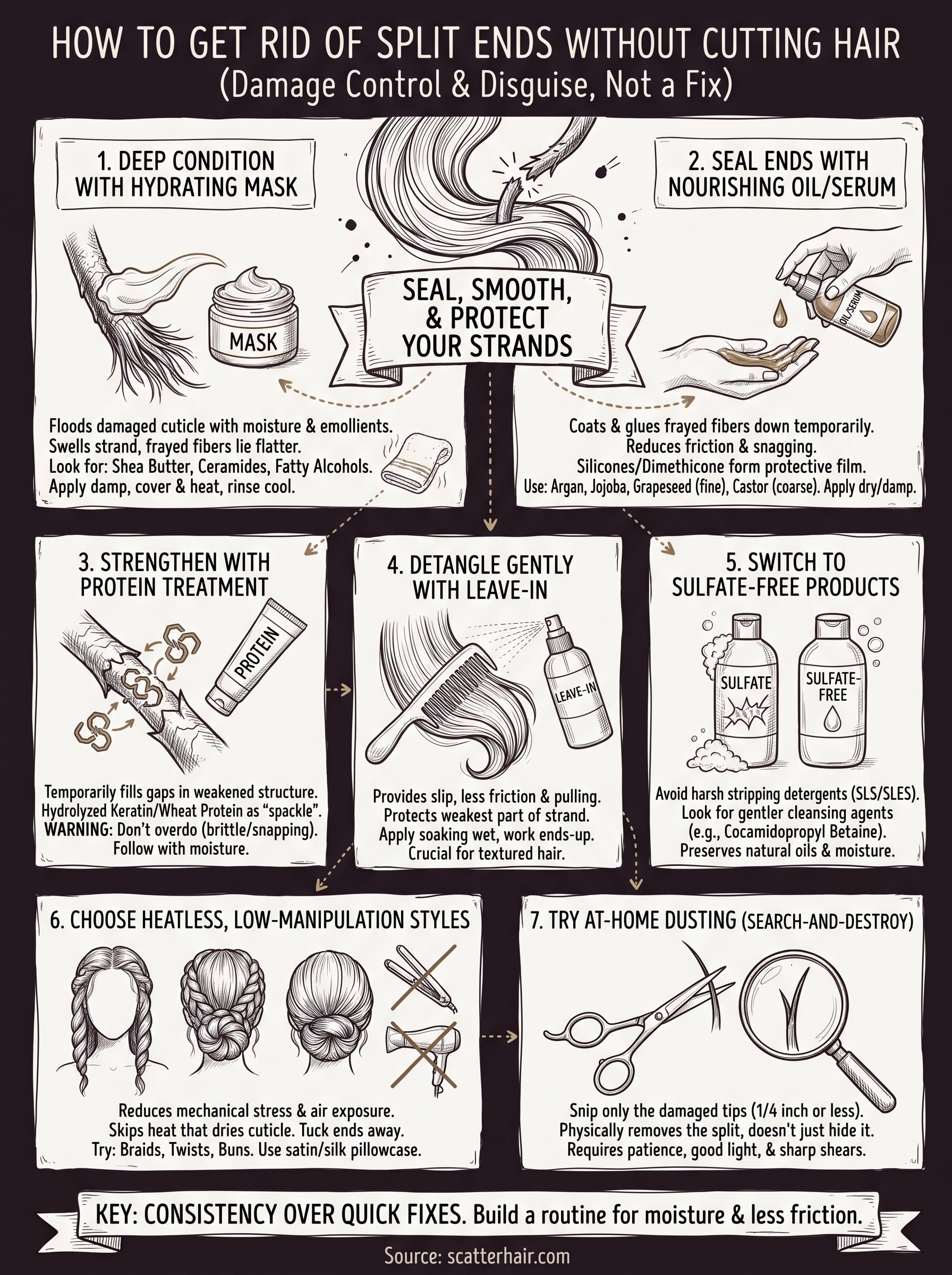
Keeping your ends healthy going forward
None of these seven methods glue a split end back together for good, but together they slow the damage, hide what's already there, and buy you real time to grow out your length. The key is consistency over quick fixes: a hydrating mask one week won't undo months of heat styling, but a steady routine of masking, sealing, and gentle detangling adds up fast. Pick two or three methods that match your hair type and stick with them for a full month before judging results.
Split ends are usually a sign that your strands need better moisture and less friction, not necessarily a haircut. If you're building a routine for textured hair that actually works instead of fighting against your texture, that's exactly the kind of styling philosophy we're building at Scatter. Sign up for early access and rock your texture with Scatter when we launch, no more guessing what your ends actually need.