

How to Protect Hair from Hard Water: 6 Easy Tips
If your curls feel like straw no matter how much product you pile on, hard water might be the actual culprit. Learning how to protect hair from hard water matters because minerals like calcium and magnesium build up on your strands over time, coating your texture and blocking moisture from getting in. That's why your wash day routine stops working the way it used to, even with products that used to give you great definition.
The fix isn't complicated, but it does require the right combination of tools and habits. You need a mix of filtration methods to stop mineral buildup at the source, plus chelating treatments that strip out what's already sitting on your hair from months (or years) of hard water washing.
Below, you'll find six tips that actually work for textured hair, from shower filters worth the investment to DIY rinses you can make tonight. We'll cover clarifying shampoos that won't strip your natural oils completely, plus timing tricks for when to deep condition for maximum repair. Follow these steps and your curls or coils get their bounce, shine, and softness back.
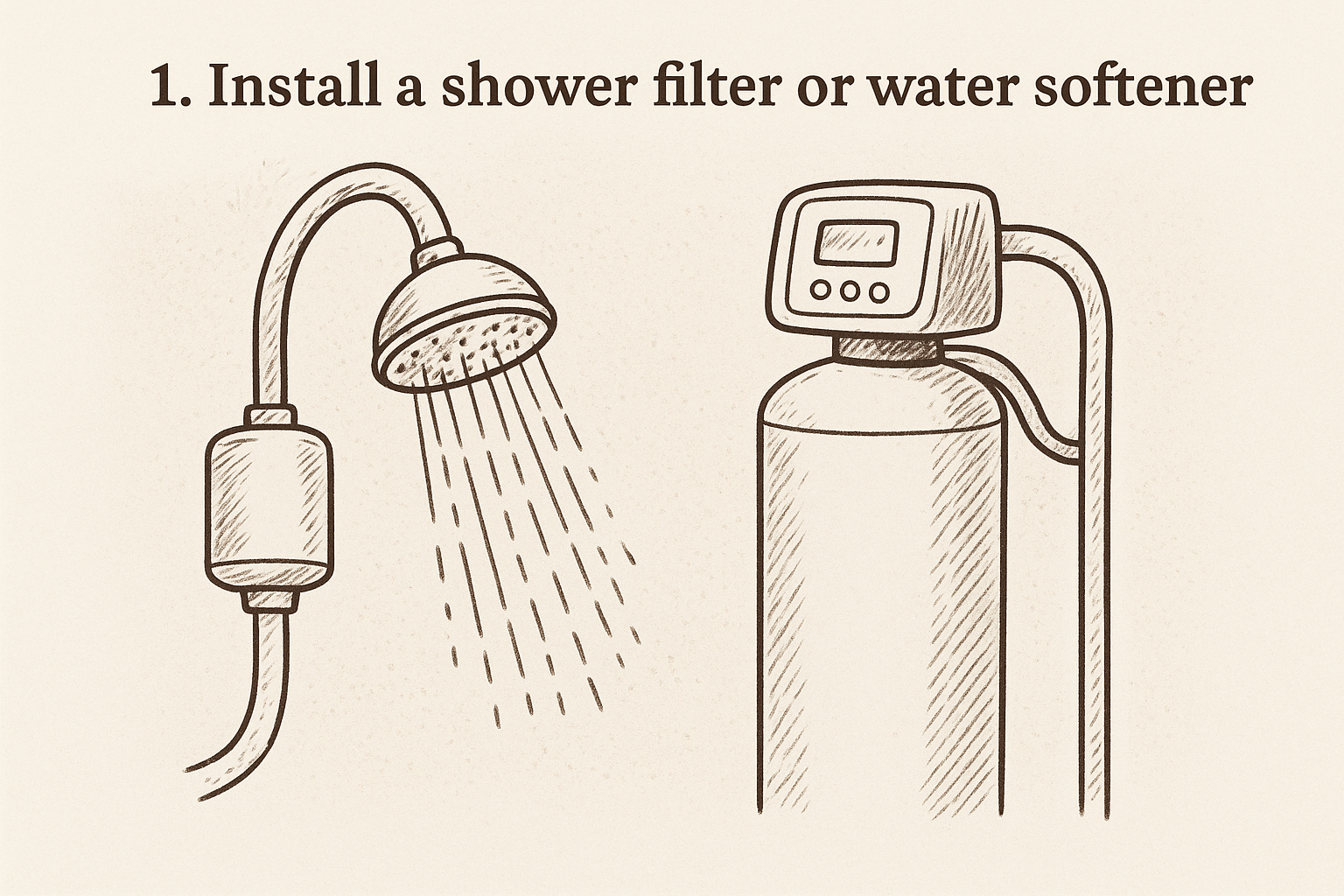
1. Install a shower filter or water softener
Stopping the problem before it reaches your strands is the most effective way to answer how to protect hair from hard water long term. A shower filter or whole-home water softener catches calcium, magnesium, and iron before they ever touch your hair, so you're not fighting mineral buildup every wash day.
How it works
Shower filters use activated carbon, KDF media, or vitamin C cartridges to reduce mineral content and chlorine as water passes through your showerhead. A water softener, installed at your main water line, uses ion exchange to swap out calcium and magnesium for sodium ions before water reaches any faucet in your house. Both approaches attack the root cause instead of just treating the symptoms after your hair's already coated.
Filtering your water stops mineral buildup before it ever touches your curls, which makes every product you use afterward actually work.
Who it's for
This tip suits anyone dealing with visibly hard water, meaning soap scum on your shower doors, dry skin, or hair that feels crunchy no matter what conditioner you use. If you rent, a shower filter attachment is your best bet since it requires no plumbing changes. Homeowners in regions with notoriously hard water, like much of the Midwest and Southwest, get more long-term value from a full water softener system.
Cost
| Option | Price Range | Installation |
|---|---|---|
| Shower filter | $20-$80 | DIY, 5 minutes |
| Faucet-mount filter | $15-$40 | DIY, no tools |
| Whole-home softener | $600-$2,500 | Professional, 1-2 days |
Tips for best results
Replace shower filter cartridges every 3 to 6 months, since spent media stops removing minerals even though water still flows through it. Testing your water hardness first with an at-home kit helps you decide whether a simple filter will do or whether you need the bigger investment of a softener. Combining a filter with the other tips below gives you the best shot at fully reversing existing damage.
2. Wash with a clarifying or chelating shampoo
Even with a filter installed, months of old mineral deposits don't disappear on their own. A chelating shampoo grabs onto calcium and magnesium molecules and rinses them away, giving you a genuine reset for hair that's been coated for a while.
How it works
Chelating agents like EDTA or citric acid bind to metal ions sitting on your strands, lifting them off during the wash. Clarifying shampoos for scalp buildup work similarly but rely more on stronger surfactants to strip buildup, including product residue and oils. Both leave your cuticle smoother, which is why conditioner and styling cream suddenly absorb better afterward.
A single chelating wash can undo weeks of hard water damage that regular shampoo never touches.
Who it's for
Anyone who's tried a new curl cream and gotten zero definition despite following the directions needs this step. It's especially useful before a deep conditioning treatment, since stripped hair absorbs moisture more effectively than hair coated in mineral film.
Cost
Expect to pay $12 to $28 for a bottle that lasts several months, since you'll only use it once every one to two weeks.
Tips for best results
Don't use chelating shampoo more than weekly, since overuse dries out textured hair fast. Always follow with a rich conditioner to replace the moisture the wash removed.
3. Rinse with diluted apple cider vinegar or citrus juice
Sometimes the simplest fix is already in your kitchen. A diluted acidic rinse closes your cuticle and dissolves surface mineral residue between your regular chelating washes, keeping buildup from creeping back in.
How it works
Hard water leaves an alkaline film on your strands, and acids neutralize that film on contact. Apple cider vinegar and lemon juice both lower the pH of your hair, which smooths the cuticle layer and knocks loose mineral deposits before your conditioner goes on. This is one of the cheapest ways to tackle how to protect hair from hard water between wash days.
An acidic rinse closes your cuticle and knocks loose mineral film your shampoo left behind.
Who it's for
This works best for anyone who wants a low-cost maintenance step between chelating washes, especially if your scalp reacts to stronger clarifying formulas. Curly and coily textures benefit most, since a smoother cuticle means less frizz and better curl clumping.
Cost
A bottle of apple cider vinegar runs $3 to $6 and lasts for months of weekly rinses. Lemons cost even less if you're juicing your own.
Tips for best results
Mix one tablespoon of vinegar per cup of water, never apply it undiluted. Pour it over damp hair after shampooing, let it sit two minutes, then rinse with cool water to seal the cuticle.
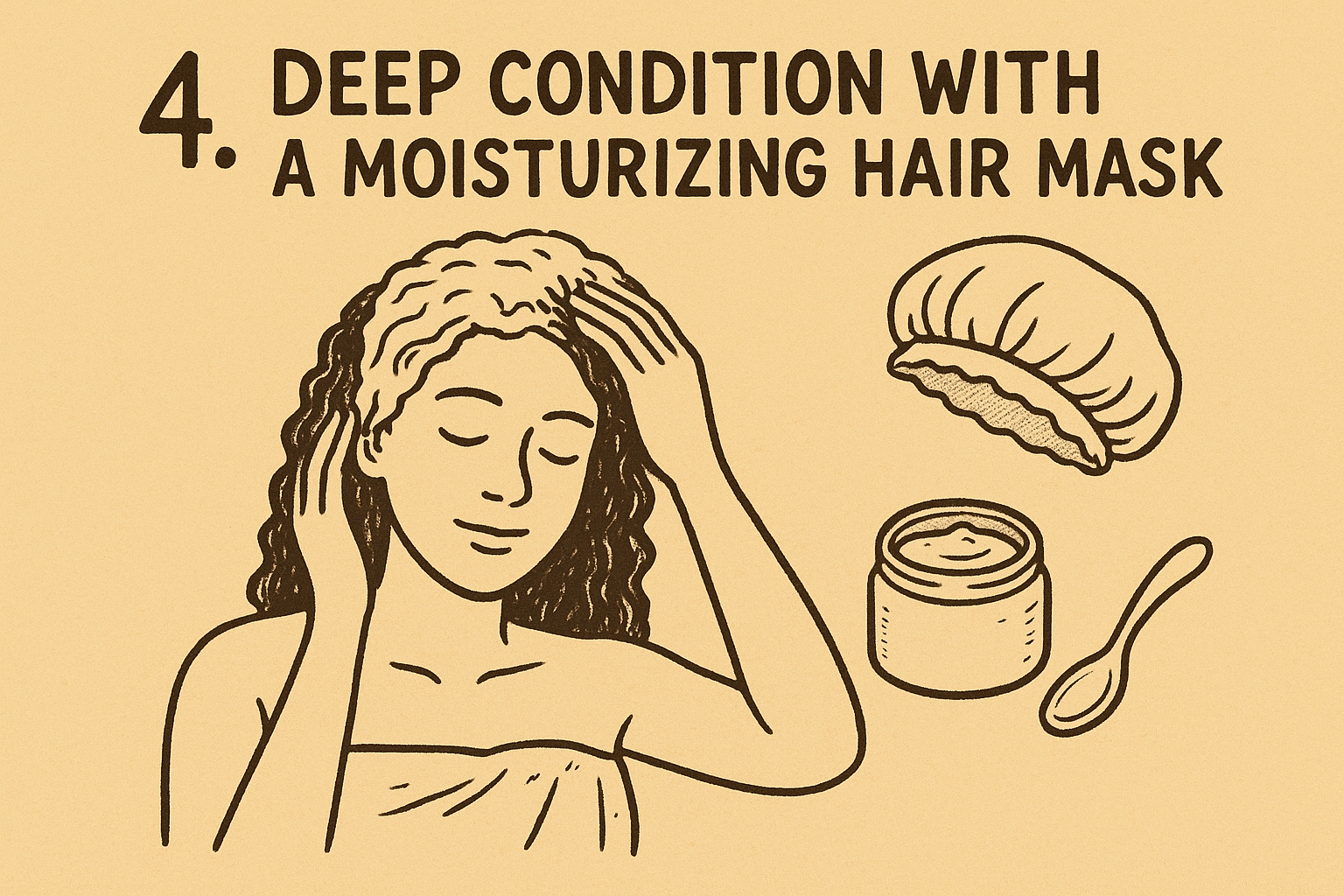
4. Deep condition with a moisturizing hair mask
Once mineral buildup is gone, your hair needs a serious moisture refill. A moisturizing deep conditioner for dry hair replaces what hard water and clarifying shampoo stripped away, and it's the step that actually restores softness instead of just removing damage.
How it works
Deep conditioners use concentrated humectants like glycerin, along with fatty alcohols and oils, to penetrate the cuticle you just smoothed with your acidic rinse. Heat helps these ingredients absorb deeper, so applying a mask under a shower cap or hooded dryer gets noticeably better results than a quick five-minute rinse-out. This combination rebuilds the protein and moisture balance that hard water constantly throws off.
A hair mask only works its magic once mineral film is gone, so timing it right after a chelating wash makes the difference.
Who it's for
This step matters most for anyone with textured hair prone to dryness, since coils and curls naturally struggle to distribute scalp oils down the strand. It's non-negotiable after any clarifying or chelating wash, since stripped hair absorbs treatments far better than hair coated in product or minerals.
Cost
Quality masks run $15 to $35 per jar and typically last two to three months with weekly use.
Tips for best results
Apply mask to damp, detangled hair and focus on your ends, where damage shows up first. Leave it on for 20 to 30 minutes with gentle heat, then rinse with cool water to lock moisture in before styling.
5. Seal in moisture with a protective oil
After your mask has soaked in, sealing that moisture matters just as much as adding it in the first place. A protective oil locks hydration inside the strand and adds a barrier against future mineral exposure, so your curls stay soft longer between wash days.
How it works
Oils like jojoba, argan, and grapeseed coat the cuticle without weighing down texture, forming a thin layer that slows water evaporation. This barrier also makes it harder for calcium and magnesium to re-attach to your strands during your next shower, which helps you stay ahead of hard water buildup instead of constantly reacting to it. Applying oil while hair is still damp traps the moisture from your mask underneath, rather than sitting on top like a heavy sealant.
Oil doesn't just add shine, it locks the moisture from your mask inside your strands where hard water can't reach it.
Who it's for
Anyone with curly or coily hair that dries out fast benefits here, especially if you live somewhere with year-round hard water exposure.
Cost
A bottle runs $8 to $25 and lasts several months with light, regular use.
Tips for best results
Use a dime-sized amount on damp hair, focusing on ends first. Too much oil weighs down fine textures, so build up gradually rather than applying it all at once.
6. Finish with a bottled or purified water rinse
Winding down your wash routine with a final rinse of bottled or purified water gives your hair one last mineral-free pass before you style. It's a small step, but it matters most for anyone who's already invested in a filter, chelating shampoo, and mask, since tap water at the very end can undo some of that work.
How it works
Distilled or purified water carries no calcium or magnesium, so pouring it over your hair after your regular rinse prevents fresh mineral deposits from settling back onto damp, open cuticles. Your hair absorbs whatever touches it last, which is exactly why this final step protects the moisture you just worked to restore.
The water you rinse with last is the one your hair remembers, so make it mineral-free.
Who it's for
This suits anyone dealing with especially aggressive hard water damage, or anyone without a shower filter yet who still wants a quick fix on wash day.
Cost
A gallon of distilled water costs $1 to $2, and you'll only need a cup or two per rinse.
Tips for best results
Pour it slowly over your ends and scalp after conditioner, and skip your regular showerhead entirely for this last pass. Keep a labeled jug in your shower so it's ready every wash day without extra planning.
Getting your hair back to its best
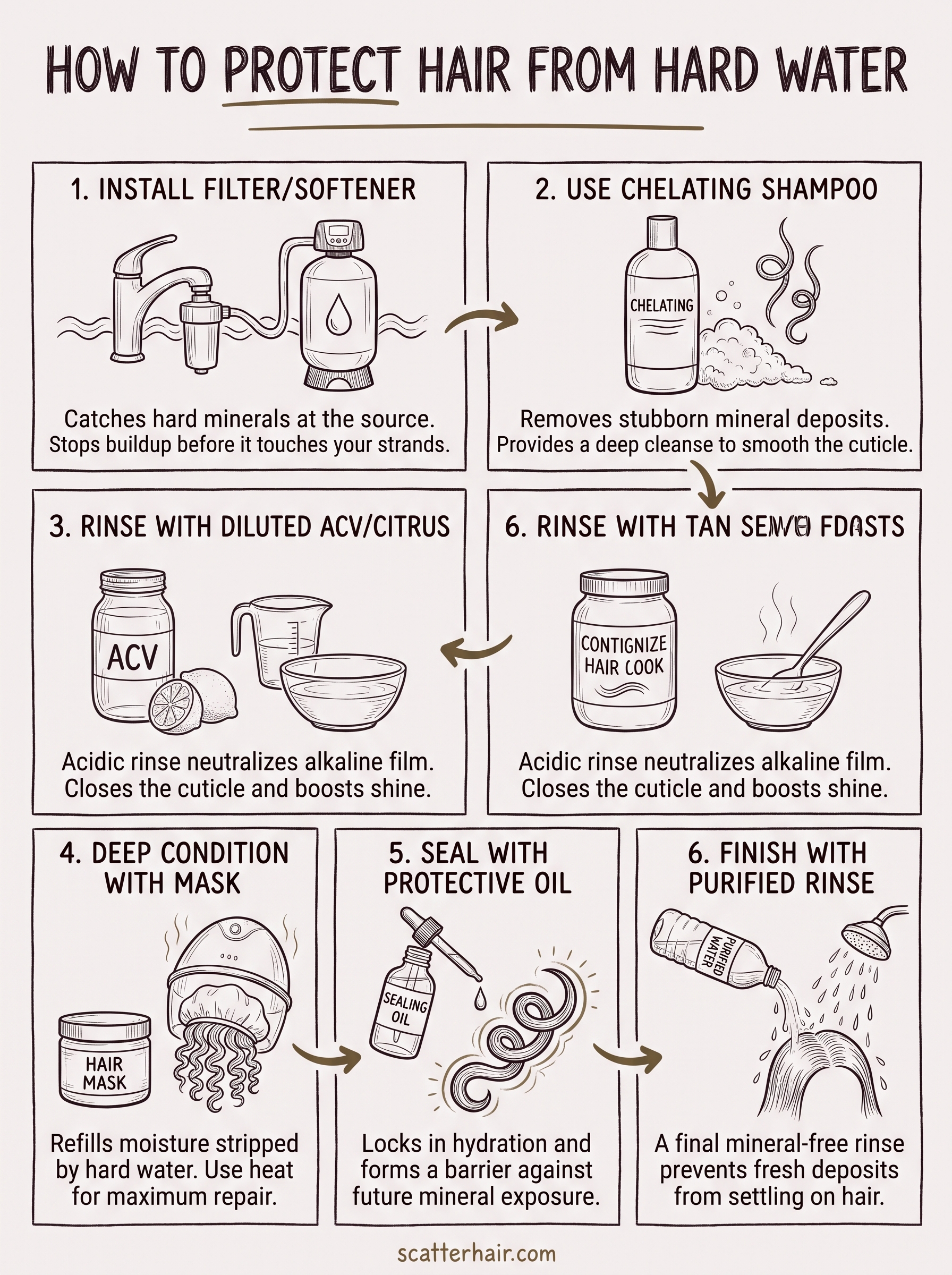
Six tips, one goal: getting your texture back to feeling like yours again. Filtering water stops new buildup, chelating shampoo strips what's already there, and the acidic rinse keeps things in check between washes. Together, these steps answer how to protect hair from hard water in a way that actually sticks, instead of masking the problem for a day or two.
Moisture is the other half of the equation. Once minerals are gone, your hair mask and sealing oil do the real repair work, and that final purified water rinse locks everything in before you even reach for styling product. Skip a step and you're just patching a leak instead of fixing it.
Your curls or coils deserve products formulated for exactly this kind of damage, not generic formulas that ignore how textured hair actually behaves. See the products that work for thirsty, hard-water-damaged curls and coils, and sign up for early access at Scatter to be first in line when styling products built for your texture launch.