

How To Refresh Curls Without Frizz: A Between-Wash Routine
You nailed your wash day. Your curls looked incredible. Then you slept on them, and now they're flat in some spots, frizzy in others, and barely holding their original shape. Sound familiar? Figuring out how to refresh curls without frizz is one of the most frustrating parts of having textured hair. This routine walks you through it step by step.
The good news: you don't need to rewash your hair every time your curls lose their bounce. With the right technique and a few smart product choices, you can revive second-, third-, and even fourth-day curls while keeping frizz under control. It comes down to moisture, method, and knowing what not to do (which, honestly, is half the battle).
This guide breaks down a simple between-wash refresh routine step by step, from prepping your curls to locking in definition. Whether your texture is wavy, curly, or coily, you'll walk away with a repeatable system that actually works. No overwetting. No crunch. Just curls that look like they still remember wash day.
What causes frizz during a refresh
Frizz during a refresh usually comes from a few specific mistakes, and most of them happen before you even reach for a product. Your hair's cuticle layer, the outermost part of each strand, lifts when it encounters moisture unevenly. When you spray water directly onto fully dry hair and then start touching it, the cuticle opens at different rates across your head, which breaks apart curl clumps and creates that halo of frizz you're trying to avoid.
The role of moisture imbalance
Dry hair absorbs water fast, which sounds like a good thing, but the speed is the problem. When moisture enters the strand too quickly, it swells unevenly, and your curls lose their definition before you've had a chance to reset them. This is why going from fully dry to soaking wet in one step tends to backfire. Your goal during a refresh isn't to re-wet your hair, it's to rehydrate it in a controlled, gradual way.
The most common refresh mistake is adding too much water at once, which breaks down curl structure instead of restoring it.
Signs your hair is taking on too much moisture at once:
- Frizz appears immediately after you apply water
- Curl clumps separate and puff out instead of reforming
- Hair feels wet on the surface but looks undefined underneath
How product residue makes it worse
Old product buildup on your strands creates an uneven barrier that blocks fresh moisture from absorbing consistently. If you're misting water over heavy residue from previous days, some sections rehydrate and some don't, and that inconsistency shows up as patchy frizz and texture. Understanding how to refresh curls without frizz means recognizing that what's already on your hair affects what you're about to put on it. A clean base, even mid-week, makes every refresh more predictable.
Step 1. Reset with targeted water
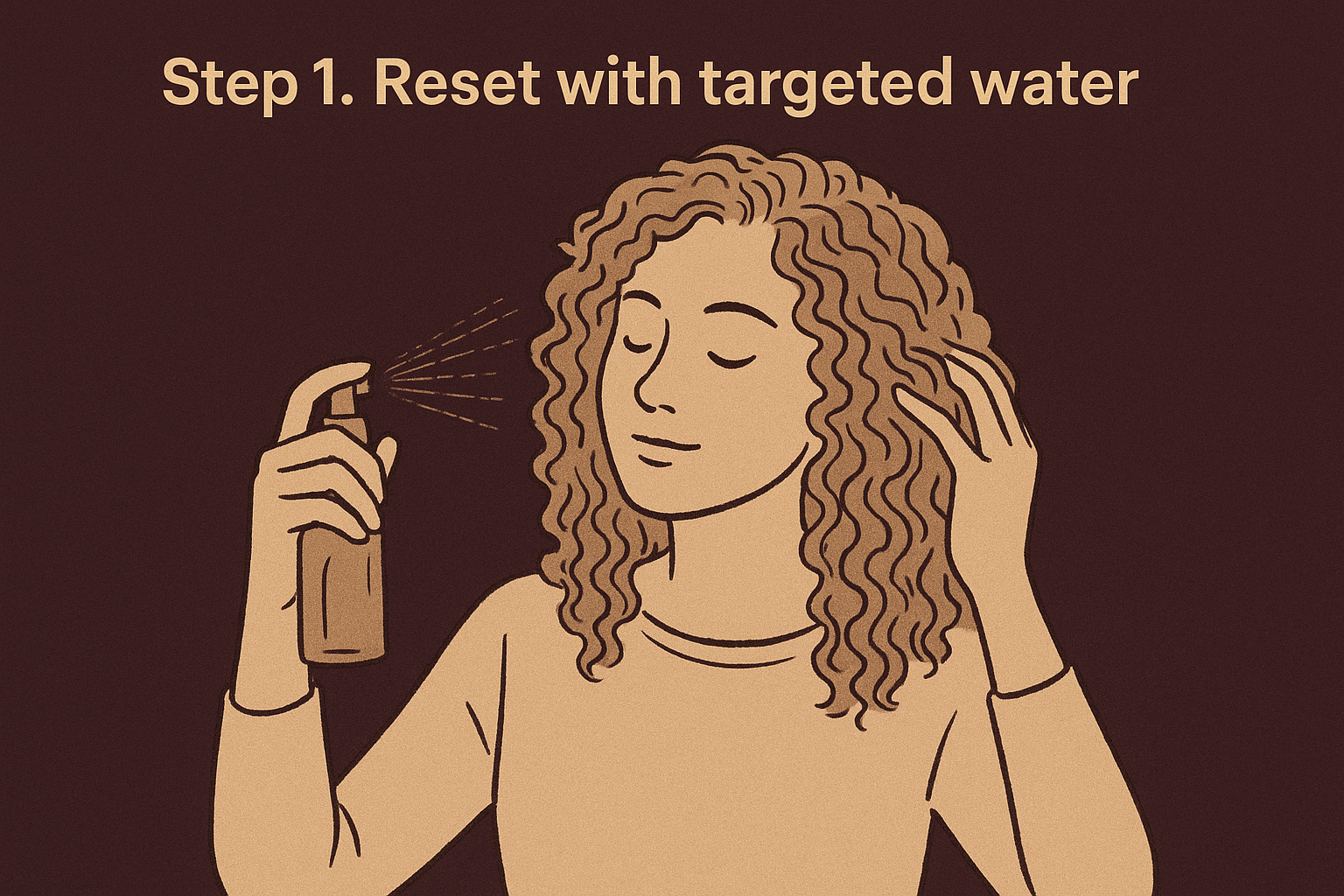
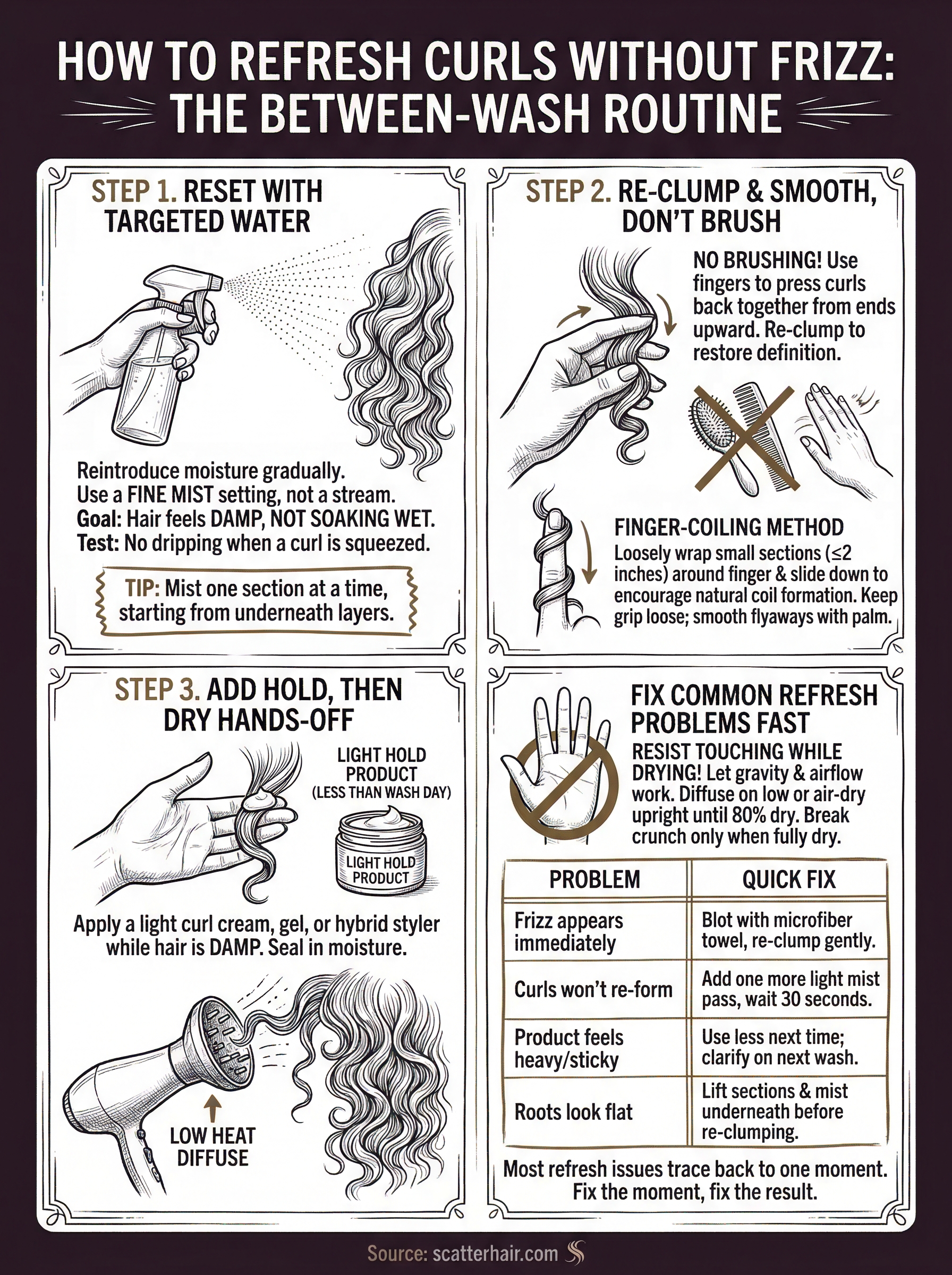
The goal here isn't to re-wet your hair. You want to reintroduce moisture in a controlled way that works with your curl pattern instead of against it. Start with a spray bottle set to a fine mist, not a stream. A fine mist distributes water more evenly across your strands, which gives your cuticle time to open gradually rather than all at once. This single adjustment is one of the most effective parts of learning how to refresh curls without frizz.
How to mist without overdoing it
Work in sections. Hold your spray bottle at least six inches from your hair and mist one section at a time, starting from the underneath layers and moving upward. Your hair should feel damp, not soaking wet. If you press a curl between your fingers and water drips out, you've added too much.
The moment your hair feels wet rather than damp, you've added more water than a refresh needs.
Check these four signs before moving to the next step:
- Hair feels pliable and soft, not stiff or crunchy
- No dripping when you squeeze a curl
- Curl clumps are still mostly intact, just slightly moistened
- Underneath layers feel as damp as the top layers
Step 2. Re-clump and smooth, don't brush
Once your hair is damp, re-clumping is the most important move you can make to restore curl definition without triggering frizz. Raking a brush or comb through damp second-day curls breaks apart the bonds holding your clumps together, which works against everything you're trying to do. Instead, use your fingers to gently press curls back together, working from the ends upward in small sections. This is where knowing how to refresh curls without frizz shifts from product knowledge to actual technique.
Brushing damp refreshed curls undoes the definition you're trying to restore.
The finger-coiling method
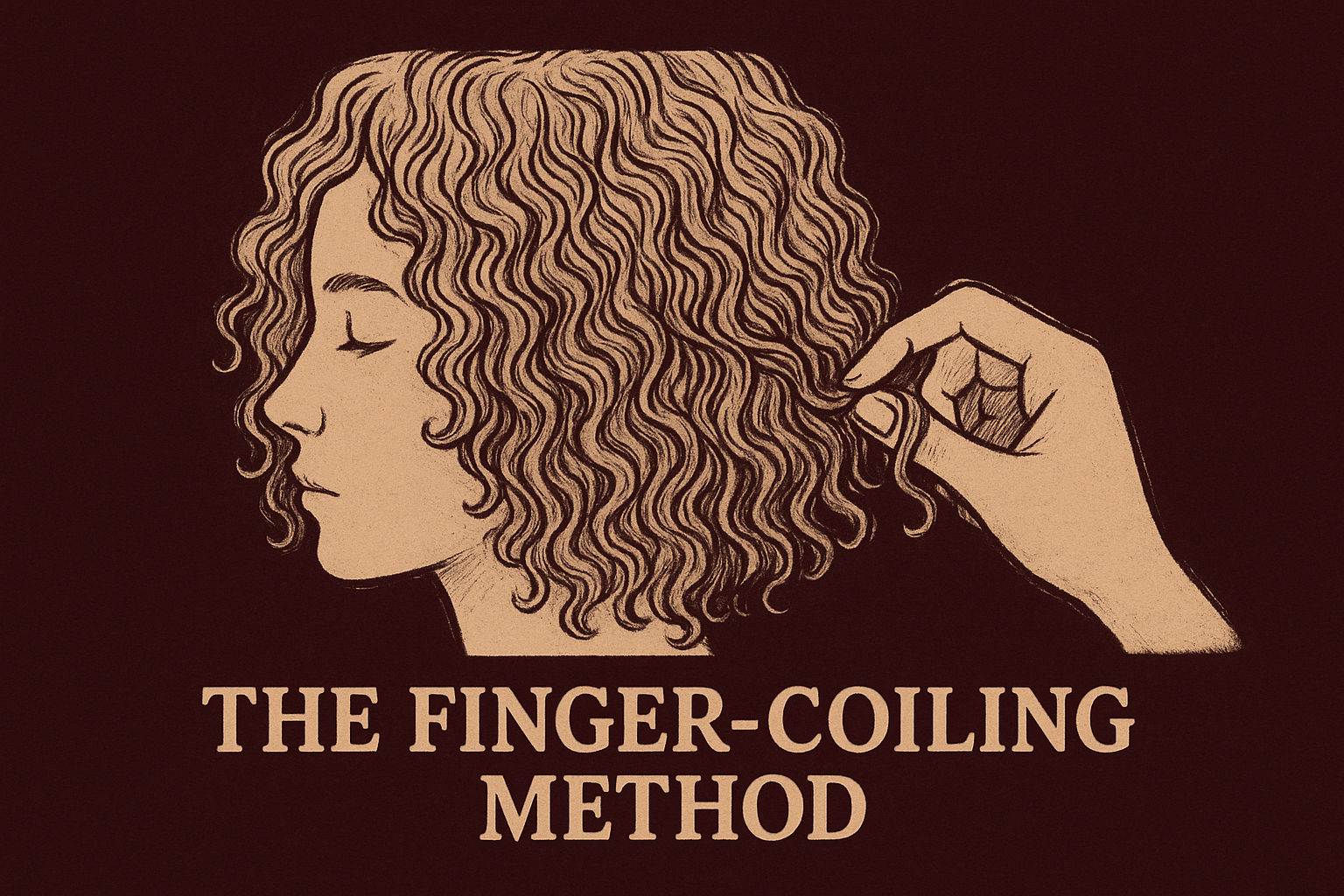
This technique works for any curl pattern and gives you precise control over each individual section. Take a small section of damp hair, wrap it loosely around one or two fingers, and slide down the full length of the curl. This motion encourages the strands to coil together and re-form their natural shape.
Repeat on every section before moving on. Use these guidelines to keep your clumps consistent and even:
- Work on sections no wider than two inches
- Keep your grip loose since tight pressure adds frizz
- Smooth flyaways flat against nearby clumps using your palm, not your fingertips
Step 3. Add hold, then dry hands-off
After re-clumping, your curls need product to lock in the moisture you just added and hold their shape for the rest of the day. Apply a light hold product while your hair is still damp, not wet. A curl cream, light gel, or hybrid styler works well here. The key is using less product than you would on wash day since your hair already has a base layer from before. Overloading at this stage creates buildup that makes your next refresh harder and your next wash more complicated.
Applying product to damp hair seals in moisture; applying it to wet hair dilutes it before it can do its job.
Why hands-off drying matters
Once your product is in, resist touching your curls while they dry. Every time you handle damp, product-coated hair, you disturb the clumps you just worked to restore and reintroduce frizz. This hands-off rule is one of the most overlooked parts of learning how to refresh curls without frizz. Let gravity and airflow work for you instead of against you.
Follow these steps to protect your results while drying:
- Diffuse on low heat if you're short on time, keeping the diffuser cupped under your curls without scrunching
- Keep your head upright until curls are at least 80% dry
- Break any crunch gently only after your hair is fully dry, using your palms instead of your fingers
Fix common refresh problems fast
Even with a solid technique, some refresh days still go sideways. Hair comes out too wet, curls won't re-clump, or frizz appears after drying even though you did everything right. Identifying the root cause quickly is the difference between fixing your style in five minutes and washing your hair again from scratch.
Most refresh problems trace back to one specific moment in your process, and fixing that moment fixes the result.
Quick fixes by problem
Each row below points to one targeted adjustment you can make without starting your whole routine over. Run through this table the next time something goes wrong. Knowing these patterns is part of learning how to refresh curls without frizz consistently, not just on your best days.
| Problem | Likely cause | Fix |
|---|---|---|
| Frizz appears immediately | Too much water applied at once | Blot with a microfiber towel, then re-clump gently |
| Curls won't re-form | Hair too dry before misting | Add one more light mist pass, wait 30 seconds |
| Product feels heavy or sticky | Overapplication on existing buildup | Use less; clarify on your next wash day |
| Roots look flat | Skipped underneath layers when misting | Lift sections and mist underneath before re-clumping |
A refresh routine that lasts
Knowing how to refresh curls without frizz consistently comes down to repetition. The steps here, targeted misting, finger re-clumping, light product application, and hands-off drying, work together as a system. Skip one and the others become less effective. Run through them in order a few times and the whole routine starts to feel fast and automatic rather than something you have to think through each morning.
Your hair will also tell you when to adjust. If refreshes are getting harder by day three, that's a signal to check your product load or your misting technique, not to add more steps. Simpler is almost always better between wash days. The goal is to give your curls just enough of what they need without overcomplicating the process.
Scatter's first product is Slip, a 2% hyaluronic acid hair serum. Work it through wet-to-damp hair, then air dry for texture or blow dry for body. It's on pre-order now.