

Low Porosity Natural Hair Routine: Step-By-Step Guide
You wash your hair, apply your products, and two hours later everything just sits on top, sticky, greasy, and completely unabsorbed. Sound familiar? If you have low porosity natural hair, this is basically every wash day without the right approach. Building a low porosity natural hair routine that actually works starts with understanding why your strands resist moisture in the first place: tightly bound cuticle layers that don't let water or product in easily.
The good news? Once you learn how to work with your hair's structure instead of against it, styling becomes so much simpler. That's exactly the philosophy we build on at scatterhair, making styling effortless for textured hair through products and guides that respect how your hair actually behaves. Low porosity hair doesn't need more product. It needs the right technique.
This guide breaks down a complete wash day routine step by step, from clarifying and prepping your strands, to layering products in the right order, to using heat strategically so moisture actually penetrates. Whether you're figuring out your porosity for the first time or fine-tuning a routine that's almost there, you'll walk away with a clear plan you can use on your next wash day.
What low porosity hair is and how to spot it
Low porosity hair has tightly sealed cuticles that lay flat against the hair shaft, similar to overlapping tiles with almost no space between them. Because of this structure, both water and product struggle to penetrate the strand, which is why products ball up on top of your hair or take a long time to absorb. This is not a damage issue, and it's not something you need to fix. It's simply how your hair is built, and your low porosity natural hair routine needs to account for this from the very start.
The science behind the sealed cuticle
Your hair cuticle is made up of overlapping layers of protein cells that wrap around the cortex. In high porosity hair, those layers are raised or have gaps, letting moisture in and out very quickly. In low porosity hair, the layers stay tightly closed, which actually protects your strands from environmental damage but creates a real barrier against hydration. This is why your hair can feel dry even after you've already applied conditioner and moisturizer.
Heat is the primary tool for temporarily lifting those cuticles so moisture can actually enter the strand. This is why steam treatments, heated deep conditioning caps, and washing with warm water are such game-changers for this hair type. Cold water keeps those cuticles sealed shut.
The cuticle doesn't open on its own with low porosity hair. You have to create the right conditions for moisture to get in before your hair will absorb anything.
How to test your porosity at home
You can confirm your porosity in about five minutes with a simple float test. Take a clean, product-free strand of shed hair and drop it into a glass of room-temperature water. Watch it for two to four minutes without disturbing the glass.
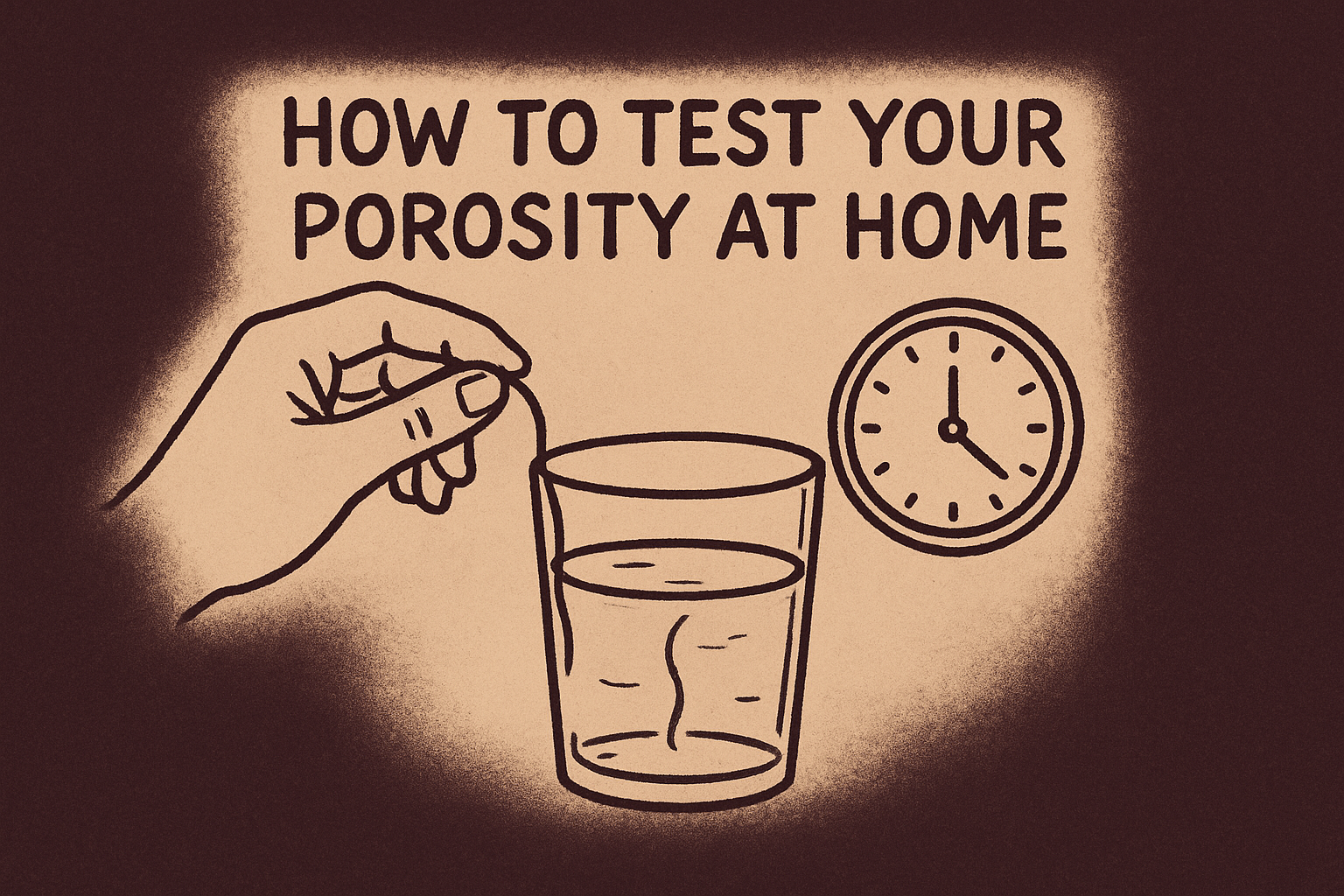
- Floats near the surface: Low porosity. Your cuticles are sealed and water isn't penetrating.
- Sinks slowly to the middle: Medium or normal porosity.
- Sinks quickly to the bottom: High porosity. Your cuticles are very open.
For the most accurate result, your hair needs to be completely free of product buildup before testing. Oils and styling residue coat the strand and skew the result. Run this test after a clarifying wash for a clean, reliable read.
Step 1. Confirm porosity and reset buildup
Before you layer a single product, your strands need to be completely clean. Low porosity hair builds up residue faster than most hair types because product just sits on top rather than absorbing into the shaft. Starting your low porosity natural hair routine with a clarifying wash clears that residue so every step after this actually works.
Skipping clarification and going straight to deep conditioning is like moisturizing over a layer of plastic wrap: nothing gets through.
How to clarify without stripping your hair
A clarifying shampoo is different from your regular moisturizing shampoo. It's designed to break down silicones, oils, and product buildup without leaving any coating behind. Apply it to your wet scalp and roots first, work it through to your ends, and rinse thoroughly with warm water. Warm water is intentional here: it slightly lifts the cuticle so the shampoo can actually reach buildup sitting along the shaft.
You don't need to clarify every single wash. A good rhythm to follow:
- Bi-weekly or monthly: Clarify with a dedicated clarifying shampoo
- Weekly wash days: Use a gentle, sulfate-free shampoo with no heavy silicones or mineral oil
- After heavy product use: Clarify before any deep conditioning treatment
Signs buildup is present
Your hair will tell you when it needs a reset. Watch for water that beads up and rolls off instead of soaking in during your wash, or styling products that pill and ball on the surface of your strands within minutes of applying them. Both are clear signals that buildup is blocking your cuticle before moisture even has a chance.
Step 2. Deep condition with heat for real hydration
With your hair clarified, your strands are ready to receive moisture. Deep conditioning is the most important step in your low porosity natural hair routine, but it only works when you pair it with heat to temporarily lift the cuticle so ingredients get inside the shaft rather than coating the surface.
Choose the right deep conditioner
Not every deep conditioner works well for low porosity hair. You want a formula that is moisture-based rather than protein-heavy, since protein treatments can cause stiffness and make already-resistant cuticles even harder to penetrate. Look for ingredients like aloe vera, honey, glycerin, or panthenol, which attract and bind water to the strand rather than just sitting on top.
Avoid conditioners that list heavy oils like castor oil or coconut oil as the first few ingredients. These work better as sealants after conditioning, not as penetrating agents during it.
How to apply heat effectively
Apply your deep conditioner to soaking wet, freshly clarified hair in sections, working from roots to tips. Then cover your hair with a plastic processing cap and add heat using one of these methods, listed from most to least effective:
- Sitting under a hooded dryer for 20 to 30 minutes
- Using a heated deep conditioning cap for 20 to 30 minutes
- Wrapping your capped hair with a warm, damp towel for 30 minutes
Heat doesn't just improve absorption marginally. It's the difference between deep conditioning working and not working at all for low porosity hair.
Rinse with cool water when your time is up to close the cuticle and lock in everything you just put in.
Step 3. Moisturize and seal without heaviness
After rinsing out your deep conditioner, your cuticles are temporarily open and your strands are primed for the final moisture and sealing steps. This is where most people with low porosity hair go wrong: they pile on heavy butters and oils that sit on top and create the same buildup they just clarified away. Your low porosity natural hair routine needs lightweight products applied in the right order to keep moisture in without weighing your strands down.
Apply moisture in layers, not in bulk
The LOC method (Liquid, Oil, Cream) works well for low porosity hair when you choose the right products at each stage. Start with a water-based leave-in conditioner as your liquid layer while your hair is still dripping wet. That's your primary moisture source. Follow with a thin, penetrating oil, then finish with a light cream or styler to lock everything in. Keep each layer thin. Thin layers absorb. Thick ones pile up.
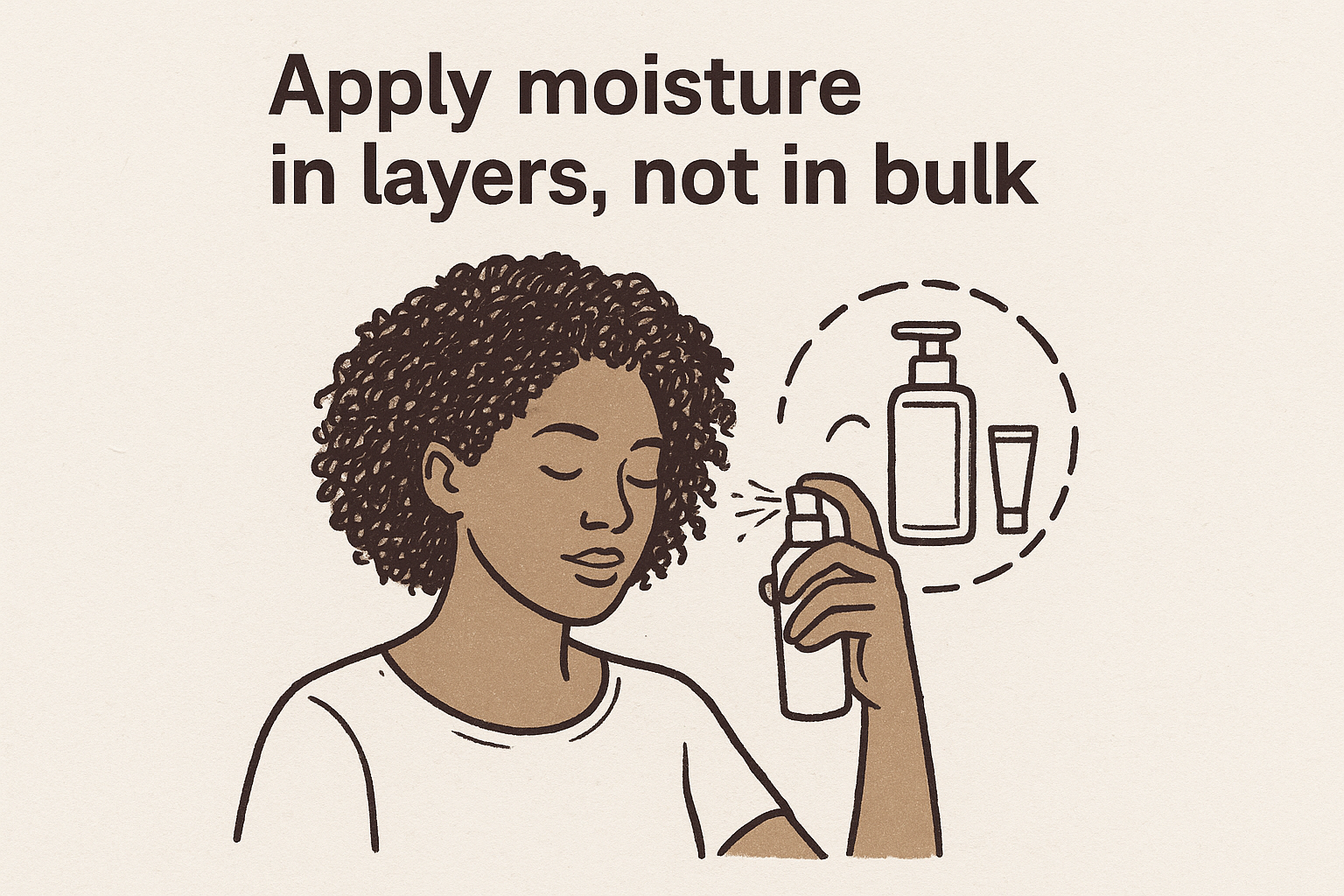
Applying products to soaking wet hair gives water-based ingredients their best chance of bonding to your strand before the cuticle closes back down.
Choose oils that actually absorb
Heavy oils like castor oil and coconut oil sit on the cuticle surface rather than penetrating it, which defeats the purpose of sealing at this stage. Reach for lightweight, fast-absorbing oils instead, since they seal without blocking future moisture entry. A few drops worked through damp sections is genuinely all you need.
Best lightweight sealing oils for low porosity hair:
- Jojoba oil
- Argan oil
- Grapeseed oil
- Sweet almond oil
Step 4. Style, protect, and refresh between wash days
With your moisture sealed in, the goal now shifts to protecting that work and extending it as long as possible. Your low porosity natural hair routine doesn't end on wash day. How you style, sleep, and refresh your hair in the days after determines how long your moisture actually lasts before you need to start over.
Style to minimize manipulation
The less you handle your hair between washes, the better your moisture retention will be. Choose low-manipulation styles like twist-outs, braid-outs, or buns that hold their shape for multiple days. These styles reduce the friction and daily touching that break down your product layers and lead to faster moisture loss.
Protective styles aren't just about length retention. For low porosity hair, they're your best tool for keeping moisture sealed in between wash days.
Apply your styler to soaking wet or very damp hair to get the best hold and definition. Dry styling creates frizz and pushes you to add more product, which brings buildup right back.
Refresh without overloading your hair
On non-wash days, your hair needs a light refresh, not a full re-application. Fill a small spray bottle with water and a few drops of your lightweight leave-in, then lightly mist your sections and scrunch gently. That's enough to reactivate your existing product layers without adding fresh buildup on top of what's already there.
At night, sleep on a satin or silk pillowcase or wrap your hair in a satin bonnet to cut down on friction and preserve your style through to the next morning.
Quick recap
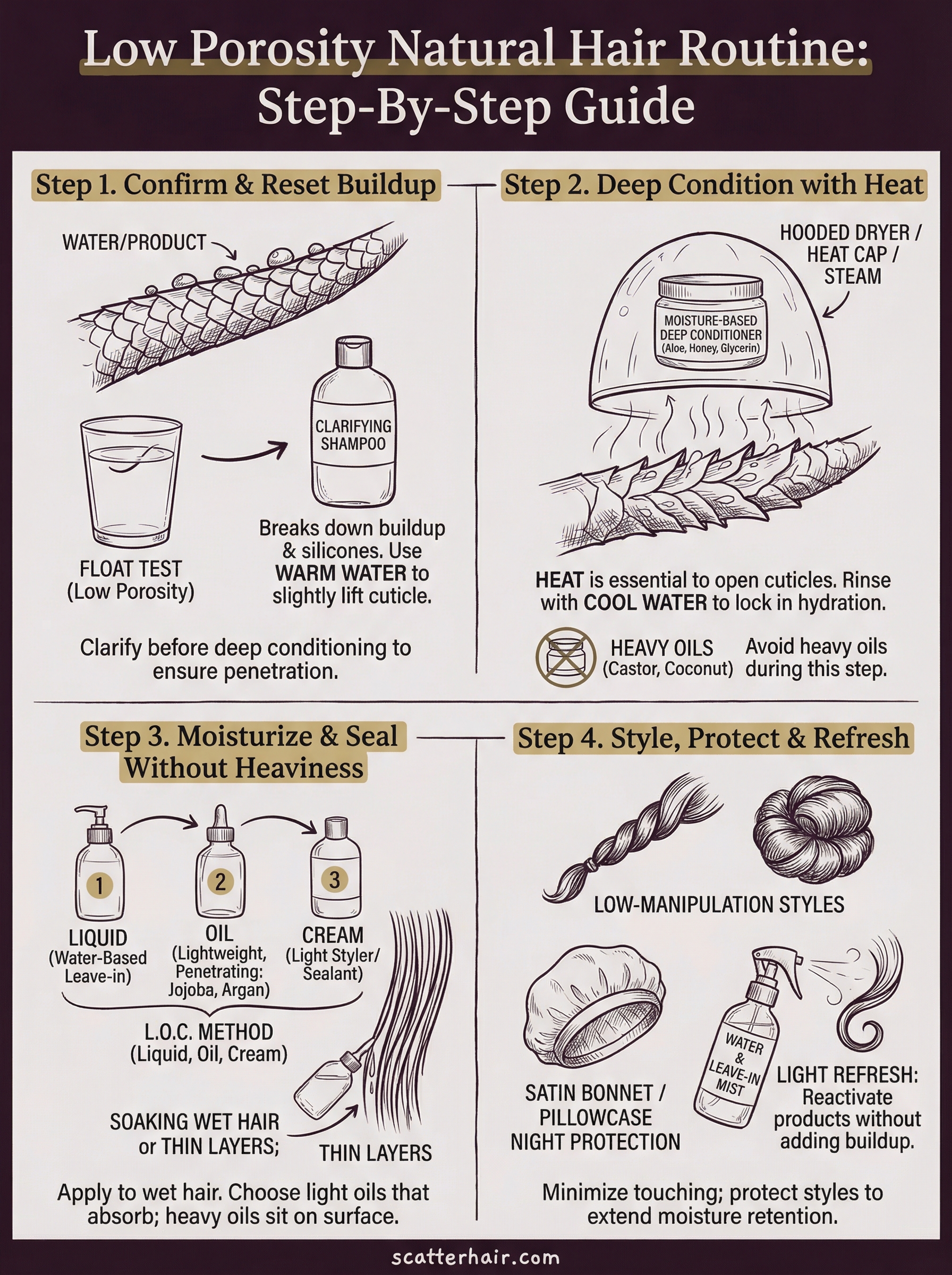
Your low porosity natural hair routine comes down to four steps done in the right order. Clarify first to remove buildup so nothing blocks your products from reaching the strand. Deep condition with heat so moisture actually enters the cuticle instead of sitting on top. Layer lightweight products while your hair is still wet, using thin coats and fast-absorbing oils to seal without creating new buildup. Then protect your style with low-manipulation techniques and a simple water-based refresh between wash days.
None of these steps require a cabinet full of products. They require the right technique and products that respect how low porosity hair actually works. That's exactly what we're building at scatterhair: performance-focused styling products made specifically for textured hair. If you want early access and styling guides as we get closer to launch, get on the list at scatterhair and be the first to know when we drop.