

Wash Day Routine for 4C Hair: Step-by-Step, Less Breakage
If your wash day routine for 4c hair feels like an all-day event that ends with a clogged drain and sore arms, you're not alone. 4c hair is beautiful, versatile, and dense, but it's also the coil pattern most prone to shrinkage, tangles, and breakage when wash day isn't handled with care.
The truth is, most wash day frustration comes down to technique and order of operations, not your hair itself. When you know exactly how to prep, cleanse, condition, and seal moisture into tight coils, the whole process gets shorter and your hair actually retains length. That's the kind of practical, no-fluff approach we believe in at scatterhair, making styling and maintenance for textured hair less of a chore and more of a routine you can trust.
This guide breaks wash day into clear, manageable steps built around moisture retention and minimal breakage. From pre-poo treatments to final styling, you'll walk away with a repeatable system that works, not a list of 47 products and vague advice. Let's get into it.
What to know before you start
Before you dive into your wash day routine for 4c hair, understanding a few fundamentals will save you time, product, and a lot of frustration. 4c coils have the tightest curl pattern of all hair types, which means less natural sebum travels down the hair shaft compared to looser patterns. That makes your hair more prone to dryness. Shrinkage can also make strands feel more tangled than they actually are, so going in without a plan turns a manageable process into a long, exhausting one.
Know your hair's porosity
Hair porosity describes how well your hair absorbs and holds onto moisture, and it directly shapes which products will actually perform for you. Low porosity hair has tightly closed cuticles that resist moisture at first but hold it well once it gets in. High porosity hair soaks up water fast but loses it just as quickly, meaning you need heavier sealants to lock things in. You can test yours by dropping a clean strand into a glass of room-temperature water and watching what happens over a few minutes.
Knowing your porosity before buying products will stop you from spending money on formulas that work against your hair instead of with it.
| Porosity Type | What It Means | What Works Best |
|---|---|---|
| Low | Cuticles are tightly closed, resists moisture | Lightweight oils, light heat to lift cuticles |
| Medium | Balanced absorption and retention | Most formulas work well |
| High | Absorbs fast, loses moisture fast | Thick creams, butters, protein treatments |
Set up your space and tools before you begin
Your setup matters more than most people expect. Wash days that drag on for hours often do so because you're hunting for a product or tool with soaking wet hair mid-process. Lay everything out before you turn on the water, so your hands never leave your head to go searching.
Here's what to have ready before you start:
- Wide-tooth comb or detangling brush
- Sectioning clips (at least 4 to 6)
- Pre-poo oil or conditioner
- Sulfate-free shampoo
- Deep conditioner
- Leave-in conditioner
- A sealant such as oil or butter
- Microfiber towel or a clean cotton t-shirt
Working in four to six sections also keeps the entire process more controlled. Loose, unclipped hair re-tangles while you focus on another area, undoing work you've already done. Clip each section away as you finish it, and you'll move through the whole routine faster and with far less breakage at the end.
Step 1. Set up, pre-poo, and detangle
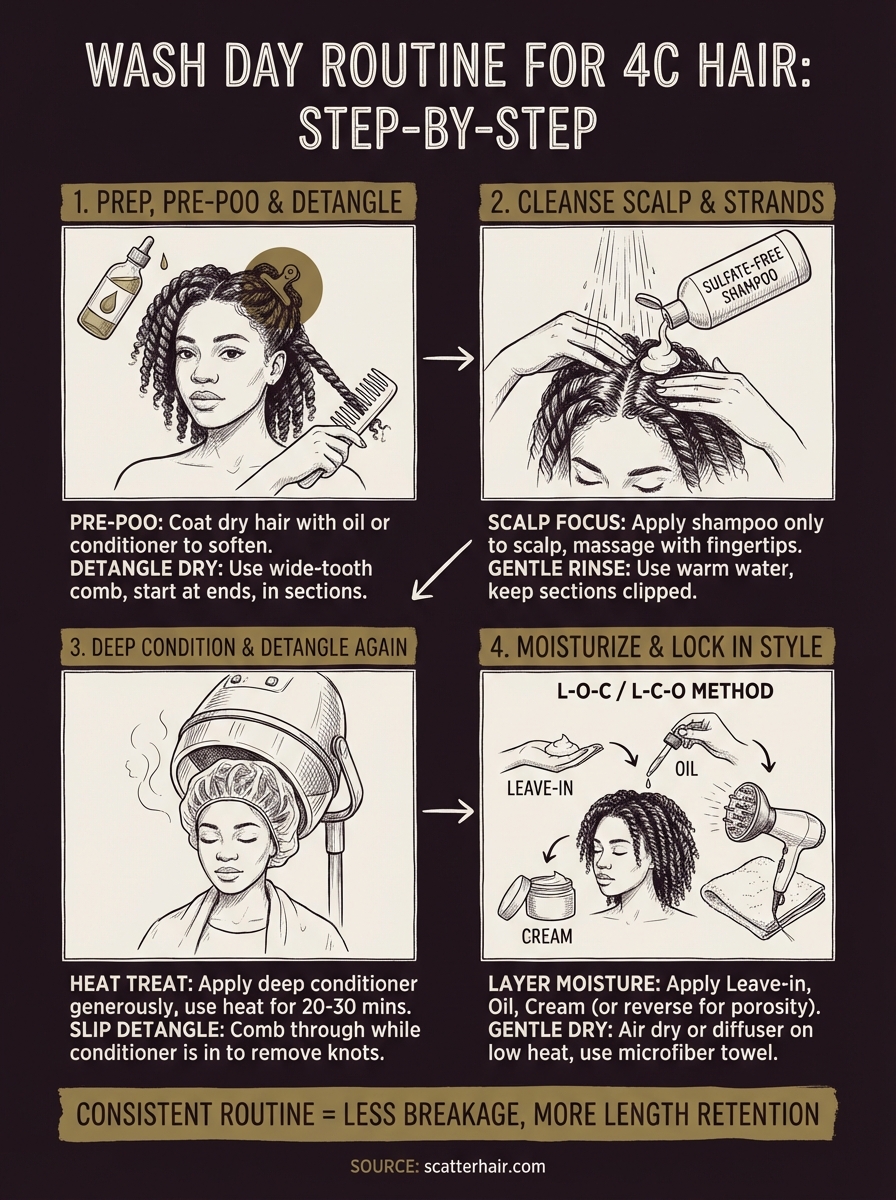
The first step in any solid wash day routine for 4c hair sets the tone for everything that follows. Before water, shampoo, or conditioner touches your strands, you need two things done: your hair coated in a pre-poo treatment and your tangles worked through while your hair is still dry. Skipping either one is the fastest path to unnecessary breakage before you've even started cleansing.
Pre-poo: coat your hair before water gets to it
A pre-poo (short for pre-shampoo) means applying an oil or conditioner to dry hair before you cleanse. Water causes 4c hair to swell and contract rapidly, which stresses the strand. A pre-poo creates a protective barrier that softens that impact and helps your deep conditioner work harder afterward. Apply it section by section, coat every strand from root to tip, and leave it on for at least 15 to 30 minutes before stepping into the shower.
Oils like coconut, olive, or avocado work well for pre-poo because they penetrate the hair shaft rather than sitting on top of it.
Detangle in sections while hair is dry
Working through tangles on dry, pre-pooed hair gives you far more control than fighting knots under running water. Divide your hair into four to six sections using clips, then start at the ends and work your way up toward the root using a wide-tooth comb or your fingers. Never drag a comb from root to tip on 4c hair that hasn't been fully separated first.
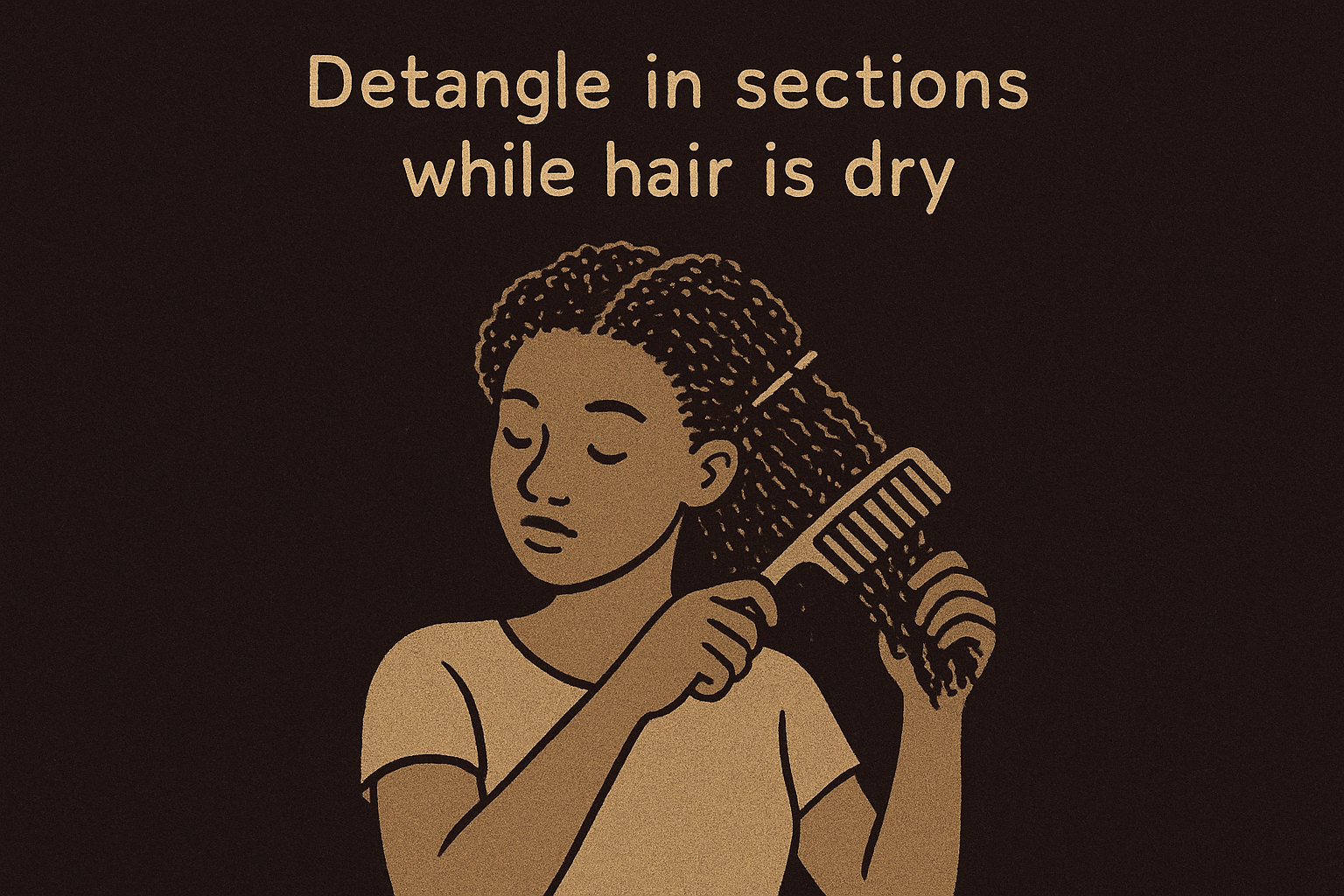
Each section needs to be fully tangle-free and re-clipped before you move on to the next. That step stops the sections you've already cleared from knotting back up while you work through the rest. Once every section is detangled and clipped, you're ready to step into the shower.
Step 2. Cleanse your scalp and strands
Now that your hair is pre-pooed and detangled, cleansing is straightforward. The goal at this step in your wash day routine for 4c hair is to remove buildup from your scalp without stripping the moisture you just worked to put in. That balance comes down to two things: what you use and how you apply it.
Choose a sulfate-free shampoo
Sulfate-free shampoos are the right call for 4c hair because they clean effectively without pulling out the natural oils your scalp produces. Traditional sulfate shampoos, while good at removing buildup, can leave tight coils feeling rough, brittle, and even harder to detangle after rinsing. Look for formulas that include moisturizing ingredients like aloe vera, glycerin, or shea butter listed near the top of the ingredient list.
If your scalp tends toward heavy product buildup or you use thick butters regularly, add a clarifying wash once a month to fully reset before going back to your sulfate-free formula.
Apply shampoo to your scalp only, in sections
Keep your hair sectioned the same way you left it after detangling. Apply a small amount of shampoo directly to your scalp within each section, then use the pads of your fingertips to massage it in with a circular motion. Do not scrub the length of your strands or pile your hair on top of your head, both of which create new tangles and friction damage.
Once you've worked through every section, rinse thoroughly with warm water until the water runs clear. A brief cool water rinse at the very end helps close the cuticle slightly, which leaves your hair feeling smoother heading into the conditioning step. Keep each section clipped back after rinsing so you stay organized going into step three.
Step 3. Condition, treat, and detangle again
Conditioning is where your wash day routine for 4c hair starts to pay off. After cleansing, your strands are clean but temporarily more vulnerable, so this step is about flooding them with moisture and giving your hair the slip it needs for a second, easier detangle.
Deep condition with heat
Deep conditioning is not optional for 4c hair. A regular rinse-out conditioner alone won't get moisture into tight coils the way a deep conditioner will. Apply a generous amount section by section, making sure every strand is coated from root to tip. Once it's in, cover your hair with a plastic cap and apply gentle heat, either from a hooded dryer or by sitting under a warm towel for 20 to 30 minutes. Heat lifts the cuticle slightly and allows the conditioner to actually penetrate the strand rather than sitting on the surface.
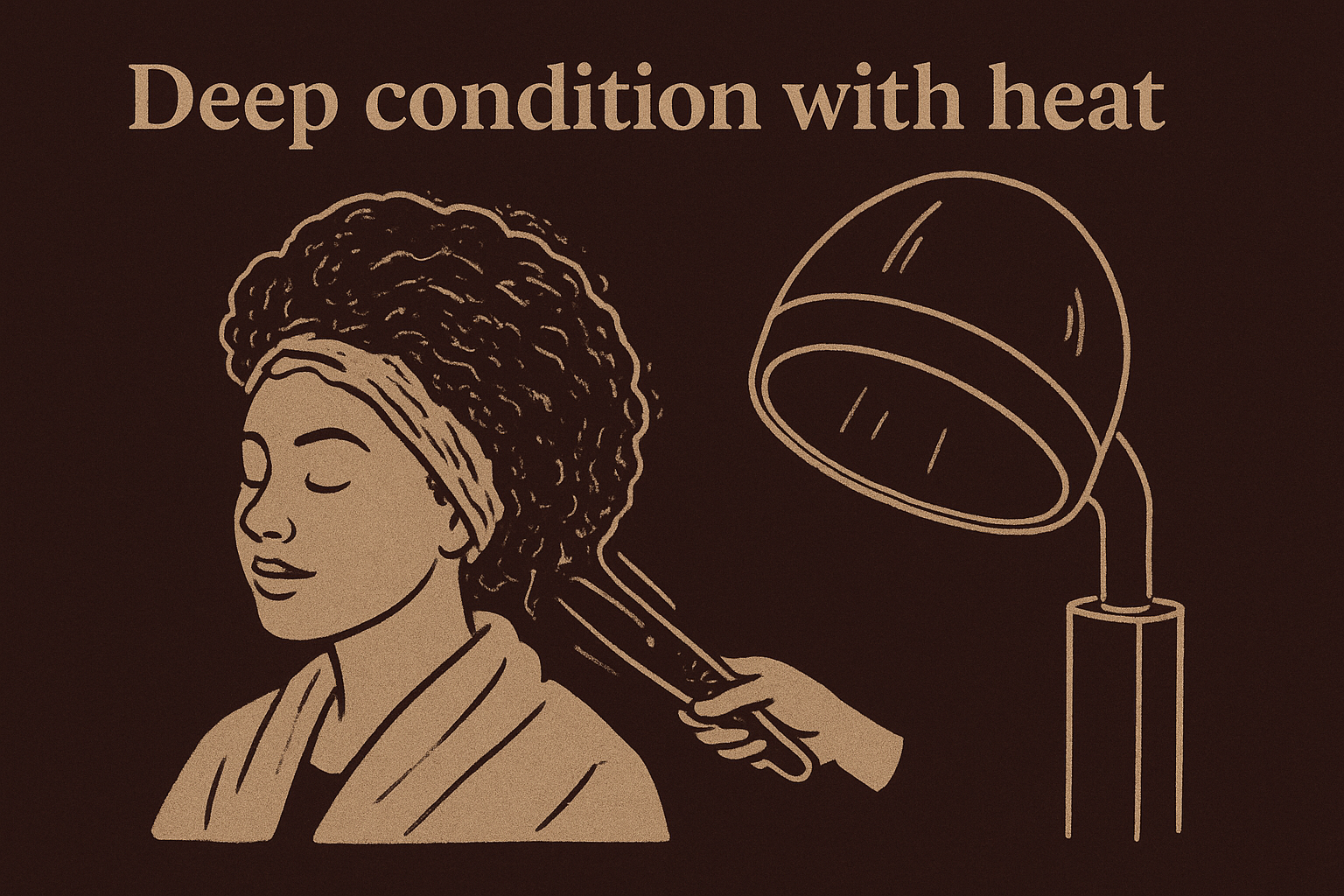
Protein treatments and moisture treatments are not the same thing. Use a moisture-based deep conditioner weekly, and add a protein treatment only every four to six weeks or when your hair starts feeling limp or overly stretchy.
Detangle again while conditioner is still in
This second detangle is far easier than the first because the conditioner gives your hair slip. Work through each section while the product is still coating your strands, starting from the ends and moving up toward your roots with a wide-tooth comb or a detangling brush. Do not rinse the conditioner out before detangling, or you lose that slip entirely.
Once every section is tangle-free, rinse with cool or lukewarm water to help close the cuticle and seal in the moisture you just added. Keep each section twisted or clipped after rinsing to hold your work in place before you move into the drying and styling step.
Step 4. Dry, moisturize, and lock in the style
The final step in your wash day routine for 4c hair is where moisture retention actually happens or falls apart. How you dry and seal your hair in the next 20 minutes determines how soft, defined, and hydrated your strands stay for the rest of the week. Rushing this step or using the wrong products in the wrong order will undo everything you've done so far.
Apply the LOC or LCO method
Both the LOC method (Leave-in, Oil, Cream) and the LCO method (Leave-in, Cream, Oil) are layering systems designed to trap moisture inside the hair shaft. Low porosity hair generally responds better to LCO because applying cream before a lighter oil helps moisture absorb before being sealed in. High porosity hair often does better with LOC, where oil goes on second to slow down how fast moisture escapes.
Start with whichever method matches your porosity, then adjust based on how your hair feels after the first few tries.
Apply each layer section by section while your hair is still damp, not dripping wet and not fully dry. Work the leave-in in first, then layer your oil or cream directly on top, sealing each section as you finish it before moving on.
Dry without the damage
Air drying is the gentlest option for 4c hair and the best default if your schedule allows it. If you need to speed things up, use a diffuser attachment on a low heat setting rather than blasting your hair with direct high heat, which breaks down protein bonds in your strands over time.
- Use a microfiber towel or cotton t-shirt to squeeze out excess water before you start styling
- Never rub your hair with a regular terry towel, which causes frizz and friction-related breakage
- Keep any heat tool on the lowest effective setting and limit heat sessions to once per week
Your next wash day, minus the stress
A solid wash day routine for 4c hair is less about doing more and more about doing things in the right order. Pre-poo before water, detangle in sections, deep condition with heat, and seal moisture in while your hair is still damp. Follow that sequence consistently and your wash days get shorter, your breakage drops, and your hair holds onto the length you've actually grown.
Start with what you have. You don't need to overhaul your entire product shelf before your next wash day. Pick one step where your current routine is breaking down and fix that first. Once that step feels solid, move to the next. Small, consistent improvements build the kind of repeatable system that actually sticks, and that's what turns wash day from a chore into something manageable.
When you're ready for styling products built specifically for textured hair, see what's coming from Scatter before the official launch.