

What Is A Protective Style? Benefits, Types, And Tips
If you have textured hair, you've probably heard someone say you need to protect it. But what is a protective style, exactly? It's more than just braids or twists, it's a deliberate approach to keeping your ends tucked away and your strands shielded from daily manipulation and environmental stress. When done right, protective styling can be a game-changer for length retention and overall hair health.
The thing is, protective styles only work when they're actually protecting your hair. Too tight, too long, or paired with the wrong products, and you end up doing more harm than good. That's why understanding the fundamentals matters, knowing which styles qualify, how long to keep them in, and what your hair needs before, during, and after is the difference between thriving curls and unnecessary damage.
Here at scatterhair, we're building styling products specifically for textured hair, formulas that make it effortless to prep and maintain your look, protective or otherwise. This guide breaks down everything you need to know: what protective styles are, why they work, the most popular types, and practical tips to get the most out of each one.
What counts as a protective style
When people ask what is a protective style, the short answer is: any hairstyle that tucks your ends away and minimizes how often your strands are touched, pulled, or exposed to the elements. The ends of your hair are the oldest and most fragile part of each strand. Keeping them shielded from friction, heat, and daily manipulation gives them the best shot at staying intact long enough for your hair to retain length.
The core requirement: ends tucked away
A style qualifies as protective when it does two things: hides your ends and reduces mechanical stress on your hair. That rules out a lot of everyday looks. A wash-and-go, for example, leaves your ends exposed and requires you to refresh, detangle, and manipulate your hair regularly. A set of box braids, on the other hand, seals your ends inside the braid and lets you leave your hair alone for weeks.
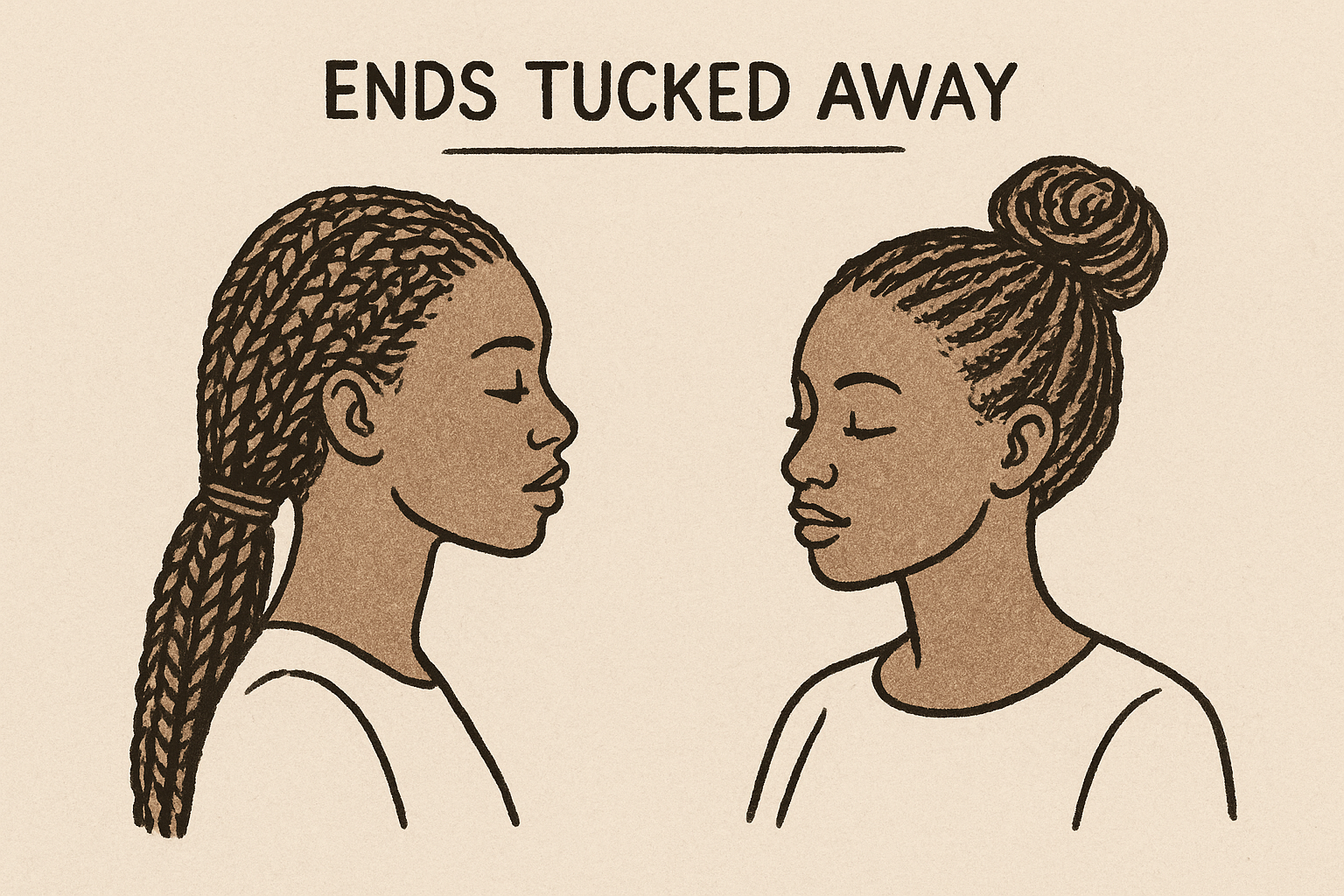
The less you handle your hair, the less breakage you risk - consistency with a protective style matters more than which specific style you choose.
Here are the most recognized protective styles:
- Box braids and knotless braids - natural hair braided with or without added hair
- Twists - two-strand or flat twists, with or without extensions
- Cornrows - braids laid flat against the scalp
- Locs - permanent or faux, both qualify
- Updos and buns - natural hair coiled or pinned with ends tucked
- Sew-ins and wigs - protective when your natural hair is laid flat or tucked beneath
Styles that don't make the cut
Loose styles, styles that leave your ends hanging freely, and styles that require frequent re-styling or daily manipulation do not count as protective, even if they look great. Ponytails with exposed ends, press-and-curls you refresh each morning, and loose twist-outs all fall outside the category because they keep your ends in constant contact with your clothes, pillowcase, and fingers.
Your installation method also matters. A braided style with extensions can easily become damaging if the braider uses too much tension at the root or if the added hair carries too much weight. The style itself is not the problem; how it is applied and maintained is what determines whether it is actually protecting anything.
Why protective styles help textured hair
Textured hair has a unique structure that makes it more vulnerable to damage than straight hair. Each twist and curve in the strand creates a weak point where moisture escapes and breakage occurs. Because of this, the way you handle and wear your hair matters more than it might for other hair types, and that is exactly where understanding what is a protective style becomes directly relevant to your hair health.
Textured hair loses moisture faster
The spiral shape of curly and coily strands makes it harder for the natural oils produced by your scalp to travel down the length of the hair. This means your ends stay dry and prone to splitting unless you actively work to keep them moisturized and shielded. When your ends are tucked into a protective style, they are protected from dry air, friction from clothing, and constant handling that strips moisture even further, giving your hair a real chance to stay strong between wash days.
The more your ends are exposed to everyday friction and dry conditions, the faster they split and break off, which is why length retention is so closely tied to protective styling.
Reducing manipulation is the real benefit
Every time you detangle, style, or refresh your hair, you create opportunities for breakage. Textured strands are strongest when left alone, and protective styles make that possible by keeping your hair in a low-manipulation state for days or even weeks at a time. Less pulling, less combing, and less daily contact with your hands means your hair accumulates length instead of losing it to preventable breakage at the ends.
Types of protective styles and who they suit
Once you understand what is a protective style, the next step is figuring out which one actually fits your hair type, lifestyle, and goals. Not every style works for every person, and choosing the wrong one can create tension, dryness, or matting that sets your hair back instead of moving it forward.
Styles with extensions
Braids, twists, and cornrows with added hair are the most widely used protective styles because they last the longest and require the least daily maintenance. Box braids suit almost any curl pattern and give you weeks of hands-off wear. Knotless braids distribute tension more evenly across the scalp, making them a better fit if you have a sensitive scalp or finer strands at the hairline. Faux locs and crochet styles fall into this category too, and both work well for people who want variety without committing to a permanent look.
If you have fine or low-density hair, lighter extensions and smaller sections will reduce the strain on your roots and protect your edges better than heavier installs.
Natural styles without extensions
Buns, updos, and flat twists on your own hair are strong options when you want a shorter commitment or prefer to avoid added hair altogether. These styles work best on medium to thick density hair because the ends need enough bulk to stay neatly tucked. Wigs worn over braided-down natural hair offer the most flexibility since you can switch your look daily without touching your natural hair underneath, making them a practical choice for any curl type.
How to do a protective style the healthy way
Knowing what is a protective style is only half the equation. The other half is execution. How you prepare your hair before installing and how you care for it during the wear determines whether the style actually protects your strands or quietly damages them over time. Skipping steps at either stage is where most people run into breakage they did not expect.
Start with clean, moisturized hair
Never install a protective style on dirty or dry hair. Build-up on your scalp creates irritation, and dry strands going into a weeks-long style will only get more brittle under tension. Wash, deep condition, and seal moisture in with a lightweight oil or leave-in conditioner before your hair gets braided, twisted, or tucked. Here is a simple pre-install checklist to follow:
- Clarify your scalp to remove build-up
- Deep condition for at least 20 minutes
- Apply a leave-in conditioner while hair is damp
- Seal with a light oil before installation
Going into a protective style with well-moisturized hair gives you a stronger foundation and significantly reduces mid-style breakage.
Keep your scalp clean and your edges relaxed
Protective styles do not mean ignoring your hair entirely. Your scalp still produces oil and collects residue, so use a diluted cleanser or scalp spray to refresh your roots every one to two weeks without disturbing the style. Consistent scalp care prevents itchiness and inflammation that can lead to unnecessary scratching and tension.
Pay close attention to your hairline throughout the wear. If your edges feel tight or sore, that is your signal to loosen the style or remove it before the damage becomes permanent.
How long to keep a protective style in
Duration is one of the most overlooked parts of what is a protective style done correctly. Leaving a style in too long is one of the most common reasons people experience matting, scalp buildup, and breakage at the roots when they finally take the style down. The general rule is simple: protective styles work best when you commit to a realistic timeline from the start.
The moment a style starts causing discomfort or you notice tension along your hairline, take it down, regardless of how long you planned to keep it in.
Timeframes by style type
Different styles have different maximum wear times, and staying within those windows protects your hair without letting new growth tangle into the installed style. Here is a general guide:
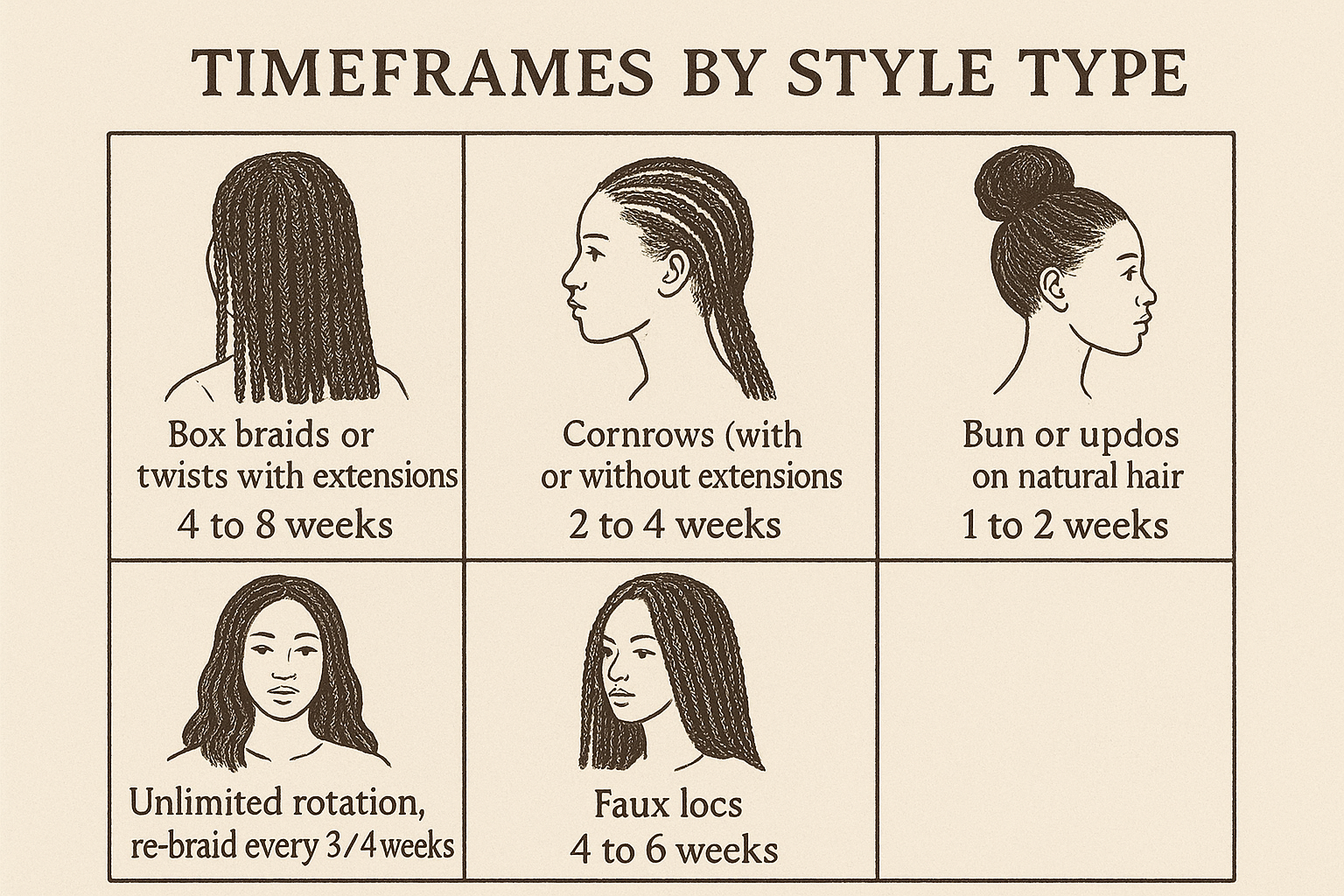
| Style | Recommended Duration |
|---|---|
| Box braids or twists with extensions | 4 to 8 weeks |
| Cornrows (with or without extensions) | 2 to 4 weeks |
| Buns or updos on natural hair | 1 to 2 weeks |
| Wigs over braided-down hair | Unlimited rotation, re-braid every 3 to 4 weeks |
| Faux locs | 4 to 6 weeks |
When to take it down early
New growth is your biggest indicator that a style has run its course. As your hair grows, the roots begin to tangle and lock into the installed style, which makes removal much harder and more damaging. If you notice significant frizz at the root, consistent itching, or soreness along your part lines, those are clear signals to take the style down before the timeline runs out.
Key takeaways
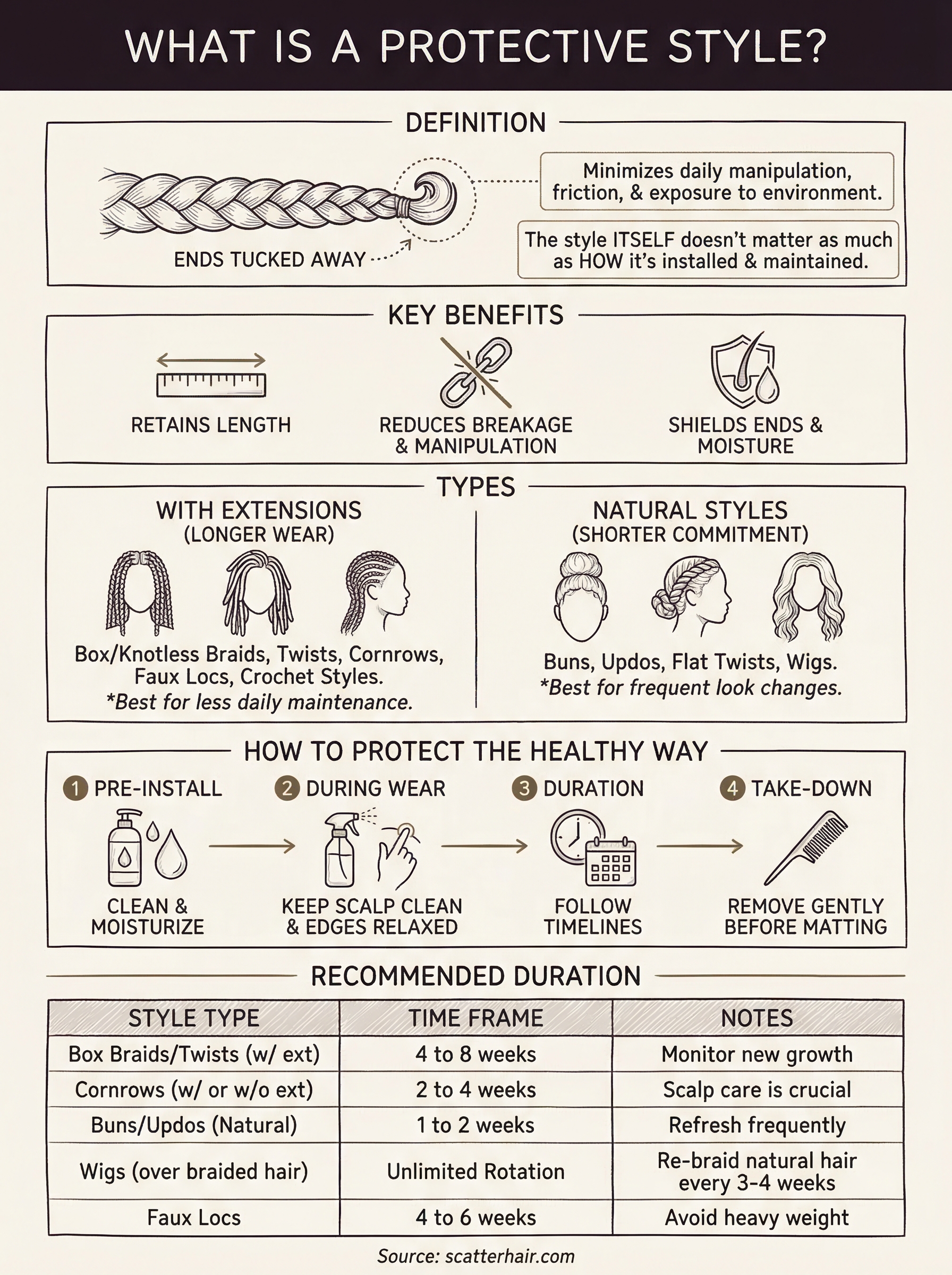
Understanding what is a protective style comes down to one core idea: any style that keeps your ends tucked, reduces daily manipulation, and gives your hair a consistent break from friction and environmental stress qualifies. The style itself matters less than how you install it, maintain it, and take it down. Going in with moisturized hair, keeping your scalp clean during the wear, and removing the style before new growth tangles into the install are the steps that separate protective styling done right from protective styling that causes setbacks.
Your hair thrives when you give it structure and intention. Choosing the right style for your density, texture, and lifestyle is the starting point, and following realistic wear timelines keeps you from undoing the progress you worked to build. If you want styling products formulated specifically for textured hair to support every step of that process, explore what Scatter is building before the official launch.