

What Is A Twist Out? How To Do One And Make It Last Longer
The twist out is one of the most celebrated styles in the natural hair community, and for good reason. A twist out is a heat-free technique that creates defined, bouncy curls by unraveling two-strand twists after they've set and dried. It works with your texture instead of fighting it, which is exactly the kind of styling we're here for at scatterhair.
Here's the catch: achieving a twist out that actually holds up takes more than just twisting and hoping. The technique, products, and timing you use determine whether you get gorgeous definition or wake up to a frizzy disappointment. Understanding the method behind this style is the first step toward making your styling routine feel effortless, not like a gamble.
This guide covers everything from the basics to step-by-step instructions, maintenance tips, and how twist outs compare to braid outs. Whether you're brand new to styling textured hair or looking to refine your technique, you'll walk away with practical knowledge to finally get the results you've been after.
What a twist out is and what results to expect
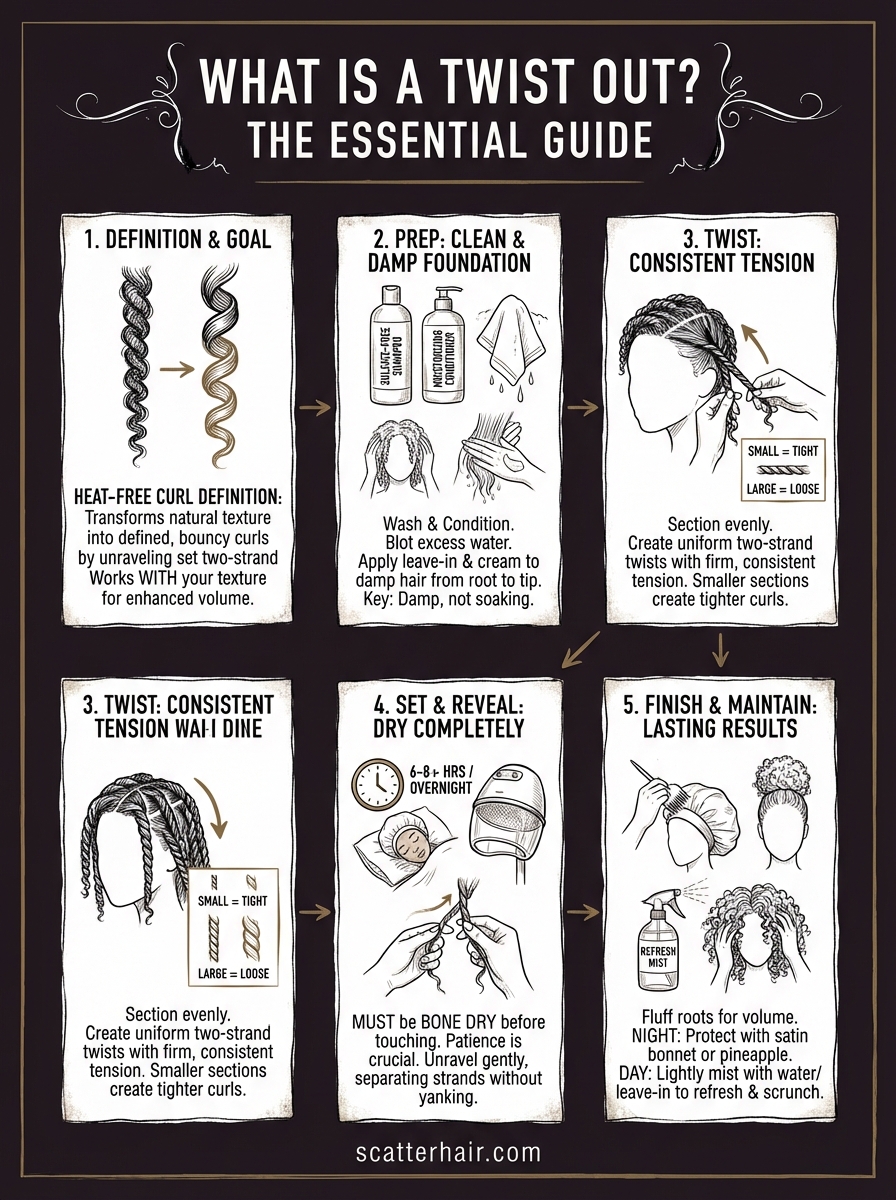
Understanding what a twist out is starts with recognizing it as a protective styling method that transforms your natural texture into defined spiral curls without heat. You create the style by dividing damp hair into sections, twisting two strands together, and allowing them to set completely before unraveling. The result mimics your natural curl pattern but with enhanced definition and volume.
The Basic Technique
The twist out works by training your hair into a specific curl shape while it dries. You apply product to damp hair, separate it into small to medium sections, and twist each section from root to tip using two strands. The size of your sections directly affects your final look: smaller twists create tighter curls, while larger sections produce looser, more voluminous waves. After the twists dry completely (usually overnight or 6-8 hours), you carefully unravel each one and separate the curls to create fullness.
What You'll Actually Get
Your twist out results depend on three main factors: your natural curl pattern, the products you use, and your technique. Type 3 curls typically show more defined spirals with immediate bounce, while type 4 hair creates a beautiful textured pattern that elongates your natural coils. You can expect volume at the roots, definition through the mid-lengths, and slight tapered ends.
The key to successful twist outs is matching your expectations to your texture rather than comparing your results to someone with a completely different hair type.
Realistic expectations matter here. Your twist out won't look identical to what you see online because everyone's hair responds differently to the same technique. Fine hair tends to hold definition longer but may lack volume, while thicker, coarser textures create impressive fullness but might lose definition faster. The style typically lasts 3-5 days with proper maintenance, gradually transitioning from defined curls on day one to a softer, fuller look by day three. You'll see the best results when you work with your natural texture instead of forcing a specific outcome.
Get your hair ready for a clean twist out
Preparing your hair properly makes the difference between a twist out that actually holds and one that falls flat by midday. You need clean, conditioned hair that's still damp enough to absorb products but not soaking wet. This preparation phase sets up everything that follows, so rushing through it guarantees disappointing results.
Start with freshly washed hair
Clean hair accepts products better and creates longer-lasting definition. Wash your hair with a sulfate-free shampoo that removes buildup without stripping natural oils, then follow with a moisturizing conditioner you leave in for 3-5 minutes. Your hair should feel soft and manageable after rinsing, not stripped or overly slippery. Skip this step and you're asking your twist out to work against product buildup, oils, and dirt that block moisture absorption.
Starting with a clean foundation isn't optional if you want your twist out to actually last the full week.
Apply products on damp hair
Blot excess water from your hair using a microfiber towel or t-shirt until it stops dripping but remains noticeably damp. Your hair should feel cool and wet to the touch without water running down your neck. Apply a leave-in conditioner first, working it through each section from root to tip, then layer your styling cream or gel. The damp state matters because what is a twist out if not properly set? Too wet and products dilute, too dry and they sit on the surface instead of penetrating your strands.
Twist technique that gives definition without frizz
The actual twisting method determines whether you get clean, separated curls or a frizzy mess. Most twist out failures happen because people rush through the twisting process or use inconsistent tension throughout each section. Your technique needs to be deliberate and systematic, treating each twist like it's the only one that matters.
Section your hair strategically
Divide your hair into four to eight sections depending on thickness and length. Clip away the sections you're not working on to prevent them from drying out. Within each section, create individual twists that range from pencil-width for tighter curls to marker-width for looser waves. Keep your sections uniform in size because mismatched twists create an uneven final look.
Consistent section sizes throughout your entire head create the uniform definition that makes twist outs look intentional rather than accidental.
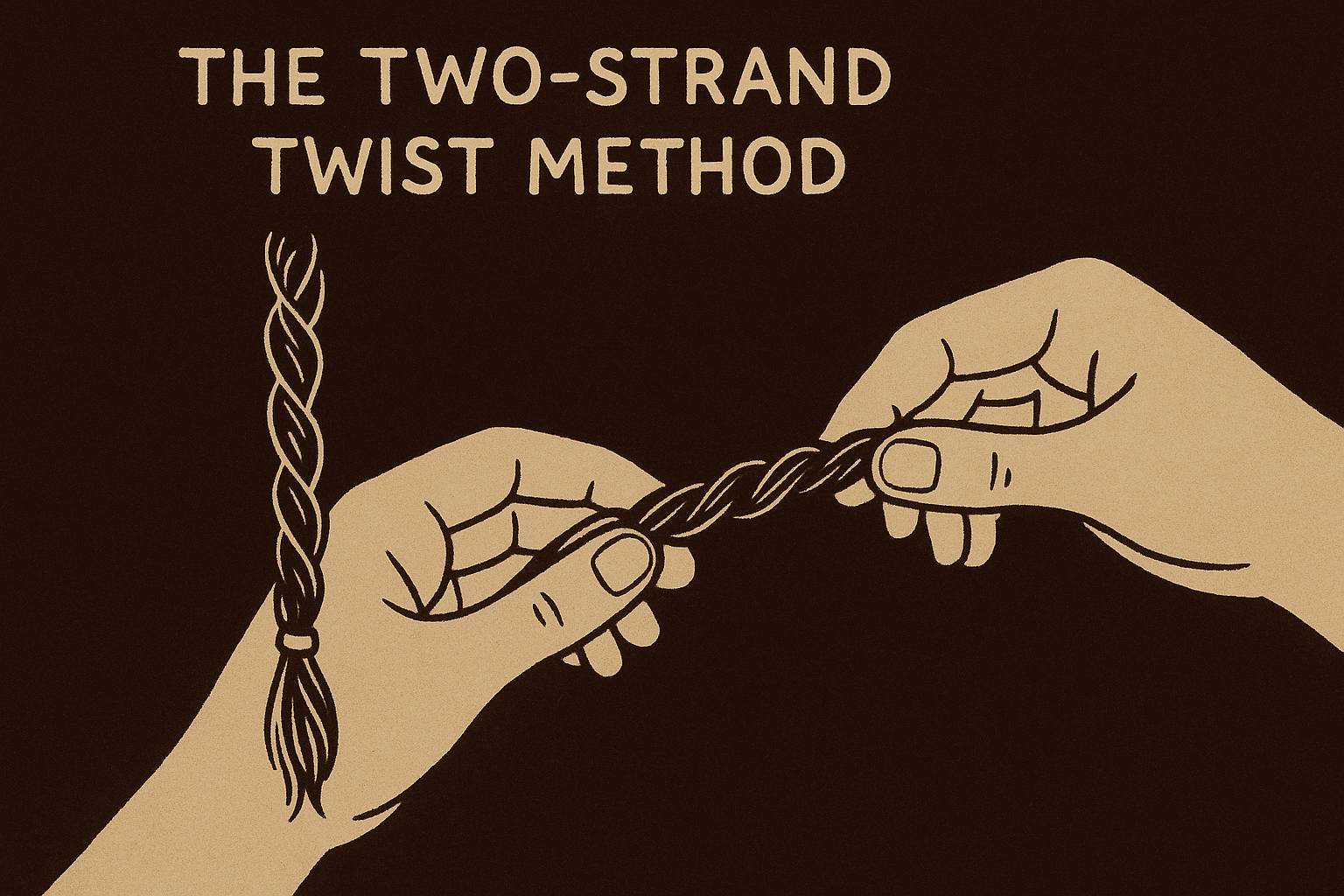
The two-strand twist method
Take one small section and apply your styling product from root to tip, making sure every strand gets coated. Split the section into two equal strands and twist them around each other in one direction, maintaining the same tension from start to finish. You want firm tension without pulling so tight that it hurts. Continue twisting all the way to the ends and either tuck the tail under or use a small clip to secure it. The direction matters less than staying consistent throughout your entire head because mixing clockwise and counterclockwise twists creates competing curl patterns that fight each other.
Dry, unravel, and fluff for your final shape
The drying and unraveling stages determine whether your twist out shows off defined curls or turns into a frizzy disaster. Rushing this process by unraveling damp twists or handling your hair roughly during separation creates the exact problems you spent all that time trying to avoid. Your patience here pays off with lasting definition that actually looks intentional.
Let your twists dry completely
Your twists need to be bone dry before you touch them. Allow at least 6-8 hours for air drying, or sleep in them overnight for best results. Check the thickest parts of each twist by gently squeezing them between your fingers. If they feel even slightly cool or damp, they need more time. Unraveling wet or damp twists guarantees frizz and undefined curls that fall flat within hours. You can sit under a hooded dryer for 45-60 minutes if you need faster results, but air drying overnight typically produces better definition.
Unravel with intention
Start unraveling from the bottom sections and work your way up to prevent tangles. Gently untwist each section in the opposite direction you originally twisted it, using your fingers to carefully separate the two strands. Don't pull or yank because aggressive handling causes instant frizz. Apply a small amount of lightweight oil to your fingertips if you notice static or flyaways during unraveling.
What is a twist out worth if you destroy the definition during the unraveling process?
Shape your final look
Separate each unraveled twist into two or three smaller sections by gently pulling them apart at the roots. This creates volume and fullness without sacrificing definition. Fluff at the roots using your fingers or a pick, working from the scalp outward to build height while keeping the ends defined.
Keep your twist out fresh for days
Maintaining your twist out requires daily attention and a solid nighttime routine that protects your curls while you sleep. Most people lose their definition by day two because they treat their twist out like it maintains itself. Your hair needs consistent moisture and protection from friction to keep those curls looking intentional instead of slept-on.
Protect your style at night
Sleep destroys twist outs faster than anything else. Cover your hair with a satin or silk bonnet every single night, or sleep on a satin pillowcase if bonnets slide off. The smooth fabric reduces friction that causes frizz and flattens your curls. Before bed, apply a light oil to your ends and gently gather your hair toward the top of your head without pulling or stretching the curls. You can also pineapple your hair by loosely gathering it at the crown with a satin scrunchie, which preserves volume at the roots while protecting the length.
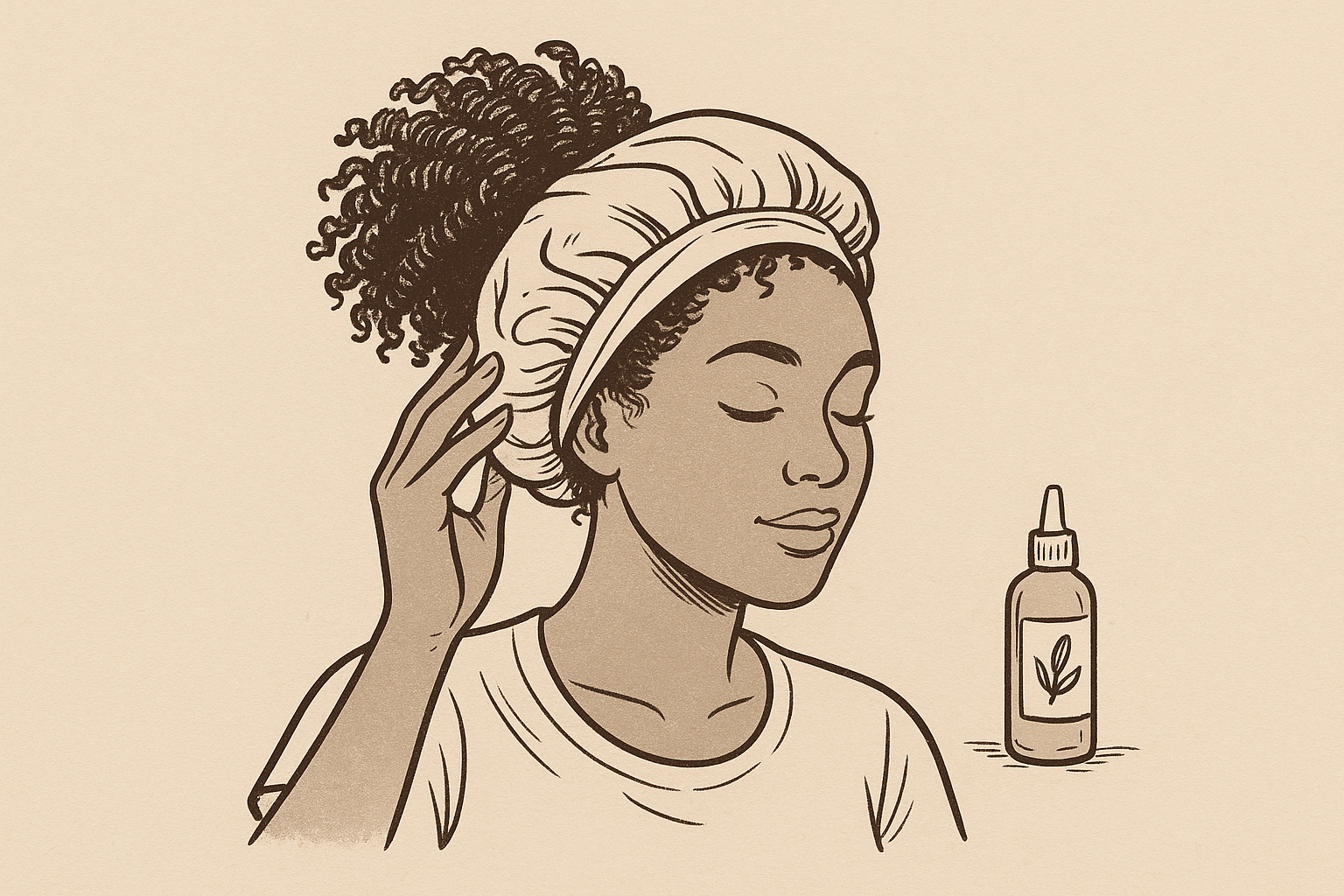
Your nighttime routine determines whether your twist out lasts three days or three hours past waking up.
Refresh definition without restyling
Revive your twist out each morning using a spray bottle filled with water and a small amount of leave-in conditioner. Lightly mist sections that look frizzy or flat, then scrunch them upward to reactivate the curl pattern. Focus on problem areas rather than soaking your entire head because what is a twist out if not a style that responds well to targeted refreshing? Apply a lightweight styling cream to your palms, rub them together, and smooth over any flyaways without disturbing the established curl pattern. Fluff your roots with a pick to restore volume that gets compressed during sleep.
Your twist out plan from here
You now understand what is a twist out, how to create one that actually lasts, and the maintenance steps that keep it looking fresh. The technique breaks down into straightforward stages: prep clean hair, twist with consistent tension, dry completely before unraveling, and protect your style overnight. Following these steps removes the guesswork from styling textured hair and gives you predictable results instead of hoping for the best.
Practice makes this process faster and more intuitive. Your first attempt might take an hour, but you'll cut that time in half once the technique becomes muscle memory. Focus on perfecting your product application and section sizes before worrying about speed. At scatterhair, we're building styling products specifically designed to make techniques like twist outs feel effortless rather than complicated. The goal is helping you rock your texture without fighting against it or spending hours on maintenance that doesn't stick.