

What Is Clarifying Shampoo? Benefits, Risks, And How To Use
If you have textured hair, you already know the drill: layering creams, gels, oils, and whatever else it takes to get your style right. But all that product adds up. Over time, your hair starts feeling heavy, dull, and weirdly unresponsive to the products that used to work perfectly. That's usually when someone tells you to try a clarifying shampoo. So, what is clarifying shampoo, exactly? And is it actually safe for textured hair that's already prone to dryness?
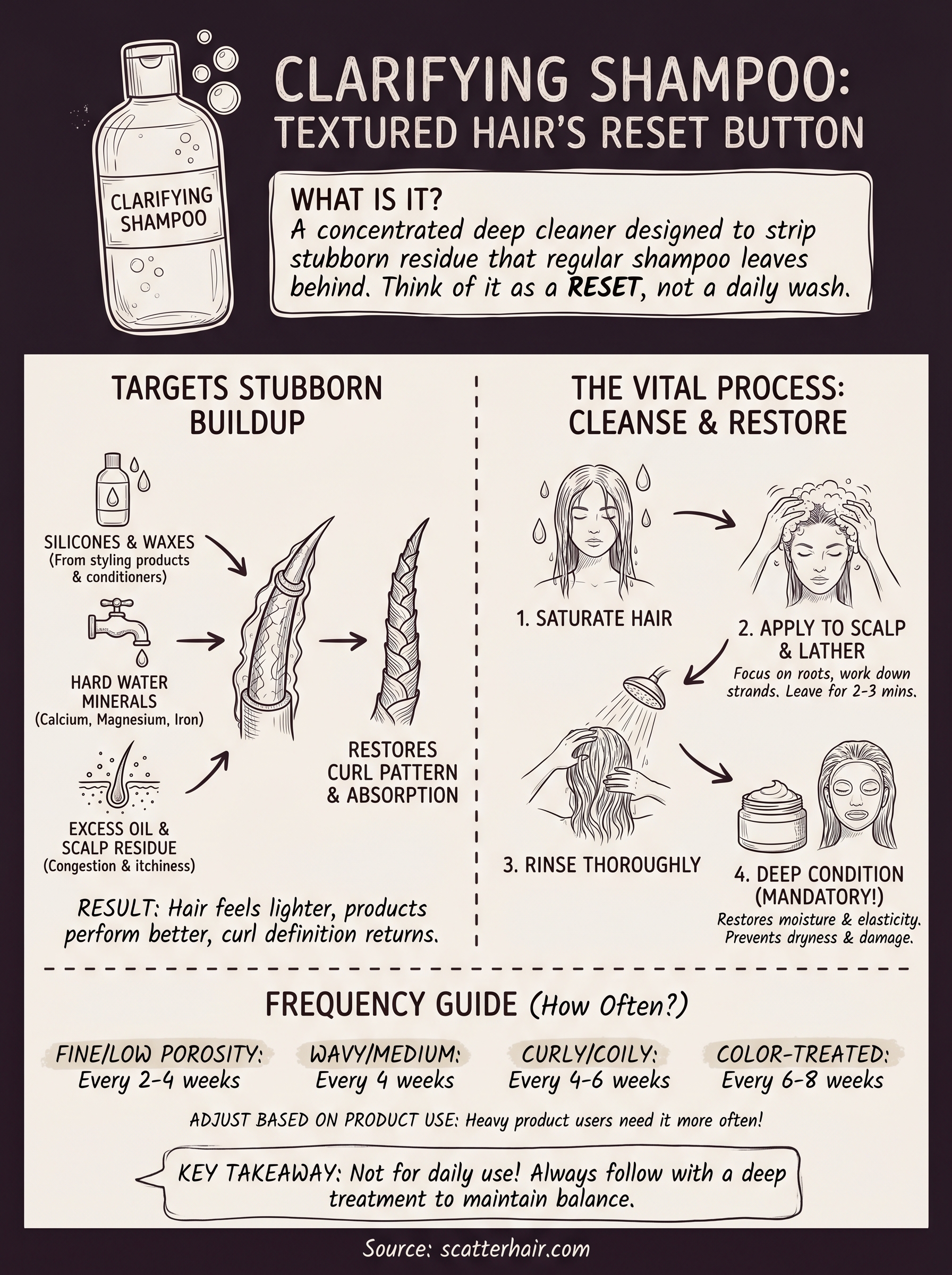
Here's the short version: clarifying shampoo is a deep-cleaning formula designed to strip away product buildup, minerals from hard water, and excess oil that your regular shampoo leaves behind. Think of it as a reset button for your hair. It's not meant for daily use, but when used correctly, it can bring your curls, coils, and waves back to life in a single wash.
At scatterhair, we're building styling products specifically for textured hair, products that perform without weighing you down. But even the best styling routine needs a clean foundation to work from. This article breaks down everything you need to know about clarifying shampoo: what it does, how it differs from regular shampoo, the real benefits and risks, and how often you should actually use it. No guesswork, just clear answers.
What clarifying shampoo is and how it works
Clarifying shampoo is a concentrated cleansing formula built to go deeper than your regular shampoo. Where a standard shampoo removes surface-level dirt and some oil, a clarifying shampoo targets the stubborn residue that accumulates over time: silicones, waxes, hard water minerals, and the leftover traces of every styling product you've applied. If you've ever wondered what is clarifying shampoo versus your everyday cleanser, the simplest answer is this: it's a stronger reset tool, not a daily wash.
Clarifying shampoo is designed for periodic use, not regular rotation. Using it too frequently strips the moisture your hair actually needs to stay balanced.
The formula works by using surfactants with a higher cleansing capacity than those found in regular or moisturizing shampoos. Surfactants are cleansing agents that attract both water and oil simultaneously, allowing them to lift residue off the hair shaft and rinse it away cleanly. In a clarifying shampoo, those surfactants are present in higher concentrations or are more aggressive by nature, which is why the clean you get feels noticeably different from your usual wash day.
The active ingredients that do the cleaning
Most clarifying shampoos rely on sulfates like sodium lauryl sulfate (SLS) or sodium laureth sulfate (SLES) as their primary cleansing agents. These sulfates create a strong lather that cuts through grease, oil, and product buildup efficiently. Some formulas use chelating agents alongside surfactants, specifically to target mineral buildup from hard water. Chelating agents like EDTA bind to mineral ions such as calcium, magnesium, and iron, and allow them to rinse out with the water. Standard shampoos skip this step entirely.
Not all clarifying shampoos use sulfates. Some formulas use gentler surfactants like cocamidopropyl betaine or plant-derived cleansers, which still deliver a deeper clean than moisturizing shampoos but with less aggressive stripping. These sulfate-free clarifying options are worth knowing about if your hair runs dry, but they tend to work best for mild buildup rather than heavy accumulation from months of product layering.
Why the clean feels different
When you use a clarifying shampoo, your hair feels noticeably squeaky or stripped right after rinsing. That sensation is your hair shaft without the coating of product, mineral, and oil residue that normally sits on top of it. The feeling is not always comfortable, especially for textured hair, but it signals that the formula did its job and your scalp is starting fresh.
Your hair's natural porosity and curl pattern affect how intensely you experience that stripped sensation. Coily and kinky hair types tend to feel it more strongly because those textures produce less sebum naturally and depend more on added moisture to stay balanced. This is exactly why following a clarifying shampoo with a deep conditioning treatment is not optional. It's the step that restores moisture to the hair shaft after the reset and keeps the process from doing more harm than good.
Clarifying vs regular shampoo and co-wash
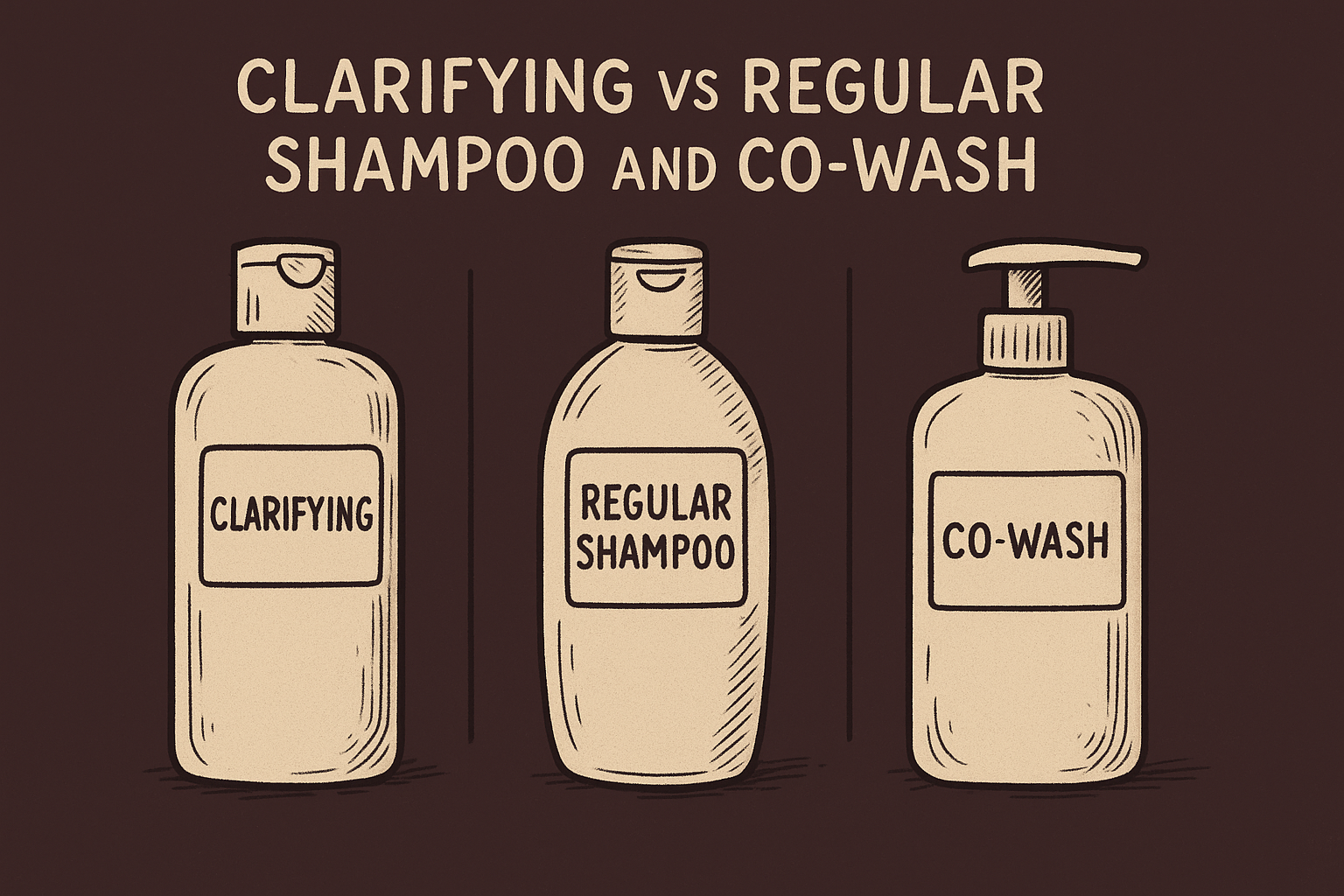
Understanding what is clarifying shampoo becomes much clearer once you put it side by side with the other cleansing options on your shelf. Regular shampoos, clarifying shampoos, and co-washes all clean your hair, but they do it at completely different levels of intensity. Knowing the difference helps you decide which one belongs in your routine and when.
What regular shampoo actually does
Regular shampoo is designed for maintenance cleaning. It removes the dirt, sweat, and surface oil your scalp produces between wash days. The surfactants in a standard formula are mild enough to clean without disrupting your hair's moisture too aggressively. That's a deliberate choice, because the goal of everyday washing is to keep your hair clean without stripping it bare every single time.
The problem is that mild surfactants have a limit. They are not built to cut through layers of silicones, heavy wax-based products, or mineral deposits from hard water. Over weeks of regular washing, those residues stay on your hair shaft and accumulate. Your regular shampoo keeps the surface clean, but the buildup underneath continues to grow.
Switching shampoos or washing more frequently will not solve buildup if your formula is not strong enough to remove it in the first place.
Where co-washing fits in
Co-washing, short for conditioner-only washing, skips shampoo entirely and uses a rinse-out conditioner to clean the hair. It became popular in the textured hair community because it keeps moisture levels high and avoids the dryness that some shampoos cause. For coily and kinky hair types that tend to run naturally dry, co-washing can be a gentle way to refresh curls between wash days without disrupting their moisture balance.
Co-washing does not remove buildup. Conditioners are designed to deposit ingredients onto the hair shaft, not lift them off. If you co-wash regularly without ever using a proper cleanser, you are adding more product on top of existing residue with every wash. A clarifying shampoo breaks that cycle by actually lifting what a co-wash and regular shampoo leave behind, giving you a genuinely clean base to work from before you restore moisture.
What it removes and why buildup happens
To understand what is clarifying shampoo and why it exists, you need to understand what your regular cleanser fails to remove. Product residue and mineral deposits build up on your hair shaft gradually, and they do it silently. You do not notice a single bad wash day. You notice it weeks later when your style falls flat faster, your products stop absorbing properly, and your scalp feels itchy or congested despite regular washing.
The types of residue clarifying shampoo targets
Clarifying shampoo works against several distinct categories of buildup, and each one affects your hair differently. Silicones are one of the biggest culprits. They appear in conditioners, leave-ins, serums, and heat protectants as smoothing agents, and they coat the hair shaft to add shine and reduce frizz. The problem is that most silicones are not water-soluble, so they stack up over time and eventually block moisture from entering the hair.
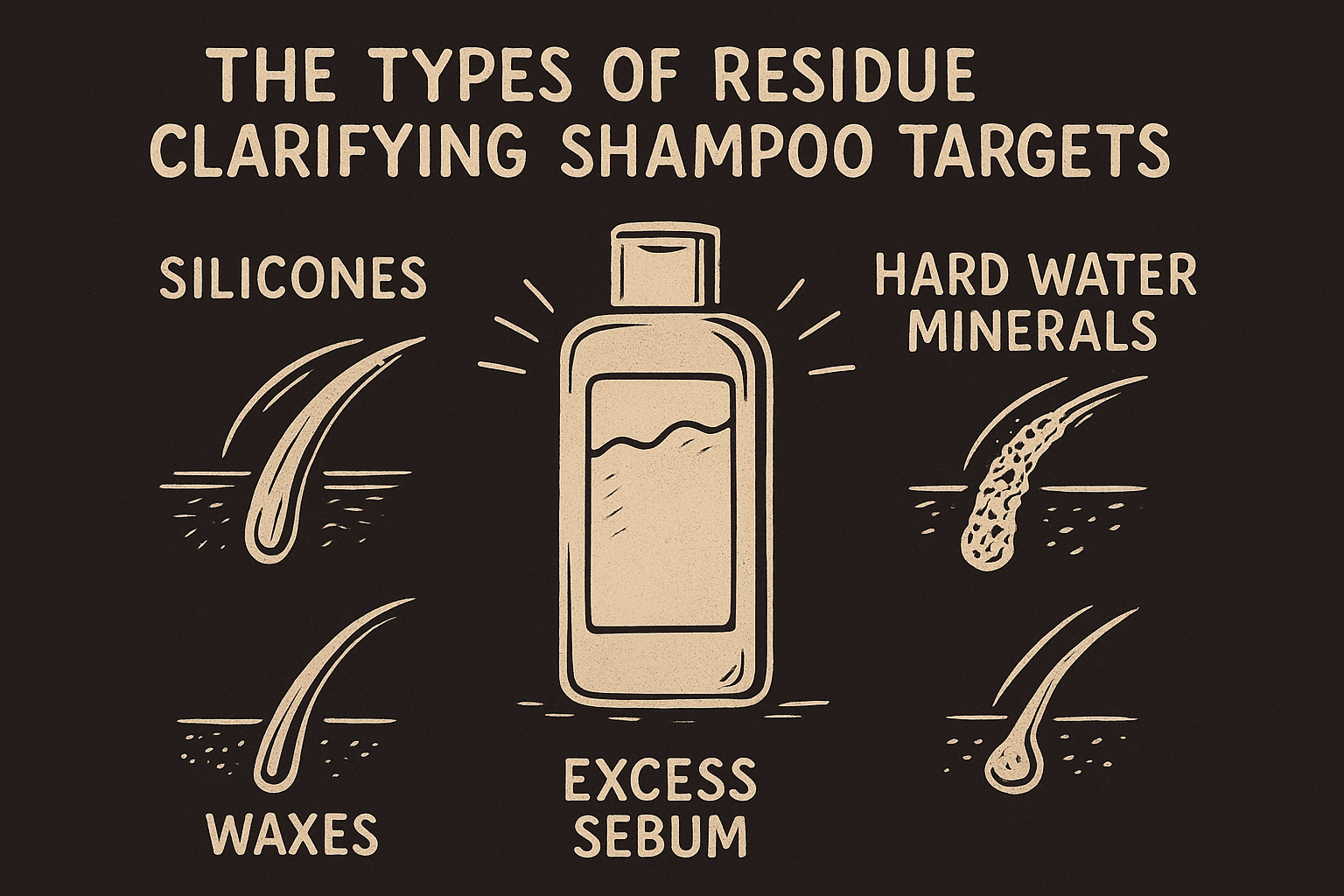
Hard water minerals are the second major source of buildup. If your tap water contains high levels of calcium, magnesium, or iron, those minerals deposit on your hair with every wash. Over time they create a rough film that makes hair feel stiff, dull, and resistant to conditioning. Waxes from styling products, excess sebum from the scalp, and general environmental residue round out the rest.
Silicone and mineral buildup are invisible until the damage is already affecting your curl pattern and moisture retention.
Why buildup accumulates faster in textured hair
Textured hair is more vulnerable to buildup for a few reasons. Coily and kinky curl patterns create more surface area and more points where product residue can grip and accumulate compared to straight hair. The twists and bends of each strand trap product more easily, and because sebum from your scalp travels down a curved shaft instead of a straight one, it distributes unevenly and mixes with product residue at specific points along the strand.
If you co-wash frequently or use heavy leave-in products and styling creams without a regular deep-cleansing wash, that residue compounds quickly. The more layers you add without fully removing what came before, the harder it becomes for your hair to respond to moisture or hold a style. Clarifying shampoo breaks that cycle by starting clean.
Benefits and who gets the most out of it
Clarifying shampoo delivers one core benefit that no other product in your routine can replicate: a genuinely clean slate. When buildup is gone, everything else you put on your hair works better. Your conditioner absorbs instead of sitting on top of a silicone barrier. Your curl pattern becomes more defined and consistent. Your scalp stops feeling congested or itchy without any obvious cause. The results are not subtle once you experience them.
What clarifying shampoo actually fixes
Once you understand what is clarifying shampoo and let it do its job, the most immediate change is how your products perform. Leave-ins, creams, and gels that felt heavy or ineffective after buildup accumulation suddenly absorb and work the way they are supposed to. That is not because the products changed. It is because your hair can actually receive them now.
A clean hair shaft absorbs moisture and product more evenly, which means your styling routine becomes more predictable and your results more consistent.
Your scalp health also improves with regular clarifying. Buildup on the scalp blocks follicles, traps bacteria, and contributes to flakiness and itchiness that do not respond to moisturizing treatments. A periodic clarifying wash clears that congestion and gives your scalp room to function normally, which supports healthier hair growth over time.
Hair types and routines that benefit most
People who use heavy styling products frequently, including gels, butters, waxes, and curl creams, benefit the most from clarifying shampoo. Those formulas are designed to perform, but they leave behind residue that stacks up fast. If you apply products every wash day or refresh your style mid-week, buildup accumulates faster than someone who uses lighter formulations.
Textured hair types specifically get a significant payoff from clarifying because buildup disrupts curl pattern more visibly than it does in straight hair. When coils, curls, and waves are weighed down or coated in residue, they lose definition, spring, and moisture retention all at once. Removing that layer restores the natural behavior of your curl pattern without requiring you to change anything else about your routine. If your hair has felt unresponsive lately, buildup is usually the first thing worth addressing.
Risks, side effects, and when to skip it
Knowing what is clarifying shampoo also means knowing where it can work against you. The same formula that removes stubborn buildup can strip away the natural oils and moisture your hair depends on to stay balanced. That trade-off is not a flaw in the product. It becomes a problem only when you use it more often than your hair can recover from or in situations where your hair is already compromised.
Dryness and moisture loss
The most common side effect of clarifying shampoo is significant dryness, especially for textured hair types. Because the formula lifts residue so effectively, it also removes the sebum and conditioning agents sitting on your hair shaft. Coily and kinky textures feel this most intensely because those patterns naturally retain less oil than straight hair. Your hair may feel rough, brittle, or difficult to detangle immediately after rinsing if you skip the deep conditioning treatment that follows.
Repeated clarifying without adequate moisture replacement disrupts your hair's protein-moisture balance over time. You may notice increased breakage, reduced elasticity, or a curl pattern that looks inconsistent rather than refreshed. That is a sign you are clarifying too often or not replenishing moisture aggressively enough after each session. The frequency you choose matters as much as the product itself.
The clarifying wash is only half the process. The deep conditioner you apply afterward is what keeps the reset from turning into damage.
Color-treated and chemically processed hair
Clarifying shampoo poses a real risk to color-treated hair. The strong surfactants that lift product residue also lift artificial pigment, which means your color fades faster with every clarifying wash. If you dye, bleach, or chemically relax your hair, using clarifying shampoo too frequently strips your treatment and leaves your strands more porous and fragile than before.
When to skip clarifying shampoo entirely
Some situations call for skipping clarifying shampoo altogether. If your hair is already severely damaged or your scalp is actively irritated or inflamed, a strong cleanser will make both conditions worse. Skip clarifying when any of the following apply:
- Your scalp has open sores, active dermatitis, or a fresh chemical treatment
- Your hair is extremely dry or over-processed and already breaking
- You clarified within the last week and your hair has not recovered moisture yet
In those situations, focus on restoring your hair's moisture and integrity first before reintroducing a deep cleanse.
How to use clarifying shampoo and how often
Knowing what is clarifying shampoo is only useful if you apply it correctly. The process looks similar to a regular wash, but a few specific steps make a real difference in the final result. Apply the formula to wet hair, focus on your scalp first, then work the lather down through your strands. Let it sit for two to three minutes before rinsing thoroughly. Unlike your regular shampoo, you do not need to repeat the application unless your buildup is extreme.
Step-by-step application
Start with completely saturated hair before applying any product. Dry or damp hair does not distribute clarifying shampoo evenly, which means some areas get over-processed while others barely get cleaned. Massage the formula into your scalp using your fingertips in small circular motions, then smooth the remaining lather down your strands from root to tip. Rinse with warm water until the water runs completely clear.
Follow immediately with a deep conditioning treatment and leave it on for at least ten minutes. That step restores moisture to your hair shaft after the clarifying formula strips the residue and some of your natural oils. Skipping this step leaves your hair dry, rough, and more prone to breakage before your next wash day.
Deep conditioning after every clarifying wash is what keeps the process effective without causing long-term dryness or damage.
How often to clarify based on your hair type
Frequency depends entirely on your hair type and how heavily you rely on styling products. Here is a simple breakdown to help you set your schedule:
| Hair Type | Recommended Frequency |
|---|---|
| Fine or low-porosity hair | Every 2 to 4 weeks |
| Wavy or medium-textured hair | Every 4 weeks |
| Curly or coily hair | Every 4 to 6 weeks |
| Color-treated or chemically processed hair | Every 6 to 8 weeks |
Heavy product users benefit from clarifying more frequently than those with minimal styling routines. If your hair starts feeling weighed down or your products stop absorbing properly before your scheduled session, move up the timeline. On the other hand, if your hair feels tight and dry after clarifying, push the interval back and focus on moisture recovery before your next deep cleanse.
Key takeaways
Now you have a clear picture of what clarifying shampoo is and how it fits into a textured hair routine. It's a concentrated deep-cleansing formula that removes the buildup your regular shampoo leaves behind, including silicones, hard water minerals, and layered styling product residue that accumulates quietly over time.
Your routine should include clarifying shampoo every four to six weeks if you have coily or kinky hair, or more frequently if you rely heavily on styling products. Follow every session with a deep conditioning treatment to restore moisture and prevent dryness, and adjust your interval based on how your hair actually responds rather than sticking to a rigid schedule.
Building a routine that works consistently starts with a clean foundation. At Scatter, we're developing styling products specifically for textured hair, so when your reset is done and your hair is ready to absorb, the products you reach for actually perform the way they should.