

10 Best Scalp Care Shampoos for Curly Hair in 2026
Your curls only look as good as the scalp underneath them, and if that scalp is flaking, itching, or coated in product buildup, no amount of curl cream is going to save your day. Finding the right scalp care shampoo for curly hair means balancing two jobs at once: clearing away dandruff, excess oil, or sensitivity, while still keeping your curl pattern soft and defined instead of stripped and frizzy. That balance is harder to find than it sounds, since a lot of clarifying formulas leave curls dry and a lot of curl-specific shampoos ignore the scalp entirely.
We tested and researched formulas built specifically for that dual purpose, looking at ingredients like salicylic acid, tea tree oil, and gentle surfactants that lift buildup without disrupting your curl's natural moisture balance. The picks ahead cover everything from dandruff-prone scalps to sensitive, easily irritated skin, so you can match the product to your actual problem instead of guessing.
Below you'll find our 10 best scalp care shampoos for curly hair in 2026, broken down by what each one does well and who it fits. And if you're curious about the styling side of the equation once your scalp is sorted, that's exactly the kind of effortless, texture-first approach we're building toward at Scatter.
1. Best overall scalp care shampoo for curly hair
For curls that need both cleansing and moisture in the same bottle, a sulfate-free scalp care shampoo built around salicylic acid and lightweight humectants hits the sweet spot. This is the pick you reach for when you can't be bothered switching between three different bottles depending on your scalp's mood that week. It clears flakes and oil without the stripped, straw-like feel that plain clarifying shampoos leave behind on curly strands.
A great all-around scalp shampoo should clean the scalp like a treatment and rinse off the hair like a conditioner.
Key ingredients to look for
Look at the ingredient list before the marketing copy. The formulas that consistently perform well for curls combine a mild exfoliant with curl-friendly hydrators, something like:
- Salicylic acid (0.5 to 2 percent) to break down flakes and buildup
- Glycerin or aloe vera to pull in moisture during the wash
- Panthenol to reinforce the hair shaft and reduce frizz
- A sulfate-free surfactant base, like cocamidopropyl betaine
Who it's for
Curly-haired people juggling more than one scalp complaint, mild dandruff plus dryness, or oily roots with parched ends, get the most out of this category. If you've been buying separate products for your scalp and your curls and neither is working great, this is where you consolidate your routine. It also suits wash-day minimalists who want fewer steps without sacrificing results.
How to use it
Work the shampoo directly into your scalp with your fingertips, not your nails, for a full 60 seconds before rinsing. Massage in small circles across the whole scalp, not just the front hairline, since buildup tends to hide at the crown and nape. Let the lather run down through your lengths as you rinse rather than scrubbing your curls, which cuts down on frizz.
Price range
Expect to pay between $18 and $32 for a full-size bottle, which is standard for a mid-range formula with active ingredients. Bottles in this tier usually last six to eight weeks with twice-weekly washing, making the cost per wash reasonable for the dual scalp-and-curl benefit.
2. Best for dandruff and flaking
When visible flakes are your main complaint, not just an itchy scalp but actual white flecks landing on your shoulders, you need a shampoo built around active anti-dandruff ingredients rather than gentle cleansing alone. A medicated scalp shampoo with pyrithione zinc or ketoconazole targets the fungus (malassezia) that drives most dandruff cases, and it does this without needing to strip your curls the way an old-school clarifying shampoo would.
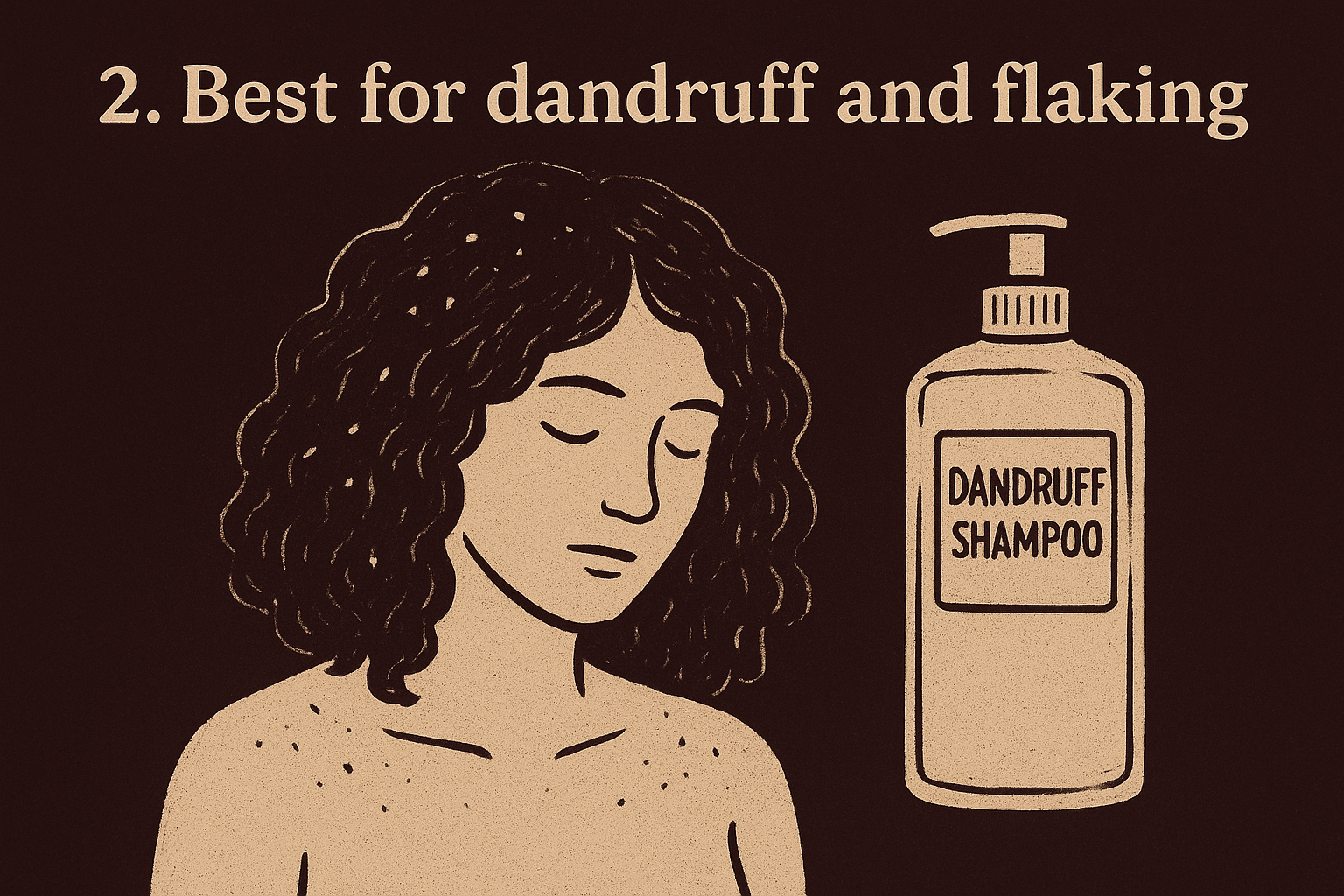
Flaking rarely responds to moisture alone. It usually needs an active ingredient that addresses the underlying cause.
Key ingredients to look for
Check the label for one of these proven actives, since dandruff shampoos live or die by their active ingredient percentage:
- Pyrithione zinc (1 to 2 percent), the most common OTC dandruff fighter
- Ketoconazole (1 percent), stronger and often recommended by dermatologists
- Salicylic acid, useful for flakes tied to dryness rather than fungus
Who it's for
This pick suits anyone with persistent flaking that doesn't clear up with a regular curl shampoo, especially if it's accompanied by mild redness or tightness. It's also worth trying before you book a dermatologist visit for seborrheic dermatitis, according to guidance from the American Academy of Dermatology.
How to use it
Leave the lather sitting on your scalp for three to five minutes before rinsing, since the active ingredients need contact time to work. Use it two to three times a week rather than daily.
Price range
Medicated formulas typically run $12 to $25, depending on strength and brand.
3. Best for dry, itchy scalp
Dry, itchy scalps on curly hair usually come from a moisture deficit rather than fungus or buildup, which means the fix looks different from a dandruff shampoo. A hydrating scalp shampoo built around oat extract, ceramides, and soothing botanicals calms the itch while feeding moisture back into both the scalp and the curl itself. This is the shampoo for anyone whose scalp feels tight within a day of washing, even when there's no visible flaking.
An itchy scalp on curly hair is often a thirst signal, not an infection.
Key ingredients to look for
Gentle, barrier-repairing ingredients matter more here than actives. Favor formulas with:
- Colloidal oatmeal to calm irritation and reduce itch
- Ceramides to reinforce the scalp's moisture barrier
- Aloe vera or chamomile extract for soothing relief
- Fatty alcohols instead of harsh sulfates
Who it's for
Curly hair types with naturally drier scalps, including anyone in a cold or low-humidity climate, benefit most from this pick. It also works well if scratching has left your scalp tender or slightly inflamed, since the formula won't sting or worsen sensitivity.
How to use it
Wash no more than twice a week, and follow immediately with a lightweight leave-in or scalp oil while hair is still damp to lock in moisture. Skip hot water, which pulls moisture out of both scalp and curl.
Price range
These formulas generally cost $14 to $28, with premium botanical blends sitting at the higher end of that range.
4. Best clarifying shampoo for buildup
Heavy gels, curl creams, and dry shampoo pile up fast on curly hair, especially if you're stretching washes to protect your curl pattern. A clarifying scalp shampoo cuts through that residue and resets your scalp so your regular products can actually absorb again instead of sitting on top of layered gunk. If your curls feel weighed down, dull, or your regular shampoo suddenly stopped lathering, buildup is almost always the culprit.
A curl that won't hold moisture anymore might just be buried under old product, not actually dry.
Key ingredients to look for
Clarifying formulas skip the fancy botanicals in favor of ingredients that physically lift residue:
- Apple cider vinegar or citric acid to dissolve mineral and product buildup
- Coco-glucoside or a mild sulfate for stronger cleansing power
- Activated charcoal, which binds oil and residue without over-drying curls
Who it's for
This pick suits product-heavy curl routines, swimmers dealing with chlorine residue, and anyone in hard-water areas where mineral deposits dull curl shine over time. It's also the right call before a protein treatment, since buildup blocks absorption.
How to use it
Use this once every two to four weeks, not on a regular wash-day rotation, since frequent clarifying can dry curls out. Follow it immediately with a deep conditioner to replace moisture the wash removed.
Price range
Clarifying shampoos usually cost $10 to $24, making them one of the more affordable additions to a curl routine.
5. Best sulfate-free pick for sensitive scalps
Sensitive scalps react to almost everything, fragrance, sulfates, even certain preservatives, so the fix isn't a stronger formula but a shorter, calmer ingredient list. A sulfate-free scalp shampoo built for reactive skin skips the harsh detergents that trigger redness or stinging, while still cleaning curly hair thoroughly enough to prevent buildup. This category matters most if you've already ruled out dandruff and dryness and your scalp still burns, tingles, or flushes red after washing.
A sensitive scalp needs fewer ingredients, not more powerful ones.
Key ingredients to look for
Stick to short, recognizable ingredient lists when shopping for this category:
- Sulfate-free surfactants like decyl glucoside
- Fragrance-free or minimally scented formulas
- Allantoin or bisabolol to calm reactive skin
- No essential oils, which are common irritants despite being marketed as natural
Who it's for
Anyone with a history of eczema, psoriasis, or contact dermatitis on the scalp should reach for this pick first. It also suits curly hair types who've noticed a pattern of irritation after switching shampoos, since a gentle scalp care shampoo removes several common triggers at once without demanding a full dermatologist workup.
How to use it
Patch test on a small section of scalp before a full wash, and introduce it gradually alongside your existing routine rather than swapping everything at once. Lukewarm water, not hot, keeps irritation from flaring during the rinse.
Price range
These formulas run $16 to $30, reflecting the cost of simplified, dermatologist-friendly ingredient sourcing.
6. Best for oily roots and low porosity curls
Low porosity curls have a tight cuticle that resists moisture but happily traps oil and product right at the root, which leaves you with a scalp that looks greasy by day two while the lengths still feel dry. A lightweight scalp care shampoo for curly hair built around clay or gentle clarifying agents pulls excess sebum off the scalp without coating your strands in heavy conditioning agents that low porosity hair can't absorb anyway. This pick solves the specific frustration of washing constantly just to manage oil, only to end up with flat roots and frizzy ends.
Low porosity curls need root-focused cleansing, not more conditioner sitting on top of hair that can't absorb it.
Key ingredients to look for
Lean toward formulas that manage oil at the scalp while staying light everywhere else:
- Kaolin or bentonite clay to absorb excess sebum
- Witch hazel to tighten pores and reduce oil production
- Rice water or lightweight proteins that won't overwhelm a resistant cuticle
- Minimal to no heavy oils or butters in the formula
Who it's for
This shampoo suits curly hair types who notice oily roots paired with dry, dull-looking ends, a common combo with low porosity strands. It also works well if your regular conditioner just sits on your hair instead of soaking in.
How to use it
Focus the shampoo entirely on your scalp and let runoff cleanse your lengths. Follow with a warm-water rinse, since heat helps low porosity cuticles open enough to accept moisture afterward.
Price range
Expect $15 to $26 for this category, depending on the clay concentration and brand positioning.
7. Best exfoliating scalp scrub shampoo
Some scalps need more than a shampoo, they need a physical reset. A scalp scrub shampoo combines gentle exfoliating granules, like jojoba beads or sugar, with a cleansing base to slough off dead skin, flaky patches, and stubborn product residue that liquid formulas leave behind. Think of it as the curly hair equivalent of a body scrub, aimed specifically at breaking up buildup that clarifying shampoo alone can't fully lift.
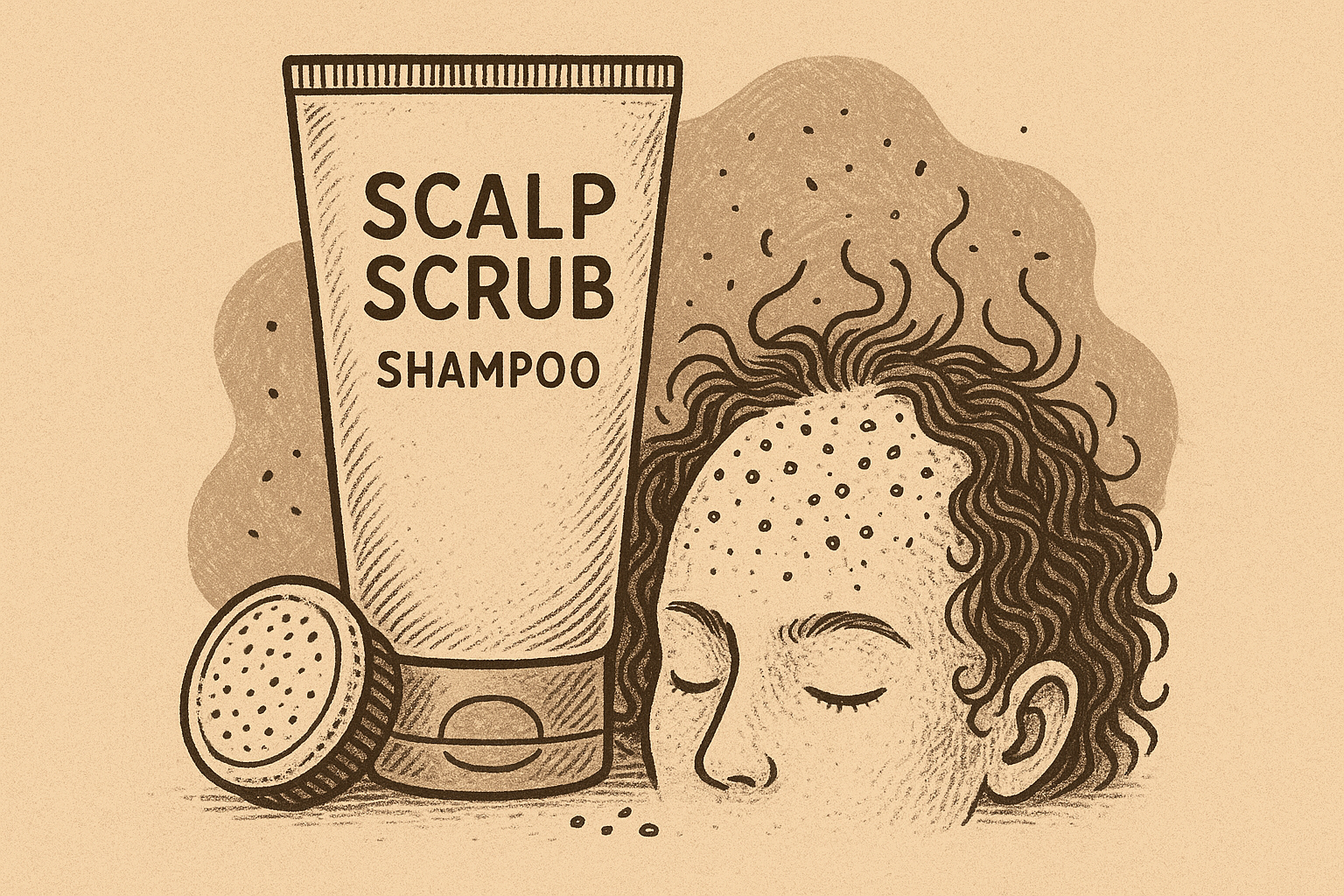
Exfoliation clears what cleansing alone leaves behind.
Key ingredients to look for
Granule quality matters more than scent or packaging here. Look for:
- Jojoba beads, which dissolve gently instead of scratching the scalp
- Fine sugar or salt crystals for a softer exfoliating action
- Tea tree oil to add antimicrobial support alongside the scrub
- A moisturizing base like glycerin so the scrub doesn't dry curls out
Who it's for
Curly hair types dealing with thick flaking, chronic buildup from styling products, or a scalp that just feels rough to the touch benefit most from this pick. It also suits anyone who's tried a standard scalp shampoo without seeing much improvement.
How to use it
Apply to a wet scalp before your regular shampoo, massaging in small circles for one to two minutes, then rinse and follow with your usual wash routine. Limit use to once weekly, since daily scrubbing can irritate the skin.
Price range
Expect to pay $18 to $34, since exfoliating formulas tend to sit at the premium end of the scalp care category.
8. Best drugstore option
Not everyone wants to spend $30 on a scalp shampoo, and you shouldn't have to. A solid drugstore scalp care shampoo for curly hair proves that affordable formulas can still combine gentle cleansing with real scalp benefits, usually built around glycerin, coconut-derived surfactants, and a touch of salicylic acid or pyrithione zinc. This is the pick for anyone testing whether scalp-focused products actually help before committing to a pricier routine.
You don't need a premium price tag to get real scalp relief, just the right ingredients in the right concentration.
Key ingredients to look for
Budget formulas can still deliver if you check the label carefully:
- Glycerin for basic moisture retention
- Coconut-derived surfactants for gentle, affordable cleansing
- Low-dose salicylic acid or pyrithione zinc for mild flake control
- Panthenol to soften curls during the wash
Who it's for
Curly hair types on a tight haircare budget, or anyone new to scalp-specific shampoos who wants to test the category before spending more, fit this pick well. Students and first-time buyers especially benefit here.
How to use it
Wash two to three times weekly, massaging the scalp thoroughly since drugstore formulas often need slightly longer contact time than premium versions to work as effectively.
Price range
Most drugstore scalp shampoos cost between $6 and $14, making this the most accessible entry point into scalp-focused curly hair care.
9. Best cowash for gentle scalp cleansing
Curly hair that gets washed often can't always handle sulfates or even sulfate-free shampoo without drying out, which is where a cowash for curly hair earns its spot in the rotation. Cleansing conditioners skip traditional detergents entirely, relying on mild surfactants and conditioning agents to lift light oil and sweat while leaving curl pattern intact. Rather than replacing your scalp shampoo, this pick fills the gaps between deeper washes so your scalp never goes too long without attention.
A cowash keeps the scalp clean between real washes without undoing the moisture work you've already done.
Key ingredients to look for
Good cowash formulas lean conditioning-first while still including something that actually cleanses:
- Cetrimonium chloride, a mild conditioning cleanser
- Behentrimonium methosulfate for light surfactant action
- Slip agents like cetyl alcohol for detangling
- A touch of peppermint or tea tree for scalp freshness
Who it's for
This suits curly hair types who wash frequently, exercise regularly, or simply can't tolerate shampoo more than once a week without dryness. It also works well for transitioning curls easing off harsher cleansers.
How to use it
Apply generously to a wet scalp, massage thoroughly for a minute, then work the excess through your lengths before rinsing completely.
Price range
Expect $14 to $28 for a full-size bottle, similar to a mid-range conditioner.
10. Best for color-treated curly hair
Color-treated curls face a double bind: bleach and dye strip moisture from the hair shaft while also leaving the scalp more reactive to harsh surfactants. A color-safe scalp care shampoo for curly hair cleans gently enough to protect your color investment while still addressing the flaking or sensitivity that often shows up after a salon visit. Picking this over a generic curl shampoo matters if you've noticed your scalp getting itchier or your color fading faster since your last treatment.
Protecting your color and protecting your scalp usually come down to the same gentle, sulfate-free formula.
Key ingredients to look for
Formulas built for treated curls balance mild cleansing with pigment protection. Look for:
- Sulfate-free surfactants that won't strip color molecules
- UV filters to prevent color fading from sun exposure
- Antioxidants like vitamin E to counter chemical damage
- Mild botanical extracts instead of harsh actives that could irritate a sensitized scalp
Who it's for
This pick suits anyone with chemically treated curls, whether that's bleach, permanent dye, or a keratin treatment, especially if your scalp has felt more reactive since the appointment. It's also worth choosing if you've noticed color fading faster than expected between salon visits.
How to use it
Wash with lukewarm water only, since heat accelerates color fade, and massage gently rather than scrubbing vigorously near the scalp.
Price range
Expect $16 to $30, roughly in line with other specialty curl formulas on this list.
11. How to choose a scalp care shampoo for your curls
Matching a scalp care shampoo for curly hair to your actual problem beats grabbing whatever has the prettiest packaging. Start by naming your primary complaint, flaking, itching, oiliness, buildup, or sensitivity, since most formulas are built to solve one issue well rather than everything at once. Trying to fix five problems with one bottle usually means none of them get solved properly.
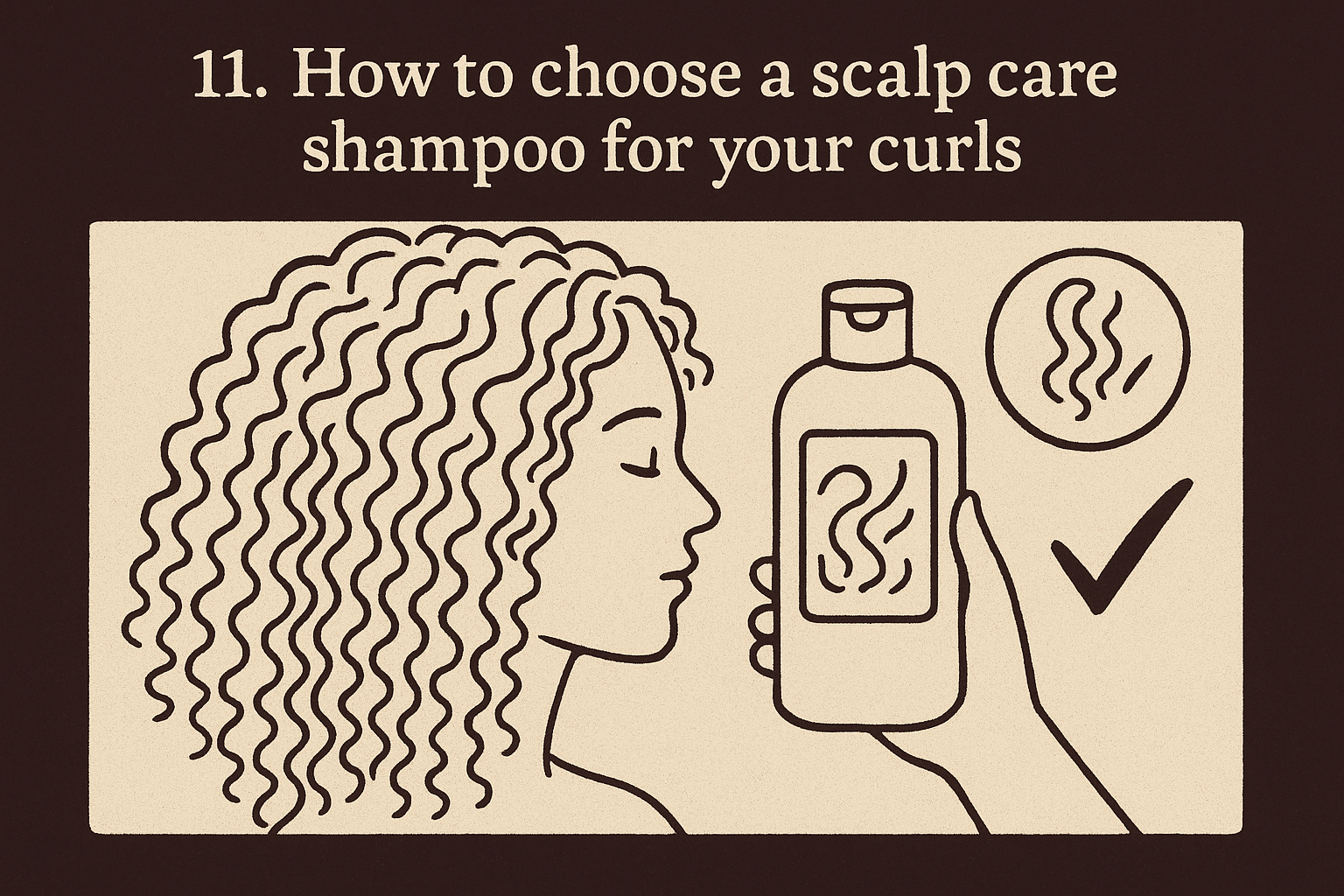
Buy for the symptom you actually have, not the one you're afraid you might have.
Texture matters just as much as scalp condition. Curl pattern and porosity change how much moisture a formula needs to carry, which is why a shampoo built for straight hair scalps often leaves curls dry even if it clears flaking well. Cross-reference your scalp issue with your curl type before buying:
| Scalp issue | Look for | Watch out for |
|---|---|---|
| Flaking or dandruff | Pyrithione zinc, ketoconazole | Heavy oils that trap the fungus |
| Dry, itchy scalp | Oatmeal, ceramides, glycerin | Sulfates, alcohol-heavy formulas |
| Buildup | Citric acid, clarifying agents | Overuse drying out curls |
| Sensitivity | Short ingredient lists, fragrance-free | Essential oils, added fragrance |
| Oily roots | Clay, witch hazel | Rich butters at the root |
Finally, check the surfactant base regardless of category. Sulfate-free formulas protect curl definition better across the board, even outside the sensitive-scalp category, so they're worth prioritizing whenever two products otherwise look similar.
12. Scalp care habits that make any shampoo work better
Even the best scalp care shampoo for curly hair underperforms if the habits around it work against it. Washing on a strict schedule regardless of how your scalp actually feels is one of the most common mistakes curly hair types make, since overwashing strips moisture while underwashing lets buildup accumulate past the point a gentle formula can handle.
Massage technique matters more than most people realize. Fingertip pressure applied in slow, deliberate circles for a full minute increases circulation and helps active ingredients like salicylic acid or pyrithione zinc actually reach the skin instead of rinsing away on contact.
A shampoo only works as well as the technique behind it.
Water temperature deserves attention too, since hot water strips natural oils and can trigger flaking in scalps that are already sensitive. Rinsing with lukewarm to cool water protects both your scalp barrier and your curl's moisture retention.
Beyond the shower, a few small habits compound over time:
- Brush or finger-detangle your scalp gently between washes to loosen dead skin before it builds up
- Avoid piling heavy oils directly on the scalp, since that can trap bacteria and worsen flaking
- Change pillowcases weekly to cut down on oil and product transfer back onto clean hair
- Track flare-ups against diet, stress, or weather, since scalp sensitivity often has triggers beyond your shampoo
Consistency across these habits, not a single miracle product, is usually what separates a scalp that stays calm from one that cycles through the same complaints every few weeks.
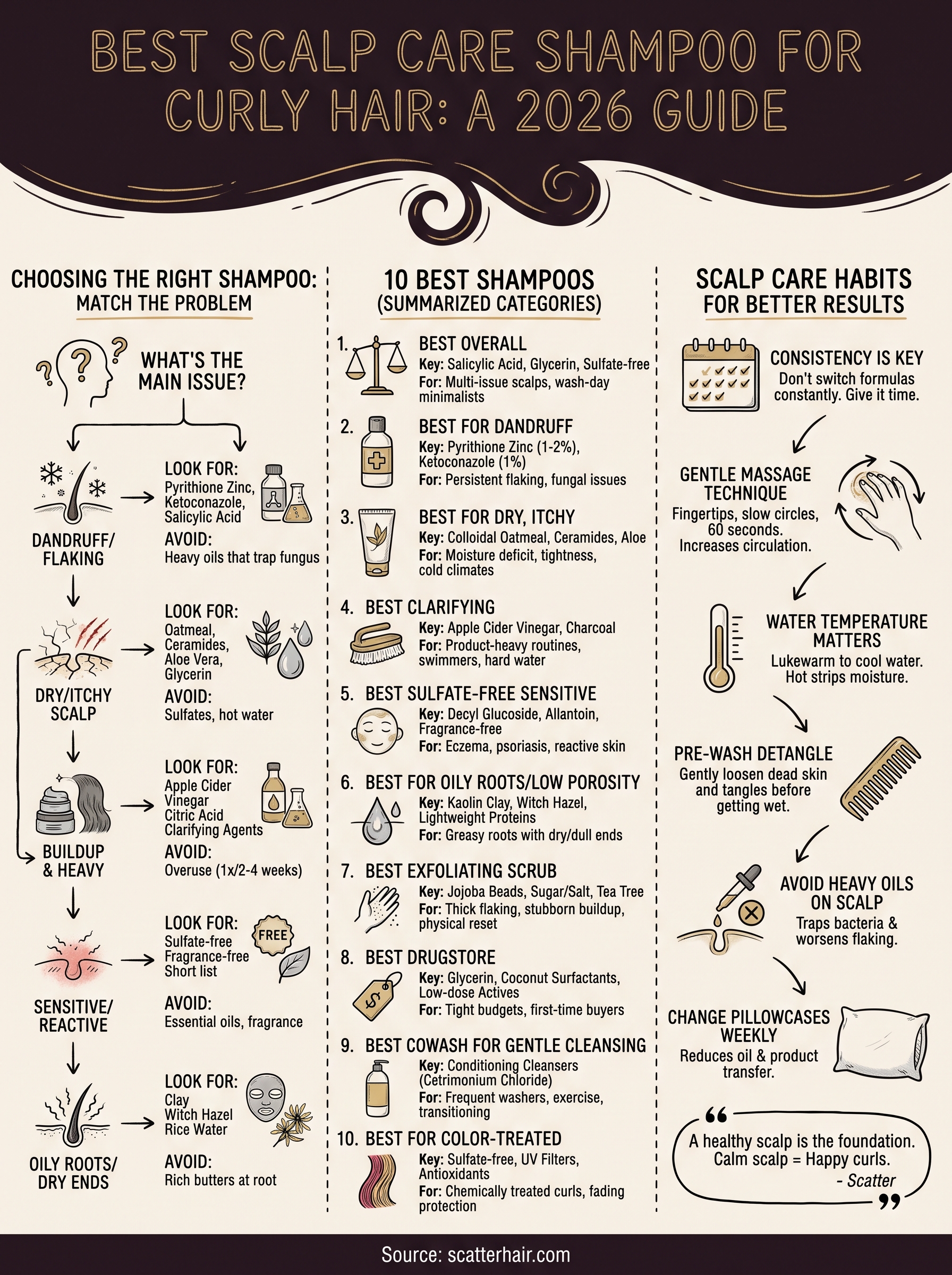
Finding the right routine for your curls
A healthy scalp is the foundation every curl pattern depends on, and no amount of styling product fixes what a mismatched scalp care shampoo for curly hair breaks first. Match the formula to your actual complaint, whether that's flaking, oil, sensitivity, or buildup, then let consistent habits like gentle massage and lukewarm rinses do the rest of the work. None of the ten picks above will perform if you're switching formulas every other week chasing a quick fix.
Once your scalp is calm and your curls are getting the moisture they need, styling becomes the easy part instead of a daily fight. That's the exact problem we're solving at Scatter, with products built for textured hair that make wash day and styling day feel effortless instead of like guesswork. Curious what that looks like in practice? Sign up for early access at Scatter and get first dibs when we launch in 2026.