

8 Hard Water Hair Symptoms: Signs, Fixes, And Prevention
Your styling routine is dialed in. The products are right, the technique is solid, but your hair still feels dry, dull, and weirdly stiff. Before you blame your products or your process, consider what's coming out of your showerhead. Hard water hair symptoms show up gradually, and most people don't connect the dots until the damage is already visible. If you have textured hair, the effects hit even harder because your strands are naturally more porous and prone to buildup.
At scatterhair, we're building styling products specifically for textured hair, formulas designed to perform without fighting against what your hair naturally does. But even the best product can't do its job on hair that's coated in mineral deposits. That's why understanding what hard water does to your hair matters just as much as what you put in it.
This article breaks down eight specific symptoms of hard water damage, explains why they happen, and gives you practical fixes to reverse and prevent them. Whether you're dealing with unexplained breakage, color fade, or buildup that won't quit, you'll know exactly what to look for and what to do about it.
1. Styling products stop working like they used to
One of the most telling hard water hair symptoms is when your go-to products suddenly feel useless. Your leave-in conditioner sits on top of your hair instead of absorbing. Your curl cream gives you crunch instead of definition. Nothing performs the way it did when you first started using it, even though you haven't changed a thing.
What it looks like on your hair
Your hair feels coated and weighed down, even right after washing. Products that used to give you soft, defined texture now leave your strands crunchy, sticky, or greasy. You might notice your wash-and-go or twist-out looks flat and undefined no matter how much product you layer on.
Some common signs include:
- Products absorb well when you use them away from home but not in your own shower
- Your hair feels stiff or waxy right after rinsing, before you apply anything
- Buildup accumulates faster than it used to, even on a consistent wash schedule
Why hard water can cause it
Hard water carries dissolved minerals, mainly calcium and magnesium, that deposit on your hair shaft every single wash. These minerals form a physical barrier on each strand, blocking moisture and active ingredients from penetrating the cuticle. When the cuticle is blocked, products sit on top instead of doing their job.
Mineral buildup creates a wall between your hair and the ingredients designed to help it, making even high-quality formulas feel ineffective.
Quick checks to confirm it is hard water
A simple way to check is to lather your shampoo in your hands before washing. If the lather is thin or takes serious effort to build, your water likely has a high mineral content. You can also pick up an inexpensive water testing strip from a hardware store to get a quick hardness reading.
Fixes and prevention
Start with a chelating shampoo once or twice a month. Chelating shampoos contain ingredients like EDTA that bind directly to mineral deposits and lift them off the hair shaft. After clarifying, follow immediately with a deep conditioning treatment to restore moisture, since the process removes some of the hair's natural oils along with the buildup.
2. Hair feels dry, rough, or straw-like after washing
You wash your hair expecting soft, clean strands, but you step out of the shower with hair that feels like dry straw. This is one of the most persistent hard water hair symptoms, and it repeats every single wash.
What it looks like on your hair
Your hair feels rough and coarse to the touch immediately after rinsing, before you apply any product. Conditioner seems to help temporarily, but the dryness returns fast and the texture stays stiff. For textured hair, this roughness also prevents curl definition from forming cleanly.
- Strands feel gritty even when freshly washed
- Moisturizing products absorb poorly and wear off quickly
- Hair looks dry even when it is technically wet
Why hard water can cause it
Calcium and magnesium ions in hard water bond to the outer cuticle layer and force it to stay lifted rather than lying flat. An open cuticle cannot seal in moisture, so your hair loses hydration continuously after every wash.
A raised cuticle turns every wash day into a losing battle, because moisture escapes faster than your products can replace it.
Quick checks to confirm it is hard water
Wash your hair once with filtered or bottled water and compare how your strands feel immediately after. If the dryness noticeably improves, your tap water is the issue, not your products.
Fixes and prevention
Do an apple cider vinegar rinse after shampooing to lower your hair's pH and help the cuticle close. Follow with a rich deep conditioner left on for at least 10 minutes to restore lasting softness.
3. Hair looks dull, cloudy, or coated
Dull hair is one of the most visible hard water hair symptoms, but it often gets blamed on the wrong things. You swap shampoos, try a new gloss treatment, add shine serum, and still your hair looks flat and matte no matter what you do.
What it looks like on your hair
Your hair lacks reflective shine and looks almost cloudy, like something is sitting on top of every strand. Even freshly washed hair appears coated rather than clean. For textured hair, the curls and coils lose their natural sheen and vibrancy, making the whole style look tired before the day even starts.
Mineral-coated strands scatter light unevenly instead of reflecting it, which is what creates that persistent dull, flat appearance.
Why hard water can cause it
Minerals from hard water deposit across the surface of each strand, building up over time into a visible film. That mineral layer prevents light from reflecting off your hair smoothly, the same way a dirty window blocks sunlight. Your hair's natural luster cannot break through the coating, no matter how moisturized the strands underneath actually are.
Quick checks to confirm it is hard water
Check your shower walls or sink fixtures for white chalky residue. That buildup is the same mineral deposit landing on your hair with every wash.
Fixes and prevention
Use a chelating or clarifying shampoo to strip the mineral film, then follow with a protein-moisture treatment to restore surface smoothness and shine.
4. Frizz gets worse and definition disappears
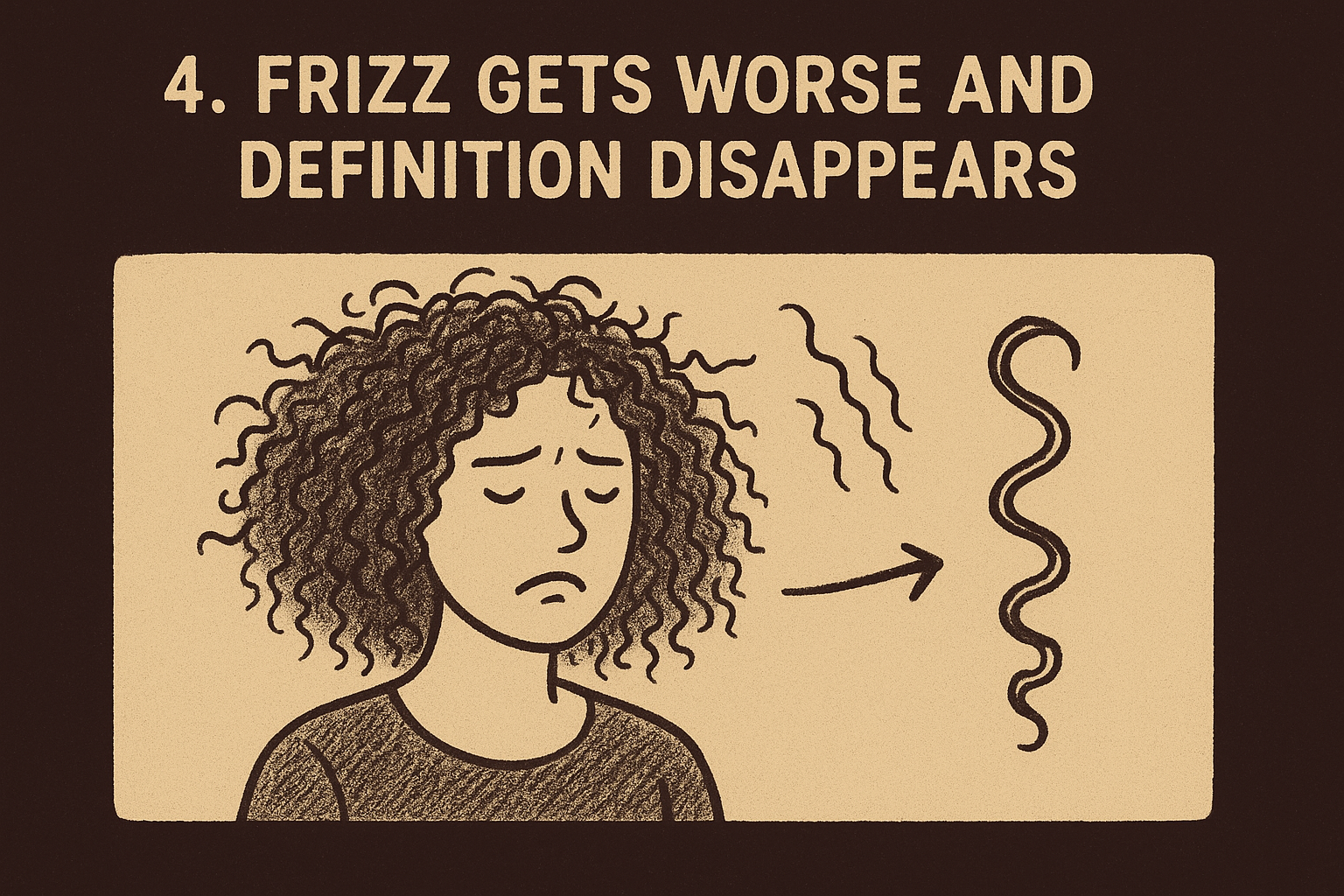
For textured hair, frizz and lost curl definition are two of the most frustrating hard water hair symptoms. You can follow your routine perfectly and still step out of the shower with a halo of frizz where your defined curls or coils should be.
What it looks like on your hair
Your curls separate instead of clumping, and frizz replaces the definition you used to get consistently. Coils that used to spring up now look stretched, undefined, and rough at the ends. No matter how much styling product you apply, the frizz returns within hours.
Why hard water can cause it
Mineral deposits keep your cuticle layer raised and rough, which causes individual strands to repel each other instead of grouping into defined curl patterns. A rough cuticle also makes your hair grab humidity from the air more aggressively, which pushes frizz even further.
When minerals force the cuticle open, your hair loses the ability to lock in moisture and hold definition at the same time.
Quick checks to confirm it is hard water
Notice whether your frizz improves when you travel or wash with filtered water. If your curls behave noticeably differently in other locations, your home's water quality is likely the variable, not your products or technique.
Fixes and prevention
Use a leave-in conditioner with humectants like glycerin or aloe vera after clarifying to help your strands retain moisture. Sealing with a lightweight oil after styling closes the cuticle and reduces frizz throughout the day.
5. Hair tangles easily and mats faster than normal
Tangles are a normal part of having textured hair, but when your strands start knotting mid-strand or forming matted sections within hours of washing, that is a different problem entirely. This is one of the more physically damaging hard water hair symptoms because the friction from detangling rough, mineral-coated strands causes direct breakage.
What it looks like on your hair
Your hair forms tight, stubborn knots that resist even generous amounts of detangler. Single-strand knots appear more often than usual, especially toward your ends. Detangling takes significantly longer than it used to, and your strands feel like they are catching on each other rather than sliding past cleanly.
- Hair knots during washing, not just after
- Shed hairs tangle into the rest of your strands and create matted clumps
- Your fingers or comb snag constantly, even on freshly conditioned hair
Why hard water can cause it
Mineral deposits rough up your cuticle surface, making each strand coarse and jagged instead of smooth. When rough strands rub against each other, they interlock and catch instead of sliding freely.
A raised, mineral-coated cuticle turns your hair into a loop-and-hook system, where every strand grabs onto its neighbor and holds.
Quick checks to confirm it is hard water
Run a single strand between your fingers after washing. If it feels gritty or rough from root to tip before applying any product, minerals are coating your cuticle.
Fixes and prevention
Clarify with a chelating shampoo to remove the mineral coating, then use a slippery, moisture-rich conditioner with ingredients like cetyl alcohol or behentrimonium chloride to restore slip and reduce friction between strands.
6. Scalp feels itchy, tight, or flaky
Most people focus on the hair shaft when they think about hard water hair symptoms, but your scalp takes a hit too. Mineral deposits don't stop at your strands; they settle on your scalp and create a layer of buildup that disrupts its natural balance.
What it looks like on your scalp
Your scalp feels dry and tight between washes, almost like it is being pulled. You notice flaking that looks similar to dandruff but doesn't respond to anti-dandruff shampoo the way it should. The itchiness tends to return quickly, often within a day or two after washing, which is a clue that your cleanser isn't fully clearing the root cause.
Why hard water can cause it
Calcium and magnesium deposits accumulate at your scalp and along the hair follicle, preventing your skin from shedding dead cells normally. This triggers irritation, dryness, and flaking that mimics dandruff but has a different origin entirely.
Mineral buildup on your scalp blocks the natural shedding process, which turns a simple water quality issue into what looks like a chronic skin condition.
Quick checks to confirm it is hard water
Check whether your scalp irritation eases after washing with bottled or filtered water even once. If the tightness and flaking reduce noticeably, your tap water is the trigger.
Fixes and prevention
Use a scalp-focused chelating shampoo to break down the mineral layer, and follow with a lightweight scalp oil like jojoba to restore moisture without clogging follicles.
7. Color shifts, brassiness, or a weird tint shows up
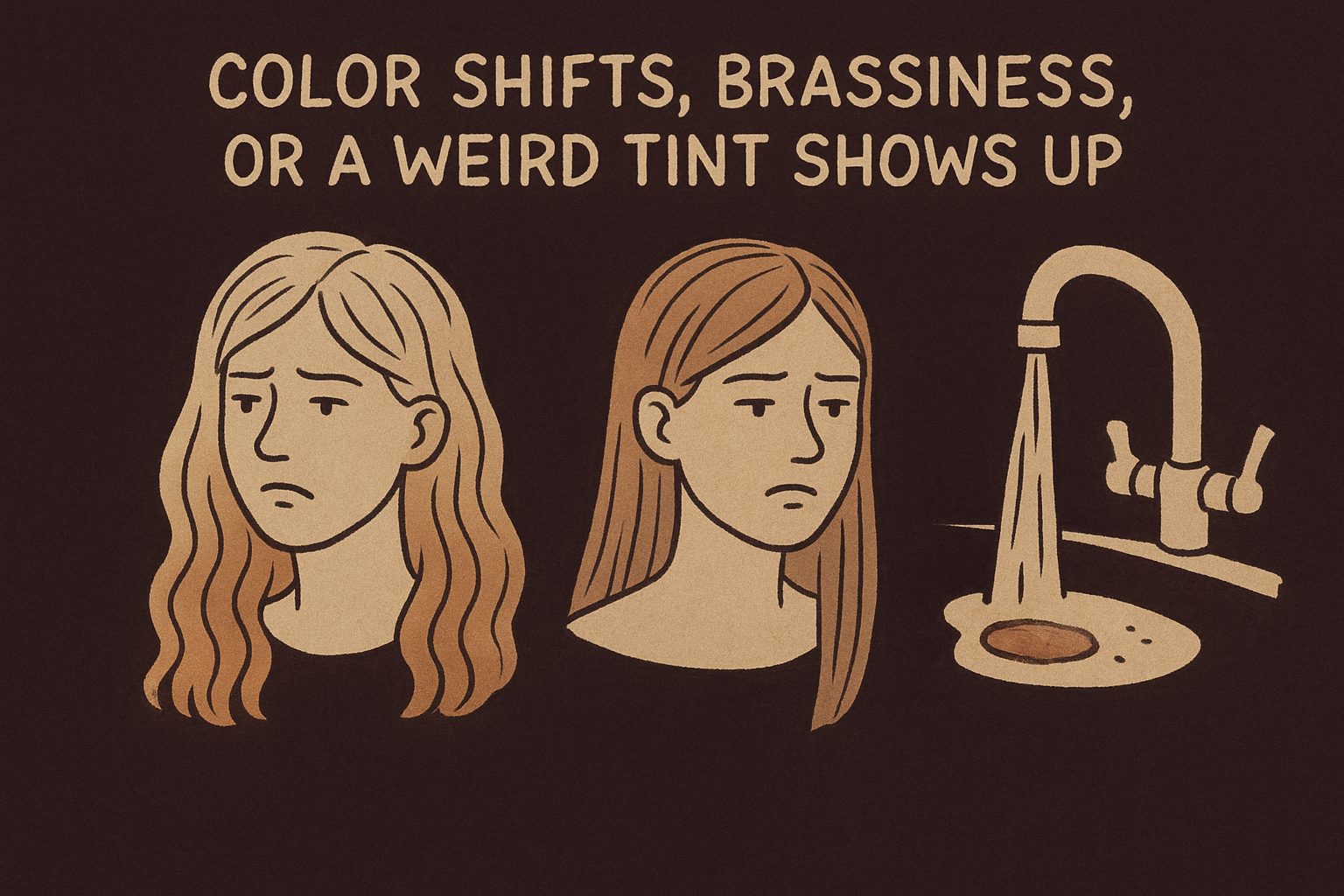
Color changes that you didn't ask for are one of the most alarming hard water hair symptoms. If your fresh dye job is turning orange within weeks, or your natural hair is picking up a dull, reddish tint, your water is the likely culprit.
What it looks like on colored and natural hair
Colored hair fades unevenly and develops brassy or orange tones much faster than expected. Blonde hair often shifts toward yellow or rust. Even on natural hair, you may notice a cloudy, slightly reddish cast that dulls your natural color and makes it look unwashed.
Why hard water can cause it
Iron and copper minerals in hard water oxidize on your hair shaft, which creates unwanted warm and metallic tones. These minerals also interfere with color molecules in dyed hair, pulling pigment out faster and replacing it with a brassy undertone.
Iron deposits from hard water essentially stain your strands from the outside in, shifting your color faster than heat or sun exposure alone.
Quick checks to confirm it is hard water
Look at your sink or tub for rust-colored staining near the drain. If your fixtures show orange or brown residue, your water carries the same iron that's landing on your hair every wash.
Fixes and prevention
Use a chelating or color-safe clarifying shampoo monthly to remove mineral deposits before they oxidize. Follow with a toning conditioner to neutralize any brassiness that has already developed.
8. More breakage, shedding, or thinning at the ends
Breakage and shedding are two of the most physically damaging hard water hair symptoms, and they are also the easiest to dismiss as normal. If you notice more short, snapped strands in your comb, excessive shedding during detangling, or ends that used to hold length but no longer do, your water quality deserves a serious look.
What it looks like on your hairline, crown, and ends
Your ends feel thin, wispy, and brittle rather than full and healthy. You find short, broken strands in your comb or on your hands during washing, not long shed hairs with a visible root bulb attached. Your hairline and crown may look less dense than before, and your ends split faster than regular trims can keep up with.
Why hard water can cause it
Mineral deposits weaken your hair's structural integrity by coating the cuticle and blocking moisture from reaching the inner cortex. Dry, brittle strands then snap under the normal tension of combing, styling, or even sleeping on a cotton pillowcase.
Repeated mineral exposure over months slowly starves each strand of the moisture it needs to stay flexible, turning everyday handling into a consistent source of breakage.
Quick checks to confirm it is hard water
Compare the number of broken strands you collect after washing with filtered water versus tap water across two back-to-back wash days. Noticeably more breakage on tap water days points directly at your water as the source.
Fixes and prevention
Clarify monthly with a chelating shampoo, then follow immediately with a protein-moisture treatment to rebuild strand strength and restore the flexibility that mineral buildup strips away over time.
A simple plan to reset your hair
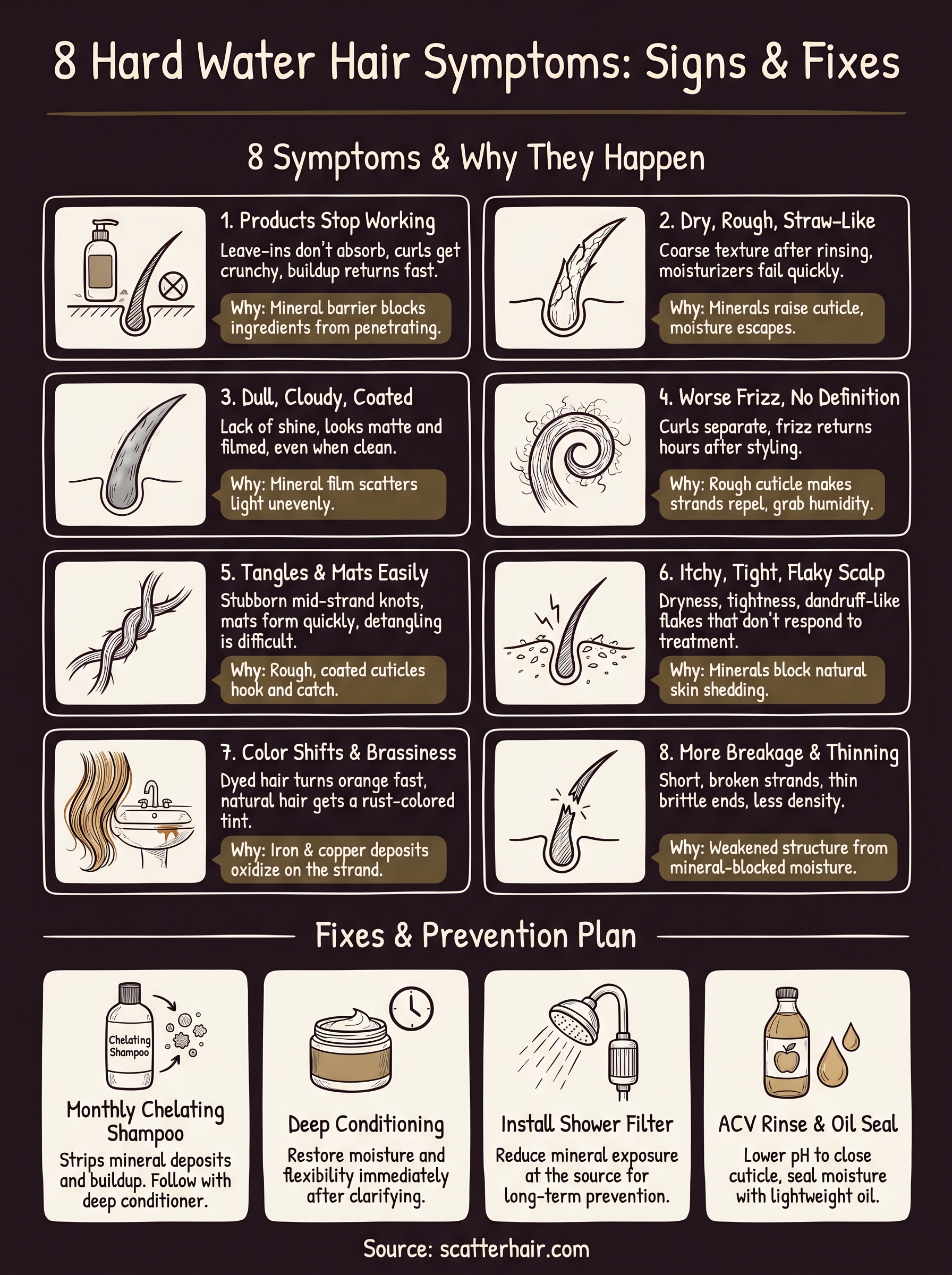
Recognizing hard water hair symptoms is the first step, but a reset takes consistent action. Start with a chelating shampoo once a month to strip mineral buildup from your strands and scalp. Follow every clarifying session with a deep conditioning treatment to restore moisture and rebuild flexibility immediately after the cleanse. If your tap water is severely hard, invest in a shower filter to reduce mineral exposure at the source rather than treating the damage after every wash.
Beyond the monthly clarify, protect your hair between wash days by sealing moisture in with a lightweight oil and sleeping on a satin pillowcase to cut friction. Small changes in your routine add up fast when the root cause is addressed. Your hair responds quickly once the mineral barrier is gone.
At Scatter, we are building styling products formulated specifically for textured hair that performs even when your environment works against you.